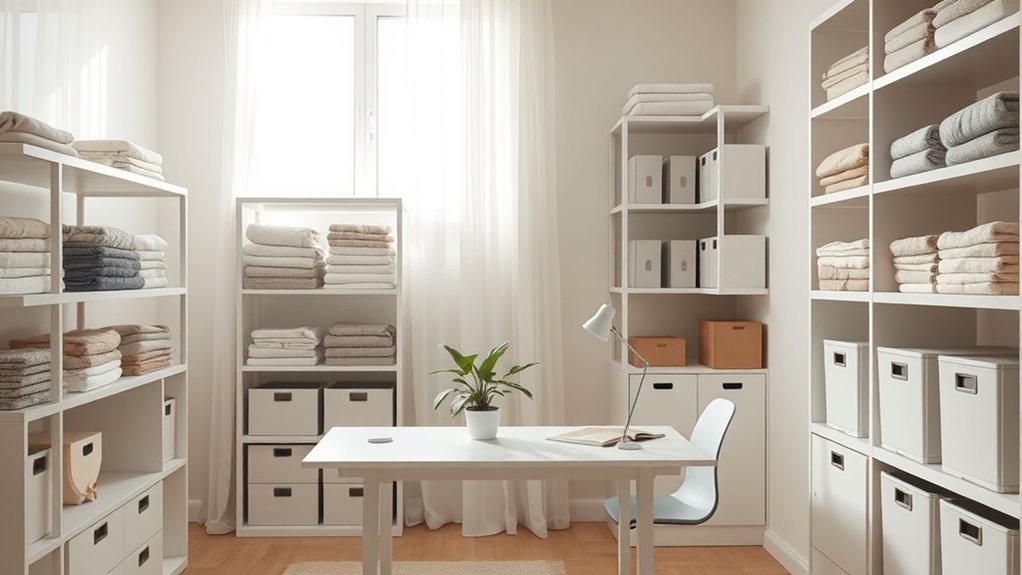

A cluttered space can heighten your stress, make it harder to focus, and leave you feeling overwhelmed. When your environment is chaotic, it mirrors scattered thoughts and hampers relaxation. Organizing your space by setting specific spots and decluttering regularly can boost your mood, reduce anxiety, and help you feel more in control. Maintaining an orderly environment creates a positive cycle that supports long-term mental well-being—exploring these strategies more deeply can truly transform your emotional health.
Key Takeaways
- Clean, organized spaces reduce visual clutter, lowering stress and anxiety levels.
- Decluttering promotes mindfulness, improving emotional regulation and mental clarity.
- Regular organization routines foster a sense of control, boosting self-esteem and mood.
- A tidy environment enhances focus and decision-making, supporting overall mental well-being.
- Long-term decluttering creates a calming atmosphere, contributing to better sleep and emotional resilience.

A cluttered space can considerably impact your mental health, often leading to stress, anxiety, and feelings of being overwhelmed. When your environment is chaotic, it can feel like your thoughts are just as scattered, making it harder to focus or relax. That’s why implementing effective organizational strategies is essential—not just for tidiness, but for your emotional well-being. When you organize your space, you create a sense of control that actively reduces stress levels. Simple steps like designating specific spots for belongings, sorting items into categories, and maintaining regular tidying routines can make a significant difference. As you develop these organizational strategies, you’ll start to notice a calming effect on your mind, because a clean, orderly space minimizes visual clutter that often triggers anxiety.
The emotional benefits of decluttering extend beyond just feeling more relaxed. When you clear out unnecessary items, you make room for positive energy and a sense of accomplishment. Every time you decide to let go of possessions that no longer serve you, you reinforce your ability to set boundaries and prioritize what truly matters. This process can enhance your self-esteem, as you see tangible proof of your capability to take control of your environment. Decluttering also fosters mindfulness; it encourages you to be present in the moment as you assess what to keep and what to discard. Over time, this mindful approach can translate into other areas of your life, helping you manage stress more effectively in general.
The emotional benefits of decluttering aren’t limited to just feeling good in the moment—they contribute to long-term mental health improvements. As your environment becomes more organized, you may experience decreased feelings of overwhelm and increased clarity. This clarity can boost your decision-making skills and improve your overall mood. In addition, a tidy space can promote better sleep and relaxation, which are critical for mental health resilience. You’ll find that as your environment improves, so does your emotional state, creating a positive feedback loop that motivates you to maintain these habits. Ultimately, investing time in decluttering isn’t just about cleanliness—it’s about nurturing your mental health through organized spaces that support emotional stability and well-being.

Bagnizer Small Plastic Storage Bins with Bamboo Lids 5.2qt Stackable Box Basket Pantry Decorative Containers Cute with Lable for Organizing Desktop Closet Office Cream White of 6 packs 10*7.2*4.1'’
【High Quality Materials】This plastic storage bins with lids are crafted from durable and lightweight plastic and come with…
As an affiliate, we earn on qualifying purchases.
As an affiliate, we earn on qualifying purchases.
Frequently Asked Questions
How Quickly Can Decluttering Improve Mental Health?
You can experience an instant mood boost right after decluttering, as the act of organizing creates a sense of accomplishment. Regular organizational routines help maintain mental clarity and reduce stress over time. While some benefits are immediate, consistent decluttering can lead to long-term improvements in mental health, making you feel more in control and peaceful in your space. So, start today for quicker, lasting positive changes.
Are There Specific Clutter Types That Impact Mental Well-Being More?
Clutter characterized by emotional attachments and chaotic organizational patterns tends to impact your mental well-being more. When sentimental items pile up or disorganized spaces dominate, they create cognitive chaos, causing stress and anxiety. By tackling these specific clutter types, you can clear your mind, boost your mood, and foster a sense of calm. Focusing on sentimental clutter and messy organizational patterns helps you feel more in control and improves your overall mental health.
Can Decluttering Help With Anxiety or Depression Symptoms?
Yes, decluttering can help with anxiety and depression symptoms. When you practice mindful organization, you create a calming environment that reduces overwhelm. As you sort through belongings, you experience emotional release, letting go of items tied to negative memories. This process restores a sense of control and clarity, which can markedly improve your mood and mental well-being over time.
What Are the Best Decluttering Methods for Mental Health?
Ever wonder how you can boost your mental health through decluttering? Focus on simple organizational techniques like sorting items into categories, setting small goals, and maintaining consistency. These methods reduce overwhelm and foster emotional benefits like calmness and control. By tackling clutter gradually, you create a peaceful space that supports your well-being. Isn’t it empowering to see how small changes in your environment can markedly improve your mood and mental clarity?
How Does Clutter Affect Sleep Quality and Stress Levels?
Clutter considerably impacts your sleep quality and stress levels by creating sensory overload and visual chaos. When your space is cluttered, your brain struggles to relax, making it harder to fall asleep and stay asleep. The constant visual distraction increases stress, leaving you feeling overwhelmed. Clearing clutter helps reduce sensory overload, promotes a calm environment, and improves both your sleep and overall mental health.

Pradnel Linen Closet Organizers And Storage, 4 Pack Storage Bins Baskets for Organization Foldable Organizer with Clear Window Organizing Clothing, Jeans, Shelves
【4PACK LINEN CLOSET STORAGE with SEE-THROUGH WINDOW】Each linen closet organizers and storage box features a clear window, allowing…
As an affiliate, we earn on qualifying purchases.
As an affiliate, we earn on qualifying purchases.
Conclusion
When you declutter, you’re not just organizing your space—you’re boosting your mental health. Studies show that a tidy environment can reduce stress by up to 20%, helping you feel calmer and more in control. So, take small steps today; clearing clutter can make a big difference in your overall well-being. Remember, a clean space isn’t just about aesthetics—it’s about creating a healthier, happier mind.

Coping Skills Cards for Anxiety & Stress Relief – Mindfulness, Meditation & Self-Care Tools for Trauma, BPD, DID, PTSD | Mental Health Therapy Gift for Adults & Teens
Helps Manage Emotional Distress and Crisis: Specifically designed to alleviate panic attacks, flashbacks, trauma recollections, anxiety, stress, dissociation,…
As an affiliate, we earn on qualifying purchases.
As an affiliate, we earn on qualifying purchases.

Boiron StressCalm Tablets for Relief of Stress, Anxiousness, Nervousness, Irritability, and Fatigue – 60 Count
PLANT-POWERED, MULTI-SYMPTOM STRESS RELIEF: StressCalm On the Go is powered by plants to relieve occasional symptoms of everyday…
As an affiliate, we earn on qualifying purchases.
As an affiliate, we earn on qualifying purchases.