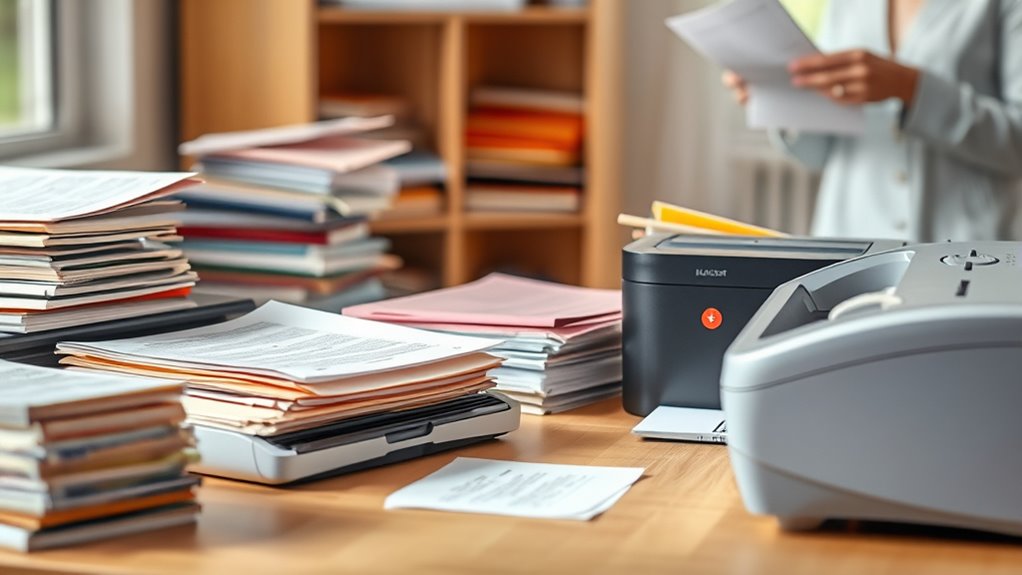

To declutter your papers, start by sorting documents into categories like bills, personal records, and work items. Digitize important files by scanning them into organized digital folders, making sure to use consistent naming conventions. Shred sensitive or outdated papers to protect your privacy and reduce clutter. Keep storage solutions labeled and accessible for easy maintenance. If you continue exploring, you’ll discover more techniques on how to keep your space tidy and efficient.

Get home appliances delivered free — and shop member deals
- Fast, free delivery on millions of items
- Access to Prime Big Deal Days deals on October 6–7
- Prime Video, Amazon Music and more included
Key Takeaways
- Sort documents into categories like bills, personal, work, and sentimental to identify what needs to be retained.
- Scan important papers into digital files with a consistent naming system to reduce physical clutter.
- Use labeled folders, filing cabinets, or storage boxes to organize physical documents for easy access.
- Shred sensitive or outdated papers regularly to prevent identity theft and minimize clutter.
- Maintain organization by regularly reviewing digital and physical files, and establishing routines for ongoing decluttering.

Have you ever felt overwhelmed by a pile of scattered papers cluttering your workspace or home? It’s a common frustration, but taking control begins with effective paper decluttering. Start by sorting through your documents, dividing them into categories like bills, personal records, work materials, and sentimental items. As you do, keep in mind that digital organization can considerably streamline your process. Consider creating a system that allows you to scan important papers, turning physical documents into digital files stored securely on your computer or in a cloud-based service. Digital organization not only reduces physical clutter but also makes retrieving documents much simpler. Once you’ve sorted and scanned what’s necessary, focus on storage solutions to keep what you’re keeping tidy and accessible. Use labeled folders, filing cabinets, or storage boxes designed for document organization. Clear containers with labels make it easy to locate papers later, and vertical file organizers can save space on your desk. For digital files, develop a consistent naming convention and folder structure to ensure you can find what you need instantly. This approach minimizes the temptation to keep unnecessary papers and creates a streamlined, efficient system. As you move through your decluttering process, consider shredding documents that are no longer needed, especially those containing sensitive information like social security numbers, bank details, or passwords. A shredder can be a valuable tool in your arsenal, preventing identity theft and reducing clutter. If you’re dealing with a large volume of papers, set aside specific times to scan or shred, making the task more manageable. Remember, the goal isn’t just to clear space but to establish a sustainable system that keeps your environment organized over time. By integrating digital organization into your routine, you’ll find it easier to maintain a clutter-free space without sacrificing access to important documents. Storage solutions should be practical, durable, and tailored to your needs, whether you prefer digital or physical formats. Maintaining this balance will save you time, reduce stress, and create a cleaner, more productive environment. As you develop your paper decluttering routine, stay consistent. Regularly review your digital files, discard outdated papers, and keep your storage solutions organized. This ongoing effort will ensure your workspace or home remains clutter-free, giving you peace of mind and more room to focus on what truly matters. Remember, decluttering isn’t a one-time event—it’s a continuous process that, once established, will make managing your documents much easier and more efficient. Incorporating digital organization can significantly enhance your overall decluttering efforts and help sustain your system long-term.
As an affiliate, we earn on qualifying purchases.
Frequently Asked Questions
How Do I Decide Which Documents to Keep Permanently?
You should keep documents permanently based on their importance and relevance, using document prioritization. If you can store them digitally, opt for digital storage to save space. Keep essential records like legal papers, tax documents, and proof of ownership, while shredding duplicates or outdated items. Regularly review your files to guarantee you retain only what’s necessary, making future access easier and your space clutter-free.
What Are the Best Tools for Scanning Documents Efficiently?
Think of your scanner as a trusty treasure map. To find your digital gems quickly, choose one with auto-crop, text recognition, and high resolution. Digital apps like Adobe Scan or CamScanner work seamlessly, turning paper into searchable PDFs. Use scanner features like duplex scanning for double-sided pages, and adjustable resolution for clarity. These tools help you navigate your document treasure chest efficiently, saving time and decluttering your space.
How Long Should I Retain Different Types of Documents?
You should retain different types of documents based on their importance and legal requirements. Keep tax records and financial documents for at least seven years, while medical and insurance records should be stored permanently or as recommended. Regularly update your digital backups and storage solutions to guarantee your documents are safe. Shred anything outdated or no longer needed to protect your privacy and free up space, and review your retention periods annually.
Are There Any Legal Considerations for Shredding Sensitive Papers?
Yes, you should consider confidentiality policies and legal compliance when shredding sensitive papers. Always follow your organization’s confidentiality policies to safeguard personal and proprietary information. Shred documents containing sensitive data, like financial records or legal documents, promptly to prevent identity theft or data breaches. Check local regulations to verify proper disposal methods, and use certified shredding services if needed to guarantee compliance and secure handling of confidential materials.
How Can I Organize Shredded Paper for Recycling or Disposal?
You can organize shredded paper for recycling or disposal by collecting it in a paper bag or a sealed container to prevent mess. To compost or repurpose shredded paper, mix it with yard waste or use it as mulch. Make sure it’s dry and free of plastic or other contaminants. Labeling your containers helps keep things organized, making it easier to recycle or turn shredded paper into compost or craft projects later.
labeled file folders for paperwork
As an affiliate, we earn on qualifying purchases.
As an affiliate, we earn on qualifying purchases.
Conclusion
So, after all that effort sorting, scanning, and shredding, you might find yourself holding onto that one tiny, pointless paper just in case. Ironically, in trying to declutter, you often create more clutter in your mind—wondering what to keep or toss. But remember, the true victory isn’t in perfect organization; it’s in freeing yourself from the endless cycle of paper chaos. Sometimes, less really is more—except when it isn’t.
digital document scanner with OCR
As an affiliate, we earn on qualifying purchases.
As an affiliate, we earn on qualifying purchases.
As an affiliate, we earn on qualifying purchases.
NFL season / tailgating Picks
team gear
As an affiliate, we earn on qualifying purchases.