
To dispose of unwanted items on a budget, consider hosting a garage sale to earn cash and clear space quickly. Donations are another low-cost option—many centers accept a variety of items and even offer free pickup, plus they’ll give you tax receipts. Both methods help the environment and save you money compared to waste removal services. If you’d like to discover more sustainable, affordable disposal ideas, keep exploring these options further.

Get home appliances delivered free — and shop member deals
- Fast, free delivery on millions of items
- Access to Prime Big Deal Days deals on October 6–7
- Prime Video, Amazon Music and more included
Key Takeaways
- Host a garage sale to sell unwanted items locally and quickly, requiring minimal setup and advertising.
- Donate items to charity donation centers for free pickup, gaining tax deductions and supporting sustainability.
- Sort and clean belongings beforehand to streamline disposal and improve their appeal for sales or donations.
- Use online marketplaces and community boards to advertise your unwanted items cost-effectively.
- Choose environmentally friendly disposal methods like donating or selling to reduce landfill waste and avoid costly waste removal services.
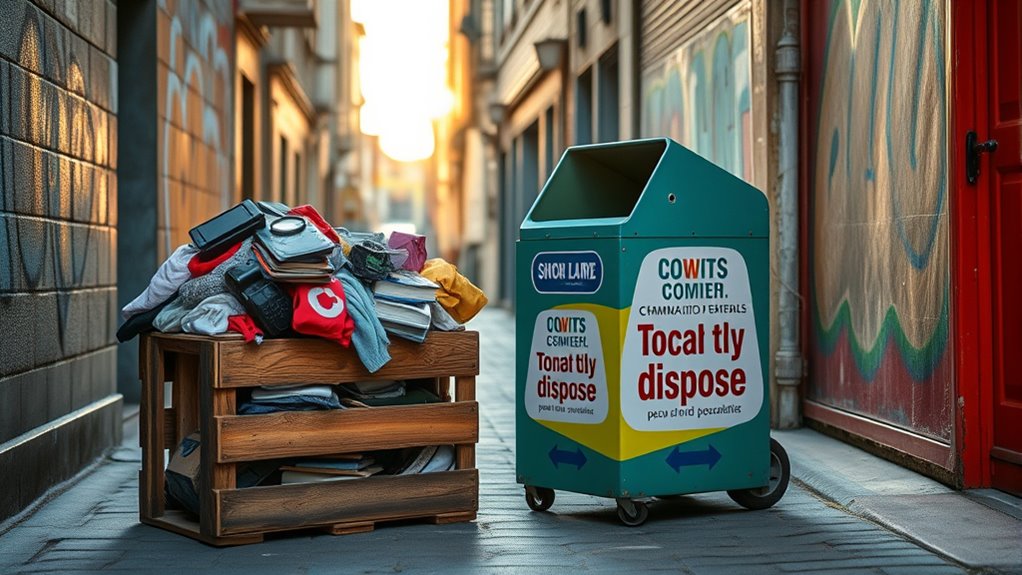
Disposing of unwanted items doesn’t have to break the bank. You can clear out clutter while keeping costs low by exploring simple, cost-effective options like garage sales and donation centers. Garage sales are an excellent way to turn your unwanted belongings into cash and free up space at the same time. You don’t need a fancy setup—just pick a weekend, advertise your sale locally, and price your items reasonably. People love hunting for bargains, and you might be surprised how quickly your unwanted stuff finds new homes. Plus, hosting a garage sale encourages you to sort through your belongings, helping you identify what you truly want to keep versus what’s ready to go. If the idea of a sale isn’t appealing or you have items that won’t sell, donation centers are another budget-friendly option. They accept a wide variety of items—from clothing to household goods—and often offer free pickup services for larger donations. Donating not only declutters your space but also benefits charitable organizations, giving your unwanted items a second life and helping those in need.
When considering garage sales, timing is key. Weekend mornings tend to attract more buyers, and advertising in local community boards or online marketplaces can boost attendance. Price your items fairly, and be prepared to negotiate—many buyers are looking for bargains. Keep in mind that a garage sale can be a quick way to dispose of larger quantities of items without incurring disposal fees. For donation centers, it’s helpful to call ahead and confirm what they accept. Some centers focus on clothing and furniture, while others might prefer specific items like electronics or household appliances. Many donation centers also provide tax deduction receipts, which can be beneficial when tax season rolls around, giving you a little extra incentive to donate rather than toss. Additionally, considering anime movies or animated content can inspire you to share your favorite media with others through donations or exchanges.
Both garage sales and donation centers are eco-friendly options that keep your unwanted items out of landfills. They’re especially useful if you’re trying to dispose of items responsibly without spending a lot of money. You don’t have to pay for bulky waste removal services or rent dumpsters; instead, you leverage community resources and charitable organizations to do the heavy lifting. Remember to clean and prepare your items before sale or donation, which makes them more appealing and easier to accept. In the end, these budget-friendly methods not only help you clear space but also promote sustainability, all while saving you money. With a little planning and effort, you can efficiently dispose of your unwanted items without breaking your budget.
garage sale signs and advertising supplies
As an affiliate, we earn on qualifying purchases.
As an affiliate, we earn on qualifying purchases.
Frequently Asked Questions
How Can I Donate Items Without Incurring Transportation Costs?
You can donate items without transportation costs by choosing local charities that offer pickup services. Many nonprofits, like Goodwill or Salvation Army, provide free pick-up options, saving you money. To maximize donation tax benefits, make sure your items are in good condition and get a receipt. Follow charity donation tips by scheduling pickups in advance and documenting everything, making your donation both budget-friendly and tax-efficient.
Are There Local Programs That Pick up Unwanted Items for Free?
Yes, you can find local programs that pick up unwanted items for free, especially through community cleanup initiatives and volunteer disposal programs. Check with your city’s waste management or community centers—they often organize free pickup days or volunteer-led disposal events. Participating in these programs not only helps you dispose of items cost-effectively but also supports community efforts to keep neighborhoods clean. Call ahead to confirm pickup schedules and accepted items.
How Do I Determine if an Item Is Recyclable or Trash?
You can determine if an item is recyclable or trash by checking its recycling symbols, usually found on the bottom or side. These symbols indicate if the material is accepted in your local waste sorting program. Always read your local guidelines, as some items like plastics, metals, and paper are recyclable, while others like certain plastics or contaminated items should go to trash. When in doubt, consult your city’s waste management resources.
Can I Dispose of Electronics Safely and Cheaply?
Your electronics deserve a safe send-off, and yes, you can dispose of them cheaply and securely! Look into electronics recycling programs or certified e-waste disposal centers—they’re the superheroes of safe disposal methods. Many communities offer free or low-cost drop-off options, preventing harmful materials from polluting the environment. Don’t risk trashing them improperly; your planet and wallet will thank you for choosing responsible, budget-friendly electronics recycling alternatives.
What Are the Best Ways to Dispose of Hazardous Household Waste on a Budget?
To dispose of hazardous household waste on a budget, you should focus on chemical disposal options. Check with local waste management or hazardous waste collection events, which often offer free or low-cost services. Never pour hazardous waste down the drain or onto the ground. Use designated drop-off sites or community collection days to safely and affordably get rid of hazardous waste, protecting both your health and the environment.
As an affiliate, we earn on qualifying purchases.
Conclusion
Remember, clearing out unwanted items doesn’t have to drain your wallet. Think of it as tending a garden—you’re making space for new growth and fresh beginnings. By choosing budget-friendly disposal methods, you’re not just tossing things away; you’re nurturing a clutter-free life where every item has a purpose. Embrace these simple tips, and watch your space blossom into a clean, vibrant oasis—where less truly is more, and your peace of mind flourishes.
As an affiliate, we earn on qualifying purchases.
reusable price tags for garage sales
As an affiliate, we earn on qualifying purchases.
As an affiliate, we earn on qualifying purchases.
Fall yard work Picks
leaf blowers
As an affiliate, we earn on qualifying purchases.