

To make decluttering with ADHD more manageable, set small goals and use timers to stick to short sessions. Break tasks into bite-sized steps and take regular breaks to prevent overwhelm. Keep your space organized with labeled bins and visual cues, simplifying decision-making. Practice self-compassion and stay flexible if setbacks occur. Focusing on progress over perfection helps maintain motivation. Keep going, and you’ll discover more strategies to stay focused and improve your environment.

Get home appliances delivered free with Prime
- Fast, free delivery on millions of items
- Prime Video, Amazon Music and more included
- Member-only deals all year
Key Takeaways
- Break decluttering into small, timed sessions with clear goals to maintain focus and prevent overwhelm.
- Use visual cues like labeled bins and color coding to simplify sorting and decision-making.
- Practice emotional regulation techniques, such as deep breathing, to manage feelings that arise during decluttering.
- Develop a flexible plan targeting specific areas, celebrating small wins to build momentum.
- Incorporate breaks and self-compassion to sustain motivation and avoid burnout throughout the process.
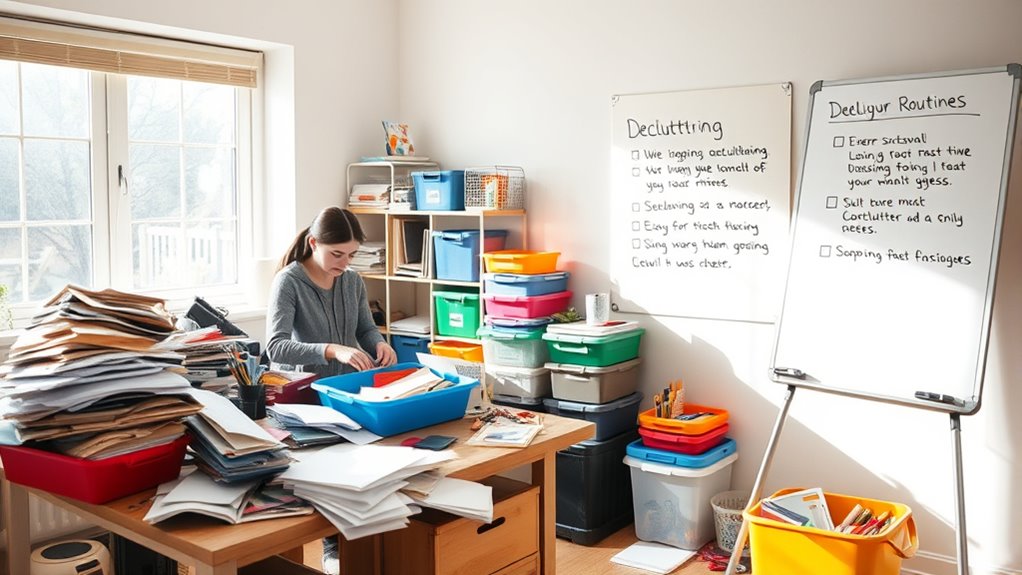
Living with ADHD can make decluttering feel overwhelming and frustrating, but with the right strategies, you can turn it into a manageable process. One of the key challenges is managing your time effectively. When you’re tackling clutter, it’s easy to get sidetracked or feel like you need to complete everything in one sitting, which only leads to burnout. Instead, set small, realistic time limits for each decluttering session—maybe 10 or 15 minutes at a time. Use timers or alarms to keep yourself on track, and remember to take breaks. Breaking the task into bite-sized chunks helps you stay focused and prevents feelings of intimidation. It also turns decluttering into a series of quick wins, which boost your motivation to keep going.
Set small time limits for decluttering to stay focused and prevent burnout.
Another critical aspect is emotional regulation. Clutter often stirs up feelings of guilt, anxiety, or frustration, making it even harder to start or continue decluttering. It’s important to recognize these emotions without letting them take over. Practice self-compassion and remind yourself that decluttering is a process, not a one-time event. If a certain area or category feels especially emotional, take a pause. Use calming techniques like deep breathing or mindfulness to center yourself before diving back in. This helps you stay grounded and prevents emotional reactions from derailing your efforts. When you’re able to regulate your emotions, you’re more likely to make thoughtful decisions about what to keep and what to let go.
Creating a structured plan can also support your time management and emotional regulation. Before you begin, identify specific areas or categories to declutter, and set clear goals for each session. For example, you might decide to focus only on your desk or your closet. Write down what you want to accomplish, and keep the plan visible. This provides a roadmap, reducing decision fatigue and helping you stay on track. Additionally, consider using visual cues—like labeled bins or color-coded containers—to make sorting easier and more intuitive. When your environment is organized and predictable, you’re less likely to feel overwhelmed or emotionally drained. Incorporating home organization techniques can further streamline the decluttering process and boost your motivation.
Finally, remember that decluttering with ADHD isn’t about perfection; it’s about progress. Celebrate small successes, stay flexible, and give yourself grace when setbacks happen. By managing your time wisely and regulating your emotions, you’ll find decluttering becomes less intimidating and more achievable. Over time, these strategies can help you create a space that not only looks better but also feels more calming and manageable.
labeled storage bins for decluttering
As an affiliate, we earn on qualifying purchases.
As an affiliate, we earn on qualifying purchases.
Frequently Asked Questions
How Can I Stay Motivated to Declutter Over Time?
To stay motivated over time, set up reward systems that celebrate small victories, like completing a section or organizing a drawer. Use visual cues, such as progress charts or before-and-after photos, to remind yourself of your achievements. Break tasks into manageable steps, and give yourself frequent breaks. These strategies help keep you engaged, making decluttering feel less overwhelming and more rewarding as you see tangible progress.
What Tools Help Maintain Organization After Decluttering?
You can stay organized after decluttering by using digital apps like Todoist or Evernote to track your tasks and reminders. Storage solutions such as labeled bins, shelves, and drawer organizers help keep your space tidy. Regularly updating your digital tools and re-evaluating your physical storage keeps everything accessible and manageable. These tools make it easier to maintain focus, prevent clutter buildup, and guarantee your space stays organized over time.
How Do I Handle Emotional Attachment to Items?
When handling emotional attachment to items, recognize their sentimental value and acknowledge your feelings. Instead of keeping everything, set limits on what you keep, like one or two meaningful items. Use tools like journaling to process emotional triggers and remind yourself why decluttering benefits you. Ask yourself if the item sparks joy or serves a practical purpose. This helps you make mindful decisions, easing emotional struggles during decluttering.
Can Decluttering Routines Improve Overall ADHD Symptoms?
Did you know that establishing decluttering routines can reduce ADHD symptoms by up to 20%? When you create organization systems, you lessen emotional triggers linked to clutter, making it easier to stay focused and calm. Regular routines help you develop habits that improve your overall focus, reduce stress, and keep your environment manageable. Consistent decluttering becomes a positive cycle, supporting your mental clarity and emotional well-being over time.
How Do I Involve Others in My Decluttering Process?
You can involve others in your decluttering process by enlisting peer support or accountability partners. Share your goals and progress with them, and ask for encouragement or hands-on help when needed. This creates a sense of accountability, keeps you motivated, and makes the task less overwhelming. Regular check-ins or working together can make decluttering more manageable and even enjoyable, helping you stay focused and committed.
visual cue color-coded containers
As an affiliate, we earn on qualifying purchases.
As an affiliate, we earn on qualifying purchases.
Conclusion
Remember, decluttering with ADHD isn’t about perfection but progress. By breaking tasks into small steps and embracing your unique organizational style, you can create a calmer space. Some experts suggest that physical clutter may even contribute to mental overwhelm, so tidying up might boost your focus and mood. Trust the process, stay patient, and celebrate each achievement—your environment and mind will thank you for it. Progress, not perfection, is your best goal.
As an affiliate, we earn on qualifying purchases.
As an affiliate, we earn on qualifying purchases.
Columbus Day / Indigenous Peoples' Day Picks
long weekend sales
As an affiliate, we earn on qualifying purchases.