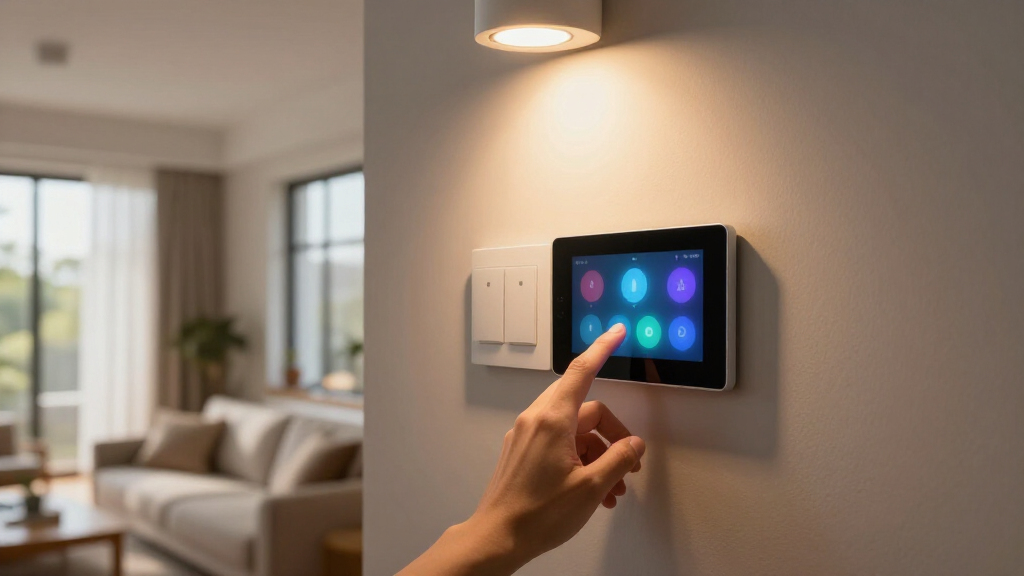

Smart home lighting systems have split into two camps in 2026: polished ecosystems like Philips Hue that offer rock-solid reliability and deep automation, and budget-friendly Wi-Fi bulbs like DAYBETTER and OREiN that skip the hub and cost a fraction of the price. My top pick, the Philips Hue Essential Smart LED A19 4-Pack, earns the Best Overall spot for its unmatched color accuracy, responsiveness, and long-term platform support. If you’re decorating rather than automating, the Cync GE 16-foot light strip and Govee Smart Ceiling Light bring ambience to spaces standard bulbs can’t reach. The main tradeoffs you’ll face are hub versus no-hub, Matter compatibility versus locked ecosystems, and upfront cost versus long-term flexibility. Read on for the full breakdown.

Get home appliances delivered free — and shop member deals
- Fast, free delivery on millions of items
- Access to Prime Big Deal Days deals on October 6–7
- Prime Video, Amazon Music and more included
Complete the kit


Key Takeaways
- Matter compatibility was the biggest differentiator in this lineup — the OREiN bulbs and Cync strip work across Alexa, Google, and Apple Home natively, while the DAYBETTER bulbs remain tied to Alexa and Google only.
- The Philips Hue Essential 4-Pack won Best Overall despite the higher price because its color rendering, response speed, and automation depth outclass every hub-free option here.
- Two nearly identical 16-foot strips landed very differently: the Cync GE strip earns its spot with Matter support, while the Kasa KL400L5 wins on raw value through Kasa‘s more mature app and scheduling.
- Not everyone needs color — the TP-Link Tapo natural daylight bulbs with a CRI above 90 beat the multicolor picks for reading, task lighting, and eye comfort.
- The Govee RGBIC ceiling light is the only fixture-style product in the roundup, making it the sole option for renters and homeowners who want statement lighting rather than bulb swaps.
| OREiN Matter Smart Light Bulb, A19 RGBTW Color Changing 4 Pack |  | Best for Multi-Platform Households | Bulb Type: A19 RGBTW | Color Range: 16+ million colors | White Temperature: 1800K-6500K | VIEW LATEST PRICE | See Our Full Breakdown |
| DAYBETTER A19 E26 Smart Light Bulbs, Compatible with Alexa & Google Home |  | Best Value Pick | Base: E26 | Wattage: 9W (60W equivalent) | Brightness: 800 lumens | VIEW LATEST PRICE | See Our Full Breakdown |
| Cync GE Smart LED Strip Light, 16 Feet, Matter Compatible |  | Best Accent Lighting | Length: 16 feet | Colors: Millions of colors and white tones | Connectivity: Wi-Fi 2.4GHz | VIEW LATEST PRICE | See Our Full Breakdown |
| Philips Hue Essential Smart LED A19 Bulb, 4-Pack |  | Best Overall System | Pack Size: 4 bulbs | Bulb Type: A19 LED | Dimming Range: 2%-100% | VIEW LATEST PRICE | See Our Full Breakdown |
| Govee Smart Ceiling Light, RGBIC 12 Inch, 2400LM |  | Best All-in-One Fixture | Size: 12 inches | Brightness: 2400 lumens | Color Temperature: 2700K-6500K | VIEW LATEST PRICE | See Our Full Breakdown |
| Kasa Multicolor Dimmable Wi-Fi Smart Bulb, A19, KL125P4 |  | Best Color Bulb for the Money | Color Options: 16 million colors | White Temperature Range: 2500K–6500K | Brightness Equivalent: 60W incandescent | VIEW LATEST PRICE | See Our Full Breakdown |
| Kasa Smart LED Light Strip, RGB, 16.4ft, Multicolor, KL400L5 |  | Best Accent Lighting Strip | Length: 16.4 ft | Color: RGB multicolor | Control: App, Alexa, Google Assistant | VIEW LATEST PRICE | See Our Full Breakdown |
| TP-Link Tapo Smart Light Bulbs – Natural Daylight, Dimmable, E27 Base, 60W Equivalent, 800LM, CRI>90 (4-Pack) |  | Best for Everyday White Lighting | Light Type: LED, dimmable | Brightness: 800 lumens (60W equivalent) | Color Temperature: 4000K fixed daylight | VIEW LATEST PRICE | See Our Full Breakdown |
| smart home lighting system | Brightness | Connectivity | Control |
|---|---|---|---|
| OREiN Matter Smart Light Bulb | 60W equivalent, 9W | — | — |
| DAYBETTER A19 E26 Smart Light | 800 lumens | Wi-Fi 2.4GHz, Bluetooth | — |
| Cync GE Smart LED Strip Light | — | Wi-Fi 2.4GHz | App, voice, smart home integration |
| Philips Hue Essential Smart LE | — | — | Hue app, voice, remote |
| Govee Smart Ceiling Light | 2400 lumens | — | Matter, SmartThings, Alexa, Govee Home App |
| Kasa Multicolor Dimmable Wi-Fi | — | Wi-Fi 2.4GHz, no hub required | — |
| Kasa Smart LED Light Strip | — | — | App, Alexa, Google Assistant |
| TP-Link Tapo Smart Light Bulbs | 800 lumens (60W equivalent) | 2.4GHz Wi-Fi, no hub required | — |
More Details on Our Top Picks
OREiN Matter Smart Light Bulb, A19 RGBTW Color Changing 4 Pack
Most budget smart bulbs lock you into one ecosystem, but the OREiN Matter bulbs take a different approach: native Matter support means they work across Apple Home, Alexa, and Google Home without picking a side. That alone separates them from the DAYBETTER bulbs, which stick to Alexa and Google only. The CRI of 90+ is a quiet advantage too — whites render more naturally than on most color bulbs at this price, which matters if these end up in a reading lamp rather than a party corner.
The tradeoff is connectivity discipline. These are 2.4GHz-only, and like nearly everything in this roundup, they misbehave on physical dimmer switches. But for a mixed-device household that wants color and flexibility without a hub, this pick makes the most sense.
Pros:- Native Matter support across all major platforms
- 90+ CRI for natural-looking white light
- 16 million colors plus tunable 1800K-6500K white
- QR-code setup that skips messy pairing workflows
Cons:- 2.4GHz WiFi only — fails on 5GHz networks
- Flickers or fails on physical dimmer switches
- App required for full dimming control
Best for: Households mixing Apple Home, Alexa, and Google devices who want one bulb lineup that works everywhere without a hub
Not ideal for: Renters or homeowners with 5GHz-only networks and anyone planning to keep using existing wall dimmers — the flickering isn’t worth it
- Bulb Type:A19 RGBTW
- Color Range:16+ million colors
- White Temperature:1800K-6500K
- Brightness:60W equivalent, 9W
- CRI:90+
- WiFi:2.4GHz only
- Protocol:Matter
- Lifespan:~25,000 hours
Our verdict“The right choice if your smart home spans multiple ecosystems and you want Matter-grade flexibility at a budget-bulb price.”
DAYBETTER A19 E26 Smart Light Bulbs, Compatible with Alexa & Google Home
When the goal is simply smart lighting for the least money per bulb, the DAYBETTER four-pack is hard to beat. You still get RGB color, tunable white from 2700K to 6500K, scheduling, grouping, and music sync — features that cost noticeably more per bulb from Philips Hue. Dual Wi-Fi and Bluetooth connectivity also makes initial setup friendlier than app-only alternatives, since you can pair over Bluetooth before touching your network settings.
The savings show in the details. Unlike the OREiN Matter bulbs, there’s no Matter support and no Apple Home compatibility, so iPhone-centric households should skip this one. The bulbs are also locked to the DAYBETTER app — Tuya and SmartLife users are out of luck. For Alexa or Google households on a budget, though, this model covers the basics without paying for ecosystems they’ll never use.
Pros:- Lowest cost per bulb in this lineup
- Bluetooth + Wi-Fi pairing simplifies first-time setup
- Scheduling, grouping, and music sync included
- Full RGB plus tunable white range
Cons:- Locked to the DAYBETTER app — no Tuya or SmartLife support
- No Apple Home or Matter compatibility
- 2.4GHz Wi-Fi only, no dimmer switch support
Best for: Budget-conscious Alexa or Google Home users outfitting several rooms who want color and scheduling without premium pricing
Not ideal for: Apple Home users and Tuya/SmartLife households — ecosystem support just isn’t there
- Base:E26
- Wattage:9W (60W equivalent)
- Brightness:800 lumens
- Color Temperature:2700K-6500K
- Connectivity:Wi-Fi 2.4GHz, Bluetooth
- App:DAYBETTER App
- Voice Assistants:Alexa, Google Home
Our verdict“The most sensible pick when price per bulb matters more than ecosystem breadth or premium color accuracy.”
Cync GE Smart LED Strip Light, 16 Feet, Matter Compatible
Bulbs change how a room looks; the Cync GE 16-foot strip changes how a room feels. Running it behind a TV, along a headboard, or under shelving delivers the ambient color wash that no A19 bulb in this lineup — not the DAYBETTER nor the OREiN — can replicate from a ceiling socket. No hub is required, and Matter support plus Alexa and Google Home integration keep it flexible across platforms, which is rare for strip lighting at this length and price.
Compared with the Kasa KL400L5 strip, the Cync pulls ahead on ecosystem openness thanks to Matter. The compromises are real, though: it’s indoor-only, it needs 2.4GHz Wi-Fi, and the app setup has enough steps that less patient users may find it frustrating on day one.
Pros:- 16 feet of continuous color in one affordable package
- Matter support plus Alexa and Google Home
- Hub-free Wi-Fi setup
- Includes mounting clips and power accessories
Cons:- Indoor use only
- 2.4GHz Wi-Fi requirement
- App setup can feel convoluted compared to bulb pairing
Best for: Gamers, renters, and decorators who want dramatic behind-the-TV or under-cabinet color without buying a hub
Not ideal for: Outdoor patio or garage projects — this strip is strictly indoor-rated
- Length:16 feet
- Colors:Millions of colors and white tones
- Connectivity:Wi-Fi 2.4GHz
- Compatibility:Alexa, Google Home, Matter
- Control:App, voice, smart home integration
- Included:Power cord, plug, mounting clips
Our verdict“The easiest way to add the ambient, wall-washing color effect that bulbs alone can’t achieve.”
Philips Hue Essential Smart LED A19 Bulb, 4-Pack
Plenty of bulbs in this roundup can change color; few can do it as smoothly and reliably as the Philips Hue Essential four-pack. Dimming down to 2% without flicker, polished preset scenes, and compatibility with all three major voice platforms put this a tier above the DAYBETTER and OREiN bulbs, which dim less gracefully and depend on more finicky third-party apps. The Hue app also handles whole-home lighting better than any budget competitor’s software, which becomes obvious once you pass ten or so fixtures.
The catch is cost — per bulb, this runs well beyond everything else here. And while basic control works out of the box, advanced features require the Hue Bridge, an extra purchase that widens the price gap further. This pick makes the most sense for buyers building a long-term lighting system rather than smartening up a single lamp.
Pros:- Flicker-free dimming down to 2%
- Works with Alexa, Google Assistant, and Apple Home
- Best-in-class app with scenes and scheduling
- Expandable into a full Hue ecosystem with the Bridge
Cons:- Highest per-bulb cost in the roundup
- Advanced automation requires the separately sold Hue Bridge
Best for: Owners planning a whole-home lighting system who value rock-solid reliability and polished software over upfront savings
Not ideal for: Casual buyers smartening one or two lamps — the price premium and optional Bridge are overkill
- Pack Size:4 bulbs
- Bulb Type:A19 LED
- Dimming Range:2%-100%
- Compatibility:Alexa, Google Assistant, Apple Home
- Control:Hue app, voice, remote
- Features:Color customization, preset scenes, Hue Bridge expansion
Our verdict“Worth the premium only if you’re building a permanent, multi-room system where reliability matters more than price.”
Govee Smart Ceiling Light, RGBIC 12 Inch, 2400LM
Sometimes the smartest lighting move isn’t another bulb — it’s replacing the fixture entirely. The Govee 12-inch ceiling light delivers 2400 lumens of main lighting plus an RGBIC backlight that paints the ceiling with segmented color, something no screw-in bulb, including the Philips Hue Essential, can physically do. With 71 scene modes, circadian automation, and Matter, SmartThings, Alexa, and Govee app support, it functions as both the room’s primary light source and its ambient accent in one purchase.
Two limitations shape the decision. The main light and backlight can’t run simultaneously, so it’s either task lighting or mood lighting, never both at once. And unlike bulb-based options, installation is a ceiling fixture job rather than a screw-and-go swap. For bedrooms, nurseries, and home offices, though, this consolidated approach beats managing separate bulbs and strips.
Pros:- 2400 lumens replaces a room’s main light source
- RGBIC backlight for segmented ceiling color effects
- Matter, SmartThings, and Alexa support
- Circadian lighting automation built in
Cons:- Main light and backlight cannot operate simultaneously
- Requires fixture installation, not a simple bulb swap
- Full feature set depends on app and voice setup
Best for: Bedroom or nursery owners who want primary lighting and ambient color effects from a single ceiling fixture
Not ideal for: Renters who can’t swap fixtures, or anyone wanting task and accent lighting on at the same time
- Size:12 inches
- Brightness:2400 lumens
- Color Temperature:2700K-6500K
- Light Type:RGBIC, RGB+WW
- Scene Modes:71
- Control:Matter, SmartThings, Alexa, Govee Home App
- Power Source:LED
- Certification:Climate Pledge Friendly
Our verdict“The one to buy when you’d rather replace the fixture than keep adding bulbs and strips to the same room.”
Kasa Multicolor Dimmable Wi-Fi Smart Bulb, A19, KL125P4
For buyers who want full-spectrum color without paying Philips Hue prices, this four-pack is the obvious middle ground. Compared with the Philips Hue Essential bulbs elsewhere in this lineup, the Kasa KL125 gives up a hub and the broader Hue accessory ecosystem, but it delivers 16 million colors plus an adjustable 2500K–6500K white range at a fraction of the cost — and unlike the Tapo daylight-only bulbs below, it can shift from warm evening glow to cool work light on demand.
The tradeoff is reliability: these bulbs depend entirely on a 2.4GHz Wi-Fi network, and like most hub-free options they occasionally drop off the network. Scheduling and energy monitoring work well once set up, though, which makes this pick a stronger value than the similarly priced DAYBETTER bulbs thanks to better app polish.
Pros:- 16 million colors plus tunable white from 2500K to 6500K in one bulb
- Works with Alexa and Google Assistant with no hub required
- Scheduling and energy monitoring through the well-designed Kasa app
- UL certified with a 2-year warranty for peace of mind
Cons:- Requires a 2.4GHz Wi-Fi network, which trips up some modern mesh routers
- Occasional connectivity drops compared with hub-based systems like Hue
- Full automation features are locked to Kasa-compatible ecosystems
Best for: Renters and casual smart home users who want colorful, dimmable lighting in multiple rooms without buying a hub
Not ideal for: Households on mesh networks that only broadcast 5GHz, or anyone wanting deep HomeKit or Matter integration
- Color Options:16 million colors
- White Temperature Range:2500K–6500K
- Brightness Equivalent:60W incandescent
- Connectivity:Wi-Fi 2.4GHz, no hub required
- Voice Assistants:Alexa, Google Assistant
- Certifications:UL certified
- Warranty:2 years
Our verdict“The most sensible color bulb for most people: Hue-level flexibility at a budget price, provided your Wi-Fi cooperates.”
Kasa Smart LED Light Strip, RGB, 16.4ft, Multicolor, KL400L5
Not every smart lighting purchase is about bulbs — sometimes you want to wash a wall or underline a TV stand with color. That’s where this 16.4-foot strip earns its spot. Against the Cync GE Smart LED Strip in this roundup, the Kasa KL400L5 counters with animated lighting effects and tighter integration with the same Kasa app that powers the KL125 bulbs, so you can group strip and bulb scenes into a single routine rather than juggling two platforms.
Brightness and saturation are genuinely strong for the price, and the cuttable, bendable design handles awkward corners that fixed-length strips can’t. The catch: the strip must connect to its controller in a specific direction, which forces careful planning before you cut, and the advanced grouping features only work within the Kasa ecosystem — buyers invested in Govee or Hue will feel the walls.
Pros:- Vivid, high-saturation color output that holds up in lit rooms
- Animated effects add dynamic ambiance most budget strips lack
- Cuts and bends to fit custom spaces up to 16.4 feet
- Groups with other Kasa devices for unified automation
Cons:- Controller must attach in a specific direction, limiting layout mistakes-and-redos
- Advanced features locked to the Kasa Smart ecosystem
- No Matter support, unlike the Cync GE strip in this lineup
Best for: Home theater and gaming setups where animated, synced accent lighting is the goal
Not ideal for: Buyers already committed to Govee, Hue, or Matter ecosystems who want cross-platform scenes
- Length:16.4 ft
- Color:RGB multicolor
- Control:App, Alexa, Google Assistant
- Effects:Animated lighting effects
- Installation:Cuttable and bendable
- Ecosystem:Kasa Smart grouping and scheduling
Our verdict“The right strip for Kasa households and anyone prioritizing animated effects over ecosystem flexibility.”
TP-Link Tapo Smart Light Bulbs – Natural Daylight, Dimmable, E27 Base, 60W Equivalent, 800LM, CRI>90 (4-Pack)
Plenty of shoppers don’t actually want a rainbow in the living room — they want consistent, high-quality white light they can dim from a phone. That’s this bulb’s whole identity, and it’s a narrower brief than the Kasa KL125 above: fixed 4000K daylight, no color shifting, but with a CRI above 90 that renders colors more accurately than most budget smart bulbs, which matters for kitchens, bathrooms, and reading nooks.
Dimming down to 1% is the standout spec — far lower than typical budget bulbs — making it genuinely usable as a nighttime light. Compared with the OREiN Matter bulbs in this roundup, the Tapo trades cross-platform Matter support for tighter Alexa, Google, and SmartThings integration with real-time energy monitoring. The fixed daylight temperature and E27-only base mean it won’t suit every fixture or mood, so it’s a deliberate choice, not a default.
Pros:- CRI above 90 for accurate, natural color rendering
- Dimming range from 1% to 100% for true low-light use
- Works with Alexa, Google Assistant, and SmartThings with no hub
- Real-time energy monitoring helps track actual savings
Cons:- Fixed 4000K daylight — no warm/cool or color adjustment at all
- E27 base only, incompatible with standard E26 sockets in North America
- 2.4GHz Wi-Fi required, no 5GHz support
Best for: Practical homeowners replacing everyday bulbs who value accurate, dimmable daylight over color gimmicks
Not ideal for: Anyone wanting tunable white or color scenes — this bulb is fixed at 4000K daylight only
- Light Type:LED, dimmable
- Brightness:800 lumens (60W equivalent)
- Color Temperature:4000K fixed daylight
- CRI:>90
- Dimming Range:1%–100%
- Base:E27
- Connectivity:2.4GHz Wi-Fi, no hub required
- Pack Size:4-pack
Our verdict“A focused, no-nonsense pick for buyers who want beautiful dimmable daylight and nothing they won’t use.”
How We Picked
I ranked these eight systems against the criteria that actually decide a purchase: ecosystem compatibility (Alexa, Google Home, Apple Home, and Matter support), setup difficulty, light quality (brightness, color range, and CRI), app reliability, and value per bulb or foot. Because smart lighting is a system you live with daily, I weighted long-term factors like firmware support and automation features more heavily than one-time setup convenience.
The ranking logic is straightforward: products that work across multiple ecosystems without a hub rose to the top of the budget tier, while the Philips Hue bundle claimed Best Overall on light quality and platform maturity despite its premium price. Strip lights and the ceiling fixture were judged as ambience products rather than utility lighting, which is why the Govee and Cync entries sit in their own lane rather than competing head-to-head with the A19 bulbs.
| smart home lighting system | Control |
|---|---|
| OREiN Matter Smart Light Bulb | — |
| DAYBETTER A19 E26 Smart Light | — |
| Cync GE Smart LED Strip Light | App, voice, smart home integration |
| Philips Hue Essential Smart LE | Hue app, voice, remote |
| Govee Smart Ceiling Light | Matter, SmartThings, Alexa, Govee Home App |
| Kasa Multicolor Dimmable Wi-Fi | — |
| Kasa Smart LED Light Strip | App, Alexa, Google Assistant |
| TP-Link Tapo Smart Light Bulbs | — |
Factors to Consider When Choosing Smart Home Lighting Systems
Choosing between smart home lighting systems comes down to a few structural decisions you should make before comparing prices. These factors shape how your lighting will work years from now, not just on day one.Hub or No Hub: The First Fork in the Road
Hub-free Wi-Fi bulbs like the DAYBETTER, Kasa, and Tapo options connect straight to your router, which keeps costs down and setup simple. The tradeoff appears at scale: past 15 or 20 bulbs, Wi-Fi networks get congested, and cheap bulbs without local control stop responding when the internet drops. Hub-based systems such as Philips Hue use Zigbee, which handles dozens of lights gracefully and keeps automations running offline. If you’re lighting one or two rooms, skip the hub. If you’re doing a whole house, the hub pays for itself in reliability.
Matter Compatibility and Future-Proofing
Matter is the cross-platform standard that lets one bulb work with Alexa, Google Home, and Apple Home without favoritism, and it’s the single best hedge against ecosystem lock-in. The OREiN bulbs and Cync strip in this roundup support it natively, while older Wi-Fi lines like the DAYBETTER don’t. The common mistake buyers make is assuming every Wi-Fi bulb works with everything — many only support one or two voice assistants. If your household mixes an iPhone user with Android smart speakers, Matter isn’t optional; it’s the difference between one system and two competing ones.
Color Versus White-Only: Paying for What You Use
RGB bulbs typically cost 30 to 50 percent more than tunable-white equivalents, and most owners end up using color mode for a few weeks before settling on warm white. The Tapo daylight bulbs with a CRI above 90 exist for exactly this reason — they render skin tones, food, and books more naturally than any color bulb set to white. Where color genuinely earns its price is in accent and ambience applications: strips behind a TV, or a fixture like the Govee ceiling light. Match the feature to the room instead of defaulting to RGB everywhere.
Connectivity Bandwidth: The 2.4GHz Problem
Nearly every budget smart bulb here connects over 2.4GHz Wi-Fi only, and modern mesh routers that combine bands into a single network name can confuse the setup process entirely. Buyers frequently return perfectly good bulbs because the app refuses to pair — the fix is usually forcing the phone onto 2.4GHz during setup or using the manufacturer’s pairing trick. This is also why systems like Kasa and Tapo, which come from networking companies, tend to have smoother onboarding than no-name brands. If your router is older or you have a guest network on 2.4GHz, pairing becomes far less painful.
Bulbs, Strips, or Fixtures: Matching Format to Space
A common mistake is treating all smart lighting as interchangeable bulb swaps. Strips like the Cync and Kasa 16-foot rolls solve problems bulbs can’t — cove lighting, under-cabinet glow, and TV bias lighting — but they can’t light a room on their own. Fixture-style products like the Govee ceiling light replace an existing ceiling mount and deliver genuine 2400-lumen illumination with ambience on top. Most finished smart homes mix all three formats, so plan purchases room by room rather than bulk-buying one type.
Total Cost of Ownership Beyond the Sticker Price
The price gap between a budget 4-pack and a Philips Hue 4-pack looks enormous until you amortize it over a five-to-eight-year lifespan and factor in what a failed ecosystem costs. Cheap bulbs from discontinued product lines become dumb LEDs when the manufacturer shuts down cloud servers — a pattern that has hit several low-cost brands. Established platforms like Hue, Kasa, and Tapo have long firmware support histories, which is why they dominate the top of this ranking despite cheaper alternatives existing. My rule: buy budget bulbs for experiment rooms, and buy proven platforms for rooms you won’t want to redo.
Frequently Asked Questions
Can I mix Philips Hue bulbs with budget Wi-Fi bulbs in the same house?
Yes, and it’s actually a smart way to split your budget. Voice assistants like Alexa and Google Home can control both Hue and Wi-Fi bulbs like Kasa or DAYBETTER in the same routines and groups, so a single “movie time” command can dim both. The limitation is app experience: Hue’s own app can’t control non-Hue bulbs, so advanced automations like gradient scenes have to be built separately or through a third-party platform. A common setup is Hue in the main living areas where reliability matters, and budget Wi-Fi bulbs in closets, hallways, and guest rooms where a rare glitch is harmless.
Do Matter bulbs like the OREiN still need their manufacturer’s app?
For basic control — on/off, dimming, color changes, and scheduling — no, Matter lets you run everything through Apple Home, Google Home, or Alexa directly. You’ll only return to the manufacturer’s app for firmware updates and occasionally for setup, since the initial pairing still usually requires it. This matters for privacy-minded buyers who want to avoid a cloud account for every bulb brand. The one catch is that Matter support quality varies by platform, so occasionally a firmware update is required before features like adaptive lighting work smoothly across all three ecosystems.
Are smart light strips bright enough to be a room’s main light source?
Generally no — even quality strips like the Cync or Kasa 16-foot rolls are accent lights, producing diffuse glow rather than usable illumination for reading or working. They excel at bias lighting behind TVs, under-cabinet kitchen accents, and cove lighting where the light bounces off surfaces. If you want strip-style ambience that also lights a room, the Govee ceiling light is the better format because it delivers 2400 lumens of genuine overhead brightness plus RGBIC color effects. Plan on pairing any strip with functional bulbs or a fixture for task lighting.
What happens to my smart bulbs if the Wi-Fi or internet goes out?
All the bulbs in this roundup will keep functioning as regular lights — a wall switch still turns them on and off. The difference is automation: cloud-dependent bulbs like the DAYBETTER lose schedules and app control during an internet outage, while locally controlled systems like Kasa, Tapo, and Philips Hue keep their schedules and app control running as long as your router is powered. Hue is the strongest here because its Zigbee hub stores everything locally and even works through a Bluetooth fallback. If you rely on lighting automations for security while traveling, local control should be a hard requirement.
Is a CRI above 90 worth paying attention to when buying smart bulbs?
It is, if the bulbs will light spaces where color accuracy matters — bathrooms, kitchens, closets, and anywhere you read or apply makeup. CRI measures how faithfully a light renders colors compared to sunlight, and most budget smart bulbs sit in the 80s, which makes skin look slightly washed out and food look dull. The Tapo daylight bulbs in this lineup advertise a CRI above 90, putting them close to natural light quality, which is rare at their price. For hallway or porch lighting, CRI barely matters and you can safely prioritize price and ecosystem instead.
Conclusion
The right pick here depends entirely on what kind of lighting system you’re building. For best overall, the Philips Hue Essential 4-Pack justifies its premium with superior light quality and a platform that will still be supported in five years. The DAYBETTER A19 bulbs take best value for whole-home bulb swaps on a budget, while the OREiN Matter 4-Pack is the smarter budget pick for mixed-ecosystem households thanks to native Matter support.
For beginners, the Kasa KL125 multicolor bulbs offer the smoothest setup-and-schedule experience of any hub-free option here. The Govee RGBIC ceiling light is my best premium statement piece for bedrooms and living rooms, and the Cync GE light strip wins best for accent and Matter-ready ambience lighting, with the Kasa KL400L5 strip as its value alternative. If color isn’t your priority at all, the Tapo natural daylight bulbs are the clear choice for comfortable, accurate everyday white light. Whatever you choose, start with one room, confirm the app and voice control work for you, then scale up — that’s how you avoid an expensive shelf of mismatched smart lights.
NFL season / tailgating Picks
team gear
As an affiliate, we earn on qualifying purchases.