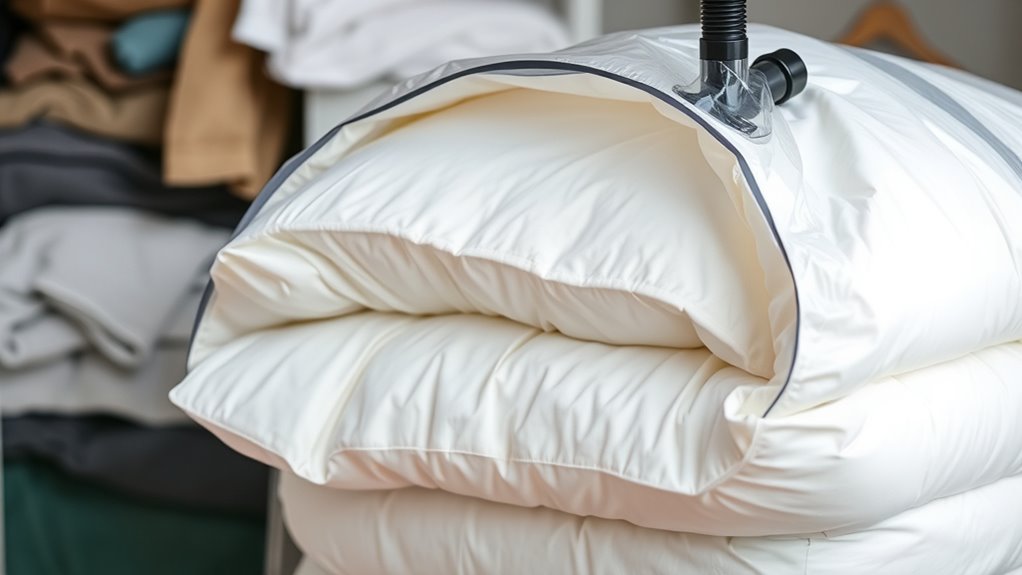

Vacuum-packed duvet storage is a smart solution for squeezing bedding into small closets. You simply place your duvet in a specialized bag, seal it, and use a vacuum to remove the air, drastically reducing its size. This method not only saves space but also protects your duvet from dust, pests, and moisture. It’s quick and easy to do, making it perfect for seasonal storage or tight spots—discover more tips to maximize your space.
Key Takeaways
- Vacuum-packing significantly reduces duvet volume, making it easier to fit into small closet spaces.
- It protects bedding from dust, moisture, and pests, maintaining hygiene during off-season storage.
- The process is quick and simple: seal the duvet in a bag, then use a vacuum to remove excess air.
- Compressed duvets are lightweight and manageable, ideal for under-bed or tight corner storage.
- Reversible and easy to open, vacuum-packed storage allows for quick access and reorganization when needed.

Have you ever struggled to find enough storage space for your duvet? If so, you’re not alone. Many people face this challenge, especially when living in small apartments or tight closets. Luckily, vacuum-packed duvet storage offers a practical solution. By compressing your bedding, you can free up valuable space and keep your duvet protected from dust, moisture, and pests. Using a vacuum seal benefits you in multiple ways, primarily by maximizing your storage space. When you seal your duvet with a vacuum, you considerably reduce its volume, making it easier to tuck away in tight spots or under beds. This process not only saves space but also helps prevent the duvet from getting wrinkled or damaged over time.
Vacuum seal benefits extend beyond just space saving. When you remove excess air from the storage bag, you slow down the growth of mold and bacteria, which thrive in humid environments. This keeps your duvet fresher and more hygienic for longer periods, reducing the need for frequent washing. Plus, vacuum-sealed bedding is less likely to attract pests like moths, which can cause damage. The compression process also makes it easier to organize your closet, as your duvet becomes a compact, manageable bundle. Instead of bulky, unruly bedding taking up half your closet, you can neatly store it in a small, lightweight package. This is especially helpful if you have limited storage options or want to maximize every inch of space.
Another advantage of vacuum-packed duvet storage is convenience. Most vacuum sealers are simple to use; you just place your duvet in the bag, seal it, and use the vacuum to suck out the air. The process is quick, often taking only a few minutes, and you’re left with a tightly compressed bundle that’s easy to handle and transport. When you need your duvet again, simply cut open the seal and uncompress it. The duvet will quickly regain its original shape and fluffiness, ready for use. This method is particularly useful for seasonal bedding, allowing you to store your duvet during warmer months without sacrificing space or comfort.

Cozy Essential Vacuum Storage Bags, 80% Compression Vacuum Seal Space Saver Plastic Packaging Bags for Clothes, Blankets, Pillow, Bedding, Comforters, Sealer Clothing Storage,4 XXL Jumbo
47.2" x 35" Extra Jumbo Capacity for Bulky Bedding: Easily stores king/queen sized comforters, quilts, duvets, blankets, pillows,…
As an affiliate, we earn on qualifying purchases.
As an affiliate, we earn on qualifying purchases.
Frequently Asked Questions
Does Vacuum Packing Damage Duvet Fabrics Over Time?
Vacuum packing can cause fabric degradation over time if you’re not careful, especially with delicate materials. It’s essential to check your duvet’s material compatibility before compressing it, as some fabrics may weaken or tear with prolonged compression. To prevent damage, avoid over-packing and give your duvet occasional airings. Properly stored, vacuum compression won’t harm your duvet fabrics considerably, but always follow manufacturer guidelines to protect your bedding’s longevity.
Can Vacuum Storage Be Used for All Duvet Types?
Don’t put all your eggs in one basket, and the same goes for duvet storage. Vacuum storage works for most duvet materials like cotton or microfiber, but avoid it for delicate fabrics like silk or wool, which may get damaged. While vacuum storage cost is reasonable, always check duvet material compatibility first. If unsure, opt for traditional storage to keep your bedding in top shape and avoid potential harm.
How Long Can a Duvet Stay Vacuum-Packed Without Damage?
You can typically keep a duvet vacuum-packed for up to six months without damage, but it’s crucial to take into account storage humidity and vacuum seal quality. High humidity can cause mold or mildew, while a poor seal might let in air and moisture, degrading the duvet. To prolong its condition, store it in a cool, dry place and ensure the vacuum seal remains intact. Regularly check the seal for any signs of deterioration.
Is Special Equipment Needed for Vacuum Packing Bedding?
You don’t need special equipment to vacuum pack bedding, but a good vacuum sealer makes it easier. You’ll also need sturdy storage bags designed for vacuum sealing. Simply place your duvet in the bag, seal it with the vacuum sealer, and remove the air. This method compresses the bedding, saving space and protecting it from moisture and pests. Make sure to follow the sealer’s instructions for the best results.
Are Vacuum-Packed Duvets Suitable for Long-Term Storage?
Vacuum-packed duvets are great for long-term storage, especially since they reduce space by up to 75%. Studies show that proper storage extends bedding lifespan considerably. However, for long-term use, it’s best to switch to breathable storage options, as they help prevent mold and moisture buildup. Vacuum packing is convenient, but ensuring your duvet stays dry and aired out is key to maintaining its freshness over time.
Cozy Essential Vacuum Storage Bags, 80% Compression Vacuum Seal Space Saver Plastic Packaging Bags for Clothes, Blankets, Pillow, Bedding, Comforters, Sealer Clothing Storage,4 XXL Jumbo
47.2" x 35" Extra Jumbo Capacity for Bulky Bedding: Easily stores king/queen sized comforters, quilts, duvets, blankets, pillows,…
As an affiliate, we earn on qualifying purchases.
As an affiliate, we earn on qualifying purchases.
Conclusion
By vacuum-packing your duvet, you’re fundamentally giving your bedding a tiny, powerful boost—like squeezing a balloon to make more room. It’s a clever trick to tame bulky comforters and keep your closet from bursting at the seams. With this simple method, your closet stays neat and organized, ready to breathe again when you need it. Think of it as giving your closet a breath of fresh air, making space for new memories and cozy nights ahead.
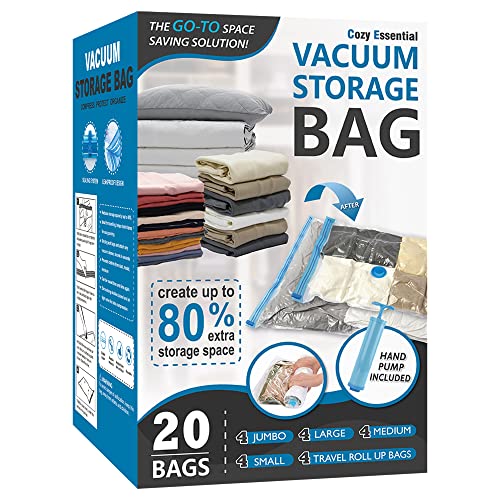
Cozy Essential Vacuum Storage Bags, 80% Compression Vacuum Seal Space Saver Plastic Packaging Bags for Clothes, Blankets, Pillow, Bedding, Comforters, Sealer Clothing Storage,20 Combo
Expand your storage by up to 80%: Our vacuum seal storage bags effortlessly compress clothes, blankets, pillows, and…
As an affiliate, we earn on qualifying purchases.
As an affiliate, we earn on qualifying purchases.
Cozy Essential Vacuum Storage Bags, 80% Compression Vacuum Seal Space Saver Plastic Packaging Bags for Clothes, Blankets, Pillow, Bedding, Comforters, Sealer Clothing Storage,4 XXL Jumbo
47.2" x 35" Extra Jumbo Capacity for Bulky Bedding: Easily stores king/queen sized comforters, quilts, duvets, blankets, pillows,…
As an affiliate, we earn on qualifying purchases.
As an affiliate, we earn on qualifying purchases.