TL;DR

Get home appliances delivered free with Prime
- Fast, free delivery on millions of items
- Prime Video, Amazon Music and more included
- Member-only deals all year
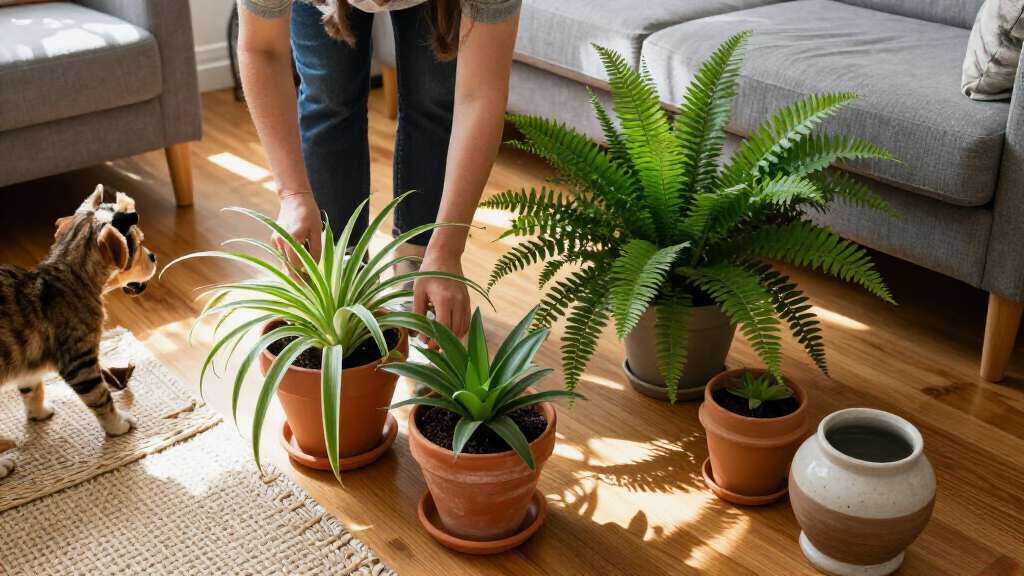
An Ideal Home report identifies spider plants, Kentia palms, calatheas, Chinese money plants, Boston ferns and polka dot plants as options described as safe for cats and dogs. Plant experts quoted in the report caution that even pet-safe plants may cause stomach upset if eaten in quantity, so owners should monitor pets that chew plants.
Ideal Home’s houseplant guide names six plants it describes as safe for cats and dogs, including spider plants, Kentia palms and Boston ferns. The report also cautions that pet-safe does not mean pet-proof: eating a large amount of any plant can cause physical irritation or an upset stomach.
The six plants in the guide are the spider plant, Kentia palm, calathea, Chinese money plant, Boston fern and polka dot plant. Ideal Home presents them as indoor greenery options for households with cats or dogs, while noting that pets may still chew or disturb them.
Jo Lambell, founder of Beards & Daisies, recommends spider plants as a hardy choice and says they are non-toxic. She adds that cats may chew them. Lambell also describes Kentia palms as suitable for pets and able to cope with lower light, and says Boston ferns are a safe choice that like humid conditions such as a bathroom.
GardeningExpress.co.uk plant expert Nick Wood identifies calatheas, Chinese money plants and polka dot plants as pet-friendly options. The report pairs those recommendations with care notes: calatheas suit northeast- or west-facing rooms, Chinese money plants prefer bright, indirect light and soil that dries slightly between waterings, and polka dot plants need bright, indirect light and lightly moist soil.
Greenery Options for Pet Owners
The list offers practical choices for homes with pets without suggesting owners must give up indoor plants. Its recommendations also vary in size, appearance and care needs: a spider plant is presented as easy to maintain and propagate, while a Kentia palm offers a larger statement plant and calatheas and polka dot plants bring patterned foliage.
The safety caveat matters as much as the list. A plant described as non-toxic is not necessarily harmless to eat in quantity. Owners should keep an eye on pets that repeatedly chew plants and respond if an animal appears unwell after eating one.
pet-safe houseplants for cats and dogs
As an affiliate, we earn on qualifying purchases.
As an affiliate, we earn on qualifying purchases.
How the Six Plants Were Selected
The source is a home-and-garden buying guide, not a veterinary study or a report of new safety testing. It draws on comments from Lambell and Wood to recommend plants and offer basic placement and care advice. The supplied material does not describe a testing method or cite a veterinary organisation for the safety claims.
The guide also distinguishes between plants’ general suitability and their needs at home. For example, it describes the Kentia palm as tolerant of lower light, while recommending bright, indirect light for Chinese money plants and polka dot plants. These are care suggestions, not guarantees that a plant will thrive in every room or remain untouched by pets.
“Even pet-safe plants can upset a tummy if they’re eaten in bulk, so it’s worth keeping an eye on any serial chewers.”
— Jo Lambell, founder of Beards & Daisies, as quoted by Ideal Home
As an affiliate, we earn on qualifying purchases.
Limits of the Safety Claims
The source material does not provide independent veterinary verification, details of toxicity testing or a risk assessment for different amounts eaten. Its descriptions of the plants as pet-friendly should therefore be understood as the guide’s recommendations, not a guarantee that every individual pet will have no reaction.
The report itself says that eating too much of even a pet-safe plant may cause irritation or stomach upset. It does not specify how much would be harmful, how risk varies by animal, or what symptoms owners should watch for. If a pet eats a plant and becomes unwell, the source offers no treatment guidance; readers should seek advice from a veterinarian.
As an affiliate, we earn on qualifying purchases.
Choosing Plants and Monitoring Pets
Owners can use the six suggestions as a starting point, matching each plant to the light and humidity in their home and checking care needs before buying. The guide also suggests keeping plants out of pets’ reach or using barriers to discourage digging, while stressing that placement does not replace supervision.
The source provides no announced follow-up research or further testing. For now, the practical next step for readers is to monitor pets around new plants and consult a veterinary professional if they are concerned about a pet eating any plant.
As an affiliate, we earn on qualifying purchases.
Key Questions
Which six houseplants does the guide recommend?
It lists the spider plant, Kentia palm, calathea, Chinese money plant, Boston fern and polka dot plant as pet-friendly options.
Does pet-friendly mean a plant is safe to eat?
No. The report cautions that eating a large amount of any plant can cause physical irritation or an upset stomach, even when the plant is described as pet-safe.
Which option is described as suitable for lower light?
Jo Lambell says the Kentia palm copes well in lower light. The guide also notes that calatheas can suit northeast- or west-facing rooms.
What should I do if my pet eats one of these plants?
The guide advises watching pets that chew plants but does not give treatment instructions or describe symptoms. If your pet appears unwell or you are worried, contact a veterinarian.
Source: rss
Cold & flu season Picks
humidifiers
As an affiliate, we earn on qualifying purchases.