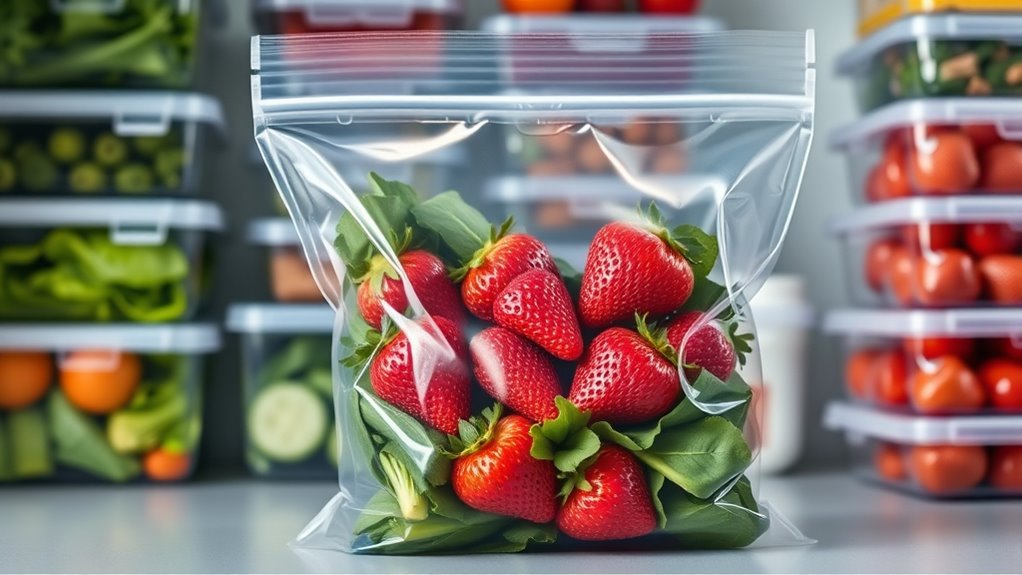
Vacuum-sealed food storage helps you keep your groceries fresh longer by removing air, which slows spoilage and prevents freezer burn. It also saves space by making packages compact and stackable, making organization easy. This method enhances marinating, infuses flavors quickly, and reduces food waste. Proper sealing and labeling guarantee your food stays safe and accessible. Keep exploring to discover more tips on maximizing freshness and space savings with vacuum sealing.
Key Takeaways
- Extends food freshness and shelf life by removing air and preventing spoilage.
- Compact, stackable packages optimize storage space in fridges and freezers.
- Prevents freezer burn and dehydration, maintaining food quality longer.
- Facilitates organized meal prep with portioned, easily identifiable packages.
- Slows microbial growth, reducing food waste and saving money.

Vacuum-sealed food storage is an effective way to extend the freshness and shelf life of your groceries. By removing air from packaging, you considerably slow down the process of spoilage, keeping your food safer and tastier for longer. One of the key benefits of vacuum sealing is that it enhances marinating techniques. When you vacuum-seal meat, vegetables, or even fruits with marinades, the flavors penetrate more deeply and quickly. The airtight environment ensures the marinade stays in close contact with the food, resulting in more flavorful dishes in less time. Plus, since the marinade is contained within the vacuum bag, you avoid messes and excess liquid in your refrigerator. Using specialized office supplies like vacuum sealer bags can also help you organize and keep track of your stored items more efficiently. Preventing spoilage is a major advantage of vacuum-sealed storage. Bacteria and mold need oxygen to grow, so by eliminating air, you drastically reduce the chances of microbial activity that causes food to spoil. This method is especially useful for perishable items like meats, cheeses, and seafood, which are prone to rapid deterioration. When you vacuum seal these items immediately after shopping or preparing, you preserve their quality and extend their usability, saving you money and reducing waste. It also helps maintain the texture and flavor of your food, as it prevents freezer burn and dehydration that often occur during traditional storage methods. In addition to spoilage prevention, vacuum sealing allows you to organize your pantry and freezer efficiently. You can portion out meals or ingredients into individual servings, making meal prep easier and more convenient. Since the packages are compact and stackable, you save space in your fridge or freezer, making room for other essentials. This space-saving benefit is especially valuable if you have a small kitchen or a busy lifestyle where quick access and easy storage are priorities. To get the most out of your vacuum-sealed food storage, make sure to follow proper marinating techniques—such as adding the marinade before sealing to maximize flavor infusion. Also, always label your packages with the date to keep track of freshness and prevent old items from lingering too long. Proper sealing and storage not only ensure freshness but also make it easier to meal plan and reduce waste. Overall, vacuum-sealed food storage is a smart investment that offers both extended shelf life and efficient use of space, all while enhancing your marinating techniques for tastier, fresher meals.
Frequently Asked Questions
How Long Can Vacuum-Sealed Food Be Stored Safely?
Vacuum-sealed food can last considerably longer than unsealed items, typically maintaining safety for 1 to 3 years for frozen meats and 1 to 2 years for vegetables. Your shelf life depends on the type of food and storage conditions, but always prioritize food safety. Check for signs of spoilage before consuming, and remember that freezing extends shelf life without compromising quality. Proper sealing and storage help keep your food fresh and safe longer.
Is Vacuum Sealing Suitable for All Types of Food?
Imagine a treasure chest where each item holds value; vacuum sealing suits many food types, but not all. You should consider storage limitations, as delicate produce or liquids might not seal well or could spoil. For sturdy meats and grains, it’s ideal. However, fragile fruits or powders may not benefit. So, always assess food type and storage needs to decide if vacuum sealing is your best option.
Can Vacuum-Sealed Food Be Frozen and Refrigerated Simultaneously?
Yes, you can freeze and refrigerate vacuum-sealed food simultaneously. This storage technique enhances food preservation by preventing freezer burn and maintaining freshness longer. When refrigerating, vacuum sealing keeps moisture in and air out, while freezing slows down spoilage. Just guarantee the vacuum seal remains intact and the food is properly labeled. This method allows you to optimize storage space and extend the quality of your food, whether in the fridge or freezer.
What Are the Best Vacuum Sealers for Beginners?
Did you know that over 60% of beginners find vacuum sealers easy to use? For starters, look for user-friendly models with simple controls. Budget options like the FoodSaver V2244 or Seal-a-Meal Manual are great choices—they’re affordable and reliable. These models offer good sealing power and are perfect for learning the basics without overspending. With the right starter model, you’ll quickly master vacuum sealing and keep your food fresh longer.
How Do I Prevent Freezer Burn With Vacuum-Sealed Foods?
To prevent freezer burn with vacuum-sealed foods, focus on moisture control and storage temperature. Guarantee all excess moisture is removed before sealing to avoid ice crystals. Keep your freezer at a consistent, cold temperature—around 0°F (-18°C)—to slow dehydration and ice formation. Properly vacuum-sealing and maintaining a stable freezer environment helps preserve food quality, keeps flavors intact, and extends storage life, effectively preventing freezer burn.
Conclusion
By vacuum-sealing your food, you not only extend freshness but also save valuable space in your fridge or freezer. Imagine sealing a large batch of berries; months later, they taste just as fresh as day one. For example, Sarah stored her summer harvest this way, and months later, she enjoyed vibrant, flavorful berries for smoothies and desserts. Embrace vacuum-sealing to keep your food fresher longer and maximize your storage efficiency effortlessly.