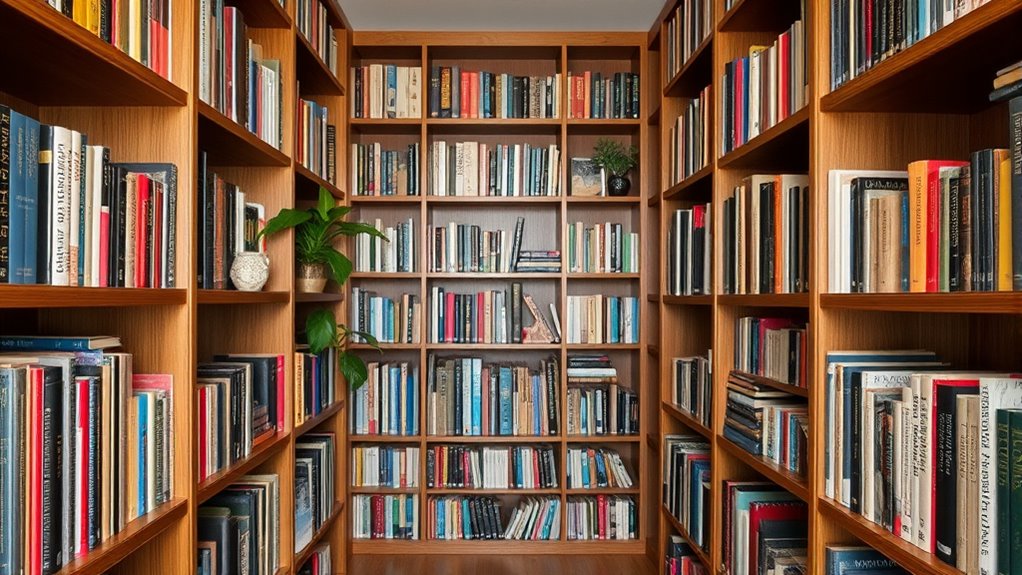

To organize your home library effectively, choose shelving systems that suit your space and collection size. Open and adjustable shelves offer easy access and customization, while wall-mounted units maximize space efficiency. Consider sturdy materials for durability and safety, especially for taller shelves. Incorporate a mix of open displays and closed cabinets for a balanced look. By selecting the right shelving style, you’ll create an inviting space. Keep exploring to discover how thoughtful organization can transform your library.
Key Takeaways
- Select adjustable or custom-built shelving to accommodate a growing collection and varied book sizes.
- Organize books by genre, author, or color to enhance visual appeal and ease of access.
- Incorporate open and closed storage options for display and clutter control.
- Secure tall or heavy shelves to the wall for safety and stability.
- Use dividers and labels to keep collections tidy and facilitate quick retrieval.

Have you ever felt overwhelmed by cluttered shelves and hard-to-find books in your home? If so, you’re not alone. A cluttered home library can make it difficult to enjoy your collection and can even discourage reading altogether. The key to transforming chaos into order lies in choosing the right shelving styles for your space and needs. Effective book storage isn’t just about fitting as many books as possible; it’s about creating a system that’s both functional and aesthetically pleasing.
A cluttered library hampers enjoyment—choose the right shelving to organize and showcase your collection beautifully.
When considering shelving styles, think about how you want to access and display your books. Open shelving is a popular choice for avid readers because it provides visibility and easy access. With open shelves, you can organize your books by genre, author, or color, turning your collection into a visual showcase. You can also incorporate adjustable shelves, which allow you to customize the height for different-sized books or decorative items. If space is limited, wall-mounted units can save floor space while still offering ample storage options.
For larger collections, consider vertical or floor-to-ceiling shelving. These styles maximize storage capacity and make a bold statement in a room. They’re especially useful if you have a diverse collection spanning many genres and formats. To prevent books from toppling over, use sturdy materials and secure tall shelves to the wall. If you prefer a more traditional look, freestanding bookcases with multiple shelves can be moved around and reconfigured as your collection grows.
Another popular shelving style is the built-in unit, which provides a seamless look and can be tailored to fit your space perfectly. Built-ins can be designed with open sections for display and closed cabinets for less attractive or less frequently used books. They make your library feel integrated with the rest of your home, turning storage into a stylish feature.
No matter which shelving style you choose, keep in mind that good book storage involves more than just stacking books. Leave some space between books to prevent damage and make it easier to pull out specific titles. Incorporating the right materials can also enhance durability and appearance. Incorporate features like adjustable shelves and dividers to help organize your collection efficiently. Regularly declutter and rotate your books to maintain a clean, accessible, and inspiring home library. With the right shelving styles and thoughtful organization, you’ll create a space where your books can be appreciated and easily enjoyed every day.
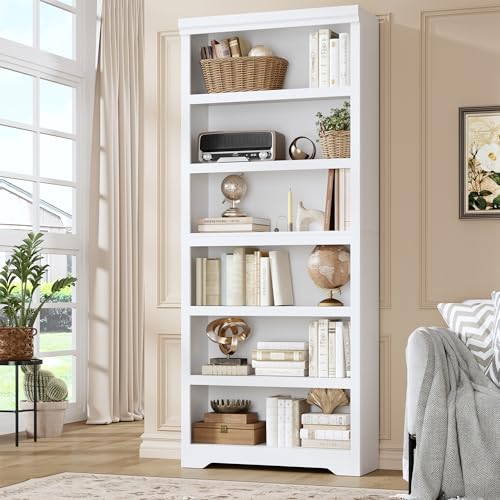
Garvee 6 Tier Bookshelf, 75" Tall Farmhouse Bookcase – 31.5" W with Adjustable Shelves, Open Display Storage Rack with Anti-Slip Design for Home Office, Balcony, Library, Study/Living Room, White
【Versatile Use】 This expansive bookcase offers five spacious tiers of open shelving, making it an ideal storage and…
As an affiliate, we earn on qualifying purchases.
As an affiliate, we earn on qualifying purchases.
Frequently Asked Questions
What Are the Best Materials for Durable Bookshelves?
You should choose bookshelves with sturdy materials like wood with high-quality wooden finishes for an elegant look and durability. Metal frame durability also makes these shelves strong and long-lasting, especially when supporting heavy books. Combining wood and metal offers both aesthetic appeal and resilience. Look for shelves with reinforced joints and solid construction to guarantee your collection stays well-organized and secure for years to come.
How Can I Maximize Space in a Small Home Library?
Think of your small library as a treasure chest; you want to fit every gem inside. Maximize space by using vertical stacking, which draws the eye upward and uses every inch efficiently. Incorporate modular shelving to adapt as your collection grows, creating sections that fit your needs. By combining these strategies, you’ll transform your compact space into a functional, beautiful haven where every book has its rightful place.
What Safety Features Should I Consider for Tall Shelving Units?
You should prioritize stability considerations by securing tall shelving units to the wall with safety hardware like brackets or straps. This prevents tipping if bumped or during earthquakes. Additionally, use anti-tip devices and ensure the shelves are properly anchored. Regularly check the hardware to keep everything secure, especially if you add or remove books. These safety features help protect you and your collection from accidents.
How Do I Organize a Library for Children and Teens?
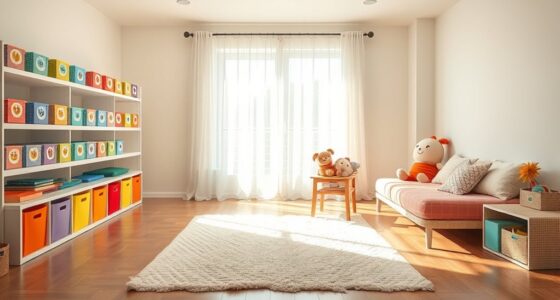
Did you know kids and teens are more likely to read when they have dedicated spaces? To organize your library, create child-friendly storage at lower levels for easy access and design teen reading zones with comfy seating and taller shelves. Use colorful bins and labels to keep books sorted by genre or age, making it inviting and functional. Engaging spaces encourage your young readers to explore and develop a lifelong love for books.
What Are Eco-Friendly Options for Bookshelf Materials?
You can choose eco-friendly bookshelf options made from sustainable wood or recycled materials. Look for shelves crafted from FSC-certified wood, which guarantees sustainable forestry practices. Recycled materials like reclaimed wood, repurposed metal, or recycled plastic also make great choices, reducing waste and environmental impact. These options are durable, stylish, and eco-conscious, helping you create a green home library while supporting sustainable practices.
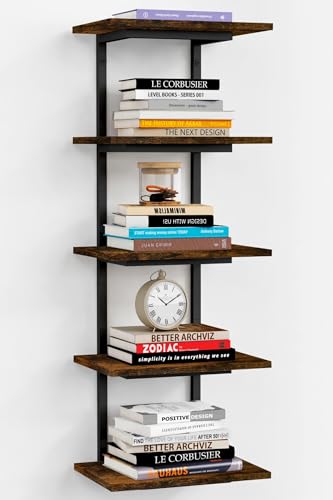
Harwaya 5 Tier Wall Bookshelf Unit for Bedroom Books, Large Floating Book Shelves Wall Mounted, Rustic Wood Lack Tiered Hanging Shelf for Kitchen Office Living Room Corner (Dark Brown)
[5 Tier Wall Shelf Unit] Lack wall shelf unit (Each Shelf Size: W 11.8" x D 8" )…
As an affiliate, we earn on qualifying purchases.
As an affiliate, we earn on qualifying purchases.
Conclusion
Designing a delightful, dynamic home library boosts your brain and beautifies your space. By breezily balancing bookshelves, sorting systems, and style, you create a cozy corner for curiosity and comfort. With thoughtful organization, your shelves become a sanctuary of stories, sparking inspiration and igniting imagination. So, seize the shelves, simplify the space, and celebrate your love for literature. Your perfect, personalized library awaits—where wonder and wisdom warmly whirl within your walls.

Giantex 7 Cubes Bookshelf, Free-Standing Wooden Bookcase, 4 Tier Home Display Shelf, Horizontal Storage Unit w/Anti-Toppling Devices, Open-Back Display Rack for Study, Living Room (1, Natural)
[Plenty of Storage Space]: With 7 compartments and a spacious top, our 4-tier bookshelf can hold your books,…
As an affiliate, we earn on qualifying purchases.
As an affiliate, we earn on qualifying purchases.

HOSTACK 71" Tall Triple Wide Bookshelf with Storage Drawers & Doors, White
Spacious & Versatile Storage Solution: Featuring 12 open compartments for display, 2 large drawers, and 2 cabinets (one…
As an affiliate, we earn on qualifying purchases.
As an affiliate, we earn on qualifying purchases.