
TL;DR

Get home appliances delivered free with Prime
- Fast, free delivery on millions of items
- Prime Video, Amazon Music and more included
- Member-only deals all year
A Hunker report highlights curtain wire as a slimmer alternative to conventional curtain rods, particularly for lightweight curtains and minimalist rooms. Its low-profile look can come with trade-offs: wire may sag, weight limits vary by product, and longer spans may need support fittings.
A Hunker report describes curtain wire as a slimmer alternative to conventional curtain rods, offering a less prominent way to hang lightweight window coverings. The option may appeal to people seeking a minimal look, but the report cautions that wire needs proper tension and may require added support, especially across longer spans or with heavier curtains.
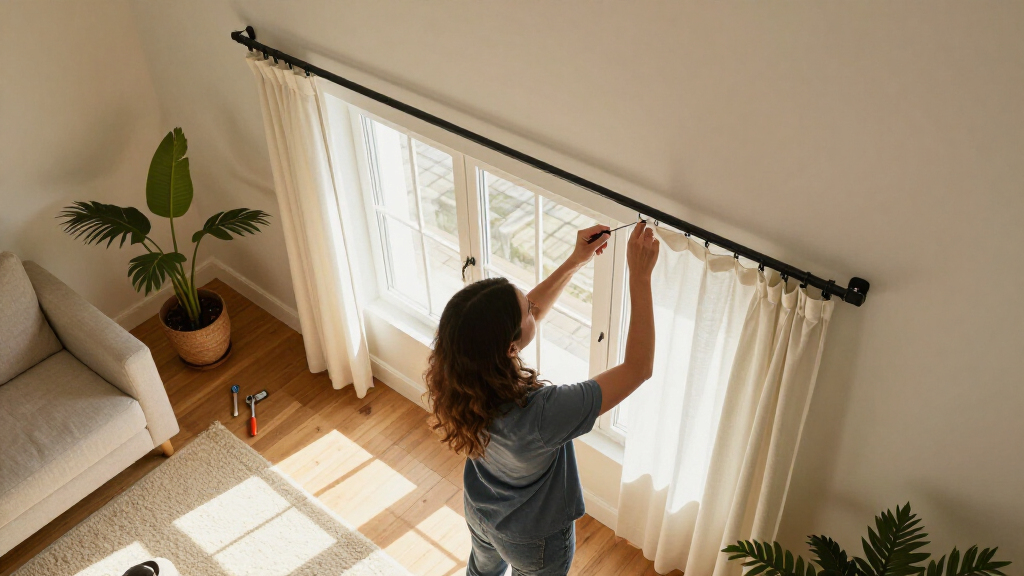
A curtain-wire system uses a thin, taut wire stretched between two mounting points. Compared with a traditional rod, its smaller profile and typically compact mounts can draw less attention to the hardware. The wire remains visible, but Hunker says the understated setup may suit small rooms, minimalist interiors or windows where the curtains themselves are meant to stand out.
One possible visual advantage is the absence of a center bracket on shorter installations. Rods may need a central support depending on their length and load; without one, a wire system can leave a less interrupted span. However, that does not mean every wire can safely cross a long window unsupported. Product instructions and the curtain’s weight determine whether extra fittings are needed.
Hunker cites two examples of relatively low-cost products: the UrbanRed Curtain Wire Rod Set, described as including just over 16 feet of wire and costing about $22 on Amazon, and IKEA’s DIGNITET wire, described as providing around 16 feet for $16 without mounting accessories. Prices and product availability can change, and the examples do not establish the cost of a complete installation in every home.
A Cleaner Look With Load Limits
For readers choosing window hardware, curtain wire presents a trade-off between visual simplicity and support requirements. Its narrow profile may be useful where a bulky rod would dominate a small room or compete with the fabric. A ceiling-mounted wire can also make floor-length curtains feel more continuous, while a separate wire for sheers can take up less visual space than a double-rod arrangement.
The design choice is less suitable when the curtains are heavy or the span is long. A wire that is not tensioned correctly can sag, and some systems call for intermediate supports. Those supports may be less conspicuous than rod brackets, but they remain part of the installation. Buyers should check each product’s stated capacity and fitting requirements rather than assume that all wire systems perform alike.
As an affiliate, we earn on qualifying purchases.
How Wire Systems Differ From Rods
Curtain rods remain a familiar way to hang window treatments, while wire systems use tension rather than a rigid bar to hold fabric between mounts. That flexibility helps create a low-profile appearance, but it also means tension and support matter to how the installation looks over time. The Hunker report notes that some wire products allow users to readjust tension, though this feature depends on the system.
The report gives IKEA’s DIGNITET as one product-specific example: it lists a maximum capacity of 11 pounds and recommends extra support fittings for lengths beyond 55 inches. Those figures apply to that product as described by the source, not to curtain wire systems generally. Hunker also says wire tends to work best with very lightweight coverings, such as sheer curtains.
“A curtain wire consists of a thin, taut wire that holds the curtain between two mounts.”
— Hunker report
As an affiliate, we earn on qualifying purchases.
Fit Depends on Fabric and Span
The source does not identify a universal weight limit, maximum unsupported length or lifespan for curtain wire. Those details vary by product, mounting conditions and curtain choice. It also does not provide independent testing comparing wire systems with rods, or establish how often a particular system needs retensioning.
Prices cited by Hunker are examples, not guaranteed current prices, and the IKEA product example excludes mounting accessories. Readers should confirm what hardware is included, verify the manufacturer’s instructions and account for the wall or ceiling surface before buying. Whether a wire will suit a particular window cannot be determined from the article’s general description alone.
tension curtain wire with support fittings
As an affiliate, we earn on qualifying purchases.
As an affiliate, we earn on qualifying purchases.
Check Specifications Before Installing
Anyone considering the switch should measure the span, weigh or estimate the curtain load, and compare those details with the chosen product’s stated limits. Check whether the kit includes mounts and tensioning parts, whether intermediate supports are required, and whether the system permits later adjustment. For a lightweight sheer on a short span, wire may provide the subtle look described in the report; heavier drapes may call for a sturdier option.
There is no announced product launch or policy change in the source material. The practical next step is a product-by-product decision: follow the manufacturer’s mounting guidance and reassess the wire if it begins to sag. The report provides no timeline or further update about the products it mentions.
As an affiliate, we earn on qualifying purchases.
Key Questions
What is curtain wire?
It is a thin wire held taut between mounts to support curtains, rather than a conventional rigid rod.
Are curtain wires suitable for heavy curtains?
Hunker says these systems generally work best with lightweight curtains, such as sheers. Check the specific product’s weight rating before using one with heavier fabric.
Can curtain wire sag?
Yes. The report says wire can sag over time, particularly if tension is inadequate. Some systems allow tension adjustments; features vary by product.
Do curtain wires need center supports?
Some installations need additional support, depending on the wire system, span and curtain weight. IKEA’s DIGNITET, for example, recommends extra fittings for lengths over 55 inches, according to the report.
How much do the examples in the report cost?
Hunker cites an UrbanRed set at about $22 and IKEA’s DIGNITET wire at $16, with the latter described as excluding mounting accessories. Prices and availability may change.
Source: rss
Fall Picks
fall essentials
As an affiliate, we earn on qualifying purchases.