To prepare for weather changes, start by decluttering your home and outdoor spaces. Sort through your wardrobe, removing items you haven’t worn in over a year, and store seasonal clothes in clear bins or vacuum-sealed bags. Tackle outdoor clutter by organizing garden tools and storing seasonal items away in labeled containers. Maintaining organized systems guarantees quick access and less stress during changing seasons. Keep going to discover even more tips for a smooth seasonal transition.
Key Takeaways
- Sort and remove clothing and gear that no longer suit the upcoming season.
- Store seasonal items in labeled, space-efficient containers for easy access.
- Clear outdoor storage to protect patio furniture and garden tools from weather damage.
- Regularly review and update storage systems to prevent clutter buildup.
- Keep frequently used seasonal items accessible for quick and stress-free transitions.
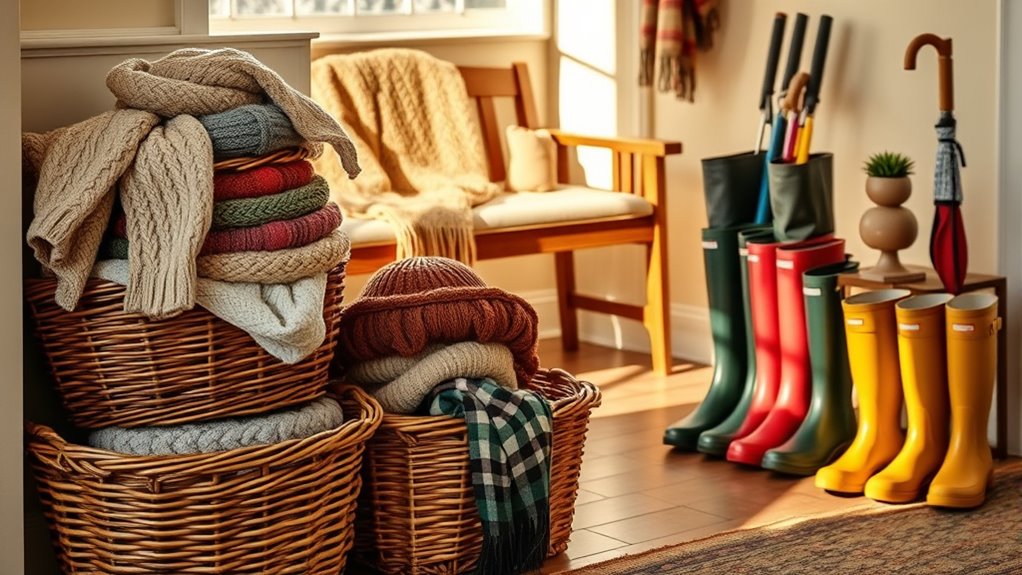
Have you ever noticed how clutter tends to accumulate more quickly during certain seasons? As weather shifts, you often find yourself juggling different clothing and gear, which can quickly lead to chaos if you’re not proactive. This is the perfect time to focus on clothing organization and outdoor storage to keep your space tidy and ready for the changes ahead. Seasonal decluttering isn’t just about tidiness; it’s about making your home functional and stress-free as temperatures fluctuate.
Start by sorting through your wardrobe. As you prepare for a new season, pull out the clothes that no longer fit, aren’t suited for the upcoming weather, or you simply haven’t worn in months. This is the moment to be honest with yourself—if you haven’t used a piece of clothing in over a year, chances are you don’t need it cluttering your closet now. Store seasonal clothing you won’t immediately use in clear bins or vacuum-sealed bags, placing them in your closet or a dedicated storage space. Proper clothing organization not only frees up room but also makes it easier to find what you need when the weather changes again.
Sort through your wardrobe and store seasonal clothes you no longer need or wear.
Next, turn your attention to outdoor storage. As you *shift* to colder or warmer months, outdoor gear like garden tools, patio furniture, or seasonal decorations can clutter your yard or garage. Take time to evaluate what you truly need and what can be stored away. Invest in sturdy outdoor storage containers or sheds to keep items protected from the elements, reducing clutter and preventing damage. Label everything clearly, so you can quickly access what you need without creating a mess. This not only declutters your outdoor space but also helps you avoid last-minute searches for seasonal items when the weather shifts unexpectedly. Additionally, understanding your storage options can help you select the most effective solutions for your needs.
Throughout the process, remember that decluttering is more than just discarding; it’s about creating a system that works for you. Keep frequently used seasonal clothes accessible, and neatly pack away the rest. For outdoor storage, organize items logically—group gardening tools together, outdoor cushions in one bin, holiday decorations in another. Doing so saves you time and energy later on and prevents clutter from seeping back in.
Frequently Asked Questions
How Do I Decide What to Keep or Discard During Seasonal Decluttering?
When deciding what to keep or discard, start with clothing selection and ask yourself if you’ve worn it in the past year. If not, consider donating or discarding. For items with sentimental value, evaluate whether they truly bring joy or serve a purpose. Be honest about what you need for upcoming weather changes, and don’t hold onto items just out of habit. This helps create space for what matters most.
What Are Eco-Friendly Ways to Dispose of Unwanted Items?
You can dispose of unwanted items eco-friendly by taking advantage of local recycling programs for plastics, metals, and paper. For items in good condition, donate them to donation centers or charities instead of throwing them away. This keeps useful items out of landfills and helps others in need. Be sure to research your community’s recycling options and find nearby donation centers to make your decluttering process environmentally responsible.
How Can I Organize Seasonal Storage to Maximize Space?
Did you know that proper organization can free up to 25% of your storage space? To maximize seasonal storage, invest in versatile storage solutions like stackable bins and vacuum-sealed bags. Use clear containers and apply labeling techniques so you can easily find items when needed. Group similar items together, such as winter clothes or holiday decorations, to keep everything accessible and tidy, making seasonal progressions smoother.
When Is the Best Time to Start Seasonal Decluttering?
You should start seasonal decluttering a few weeks before the weather changes. This allows you to assess your seasonal wardrobe and decide what to keep, donate, or store. By doing this early, you’re better prepared for weather shifts and can organize your seasonal storage effectively, maximizing space. Regularly updating your wardrobe and storage guarantees you’re always ready for weather changes and helps keep your home tidy.
How Do I Involve Family Members in the Decluttering Process?
Oh, sure, get the family to participate—what could possibly go wrong? To make it work, encourage shared decision making and assign roles based on everyone’s strengths. Make it fun by turning decluttering into a game or challenge. Speak openly about why their input matters, and you’ll find family participation naturally increases. Remember, when everyone feels involved, the process becomes less of a chore and more of a team effort.
Conclusion
As you clear out the clutter and make room for the new season, imagine your home transforming into a fresh, open garden ready to bloom. Each item you let go of is like shedding old leaves, making way for vibrant new growth. Embrace this season of change with open arms, and watch your space breathe easy, sparkling like sunlight on a clear autumn day. Your home’s renewal mirrors your own, ready to flourish with the changing weather.