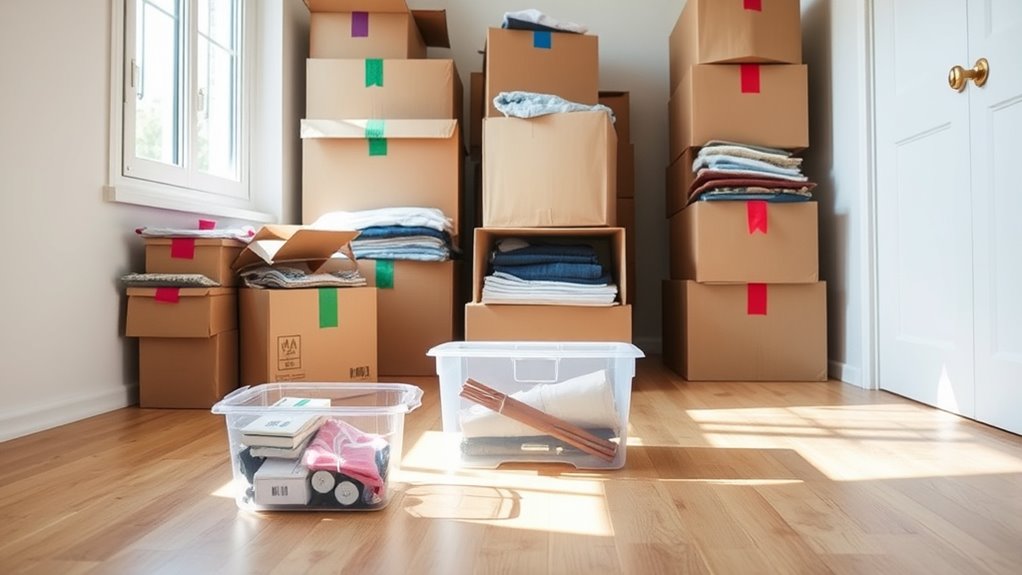

Decluttering before moving helps you cut costs and reduce stress by eliminating unnecessary items and minimizing your load. By sorting through your belongings, you can decide what to keep, donate, or discard, which makes packing easier and cheaper. Using organized storage solutions and labeling also speeds up unpacking in your new home. If you’d like to discover smarter ways to streamline your move and save more money, keep exploring these helpful tips.
Key Takeaways
- Sort belongings to identify items to keep, donate, or discard, reducing clutter and moving weight.
- Use storage solutions like labeled bins for sentimental items to keep them organized and protected.
- Discard unnecessary or broken items to lower moving costs and streamline your move.
- Plan storage arrangements in advance, categorizing belongings to simplify packing and unpacking.
- Decluttering creates a fresh start and improves efficiency during unpacking in your new home.

Are you preparing to move and wondering where to start? The first step is tackling the clutter. Moving can be overwhelming, but breaking it down into manageable tasks makes it easier. Begin by sorting through your belongings and identifying what you truly need. This is the perfect time to consider storage solutions that can help you organize and protect your items. For example, investing in stackable bins or vacuum-sealed bags can maximize space and keep things neat. When choosing what to keep, ask yourself if each item adds value to your new life or if it’s just taking up unnecessary space.
Start your move by decluttering—sort belongings and consider smart storage options to maximize space and organization.
Don’t forget to pay special attention to sentimental items. These are often the hardest to part with because they hold emotional significance. Take your time to evaluate each one carefully. While it’s tempting to keep everything that reminds you of loved ones or special moments, consider whether those items will be meaningful in your new home or if they might be better stored away temporarily. For sentimental items you decide to keep, find appropriate storage solutions to preserve their condition. Use sturdy boxes, acid-free tissue paper, or specialized containers to prevent damage over time. Label these boxes clearly so you can easily find your cherished items later without rummaging through everything.
As you go through your belongings, set aside items that are broken, outdated, or no longer useful. These are prime candidates for donation, recycling, or disposal. Clearing out these items not only lightens your load but also saves money on moving costs, since fewer belongings mean less weight and fewer boxes. Remember, every piece you decide to keep should serve a purpose or hold genuine sentimental value. If an item doesn’t fit either category, it’s best to let it go.
Planning your storage solutions early can also help you stay organized during the move. Consider creating designated areas for items you plan to keep, donate, or discard to streamline the process. This way, you won’t waste time searching for things or second-guessing what to do with them. Ultimately, decluttering before moving isn’t just about reducing your load; it’s about starting fresh and making your new space more manageable. By carefully selecting what to keep, investing in thoughtful storage solutions, especially for sentimental items, and getting rid of the rest, you’ll save money, reduce stress, and make your move much smoother.
Additionally, incorporating glycolic acid into your skincare routine can improve skin texture and appearance, making you feel more confident during your move and in your new space.
Frequently Asked Questions
How Do I Decide What to Donate Versus Sell?
You should decide what to donate versus sell based on donation criteria and selling strategies. Items in good condition with sentimental or practical value are great for selling, especially if they’re trendy or collectible. Don’t hesitate to donate things that are still usable but less desirable, like clothing or household items. Focus on value and demand; if something won’t sell easily, it’s better to donate and clear space efficiently.
What Is the Best Way to Organize Clutter for Donation?
Think of your clutter as a garden needing tidy rows. Use storage solutions like labeled bins and baskets to keep items sorted, making donation easier. Apply categorization strategies—group similar items, like kitchenware or clothes—so you can quickly see what’s ready to give away. Keep a dedicated donation box nearby, and regularly transfer items into it. This organized approach transforms chaos into clear pathways for donating, saving you time and effort.
How Can I Stay Motivated During a Long Decluttering Process?
To stay motivated during a long decluttering process, try setting small, achievable goals and celebrate each victory. Use motivational techniques like visualizing your clutter-free space or playing upbeat music. Remember, decluttering challenges are temporary, and focusing on the positive outcome keeps you driven. Break the task into manageable steps, and remind yourself of the benefits—less stress, more space, and a smoother move. Keep pushing forward!
Are There Eco-Friendly Disposal Options for Certain Items?
As you sort through your belongings, you might find a perfect match in eco-friendly disposal options. You can explore recycling options for plastics, metals, and electronics, ensuring they’re reused responsibly. For organic waste, consider participating in composting programs that turn leftovers into nutrient-rich soil. These choices not only reduce landfill waste but also align with your eco-conscious values, making your decluttering process more sustainable and fulfilling.
How Early Should I Start Decluttering Before Moving Day?
You should start decluttering at least 4 to 6 weeks before moving day. Using timing strategies helps prevent last-minute stress, giving you ample time to follow a decluttering checklist. Break down tasks into manageable chunks, tackling one room at a time. Early decluttering saves money by reducing moving costs and makes the process smoother, so you’re less overwhelmed when the big day arrives.
Conclusion
decluttering before moving might seem like a chore, but it’s the key to a smoother shift. While packing your unwanted items feels like a hassle now, it saves you time, money, and stress in the long run. Think of it as shedding baggage—you’ll arrive lighter, happier, and ready for a fresh start. So, embrace the purge; it’s the simple step that transforms moving from chaos to clarity, making your new beginning truly exciting.