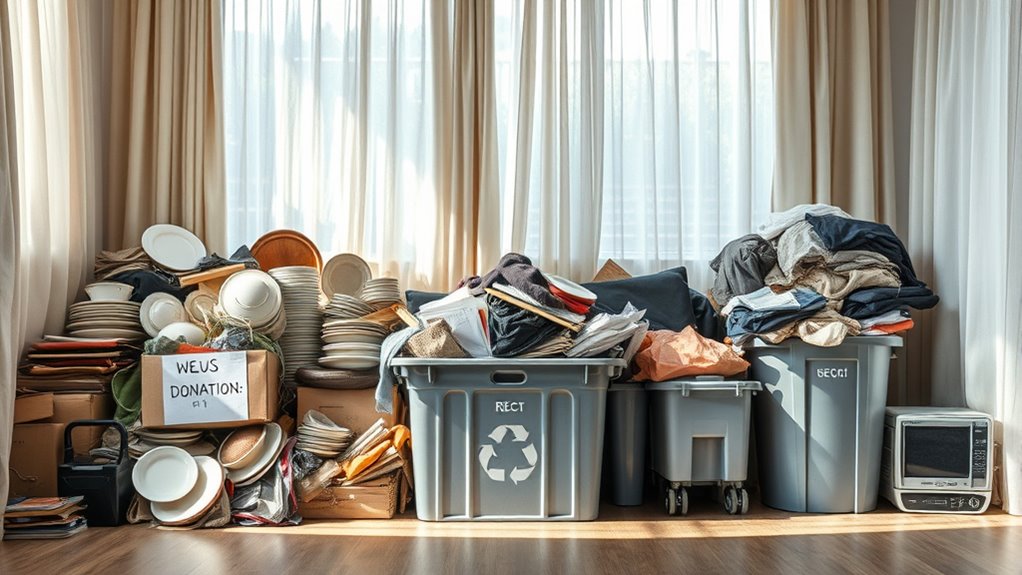

When deciding whether to sell, donate, or recycle your belongings, consider your goals. Selling can bring in extra cash and convert clutter into financial assets, but it takes effort. Donating helps others and creates space without immediate reward, while recycling is eco-friendly for unusable items. Think about your priorities—immediate profit, supporting community, or environmental impact—as each choice offers different benefits. Keep exploring to find the best approach for your situation.
Key Takeaways
- Selling items provides immediate cash but requires effort, while donating offers community support without direct financial return.
- Recycling is eco-friendly for unusable items, preventing waste, but doesn’t generate income like selling.
- Consider emotional attachment; photographing keepsakes helps balance sentimental value with decluttering goals.
- Strategic timing and proper disposal maximize resource efficiency and reduce unnecessary waste.
- Combining selling, donating, and recycling aligns with financial, emotional, and environmental objectives for effective decluttering.
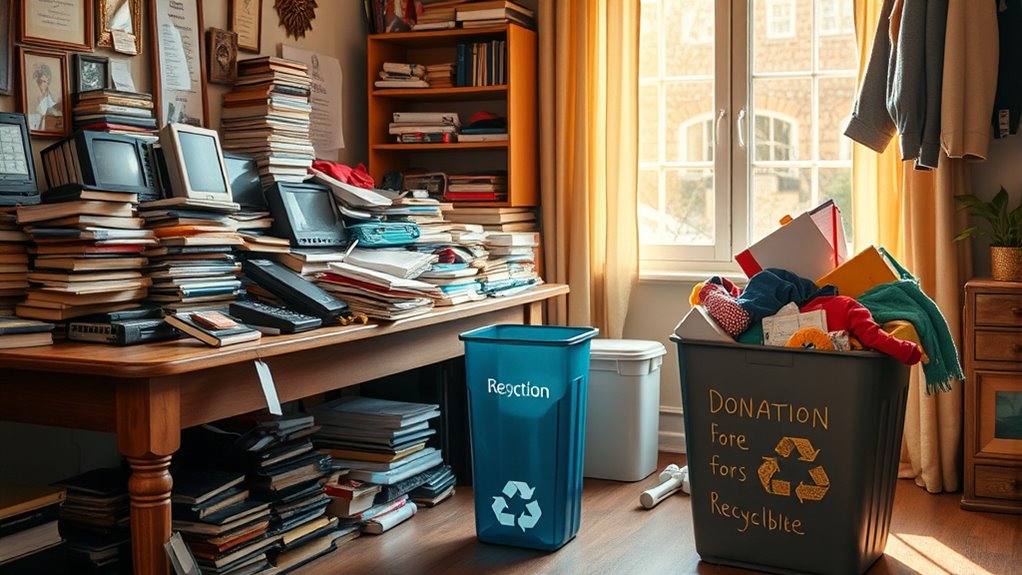
Decluttering your space isn’t just about tidying up—it can also boost your financial well-being. When you clear out clutter, you create room for smarter financial choices, and you might even access new sources of income. One way to do this is by considering your belongings through the lens of investment strategies. Instead of holding onto items because of emotional attachment, you can evaluate whether they hold financial value and if selling them could be a smart move. For example, that old designer bag or unused electronics might be worth more than you think. By selling items that no longer serve a purpose, you can generate extra cash, which you can then put toward savings, debt repayment, or investing. This approach turns clutter into a financial asset, helping you make strategic decisions about what to keep and what to let go.
However, it’s not always easy to detach emotionally from possessions. Many items carry sentimental value, making it difficult to part with them. Recognizing emotional attachment is vital; it’s natural to feel hesitant about selling or donating certain belongings. But understanding that your emotional well-being is also part of your financial health can help you make balanced choices. If a keepsake holds deep sentimental value, consider alternative ways to honor its memory, like taking a photo of it before donating or selling. This way, you preserve the memory without cluttering your space or tying yourself to items that no longer serve a practical purpose.
When deciding whether to sell, donate, or recycle, think about the long-term impact. Selling can bring immediate cash, but it requires effort and time. Donating is a generous option that benefits others and clears your space without the need for financial return. Recycling offers an eco-friendly solution for items that can’t be sold or donated, ensuring they’re disposed of responsibly. Each choice aligns with different goals—selling boosts your finances, donating supports your community, and recycling helps the environment. By consciously choosing how to handle your clutter, you optimize your resources and reduce waste.
Additionally, understanding the proper application timing and placement of skincare patches, such as pimple patches, can maximize their effectiveness and prevent unnecessary waste, which aligns with the idea of thoughtful resource management. Ultimately, decluttering is a strategic activity that influences your financial landscape. It’s about more than just a tidy home; it’s about making mindful decisions that serve your financial goals and emotional health. Whether you sell, donate, or recycle, you’re taking control of your belongings and, in turn, your financial future. This process helps you recognize the value in your possessions, whether monetary or sentimental, and encourages you to make choices that align with your overall investment strategies. When you approach decluttering with intention, you create space for growth—financially, emotionally, and physically.

Marketing in the Age of Google, Revised and Updated: Your Online Strategy IS Your Business Strategy
As an affiliate, we earn on qualifying purchases.
As an affiliate, we earn on qualifying purchases.
Frequently Asked Questions
How Do I Determine the True Value of Items to Sell?
To determine the true value of items to sell, start with appraisal techniques like researching comparable items online or consulting experts. Conduct market research by checking recent sales on platforms like eBay or Craigslist to see what buyers are willing to pay. Consider the item’s condition, rarity, and demand. This approach helps you set a realistic price, ensuring you get the best value while attracting potential buyers.
What Are the Best Platforms for Selling Secondhand Items?
Imagine your items sailing beyond your door to enthusiastic buyers—you’ll find the best platforms like eBay and online auction sites where collectors gather like treasure hunters. For more casual sells, try Facebook Marketplace or specialized apps. Thrift store shopping can also be a good way to sell or donate. These platforms connect you directly with buyers, making your secondhand sales smooth, profitable, and exciting, like uncovering hidden treasures.
How Can I Ensure Donations Are Tax-Deductible?
To guarantee your donations are tax-deductible, always get a donation receipt from the charity, which serves as tax documentation. Keep these receipts safely, as you’ll need them when filing your taxes. Make sure the charity is recognized as a tax-exempt organization by the IRS. Document the items donated and their estimated value, and consult a tax professional if you’re unsure about the deductibility or proper record-keeping.
Are There Environmental Benefits to Recycling Versus Donating?
Opting for recycling over donation offers notable environmental perks, especially in combatting plastic pollution and promoting resource conservation. Recycling transforms waste into new materials, reducing landfill accumulation and conserving natural resources. While donating benefits communities, it often keeps items in use longer, lessening environmental impact. By choosing recycling, you actively minimize ecological footprints, helping preserve ecosystems and reduce waste-related pollution, ultimately fostering a healthier planet for future generations.
How Do I Handle Sentimental Items I No Longer Need?
You should approach sentimental items with care, recognizing that emotional decision-making can make letting go difficult. To handle sentimental attachment, consider taking photos of items you no longer need, preserving memories without the clutter. You might also donate or gift items to someone who’ll appreciate them, helping you feel connected while reducing clutter. Remember, it’s okay to keep a few meaningful pieces, but prioritize your emotional well-being during the process.

Nicecho Receipt Coupon Organizer, 13 Pockets Small Accordion File Organizer with Labels for Receipt Cards, Bill Business, Coupons Storage, 10.2X 5.1 Inches
【HIGH CAPACITY】Product size is 10.2*5.1inch. 13 individual pockets, maximum 350 sheets of coupon. it is large enough to…
As an affiliate, we earn on qualifying purchases.
As an affiliate, we earn on qualifying purchases.
Conclusion
So, as you clear out your space, remember: selling might fatten your wallet, donating clears your conscience, and recycling saves the planet. Yet, in the end, the real irony is that the stuff you cling to for comfort often ends up costing you more—whether in clutter, cash, or guilt. Maybe the best move is to let go, embrace the unknown, and find freedom in simplicity. After all, sometimes less truly is more.

ANUANT Separate Recycling Waste Bin Bags for Kitchen Office in Home – Large Size Sturdy Double Handles 10 Gallon Recycle Garbage Sorting Bins
The Perfect Solution: Looking for a way of creating a functional and effective recycling system in your home…
As an affiliate, we earn on qualifying purchases.
As an affiliate, we earn on qualifying purchases.

Knack Organizing Your Home: Decluttering Solutions And Storage Ideas (Knack: Make It Easy)
As an affiliate, we earn on qualifying purchases.
As an affiliate, we earn on qualifying purchases.