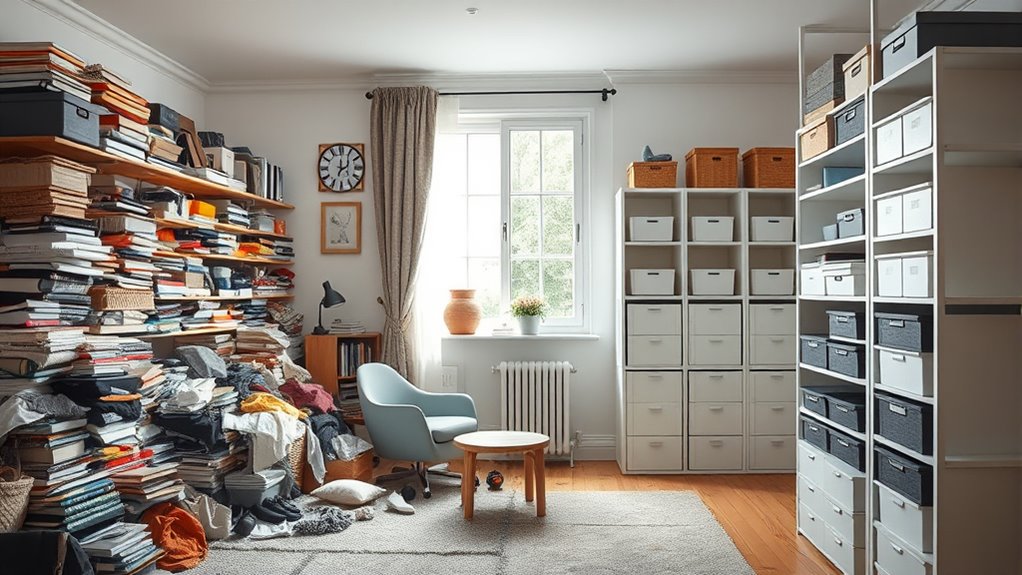

Choosing between decluttering by category or by room depends on your goals and space. If you want a clear overview of your belongings, organizing by category helps you see everything at once. If you prefer quick access and simplicity, room-based sorting makes sense. You could also combine both for best results. Keep looking into your options to find the method that suits your needs, and you’ll make the process smoother.
Key Takeaways
- Categorization offers a comprehensive view of items, aiding in decluttering and decision-making.
- Room-based organization simplifies access and prioritizes space efficiency for daily use.
- Combining both methods can maximize clarity, accessibility, and emotional comfort.
- Space limitations and personal goals influence whether categorization or room organization is more effective.
- Consider emotional attachment; room-based sorting can reduce overwhelm when dealing with sentimental items.
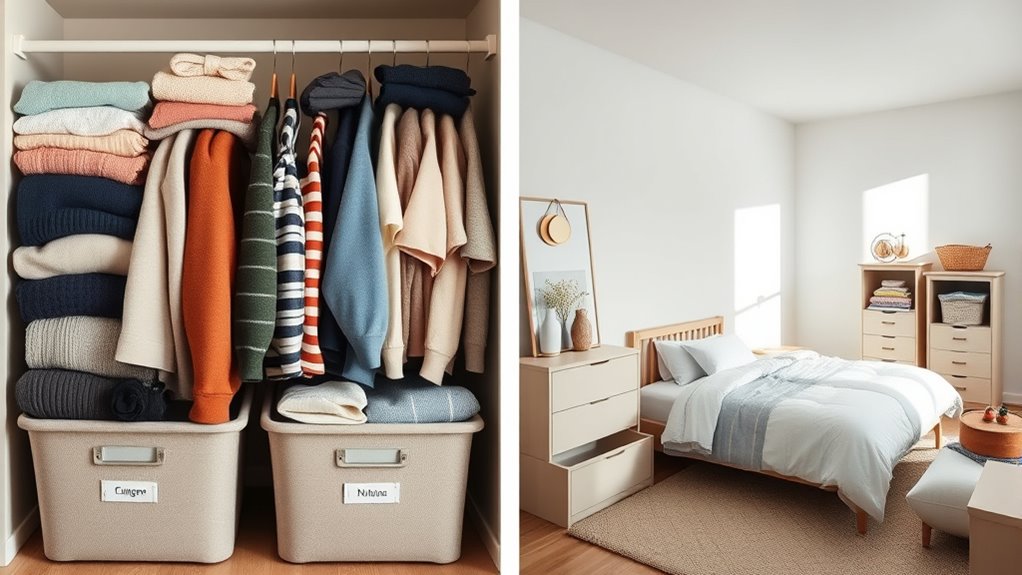
When tackling clutter, you might wonder whether organizing by room or by category is more effective. Organizing by category means grouping similar items together—think all books, clothes, or kitchen gadgets—regardless of where they’re stored. This method helps you see the full scope of each item type and makes it easier to identify duplicates or things you no longer need. On the other hand, organizing by room involves sorting items based on their location, like your bedroom, pantry, or garage. This approach can make it easier to find what you need quickly and keep each space functional.
Choosing between organizing by room or category depends on your goals and space, helping you find what you need efficiently.
When considering which method works best, think about your storage solutions and how they support your organizing process. If you have versatile storage options, such as bins, shelves, or labeled containers, categorizing can streamline the process. It allows you to assign specific storage solutions to each category, keeping everything neat and accessible. For example, all craft supplies stored in labeled bins make it simple to find what you need without digging through drawers. Conversely, if your space is limited or you prefer to keep things where they’re used, room-based organization might suit you better. You can designate specific zones for different activities, reducing clutter in other areas.
Another factor to consider is emotional attachment. Sorting by category can be more challenging if you’re emotionally attached to certain items. When you see all similar belongings together, you might be forced to confront the sentimental value of each piece, making it harder to let go. If you prefer to keep items because of their emotional significance, organizing by room could be less overwhelming. You can focus on the space where the item belongs, rather than sorting through large groups of similar objects. This method helps you manage your emotional attachment by keeping keepsakes close to where they’re most meaningful, rather than scattering them throughout your home.
Additionally, understanding caffeine content in your coffee can help you make mindful choices about your consumption during organizing sessions, ensuring you stay energized without overdoing it. Ultimately, the decision comes down to your personal preference and the specific clutter you face. Some people find that categorizing makes it easier to assess what they have and decide what to discard, especially when combined with effective storage solutions. Others prefer the comfort of room-based organization, which aligns with how they use their space daily. You might even find that a hybrid approach works best—categorizing certain items while keeping others in designated rooms. Whichever method you choose, the goal is to create a space that feels manageable and reflects your lifestyle.
Frequently Asked Questions
Which Method Saves More Time Overall?
Decluttering by category generally saves more time overall because you focus on similar items at once, streamlining storage solutions and making labeling techniques more efficient. Instead of switching rooms repeatedly, you gather all related items in one spot, reducing the time spent searching. This method minimizes back-and-forth, helping you organize faster and more effectively, especially when handling large or cluttered spaces, leading to quicker, lasting results.
How Do I Decide Which Approach Suits My Lifestyle?
You should choose the approach that fits your lifestyle by considering your sorting techniques and storage solutions. If you prefer quick, focused sessions, decluttering by room might work best. If you want a thorough view, categorizing items helps you see everything at once. Think about your schedule, space, and how you use items daily. Experiment with both methods to see which feels more efficient and less overwhelming for you.
Can Combining Both Methods Be Effective?
Imagine a spacious closet where you can see everything clearly, combining both methods works well. You can organize by category to tackle emotional attachments to items and then use room-based decluttering to optimize storage solutions. This blended approach helps you stay focused, prevents overwhelm, and creates a balanced environment. By integrating both, you make smarter decisions, efficiently clearing clutter while honoring your emotional ties.
What Are Common Mistakes to Avoid?
You should avoid rushing through your decluttering process, as it often leads to overlooked items and poor decisions. Be mindful of emotional attachment, which can make it harder to let go of certain belongings. Also, don’t forget to choose effective storage solutions that suit your space and needs. Stay patient, and don’t hesitate to revisit items later if you’re unsure, helping you make confident, clutter-free choices.
How Do I Maintain Organization After Decluttering?
To maintain organization after decluttering, you should establish simple daily routines, like putting things back in their designated storage solutions. Regularly reassess your space and tidy up clutter before it accumulates. Use effective storage solutions to keep items accessible but tidy. Making these habits part of your daily routine helps prevent clutter from building up again, ensuring your space stays organized and functional over time.
Conclusion
When choosing between decluttering by category or room, consider which method suits your style best. Remarkably, a recent survey shows that 78% of people find decluttering by category more effective for maintaining long-term organization. By focusing on categories, you can see the bigger picture and avoid re-cluttering in other areas. Ultimately, pick the approach that keeps you motivated and consistent—your clutter-free space will thank you!