To prevent future clutter, adopt the one-in, one-out rule by removing an item each time you bring a new one home. This habit keeps your space manageable and stops clutter from piling up. Designate spots for belongings and regularly review what you own, donating or recycling extras. Practicing this simple system reduces stress and maintains an organized environment. If you want to discover more practical tips, you’ll find plenty to explore below.

Get home appliances delivered free with Prime
- Fast, free delivery on millions of items
- Prime Video, Amazon Music and more included
- Member-only deals all year
Key Takeaways
- Implement the rule consistently when bringing new items to maintain balance and prevent accumulation.
- Replace existing belongings before acquiring new ones to control clutter proactively.
- Designate specific storage spots to make it easier to remove or add items regularly.
- Schedule routine decluttering to evaluate necessity and uphold the one-in, one-out practice.
- Practice mindful consumption to reduce unnecessary purchases and support long-term clutter prevention.
Have you ever felt overwhelmed by clutter or unused items piling up in your space? It’s a common experience, and it can make your environment feel chaotic and stressful. The key to maintaining a tidy space is finding effective storage solutions and mastering decluttering techniques. One powerful approach is the one-in, one-out rule. This simple principle helps you control clutter before it starts, making your space more manageable and your environment more peaceful.
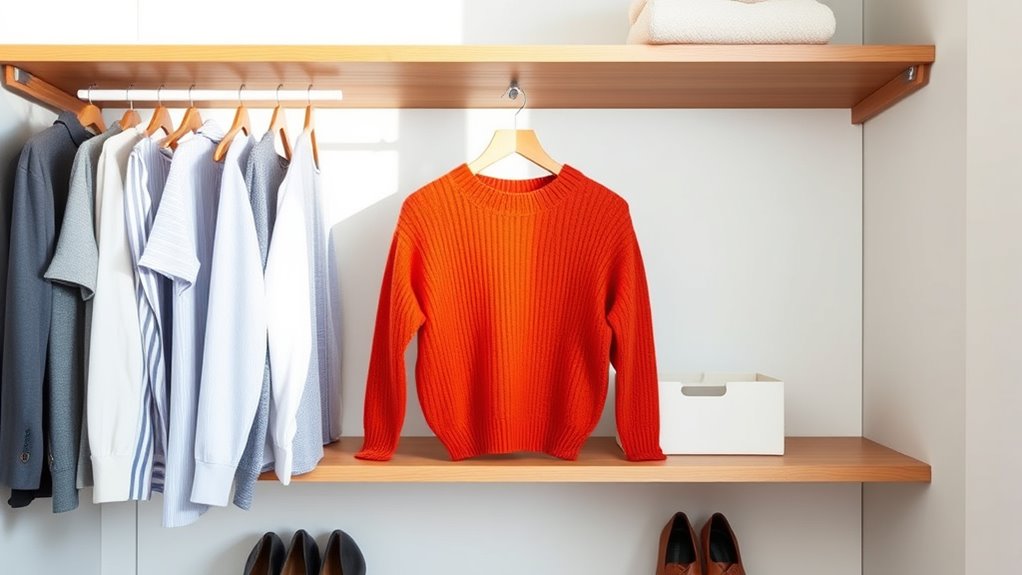
The first step is understanding how the one-in, one-out rule works. Every time you bring a new item into your home—whether it’s clothing, gadgets, or decorative pieces—you commit to removing an equivalent item. This prevents accumulation and keeps your space from becoming overcrowded. To make this work seamlessly, you need practical storage solutions. Find designated spots for your belongings, so you know exactly where everything belongs. Use storage bins, shelves, or organizers to keep things tidy and accessible. When each item has a specific place, it’s easier to put things away and resist the temptation to keep extras just “in case.”
Find designated spots for belongings to keep your space organized and clutter-free.
Implementing this rule requires discipline, but it’s easier when you combine it with effective decluttering techniques. Regularly review your possessions—set aside time weekly or monthly to evaluate what you truly need or love. Ask yourself if each item serves a purpose or brings you joy. If not, it’s time to let it go. Donating or recycling unused items clears space and allows others to benefit from your discarded belongings. Over time, these decluttering sessions become less intimidating because you’re consistently staying ahead of clutter buildup.
To make the one-in, one-out rule stick, integrate it into your daily routine. Before buying something new, consider whether you can replace an existing item. For example, if you purchase a new shirt, donate or discard an old one. This habit keeps your wardrobe or other storage areas from overflowing. The same applies to digital files, kitchen tools, or books—anything that tends to pile up. Maintaining this discipline ensures that your space stays organized without requiring major overhaul sessions.
Ultimately, this rule fosters mindful consumption. By carefully considering each new item, you develop a more intentional approach to your possessions. It’s not about deprivation but about making smarter choices and maintaining a clutter-free environment. When you combine the one-in, one-out rule with effective storage solutions and decluttering techniques, you create a sustainable system that keeps clutter at bay. This proactive approach saves you time, reduces stress, and transforms your space into a calm, functional haven where everything has its place. Additionally, understanding how wave and wind influence your environment can help you optimize storage and decluttering strategies to adapt to your space’s unique conditions.
As an affiliate, we earn on qualifying purchases.
Frequently Asked Questions
How Does the Rule Apply to Digital Clutter?
You apply the one-in-one-out rule to digital clutter by regularly managing your files and digital organization. When you add new documents or apps, delete or archive old ones to keep your digital space streamlined. This habit prevents clutter from building up, makes file management easier, and guarantees your digital workspace stays efficient. Staying disciplined with this rule helps you maintain a clean, organized digital environment effortlessly.
Can the Rule Work for Shared Household Spaces?
Yes, the rule can work in shared spaces, like a well-oiled machine. You and your housemates share responsibilities and household coordination, making it essential to agree on a one-in-one-out policy. When someone brings in a new item, an old one goes out. This teamwork prevents clutter from piling up, ensuring everyone feels comfortable and organized. Clear communication keeps the process smooth, turning your shared space into a clutter-free haven.
What Are Common Challenges in Implementing This Rule?
You might face challenges like inconsistent organizational habits among household members, making it hard to stick to the rule. Storage solutions can also be limited or ineffective, leading to resistance. To succeed, encourage open communication and teamwork, ensuring everyone understands the importance of maintaining order. Regularly reviewing and adjusting your storage solutions helps keep clutter at bay, making the rule easier for everyone to follow consistently.
How Often Should I Reassess My Belongings?
You should reassess your belongings every three to six months to maintain storage optimization and guarantee your space stays clutter-free. Regularly evaluating your items allows you to identify what’s still useful, what’s outdated, or what no longer serves a purpose. Use decluttering techniques like sorting and categorizing to streamline this process. Consistent reassessment helps you stay mindful of your possessions, making it easier to adhere to the one-in, one-out rule and prevent clutter buildup.
Is This Rule Suitable for Sentimental Items?
The one-in-one-out rule isn’t always suitable for sentimental items because emotional attachments can make it hard to part with them. You might find it helpful to set specific limits on sentimental clutter, like choosing a special box or display space. When you add a new item, consider whether it truly holds significant meaning. This way, you honor your feelings while preventing clutter from taking over.
As an affiliate, we earn on qualifying purchases.
Conclusion
By embracing the one-in-one-out rule, you’re tending to your space like tending a garden. Each item you let go is a seed, making room for new growth and clarity. As you remove clutter, imagine clearing a path through dense forest—making way for sunlight and fresh air. Keep this balance, and your space will flourish, symbolizing a mind unburdened and a life open to new opportunities. Your home becomes a sanctuary of simplicity and peace.
As an affiliate, we earn on qualifying purchases.
As an affiliate, we earn on qualifying purchases.
Halloween Picks
halloween
As an affiliate, we earn on qualifying purchases.