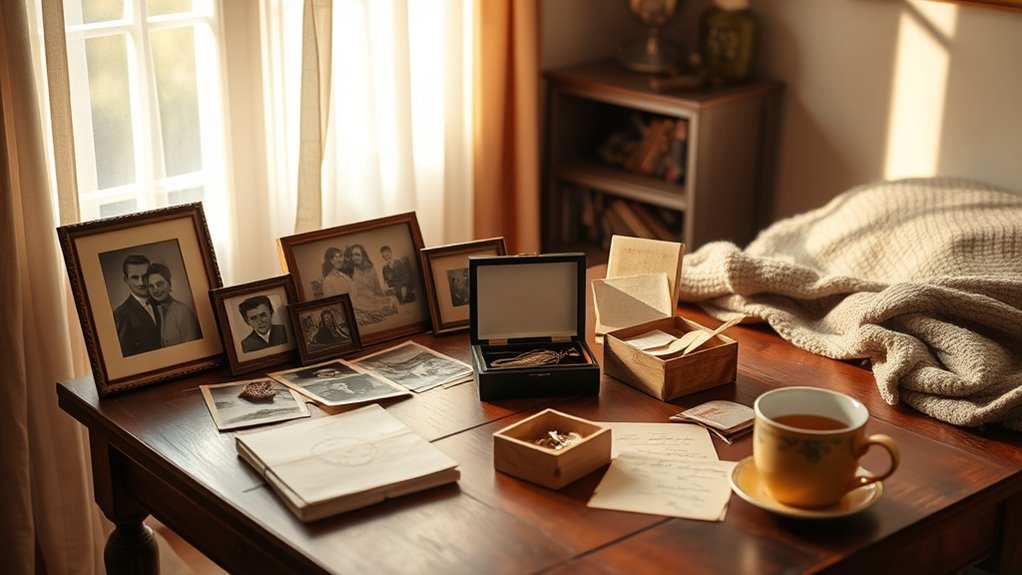

Dealing with sentimental items without guilt involves remembering that not every keepsake needs to be kept forever. Focus on what truly sparks joy or holds deep meaning, and consider taking photos or creating a digital archive to preserve memories without clutter. Set up designated spaces for special items and be gentle with yourself throughout the process. If you want more tips on letting go compassionately, you’ll find helpful strategies to support your journey.
Key Takeaways
- Remember that letting go doesn’t erase the memories or significance of the items.
- Focus on preserving the essence of memories through photos or digital archives instead of physical objects.
- Establish designated spaces for sentimental items to honor them without cluttering your daily environment.
- Practice self-compassion by acknowledging your feelings and understanding that quality over quantity is more meaningful.
- Recognize that holding onto everything isn’t necessary; creating space allows for new experiences and personal growth.

Handling sentimental items can be one of the most emotionally challenging parts of decluttering or reorganizing your space. These items carry the weight of memories, relationships, and moments that feel deeply personal. It’s natural to want to hold onto everything, but that can lead to clutter and overwhelm. To navigate this, you need to focus on minimizing attachments without sacrificing the memories you want to preserve. Remember, the goal isn’t to erase your past but to find a balance that respects your emotions while creating a functional space.
Start by recognizing that not every item needs to be kept forever. Instead of trying to preserve every memento, think about what truly holds significance. Ask yourself if an item sparks joy or if it represents a meaningful chapter in your life. This process of intentional selection helps you minimize attachments and makes it easier to part with things that no longer serve a purpose. It’s okay to let go of things that don’t contribute to your overall sense of well-being; your memories don’t have to be stored in every physical object.
Not every keepsake needs to be kept; choose what truly holds significance and sparks joy.
To aid in memory preservation, consider alternative ways to keep your important memories alive. Photograph sentimental items or create a digital archive. This way, you can keep the essence of what’s meaningful without the physical clutter. When you’re faced with a box of keepsakes, set aside some time to go through them thoughtfully. Keep only what truly resonates with you and feels worth treasuring. Remember, the value isn’t in the quantity but in what genuinely connects you to your past.
It’s also helpful to establish designated spaces for sentimental items. For example, create a memory box for special keepsakes or display a few meaningful objects in your home. This approach allows you to honor your memories without letting them take over every surface. If you’re struggling with guilt over letting go, remind yourself that you’re making space for new experiences and growth. Holding onto everything isn’t necessary to keep your memories alive; instead, choose quality over quantity.
Additionally, creating organized storage solutions can help you better manage sentimental items and keep your space clutter-free. Lastly, be kind to yourself throughout this process. Minimizing attachments and preserving memories aren’t about perfection; they’re about creating a space that reflects your values and feelings. Guilt can often cloud your judgment, but by focusing on what truly matters, you’ll find it easier to declutter with compassion and clarity. Your memories are safe within you, whether or not every physical item remains. Letting go doesn’t mean losing those moments; it means making room for your future while honoring your past.
Frequently Asked Questions
How Do I Start the Decluttering Process Without Feeling Overwhelmed?
Start small to ease decision paralysis and avoid feeling overwhelmed. Pick one area or a few items with minimal emotional attachment, like a drawer or a shelf. As you work through these, you’ll build confidence and reduce emotional attachment. Remember, decluttering is a process, not a one-time event. Take breaks, celebrate small wins, and remind yourself that letting go doesn’t mean losing memories—it’s about making space for what truly matters.
What Are Creative Ways to Repurpose Sentimental Items?
Imagine turning cherished old jewelry into a unique piece of art or using fabric from meaningful garments to create a cozy quilt. For memory preservation, frame handwritten letters or photos in a creative display. Creative repurposing transforms sentimental items into functional or decorative pieces, giving them new life and meaning. You can also make personalized keepsake boxes or ornaments, allowing you to honor your memories while decluttering.
How Can I Involve Family Members in Decision-Making?
You can involve family members in decision-making by encouraging open conversations where everyone’s input is valued. Seek their opinions on sentimental items and discuss shared memories to foster understanding. Use shared decision-making to prioritize what to keep, donate, or repurpose. This collaborative approach helps lessen guilt, as everyone feels involved and respected, making the process more meaningful and less overwhelming.
When Is It Time to Let Go of a Sentimental Item?
You should let go of a sentimental item when it no longer serves as meaningful memory preservation or when emotional attachment starts to hinder your well-being. If keeping the item causes guilt or prevents you from moving forward, it’s time to release it. Trust your instincts and focus on preserving the memories in ways that feel healthy and fulfilling, rather than holding onto objects that no longer bring joy or purpose.
How Do I Handle Guilt Associated With Removing Sentimental Possessions?
Guilt can feel like a heavy backpack, but you can lighten it by recognizing that emotional attachment isn’t a trap. To handle guilt management, remind yourself that letting go is an act of self-care, honoring your memories without keeping every item. Focus on the meaning behind the items, not their physical presence. Trust that you’re making space for new memories while respecting your feelings.
Conclusion
As you let go of sentimental items, remember it’s not about forgetting but gently making space for new memories to bloom. Embrace the quiet beauty in releasing, knowing that your heart keeps what truly matters deep within. Sometimes, parting with things isn’t loss but a tender act of honoring your journey, allowing your spirit to flourish unburdened. Trust that in releasing, you create room for your most meaningful stories to continue unfolding gracefully.