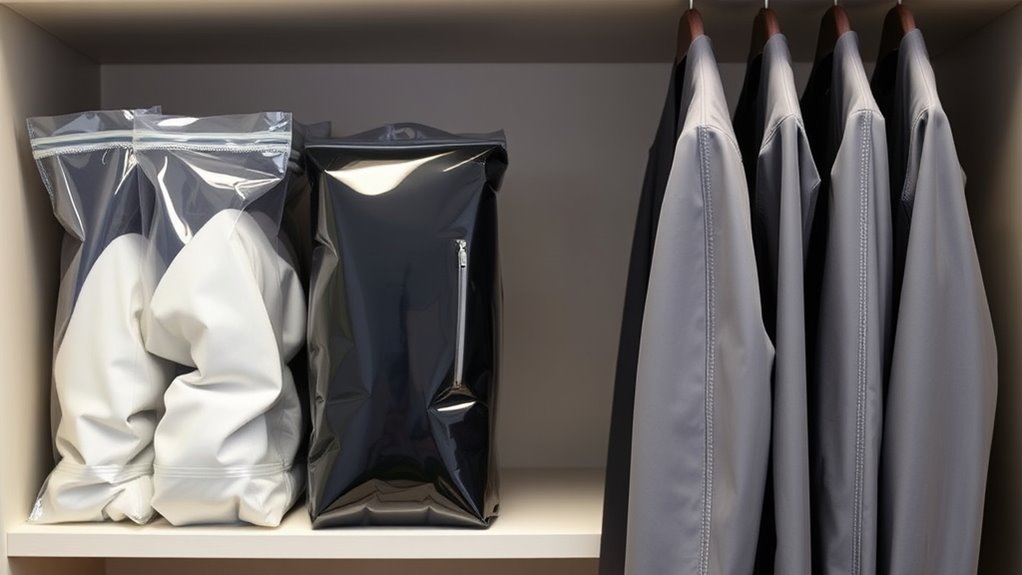

For off-season clothing storage, vacuum bags save space by compressing bulky items, making them ideal for limited areas, but they may cause wrinkles or damage delicate fabrics. Garment bags keep clothes accessible and protected from dust, moisture, and pests while maintaining their shape, especially for delicate or formal garments. Choosing the right option depends on your needs—space savings or fabric protection. Continue to explore how each method can best serve your storage goals.

Get home appliances delivered free with Prime
- Fast, free delivery on millions of items
- Prime Video, Amazon Music and more included
- Member-only deals all year
Key Takeaways
- Vacuum bags save space by compressing bulky, seasonal clothing, ideal for short-term storage.
- Garment bags protect delicate and high-quality garments from dust, moisture, and pests during off-season storage.
- Vacuum bags are less suitable for fragile fabrics, which benefit from the gentler protection of garment bags.
- Combining both methods offers space efficiency with fabric protection for long-term storage.
- Choose vacuum bags for bulk seasonal storage and garment bags for preserving delicate or expensive clothing.
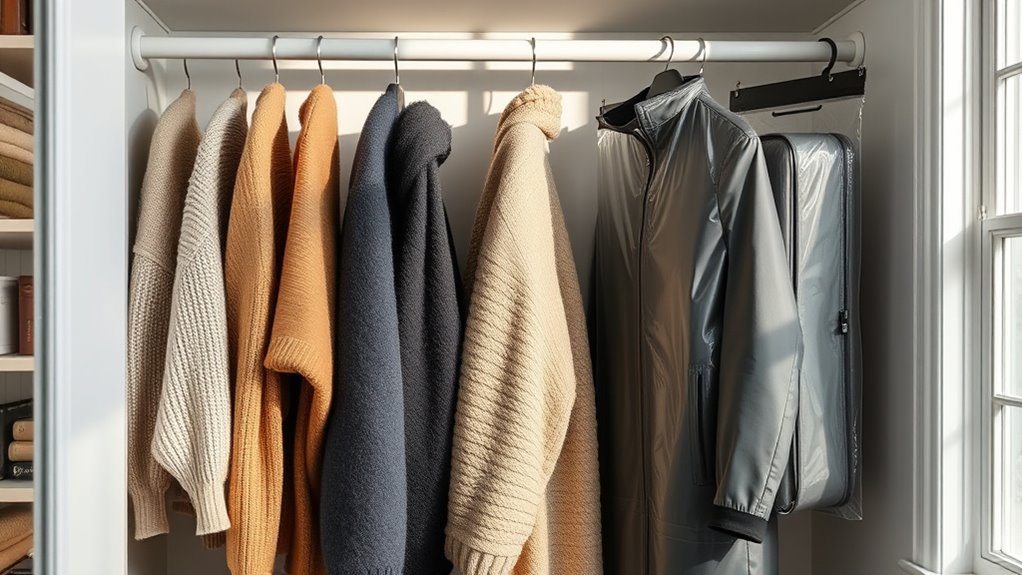
When the seasons change and it’s time to put away your summer or winter wardrobe, proper off-season clothing storage becomes essential. You want to protect your clothes from dust, pests, and moisture while maximizing space in your closet or storage area. Two popular options for storing out-of-season garments are vacuum bags and garment bags, each offering distinct benefits for fabric protection and space efficiency.
Vacuum bags are an excellent choice if you’re aiming to save space. By removing air, these bags compress your clothes into a much smaller volume, making them ideal for fitting more into limited storage areas. They’re especially useful for bulky items like sweaters, coats, or thick blankets, which tend to take up a lot of room. Plus, vacuum bags help protect fabrics from dust, dirt, and moisture, which could otherwise damage your clothing over time. The airtight seal also keeps pests at bay, giving you peace of mind. However, vacuum bags aren’t always suitable for delicate or easily wrinkled fabrics, as the compression can sometimes cause creasing or distortion. For those items, you might prefer a gentler storage method.
Vacuum bags save space but may cause wrinkles on delicate fabrics.
Garment bags, on the other hand, prioritize fabric protection and ease of access. Made of breathable or waterproof materials, they keep your clothing well-ventilated and shielded from dirt, moths, and environmental pollutants. Garment bags are especially handy for maintaining the shape and condition of delicate or structured items, like formal wear or suits. They also allow you to hang your clothes, which helps prevent wrinkles and creases that can occur with vacuum-sealed storage. While garment bags don’t offer the same space-saving benefits as vacuum bags, they excel in providing gentle, long-term fabric protection. Their transparent design also makes it easy to identify stored clothing without rummaging through boxes or piles. Additionally, selecting the appropriate storage method based on fabric type and duration can greatly enhance your clothing’s lifespan.
Choosing between vacuum bags and garment bags depends on your priorities. If space efficiency is your main goal and you’re storing bulkier items for a short period, vacuum bags are likely your best bet. But if you’re storing high-quality, delicate, or expensive garments for longer periods, garment bags offer superior fabric protection and easier access. In some cases, combining both methods works well: vacuum bags for seasonal bulk and garment bags for items you want to keep pristine and accessible. Ultimately, the right choice helps you keep your off-season clothes in excellent condition while making the most of your storage space.
vacuum storage bags for clothing
As an affiliate, we earn on qualifying purchases.
As an affiliate, we earn on qualifying purchases.
Frequently Asked Questions
Are Vacuum Bags Suitable for Storing Delicate Fabrics?
Vacuum bags aren’t the best choice for storing delicate fabrics because they can cause fabric compression and damage softer materials. You should consider material compatibility before using them, as delicate fabrics like silk or lace may tear or lose shape. Instead, opt for breathable garment bags that protect your delicate items without compression, keeping them safe and in good condition for future wear.
Can Garment Bags Prevent Moth Damage Effectively?
An ounce of prevention is worth a pound of cure, so yes, garment bags can effectively prevent moth damage when used correctly. They limit fabric breathability, creating a barrier that moths can’t penetrate. For added protection, include moth repellents inside the bags. Regularly inspecting your stored clothing ensures moths don’t find a way in, keeping your delicate fabrics safe during off-season storage.
Which Storage Method Is More Eco-Friendly Long-Term?
You’ll find garment bags more eco-friendly for long-term sustainability because they’re reusable and reduce waste over time. Unlike vacuum bags, which often involve single-use plastics, garment bags support eco-friendly practices by minimizing environmental impact. By choosing durable, reusable options, you help promote sustainability, cut down on plastic waste, and support long-term eco-conscious storage solutions. This way, you’re making a positive difference for the planet while protecting your clothes.
How Do Vacuum Bags Affect Clothing Odor Over Time?
Vacuum bags can cause clothing odor retention over time because the compression locks in moisture and smells, leading to potential mustiness. As you use vacuum bags, you might notice your clothes develop a stale odor after long-term storage. To avoid this, guarantee your clothes are clean and completely dry before sealing, and consider airing them out periodically. Proper care helps prevent odor buildup caused by clothing compression in vacuum bags.
Are There Size Limitations for Vacuum Storage Bags?
Think of vacuum storage bags as tiny suitcases for your clothes—there’s a size limit to how much they can hold. The bag material and storage capacity determine these limits, so check the manufacturer’s specifications before packing. Larger bags are great for bulky items, but you can’t squeeze everything into one. Be mindful of size limitations to avoid overstuffing, which can damage the bag or reduce its effectiveness.
garment bags for delicate clothes
As an affiliate, we earn on qualifying purchases.
As an affiliate, we earn on qualifying purchases.
Conclusion
So, whether you opt for vacuum bags or garment bags, remember that your precious wardrobe deserves a vacation too. Don’t let mold, dust, or awkward creases ruin your carefully curated collection. After all, nothing says “I care about my clothes” like cramming them into a plastic bag or hanging them in a way that screams “I’ve given up.” Choose wisely—your future stylish self will thank you, or at least stop judging your messy storage habits.
clothing storage bags for off-season
As an affiliate, we earn on qualifying purchases.
As an affiliate, we earn on qualifying purchases.
As an affiliate, we earn on qualifying purchases.
NFL season / tailgating Picks
team gear
As an affiliate, we earn on qualifying purchases.