TL;DR

Get home appliances delivered free with Prime
- Fast, free delivery on millions of items
- Prime Video, Amazon Music and more included
- Member-only deals all year
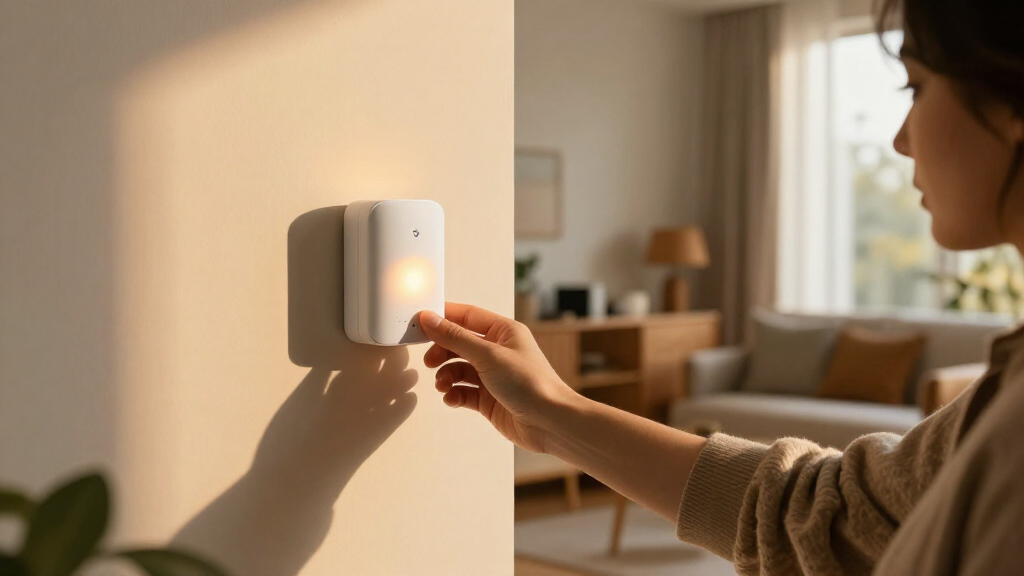
PIR sensors detect movement and are generally cheap, battery-friendly options for hallways, stairs and entrances. mmWave presence sensors can detect small movements such as breathing, making them better suited to rooms where people sit still, but they use more power and may need careful tuning.
The Ambient has published a buying comparison of PIR motion sensors and mmWave presence sensors, concluding that PIR is generally a better fit for places people pass through, while mmWave suits rooms where people stay still. The choice affects whether smart-home automations respond reliably, how often lights may switch off while someone is present, and the sensor’s power use, price and setup.
PIR sensors detect changes in infrared energy, or heat, across their field of view. A moving warm body can trigger the sensor, but a person who sits still may no longer register as present after the automation’s timeout. The Ambient describes PIR devices as relatively inexpensive, simple to set up and low-power; battery models can last a year or more, depending on the device and use.
mmWave sensors send out millimetre-wave radio signals, commonly at 24GHz or 60GHz, and measure returning reflections. The Ambient says this can pick up very small movements, including the movement of a person’s chest while breathing. Some models also offer detection zones, distance limits or position tracking, allowing different automations to respond to different parts of a room.
The technologies have different drawbacks. The report says PIR can be triggered by pets and may be less effective when someone moves directly toward the sensor; radiators and direct sunlight can also cause false triggers. mmWave is more sensitive: fans, curtains, pets and movement beyond a thin wall may register, so users may need to adjust sensitivity and zones. These sensors generally need more power and often use mains or USB, though battery-powered options are becoming more common, according to the report.
Match Detection to the Room
The practical choice is about the kind of occupancy an automation needs to detect. In a hallway, stairwell or entrance, people usually move through rather than remain still, so a PIR sensor’s movement detection may be sufficient. Its low power use can also make battery installation convenient.
In a living room, home office or bathroom, people may remain in one place for extended periods. A PIR-triggered lighting routine can time out when someone is still reading, working or bathing. An mmWave sensor can reduce that particular problem by detecting subtle movement, but its sensitivity may require adjustment to avoid unwanted activations. There is no single best sensor for every room: the suitable option depends on the automation, layout and tolerance for false triggers.
Price is another consideration. The Ambient puts common PIR sensors at often under $20 and mmWave models at roughly $25 to $60 or more. Those figures are the report’s general comparison, not a guarantee of current prices for a particular product.
Products Worth Considering

Shark NV752 Rotator Powered Lift-Away TruePet Upright Vacuum, Bordeaux

eufy Security SoloCam E42 4-Camera Kit, 4K Solar Security System

Dyson Ball Animal 3 Upright Vacuum
As an affiliate, we earn on qualifying purchases.
How the Sensors Detect People
The distinction comes from what each device measures. PIR detects changes in heat, so its response depends on movement across its field of view. If a person stops moving, the sensor may not keep identifying them as present. A longer automation timeout can compensate for this gap, though it may delay actions after a room is empty.
mmWave measures reflected radio waves, rather than heat. The report says signals can pass through some thin, non-metallic materials, including plasterboard, plastic and fabric. This can be useful for coverage but also means a sensor may detect activity outside the intended room. The source does not give a single performance range for all materials or models; walls and device placement matter.
Some products combine both methods. According to The Ambient, a hybrid sensor can use PIR to detect larger movement and mmWave to check whether someone remains in the room. The report cites Aqara’s FP400 as an example of a model offering zones, while noting that capabilities vary by product.
“Use PIR where people pass through and mmWave where people stay.”
— The Ambient, in its sensor comparison
Placement and Performance Vary
The comparison does not establish that every mmWave sensor will detect every stationary person reliably. Performance depends on the specific device, its placement, room layout and settings; the source gives no standardized testing results or measurements comparing particular models. It also does not establish that mmWave will work through every wall: the report names thin, non-metallic materials but does not claim that brick or concrete can be penetrated.
False-trigger rates, battery life and current prices can vary by product and installation. The source says advanced models may include setup routines, but does not quantify how much these reduce unwanted detections. Buyers should check the capabilities and power requirements of the model they are considering rather than assuming all sensors of one type behave alike.
Choose by Use and Test
For a purchase decision, first identify whether the sensor will cover a pass-through area or a place where people remain still. The Ambient recommends PIR for hallways, stairs, entrances, utility rooms and garages, and mmWave for living rooms, desks, bathrooms and bedrooms. Check the intended mounting position, power source, smart-home compatibility and any available zone controls before buying.
After installation, test the automation under ordinary conditions: walk through the coverage area, sit still where the sensor is meant to detect occupancy, and see whether movement elsewhere triggers it. For mmWave in particular, adjust range and zones if the device responds to fans, curtains, pets or activity in a neighboring space. The next step is model-specific: the source provides general guidance, not a product-by-product verdict or a report of new testing results.
Key Questions
Which is better for a hallway: PIR or mmWave?
PIR is usually the practical choice for hallways, stairs and entrances, where people move through and low power use can be helpful. The Ambient recommends mmWave instead for rooms where people may stay still.
Can an mmWave sensor detect someone sitting still?
It can detect very small movements, including breathing-related movement, according to The Ambient. Actual performance depends on the model, placement and settings.
Can mmWave sensors detect through walls?
The report says mmWave can pass through some thin, non-metallic materials, such as plasterboard, plastic and fabric. That may lead to detection in a neighboring room. It does not say that all walls can be penetrated; material and device placement matter.
Why might an mmWave sensor trigger when a room seems empty?
The Ambient says fans, moving curtains, pets or activity beyond a thin wall can cause unwanted detections. Adjusting sensitivity, range or zones may help, depending on the sensor’s features.
Are PIR sensors cheaper and easier to power?
The comparison describes PIR sensors as cheap and very low-power, with some battery models lasting a year or more. It gives a general price range of often under $20 for PIR and about $25 to $60 or more for mmWave; specific prices and battery life vary by product.
Source: the-ambient.com