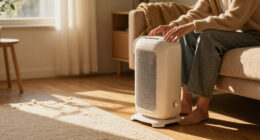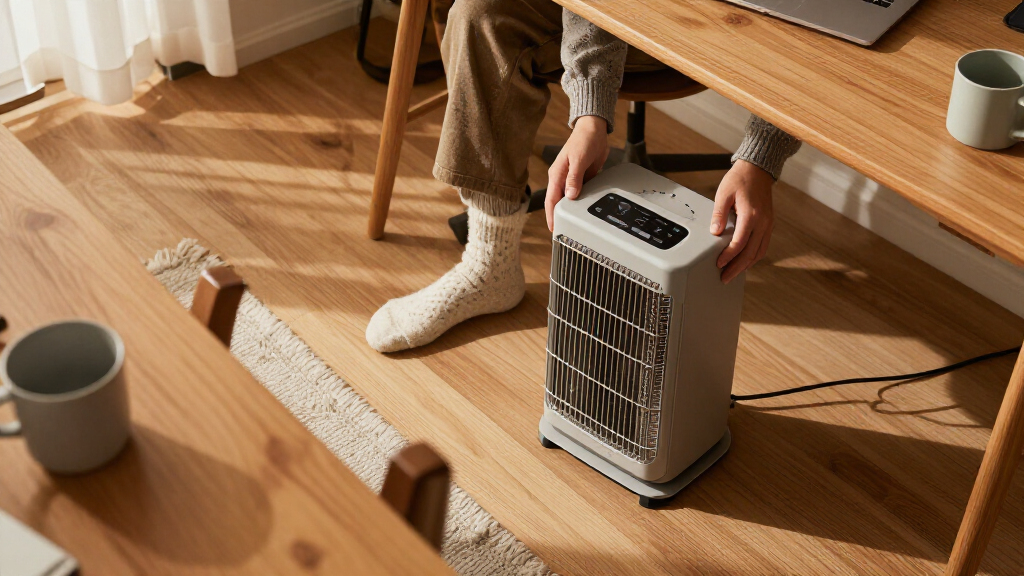

When shopping for a portable space heater, the central choice is often between a ceramic heater and an oil-filled radiator. Both use electricity and can add warmth to a chilly room, but they suit different routines: ceramic models are built for quick, directed heat, while oil-filled units favor quiet, sustained warmth. The practical tradeoff is response time and portability versus a less direct, more even-feeling heat source that can run with little fan noise.

Get home appliances delivered free with Prime
- Fast, free delivery on millions of items
- Prime Video, Amazon Music and more included
- Member-only deals all year

DREO Portable Ceramic Space Heater with Thermostat
- ✔ Heating output: 1500W PTC ceramic
- ✔ Stated coverage: Up to 200 sq. ft.
- ✔ Thermostat: 41–95°F; 1°F increments

DREO Atom One Portable Ceramic Space Heater
- ✔ Heating output: 1500W PTC ceramic
- ✔ Stated coverage: Up to 200 sq. ft.
- ✔ Oscillation: 70°

WINHL Portable 1500W Ceramic Space Heater with 70° Oscillation
- ✔ Heating output: 1500W PTC ceramic
- ✔ Oscillation: 70°
- ✔ Speeds: 5 listed
Choose ceramic if you want to warm a desk area or take a compact heater between rooms. Choose an oil-filled radiator if you plan to heat one occupied room for longer stretches and value quiet operation. Neither type should be treated as a substitute for safe, properly sized home heating; room size, electrical limits, placement, and the heater’s safety features still matter.
At a Glance
| Criteria | Ceramic space heaters | Oil-filled radiator heaters | Winner |
|---|---|---|---|
| Warm-up speed | Usually delivers noticeable heat quickly, especially nearby. | Takes longer to warm up because the radiator body and oil must heat. | A |
| Heat distribution | Fan-assisted heat spreads promptly but can feel directional. | Radiates and circulates warmth gradually, with less concentrated airflow. | Depends |
| Noise | Fan and operating sounds are common, though some models run quietly. | Typically very quiet because it does not need a fan for heat delivery. | B |
| Portability | Often lighter and easier to move or store. | Usually heavier and bulkier; wheels help with room-to-room movement. | A |
| Long-session comfort | Good for shorter sessions or targeted warmth; airflow may feel dry or distracting to some people. | Well suited to extended use in one room; the unit retains warmth briefly after switching off. | B |
| Controls and features | Many models offer oscillation, thermostats, timers, and multiple heat settings. | Often has a thermostat and heat settings, but fewer airflow-oriented features. | A |
| Safety and placement | Choose a model with tip-over and overheat protection; keep clear of fabrics and furniture. | The hot surface needs clearance and care around children or pets; safety features vary by model. | Depends |
| Value | Often an affordable choice for quick, occasional spot heating. | Can justify a higher purchase cost for quiet, sustained room heating. | Depends |
DREO Portable Ceramic Space Heater with Thermostat
The HSH006 takes our top spot because its portable-heater strengths are unusually balanced: it is compact, offers a useful range of controls, and has the lowest stated noise level in this group. DREO lists operation at 34 dB, which makes this the clearest candidate for a desk-side or bedroom setting where a heater’s fan can become distracting. Its 1°F thermostat increments also give us more precise adjustment than a simple low/high control.Like the Atom One and WINHL, it uses a 1500W PTC ceramic element, so buyers should not expect it to overcome the basic limits of a small plug-in heater. DREO states coverage up to 200 sq. ft., while WINHL is framed more cautiously for personal spaces and small rooms. The HSH006 does not list oscillation, however; if you want warmth to sweep across a wider area, the Atom One or WINHL has a more obvious advantage.A remote, ECO mode, fan-only mode, and 12-hour timer make it easier to adjust the heater without repeatedly reaching for its controls. Safety provisions include tip-over and overheat protection, flame-resistant materials, a safety plug, and a child lock. Those features improve the control package, but they do not remove the need for sensible placement or supervision. At three pounds and 6.02 inches square, it is easy to reposition, though its cord still dictates where it can run.We recommend it for buyers who prioritize quiet, adjustable warmth over sweeping airflow. Skip it if you need a cordless heater, want verified performance beyond its stated coverage, or consider oscillation essential to distributing heat across a room.
Pros:
- Stated 34 dB operation is the lowest noise figure among these three.
- Thermostat adjusts in 1°F increments, with a listed range of 41–95°F.
- Remote, ECO and fan-only modes, and a 12-hour timer support flexible use.
- Includes tip-over and overheat protection plus a child lock and safety plug.
Cons:
- Does not list oscillation, unlike the Atom One and WINHL.
- Its stated coverage tops out at 200 sq. ft.; actual comfort depends on the room.
- Requires a corded outlet, so placement is limited by access to power.
Best for: People seeking a quiet, lightweight heater with fine thermostat control for an indoor personal space or small room.
Not ideal for: Buyers who need cordless operation, want oscillating airflow, or expect a portable heater to warm a larger area reliably.
Bottom line: We rank the DREO HSH006 first for its quiet stated operation and precise controls, provided you do not need oscillation.
“We rank the DREO HSH006 first for its quiet stated operation and precise controls, provided you do not need oscillation.”
DREO Atom One Portable Ceramic Space Heater
The Atom One is the most compelling pick when a heater that points in one direction feels limiting. Its 70° oscillation moves the warm airflow across a broader arc, which can make it more suitable than the HSH006 for a small shared room where people are not sitting directly in front of the unit. Its stated coverage is up to 200 sq. ft., matching the HSH006’s figure and giving it a more defined room-use case than WINHL’s personal-space framing.We would not choose it over the HSH006 for a quiet-first setup. DREO reports noise as low as 37.5 dB, compared with 34 dB for the HSH006; both figures are manufacturer-stated and real-world sound can vary by mode and placement. The Atom One still offers useful control, including a 41–95°F thermostat adjustable in 1°F steps, ECO mode, a remote, and a timer adjustable from one to 12 hours.Its detachable filter and listed ETL Shield360° safety system distinguish it from the other two options. Tip-over and overheat protection are also specified. At 1.75 kg, it remains portable enough to move between rooms, but it needs an outlet and is not a battery-powered appliance. As with the other models, its 1500W output does not change the need to match expectations to the stated room coverage.Choose the Atom One when airflow distribution matters more than the quietest listed operation. The WINHL also oscillates and lists five speeds, so it may suit buyers who want more speed selections; the Atom One’s stronger case is its stated 200-square-foot coverage, adjustable thermostat, detachable filter, and specified safety system. Skip it if you do not need oscillation or are seeking the lowest noise figure in this comparison.
Pros:
- 70° oscillation helps move warm airflow across a wider area.
- Thermostat adjusts in 1°F increments across a stated 41–95°F range.
- Includes remote, ECO mode, a 1–12-hour timer, and detachable filter.
- Lists tip-over and overheat protection and an ETL-listed Shield360° system.
Cons:
- Its stated noise level is higher than the HSH006’s 34 dB figure.
- Coverage is stated for rooms up to 200 sq. ft., not larger spaces.
- Requires an electrical outlet and therefore is not cordless.
Best for: Buyers who want a compact, oscillating heater for a small room and value a precise thermostat and detachable filter.
Not ideal for: Quiet-first buyers who prefer the HSH006’s lower stated noise, or anyone expecting cordless use or heating beyond the stated coverage.
Bottom line: We recommend the Atom One when oscillation is a priority and its higher stated noise level is an acceptable tradeoff.
“We recommend the Atom One when oscillation is a priority and its higher stated noise level is an acceptable tradeoff.”
WINHL Portable 1500W Ceramic Space Heater with 70° Oscillation
WINHL is the smallest-footprint option by listed dimensions: its body measures 5.91 × 5.91 × 9.85 inches, slightly shorter than either DREO model. It also weighs 1.47 kg, making it an appealing choice for buyers who expect to move a heater between a desk, bedside area, or other personal spot. Its 70° oscillation gives it a practical advantage over the HSH006 when warmth needs to travel beyond a fixed forward-facing stream.The feature set is notably broad for a compact model. Buyers get a remote, adjustable thermostat, ECO mode, a 12-hour timer, and five listed speeds. Compared with the Atom One, WINHL’s five speeds may offer more selectable airflow settings, but its description focuses on personal spaces and small rooms rather than giving a stated 200-square-foot coverage figure. We would not treat the shared 1500W rating as proof that it will perform identically to the DREO heaters in every room.Overheat protection and tip-over shutoff are specified, and the model is listed as ETL certified. One small but relevant inconvenience is that the remote needs two AAA batteries, which are not included. WINHL also specifies plugging directly into a suitable wall outlet. That limits where the heater can go and means buyers should not assume an extension cord is appropriate; follow the product instructions and outlet requirements.This is our choice for shoppers who want a compact heater with oscillation and several controls, particularly for a personal area. The Atom One is the stronger fit if you want a stated 200-square-foot coverage figure and a detachable filter; the HSH006 is preferable for lower stated noise and more detailed safety features. Skip WINHL if your priority is quiet operation, a documented larger coverage area, or a remote ready to use without buying batteries.
Pros:
- Compact listed dimensions and 1.47 kg weight suit moving between nearby spaces.
- 70° oscillation spreads airflow beyond a fixed forward direction.
- Remote, thermostat, ECO mode, five speeds, and 12-hour timer provide flexible controls.
- Lists overheat protection, tip-over shutoff, and ETL certification.
Cons:
- Described for personal spaces and small rooms, with no specific coverage figure supplied.
- Remote requires two AAA batteries that are not included.
- Must be plugged into a suitable wall outlet, limiting placement.
Best for: People looking for a compact, oscillating 1500W heater for a personal space or small room, with multiple speed choices.
Not ideal for: Buyers who need a stated 200-square-foot coverage area, the lowest listed noise, or a remote that includes its batteries.
Bottom line: We favor WINHL for compact oscillating personal heating, but choose a DREO if you need clearer coverage or quieter stated operation.
“We favor WINHL for compact oscillating personal heating, but choose a DREO if you need clearer coverage or quieter stated operation.”
As an Amazon Associate we earn from qualifying purchases.
Key Differences
The biggest distinction is how quickly each heater makes a room feel warmer. A ceramic heater sends heat out quickly, often through a fan, so it is a stronger match for brief use, a cold home office, or warming the area around a person. An oil-filled radiator takes time to heat up, but its gradual output can feel steadier during a long stretch in one room. If you move between rooms or want warmth on demand, ceramic is usually the more convenient choice; if you settle in one place and want minimal operating noise, oil-filled is often more comfortable.
These are not automatic differences in running cost. Many portable electric heaters draw similar amounts of power at comparable settings, and the bill depends mainly on wattage, runtime, thermostat behavior, and local electricity rates. Oil-filled radiators retain heat for a time after switching off, but that stored warmth does not make them inherently cheaper to operate. Pay more for an oil-filled model when quiet, sustained comfort matters; pay for a ceramic model when fast response, compact size, or extra controls will get regular use.
Detailed Comparison
Warm-up speed (Ceramic space heaters wins — moderate)
Ceramic wins, by a moderate margin. Its heating element and fan can deliver a noticeable stream of warm air soon after startup. An oil-filled radiator has to warm its internal oil and metal body first, so it is less satisfying when you need immediate heat for a short task. For a room used all afternoon, the slower start matters less; for a ten-minute warm-up, it matters a lot.
Heat distribution (moderate difference)
Depends on the room and preference. Ceramic models can push warmth across a nearby area, and oscillation may help distribute it, but the airflow can leave some parts of a room cooler. Oil-filled heaters radiate warmth more gradually and avoid a strong fan stream, which many people prefer for a settled room. Neither guarantees uniform heat throughout a large or poorly insulated space; sizing and placement matter.
Noise (Oil-filled radiator heaters wins — moderate)
Oil-filled wins, by a moderate margin. Most oil-filled radiators do not use a fan to deliver heat, so they are a better fit for sleep, reading, or calls where steady fan noise is unwelcome. Ceramic heaters often make some airflow sound, although fan volume varies by model and setting. If quiet is a firm requirement, check product noise information and user reports rather than assuming every ceramic unit sounds the same.
Portability and storage (Ceramic space heaters wins — major)
Ceramic wins, by a major margin for frequent moves. Compact ceramic heaters are commonly lighter and easier to carry from a bedroom to a desk or put away when the season ends. Oil-filled radiators are bulky and heavy, though wheels can make moving one across a level floor manageable. Pick ceramic for stairs, shared spaces, or regular storage; pick oil-filled when the heater can stay in one room.
Comfort during long sessions (Oil-filled radiator heaters wins — moderate)
Oil-filled wins, by a moderate margin for people who dislike airflow. Its gradual, fan-free heat can feel less distracting when a room is occupied for hours, and the radiator stays warm for a while after it turns off. Ceramic is better for targeted warmth and quick sessions, but its moving air may bother some users. Personal comfort varies, so the best choice depends on whether fast directed heat or quieter background warmth feels better.
Controls and convenience features (Ceramic space heaters wins — minor)
Ceramic often wins, by a minor margin. Many compact models offer oscillation, several heat levels, timers, remote controls, or digital thermostats, although features differ widely. Oil-filled models may have straightforward thermostats and multiple settings but typically do not offer fan-based direction or oscillation. Compare the actual controls: a reliable thermostat and simple timer may matter more than a long feature list.
Safety and placement (major difference)
No universal winner; model design and use matter more. Either type should be placed on a stable, level surface with the manufacturer’s required clearance, away from bedding, curtains, furniture, and walkways. Look for tip-over and overheat shutoff, use a wall outlet as directed, and avoid extension cords unless the manufacturer explicitly permits them. Oil-filled radiators can have hot surfaces, while ceramic units may have hot grilles and moving parts. Keep both away from children and pets, and never leave a portable heater unattended or running while asleep unless its instructions and applicable safety guidance specifically allow it.
Value and running cost (moderate difference)
Depends on use; neither has an inherent electricity-cost advantage. Ceramic heaters are often less expensive to buy and offer strong value for occasional, short bursts of warmth. Oil-filled models may cost more upfront, but the premium can be worthwhile for a quiet heater used in one room over long sessions. Compare wattage and expected hours of use: a higher purchase price does not guarantee a lower power bill, and heat retention after shutoff is not free energy.
Ceramic space heaters: Pros and Cons
Pros:
- Quick response makes it useful for brief spot heating.
- Usually compact, lightweight, and easy to store.
- Often includes oscillation, timers, and multiple heat settings.
- Commonly a lower-cost purchase for occasional use.
Cons:
- Fan noise and directed airflow may be distracting.
- Warmth can feel less even across a room.
- The unit generally stops producing meaningful heat soon after it switches off.
- A light, portable design still requires careful placement and supervision.
Oil-filled radiator heaters: Pros and Cons
Pros:
- Quiet operation suits sleeping areas, reading, and focused work.
- Gradual warmth can feel steady during long stays in one room.
- Retains some warmth briefly after the thermostat or switch turns it off.
- No fan stream for people who dislike moving air.
Cons:
- Slower to warm up, making it less useful for short visits.
- Heavier and harder to carry or store than many ceramic units.
- Radiator surfaces can become hot and need safe clearance.
- Often costs more upfront without guaranteeing lower electricity use.
Who Should Choose What
Choose Ceramic space heaters if:
- You need quick warmth beside a desk, sofa, or workbench.
- You will carry the heater between rooms or store it regularly.
- You prefer a lower purchase cost and expect to use it in short sessions.
- You want features such as oscillation, a timer, or remote controls.
Choose Oil-filled radiator heaters if:
- You will heat one occupied room for several hours at a time.
- Fan noise or direct airflow would interfere with sleep, calls, or concentration.
- You prefer gradual, steady warmth and can leave the heavier unit in place.
- You are willing to pay more upfront for quieter operation, not on the assumption it will lower your power bill.
Skip both if: Neither type is a good fit if you need to heat a large home, replace a primary heating system, or leave a heater running unattended without following its instructions. Address insulation or central heating needs instead, or consult a qualified professional about safe heating options.
Value for Money
Ceramic is usually the better value for occasional use: it costs less to buy in many cases, heats quickly, and is easy to move when you only need warmth in one spot. The extra cost of an oil-filled radiator is worth paying when the heater will sit in one room for long sessions and quiet operation makes a meaningful difference. Do not pay a premium expecting automatic energy savings. Both types use electricity, and actual cost depends on the heater’s power draw, thermostat cycling, room conditions, usage time, and utility rates.
For either style, compare wattage, thermostat quality, shutoff protections, warranty, and the size of the space it is rated to serve. A heater that is too small may run continuously without providing enough comfort; a feature-rich model is poor value if you will not use its controls. Safety features and suitability for your room are worth more than a cosmetic design or an unsupported claim of lower operating costs.
Final Verdict
For most shoppers who want a portable heater for occasional, targeted warmth, choose a ceramic model: it heats quickly, is easier to carry, and commonly costs less upfront. Choose an oil-filled radiator instead if the heater will remain in one room for hours and you value quiet, gradual warmth more than fast startup or easy storage. The deciding factor is your routine: short bursts and frequent moves favor ceramic; long, quiet sessions favor oil-filled. Buy neither on the promise of inherently cheaper operation, and make safety protections and correct placement non-negotiable.
Frequently Asked Questions
Which type heats a room faster?
Ceramic heaters usually feel warm faster because they send heated air out soon after startup. Oil-filled radiators take longer to heat their body and oil, so they are better suited to longer sessions than quick warm-ups.
Which portable heater is quieter?
Oil-filled radiators are generally quieter because they usually do not rely on a fan to move heat. Ceramic models vary, but fan noise is common; check the specific unit if you plan to use it in a bedroom or quiet workspace.
Are oil-filled heaters cheaper to run?
Not inherently. Running cost depends mainly on wattage, runtime, thermostat cycling, room conditions, and electricity rates. An oil-filled unit can retain warmth briefly after switching off, but that does not make it automatically cheaper to operate.
Can either heater run overnight?
Follow the exact manufacturer instructions and local safety guidance. Keep the heater away from bedding and other combustible materials, use a suitable outlet, and do not leave a portable heater unattended or operating while asleep unless its instructions and applicable guidance explicitly permit it.
Fall Picks

eufy Security Essential 7-Piece Alarm System
As an affiliate, we earn on qualifying purchases.