TL;DR

Get home appliances delivered free with Prime
- Fast, free delivery on millions of items
- Prime Video, Amazon Music and more included
- Member-only deals all year
Portable space heaters warm a room or smaller area without heating an entire home. Pick a type suited to your comfort needs, check its safety listing and manual, plug an electric model directly into a wall outlet, and keep it clear of anything that can burn. A 1,500-watt heater uses 1.5 kilowatt-hours for each hour it runs, so runtime and your local electricity rate determine its cost.
A portable heater can turn a cold corner of your home office into a comfortable place to work. It can also draw 1,500 watts from a household outlet, so where you put it and how long you run it matter as much as how warm it feels.
These heaters are designed to warm a room or a smaller area without heating an entire home. You’ll learn how the main types feel, how to estimate running costs, and which safety habits help protect your household. Think of a heater as a focused pool of warmth: useful when you’re nearby, but not a substitute for whole-home heating.
For example, a person working in a chilly spare room might use an electric heater for a few supervised hours while lowering central heat safely. The same unit left running beside curtains or bedding creates a different situation entirely. The key facts below can help you choose and use a heater with care.
Choose ceramic or fan-forced heat for quick air movement, radiant heat for warmth aimed at you, and an oil-filled electric radiator for slower, steadier heat.
Estimate cost with kilowatts × hours × your electricity rate; a 1,500-watt heater uses 6 kilowatt-hours over four hours at full power.
Place electric heaters on stable, level surfaces, follow the manual’s clearances, and plug directly into a suitable wall outlet.
Turn the heater off when you leave the room or sleep; tip-over and overheat shutoffs add protection but do not replace supervision.
Use fuel-burning models indoors only when the specific unit is approved for indoor use, and follow its ventilation instructions with working carbon monoxide al…
Choose the heater that matches how you want to feel warm
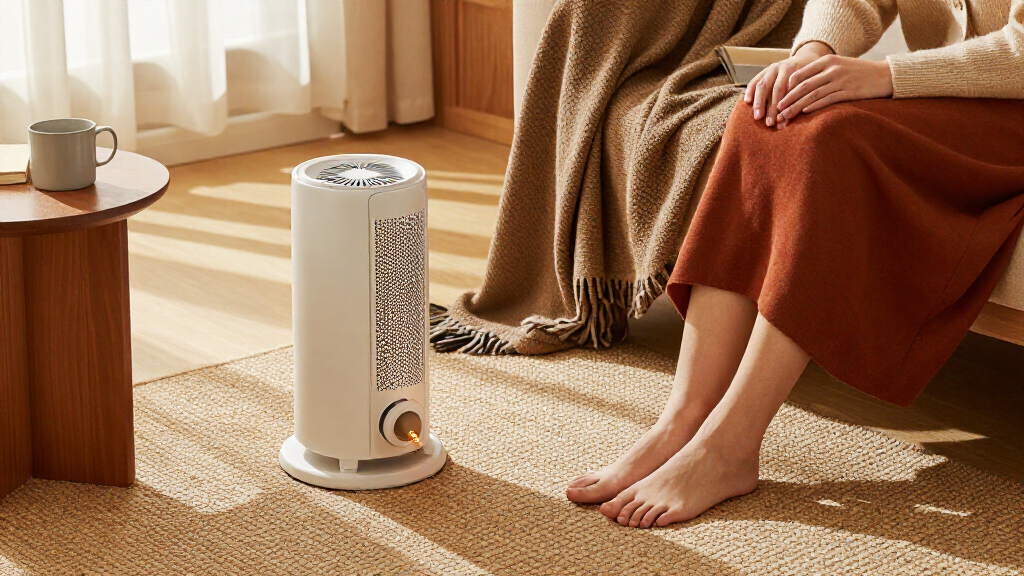
Portable space heaters warm nearby air, people, or objects in different ways, so the right choice depends on whether you want quick heat, quiet operation, or steady warmth. Ceramic fan heaters move warm air around; radiant heaters direct heat toward people and objects; oil-filled electric radiators take longer to heat but tend to provide steadier warmth. Each type suits a different moment.
Imagine sitting at a desk in a cold home office. A fan-forced ceramic heater may warm the air quickly, though you’ll hear its fan. An infrared model can warm your hands and legs while you sit still, even if the far side of the room remains cool. An oil-filled radiator may suit a bedroom where you want gradual, quiet warmth while you’re awake.
Electric heaters commonly draw up to about 1,500 watts from a standard household outlet. That number doesn’t promise a particular room temperature: insulation, ceiling height, drafts, and furniture layout all affect comfort. A draft under the door can leave your ankles cold even while the heater runs.
Fuel-burning models use propane, kerosene, or other fuels. Only use one indoors if the specific model is approved for indoor use, and follow its ventilation instructions. Combustion can produce carbon monoxide and consume indoor oxygen. A heater that works outdoors or in a garage is not automatically safe inside a home.
Products Worth Considering

Bose SoundLink Plus Portable Bluetooth Speaker, Wireless Outdoor Speaker, Up to 20 Hours Battery Life, Waterproof and Dustproof, Black

Bose SoundLink Flex Bluetooth Speaker (2nd Gen) – Portable Outdoor Speaker with Hi‑Fi Audio, Waterproof and Dustproof, USB‑C, Up to 12 Hours

eufy C28 Robot Vacuum Cleaner and Mop for Pet Hair, 15,000 Pa
As an affiliate, we earn on qualifying purchases.
Estimate the running cost before you switch it on
A heater’s electricity cost depends on its wattage, how many hours it runs, and your local electricity rate. A 1,500-watt model uses 1.5 kilowatt-hours per hour when running continuously. Multiply that by your rate per kilowatt-hour to estimate the energy charge; your bill may include other charges too.
For example, four hours of continuous use at 1,500 watts consumes 6 kilowatt-hours. If your rate is 30 cents per kilowatt-hour, that electricity costs $1.80. At a different rate, the cost changes. A thermostat can cycle the heater off after the room warms, so actual use may be lower than a full-power estimate, but the exact amount depends on the room and settings.
Here’s a quick way to work it out:
- Find the wattage on the heater label or in its manual.
- Convert watts to kilowatts by dividing by 1,000. For 1,500 watts, that’s 1.5 kilowatts.
- Multiply by running hours to find kilowatt-hours. Four hours at 1.5 kilowatts equals 6 kilowatt-hours.
- Multiply by your electricity rate to estimate the energy cost.
Using a small heater to warm only an occupied area may save energy if you can safely lower central heating. It may add to your costs if it runs for long periods or heats a space that would otherwise remain unheated. Your home’s heating system, fuel prices, and the room’s insulation all affect the comparison.
Place your heater where it can warm you without starting a fire
Place an electric space heater on a stable, level surface, keep it away from anything that can burn, and follow the clearance distances in its manual. Curtains, bedding, furniture, clothing, and paper can catch fire if a heater sits too close. A low table beside a curtain may look convenient, but it can put hot air and fabric in the same small space.
Plug an electric heater directly into a suitable wall outlet. High-wattage heaters can overheat extension cords and power strips, so don’t use those unless the manufacturer specifically allows it. Keep the heater away from water, never cover it, and leave its air intake and outlet clear so heat can move as designed.
Before switching it on, take a moment to check the setup: is the floor level, is the outlet suitable, and could a child or pet knock the unit over? A model with a tip-over shutoff and overheat protection adds safeguards, but it cannot prevent every fire, burn, or electrical problem. Certification marks such as UL or ETL can help you identify products tested against applicable safety standards.
A shutoff feature adds a layer of protection; it does not make a heater safe to leave unattended.
For instance, if your dog often naps beside your desk, move the heater to a spot where its cord and hot surfaces stay out of reach. If the plug feels hot, you see sparks, or the unit smells like burning plastic, switch it off and stop using it.
Use a heater around children, pets, and while you sleep with extra care
Turn off a portable heater when you leave the room or go to sleep, and follow the product manual and local fire-safety guidance. Supervision matters because a heater can be bumped, covered, or placed too close to fabric after you leave. A timer or remote control can make operation easier, but it does not replace safe placement or attention.
Households with young children, pets, older adults, or people with mobility or cognitive impairments may need more safeguards. A cool-touch exterior can lower the chance of contact burns, but the heater can still pose fire or electrical risks. Put it where someone cannot easily trip over the cord, pull the unit down, or use it as a shelf.
Consider a chilly bedroom on a winter evening. If you use a heater while getting ready for bed, keep it on a clear, level surface and turn it off before you fall asleep. Don’t tuck it beside a duvet to warm the bed: fabric can cover the unit or sit too close to its hot outlet.
When kids or pets share the room, build a clear area around the heater and explain that it is not a toy or a place to dry gloves. If the room remains too cold without running a heater overnight, look for a safer way to address the cold, such as improving drafts or using your home’s main heating system as directed. Extra supervision matters most when the people in the room may not recognize or react to a hazard.
Keep fuel-burning models indoors only when the model allows it
Propane and kerosene heaters belong indoors only when the specific model is approved for indoor use and you follow its instructions. Combustion heaters can produce carbon monoxide, a dangerous gas, and consume oxygen. Ventilation directions and working carbon monoxide alarms are part of safe operation, not optional extras.
Imagine setting up a heater in a drafty workshop. A model made for outdoor patios or job sites may look sturdy enough, but that does not make it suitable for a closed room. Never use an outdoor heater, grill, or generator indoors. Check the product label and manual for approved locations, ventilation requirements, and any restrictions on room size or use.
Electric models avoid combustion at the point of use, though they still carry fire and electrical risks. Fuel models may make sense for a location where electricity is unavailable, but the extra ventilation and alarm requirements affect where and how you can use them. A garage also deserves care: fuel, fumes, and damp conditions can create hazards beyond the heater itself.
If you cannot confirm that a fuel-burning unit is approved for indoor use, don’t operate it in your home. Make sure your carbon monoxide alarms work, follow local rules, and leave clear space around the appliance. For a bathroom or damp area, use a heater there only if its manufacturer specifically approves that location and the unit has the required protection.
Check the cord, air openings, and smell before each use
Inspect your heater before use, keep its intake and outlet clear, and clean it only as the manual directs. Dust can collect while a heater sits in storage, and it may create a mild smell when it first warms. That smell should fade; a persistent burning-plastic odor, smoke, sparks, or a hot plug calls for switching the unit off and stopping use.
A quick check can catch wear before a cold evening turns into a problem. Look for a frayed cord, cracked plug, or damaged casing. Don’t run the heater if you find damage, and don’t open or repair it unless the manufacturer provides instructions intended for you to follow.
For example, after pulling a compact heater from a closet, you might find lint across its air intake. Unplug it, let it cool, and clean it according to the manual before turning it on. Blocking an intake can interfere with airflow and may cause the heater to overheat.
Newer models may offer digital thermostats, programmable timers, remote controls, eco modes, or quieter operation. Those features can make a heater easier to manage, but their quality varies and they do not replace basic care. Keep the manual where you can find it, follow its cleaning schedule, and stop using any unit that shows signs of overheating.
Frequently Asked Questions
Are portable space heaters safe to leave on overnight?
Many safety authorities advise turning portable heaters off when you sleep or leave the room. Follow your heater’s manual and local fire-safety guidance, even if the model has a timer or automatic shutoff.
Can I plug a space heater into an extension cord or power strip?
Usually, no. High-wattage heaters can overheat extension cords and power strips. Plug an electric heater directly into a suitable wall outlet unless its manual explicitly allows another setup.
How much does it cost to run a 1,500-watt heater?
At full power, it uses 1.5 kilowatt-hours per hour. Four hours uses 6 kilowatt-hours, so multiply 6 by your electricity rate per kilowatt-hour to estimate the energy charge.
Which heater works best in a bedroom or home office?
It depends on room drafts, noise preferences, and whether you want quick directional heat or slower, steadier warmth. Ceramic fan heaters move warm air, radiant heaters warm nearby people and objects, and oil-filled electric radiators heat more gradually. Check the manufacturer’s guidance for the intended room and use.
Can a portable space heater heat an entire house?
Usually not effectively. Portable heaters are generally intended to supplement heating in a limited area, such as a bedroom or office. A single heater may make one spot comfortable while the rest of the home stays cold.
Are propane or kerosene heaters safe to use indoors?
Only use a specific model indoors if its label and manual approve indoor use. Follow ventilation instructions and keep working carbon monoxide alarms in place. Never use outdoor heaters, grills, or generators indoors.
Conclusion
Choose a heater for the way you use the room, then give it a clear, stable place and keep an eye on its runtime. Check the manual, inspect the cord, and calculate the energy cost before relying on it for long stretches. A heater works best as a focused source of comfort for an occupied area.
Keep the space around it open, like a little island of clear floor in a busy room. That simple habit can help you enjoy the warmth without letting convenience crowd out care.