Programmable smart thermostats combine scheduled temperature control with app access and, on some models, smart-home features. My best overall pick is the ecobee Smart Thermostat Essential for its balance of everyday scheduling and connected controls; the Sensi Touch 2 stands out for a more screen-focused experience, while the Amazon Smart Thermostat suits homes already built around Alexa. The main tradeoffs are HVAC compatibility, wiring needs, and whether you want a simple schedule or broader automation. Read on for the full breakdown of all 13 options and how I’d match them to different homes.

Get home appliances delivered free with Prime
- Fast, free delivery on millions of items
- Prime Video, Amazon Music and more included
- Member-only deals all year
Complete the kit



Key Takeaways
- ecobee Smart Thermostat Essential leads the roundup for buyers who want a balanced connected thermostat, while the Sensi Touch 2 is a stronger fit for those who prioritize touchscreen operation.
- The Sensi lineup spans different priorities: the ST55 offers a fuller feature set, while the ST25W and ST25 are simpler alternatives for shoppers focused on core Wi-Fi scheduling.
- Wiring requirements can change the shortlist quickly: the Amazon Smart Thermostat explicitly requires a C-wire, and other models also need careful system-compatibility checks before purchase.
- Screen-first buyers have several distinct choices, from the PRO1 T855iSH’s large backlit display to the touchscreen Vine and Honeywell Color models; those interfaces matter most when people adjust settings at the wall.
- Smart-home fit is not interchangeable: the Aqara W200 emphasizes Apple Adaptive Temperature, while Amazon’s model is positioned around Alexa and Ring, so ecosystem preference can outweigh extra controls.
| PRO1 T855iSH 8-Inch Backlit Wi-Fi Programmable Thermostat |  | Best for Large, Readable Controls | Display: 8-inch backlit LCD | Connectivity: Wi-Fi | Programming: 7-day or non-programmable | VIEW LATEST PRICE | See Our Full Breakdown |
| ecobee Smart Thermostat Essential, Wi-Fi |  | Best for Smart-Home Scheduling | Display: 3.74-inch LCD touchscreen | Connectivity: Wi-Fi | Compatible systems: Most 24 VAC HVAC equipment, including gas, oil, electric, dual fuel, forced air, heat pumps, and boilers | VIEW LATEST PRICE | See Our Full Breakdown |
| Sensi Touch 2 Wi-Fi Smart Thermostat, ST76 |  | Best for Room-by-Room Temperature Management | Display: LCD touchscreen | Connectivity: Wi-Fi, 2.4 GHz and 5.0 GHz | Power: 24V, common wire (C-wire) required | VIEW LATEST PRICE | See Our Full Breakdown |
| Google Nest Smart Thermostat, Programmable Wi-Fi, Snow |  | Best for Simple DIY Scheduling | Display: 1.07-inch LCD | Connectivity: Wi-Fi, 2.4 GHz and 5 GHz; Bluetooth Low Energy | Programming: Schedules set in the Google Home app | VIEW LATEST PRICE | See Our Full Breakdown |
| Sensi ST55 Wi-Fi Smart Thermostat |  | Best for Straightforward DIY Programming | Display: LED screen, 5-inch screen size | Connectivity: Wi-Fi | HVAC compatibility: Air conditioner, boiler, furnace, heat pump | VIEW LATEST PRICE | See Our Full Breakdown |
| Honeywell Home X2S Smart Wi-Fi Thermostat |  | Best for Flexible Smart-Home Scheduling | Model: RTH2SMC/N | System compatibility: Up to 2 heat/2 cool conventional; up to 2 heat/1 cool heat pump with electric backup | Connectivity: Wi-Fi 2.4 or 5 GHz; Matter | VIEW LATEST PRICE | See Our Full Breakdown |
| Sensi Lite Smart Wi-Fi Thermostat, ST25W |  | Best for C-Wire-Free DIY Installation | Model: ST25W | Compatible systems: Air conditioner, boiler, furnace, heat pump | Power: 2 AAA batteries or C-wire | VIEW LATEST PRICE | See Our Full Breakdown |
| Aqara Smart Thermostat W200 with Apple Adaptive Temperature |  | Best Premium Smart-Home Hub | Model: W200 | Display: 4-inch full-color touchscreen | HVAC compatibility: About 85% of HVAC systems, including furnaces, air conditioners, heat pumps, boilers, and PTAC units | VIEW LATEST PRICE | See Our Full Breakdown |
| Amazon Smart Thermostat, Works with Alexa and Ring, C-Wire Required |  | Best for Alexa-Centered Homes | Model: S6ED3R | HVAC compatibility: Most 24V systems, including conventional forced air, heat pumps, and radiant boilers | Power: C-wire or separately sold power adapter kit | VIEW LATEST PRICE | See Our Full Breakdown |
| Riseem Wi-Fi Smart Thermostat for Single-Stage Heating and Cooling, 7-Day Programmable, C-Wire Required |  | Best for Basic Single-Stage Programming | Model: STN701W-Blue | System compatibility: Conventional single-stage, 1 heat/1 cool | Power: 24V AC; C-wire required | VIEW LATEST PRICE | See Our Full Breakdown |
| Sensi Lite Wi-Fi Smart Thermostat, ST25 | 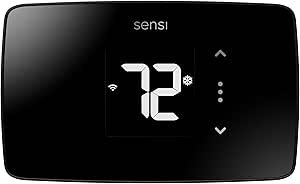 | Best for C-Wire-Free DIY Installation | Model: ST25 | Connectivity: Wi-Fi; 2.4 GHz required | Control: App, touch, and voice | VIEW LATEST PRICE | See Our Full Breakdown |
| Vine Smart Wi-Fi Thermostat with 4.3-Inch Touchscreen and Nightlight |  | Best for a Large, Easy-to-Read Display | Model: TJ-919T-V2 | Display: 4.3-inch LCD touchscreen with nightlight | Connectivity: Wi-Fi | VIEW LATEST PRICE | See Our Full Breakdown |
| Honeywell Home Wi-Fi Smart Color Programmable Thermostat, 7-Day, Touchscreen, Gray |  | Best for Detailed Scheduling and System Alerts | Model: RTH9585WF1004 | Display: Customizable color LED touchscreen | Connectivity: Wi-Fi | VIEW LATEST PRICE | See Our Full Breakdown |
| programmable smart thermostat | Connectivity | Power | Display | Model |
|---|---|---|---|---|
| PRO1 T855iSH 8-Inch Backlit Wi | Wi-Fi | Hardwired 24V | 8-inch backlit LCD | — |
| ecobee Smart Thermostat Essent | Wi-Fi | — | 3.74-inch LCD touchscreen | — |
| Sensi Touch 2 Wi-Fi Smart Ther | Wi-Fi, 2.4 GHz and 5.0 GHz | 24V, common wire (C-wire) required | LCD touchscreen | — |
| Google Nest Smart Thermostat | Wi-Fi, 2.4 GHz and 5 GHz; Bluetooth Low Energy | Battery powered; 24 volts | 1.07-inch LCD | — |
| Sensi ST55 Wi-Fi Smart Thermos | Wi-Fi | 24V AC corded electric; two AA batteries included | LED screen, 5-inch screen size | — |
| Honeywell Home X2S Smart Wi-Fi | Wi-Fi 2.4 or 5 GHz; Matter | 24 VAC; C-wire required | — | RTH2SMC/N |
| Sensi Lite Smart Wi-Fi Thermos | Wi-Fi; 2.4 GHz required | 2 AAA batteries or C-wire | — | ST25W |
| Aqara Smart Thermostat W200 wi | Dual-band Wi-Fi, Matter 1.4, Zigbee, Thread | — | 4-inch full-color touchscreen | W200 |
| Amazon Smart Thermostat | — | C-wire or separately sold power adapter kit | — | S6ED3R |
| Riseem Wi-Fi Smart Thermostat | — | 24V AC; C-wire required | — | STN701W-Blue |
| Sensi Lite Wi-Fi Smart Thermos | Wi-Fi; 2.4 GHz required | 2 AAA batteries or C-wire | — | ST25 |
| Vine Smart Wi-Fi Thermostat wi | Wi-Fi | Hardwired; C-wire required | 4.3-inch LCD touchscreen with nightlight | TJ-919T-V2 |
| Honeywell Home Wi-Fi Smart Col | Wi-Fi | — | Customizable color LED touchscreen | RTH9585WF1004 |
More Details on Our Top Picks
PRO1 T855iSH 8-Inch Backlit Wi-Fi Programmable Thermostat
The PRO1 T855iSH makes the most sense when seeing and adjusting the thermostat easily matters as much as app access. Its 8-inch backlit display is much larger than the Sensi Touch 2 ST76’s touchscreen, while 7-day scheduling gives households a set-and-follow routine rather than relying mainly on automation. Broad support for conventional and heat pump systems, plus programmable fan control, makes it a flexible choice for compatible 24V setups.
The tradeoff is installation: this model is hardwired for 24V, and setup may call for professional help. It also offers fewer smart-home and app details than the ecobee Smart Thermostat Essential. Choose it for clear on-wall controls and system flexibility; skip it if you want a more app-centered smart-home experience or a thermostat that avoids wiring work.
Pros:- Large, backlit 8-inch display improves visibility from across a room.
- Supports 7-day programming or non-programmable operation.
- Works with 2H/2C conventional and 5H/3C heat pump systems.
- Includes programmable fan control, keypad lockout, setpoint limits, and filter reminders.
Cons:- Requires hardwired 24V power, limiting suitability for some existing setups.
- Installation may require professional assistance.
- Product details emphasize on-device controls more than app and smart-home features.
Best for: Households with compatible 24V HVAC systems that want a large, easy-to-read wall display and a defined weekly schedule.
Not ideal for: Renters or DIY buyers who need a simple installation, battery operation, or stronger smart-home ecosystem integration.
- Display:8-inch backlit LCD
- Connectivity:Wi-Fi
- Programming:7-day or non-programmable
- HVAC compatibility:2H/2C conventional; 5H/3C heat pump
- Power:Hardwired 24V
- Mounting:Wall mount
- Dimensions:1.75 in D × 5.25 in W × 5.25 in H
- Additional features:Auto changeover, programmable fan, keypad lockout, setpoint limits, filter reminders, 5-minute compressor delay
Our verdict“Choose the PRO1 T855iSH if a large display and flexible HVAC compatibility matter more than a streamlined DIY installation.”
ecobee Smart Thermostat Essential, Wi-Fi
The ecobee Smart Thermostat Essential is a strong fit for buyers who want programming to respond to household routines, not just a fixed timetable. Its auto-scheduling and auto-away features can reduce heating or cooling when the home is unoccupied, and control is available through the touchscreen or app. Support for Apple HomeKit, Google Assistant, and Alexa gives it broader stated ecosystem coverage than the Google Nest Smart Thermostat.
That convenience comes with setup and accessory caveats. Homes without a C-wire may need a separately sold Power Extender Kit, and the optional SmartSensor is also an extra purchase. Unlike the Sensi Touch 2 ST76, which supports up to 15 optional room sensors, the supplied details here do not specify a sensor count. I’d pick ecobee for connected scheduling; buyers seeking a simpler, less accessory-dependent setup should compare the Sensi ST55.
Pros:- Offers touchscreen and app control with programmable schedules.
- Auto-away and schedule assistant features adapt temperature control to household routines.
- Supports Apple HomeKit, Google Assistant, and Amazon Alexa.
- Works with many 24 VAC system types, including boilers, heat pumps, and dual fuel.
Cons:- Homes without a C-wire may require a separately sold Power Extender Kit.
- SmartSensor is sold separately.
- HVAC compatibility should be checked before installation.
Best for: Smart-home households with compatible 24 VAC HVAC equipment that want app scheduling, auto-away behavior, and voice-assistant support.
Not ideal for: Buyers without a C-wire who want to avoid separate power accessories, or those who expect room sensors to be included.
- Display:3.74-inch LCD touchscreen
- Connectivity:Wi-Fi
- Compatible systems:Most 24 VAC HVAC equipment, including gas, oil, electric, dual fuel, forced air, heat pumps, and boilers
- Smart-home compatibility:Apple HomeKit, Google Assistant, Amazon Alexa
- Scheduling features:Auto-scheduling, auto-away, schedule assistant
- Additional features:Fan control, indoor humidity detection, time-of-use optimization
- C-wire:Power Extender Kit sold separately for homes without a C-wire
- Mounting:Wall mount
Our verdict“Pick the ecobee Essential if connected scheduling and broad voice-assistant support outweigh the possibility of buying separate setup accessories.”
Sensi Touch 2 Wi-Fi Smart Thermostat, ST76
The Sensi Touch 2 ST76 stands apart for buyers who want a schedule backed by the option to add room-level temperature sensing. It supports up to 15 optional Sensi Room Sensors, which can help address hot and cold spots that a single thermostat location cannot represent. Flexible scheduling, remote access, usage reports, and app-guided setup give it more monitoring detail than the PRO1 T855iSH, whose appeal centers on its larger on-wall display and system support.
The main limitation is straightforward: the ST76 requires a C-wire, and the room sensors cost extra. Its glass touchscreen and voice control suit connected homes, but buyers who want to avoid wiring checks may prefer the Google Nest Smart Thermostat, which works without a C-wire in many homes. I’d choose Sensi when sensor expansion and usage reporting matter more than minimizing installation requirements.
Pros:- Supports flexible schedules, remote access, and energy usage reports.
- Compatible with up to 15 optional Sensi Room Sensors.
- Works with Alexa, Google Assistant, and SmartThings.
- Includes app-guided setup, HVAC alerts, and maintenance reminders.
Cons:- Requires a common wire (C-wire) for installation.
- Room sensors are sold separately.
- Room-by-room sensing adds accessory decisions and setup beyond basic scheduling.
Best for: Owners of compatible 24V systems who want remote scheduling, usage reports, and the option to address temperature differences across rooms.
Not ideal for: Homes without a C-wire or buyers who want room sensors included with the thermostat.
- Display:LCD touchscreen
- Connectivity:Wi-Fi, 2.4 GHz and 5.0 GHz
- Power:24V, common wire (C-wire) required
- Supported HVAC equipment:Air conditioner, boiler, furnace, heat pump
- Control methods:App, touchscreen, voice
- Compatible assistants:Amazon Alexa, Google Assistant, SmartThings
- Room sensors:Supports up to 15 optional Sensi Room Sensors
- Dimensions:5.6 × 3.25 × 0.77 in
Our verdict“Choose the Sensi Touch 2 if you have a C-wire and want the option to tune schedules around temperatures in multiple rooms.”
Google Nest Smart Thermostat, Programmable Wi-Fi, Snow
The Google Nest Smart Thermostat is the most approachable choice here for buyers who want a programmed schedule with minimal installation friction. It follows a schedule set in the Google Home app and can adjust temperatures when the home is unoccupied. It is designed for DIY installation and works without a C-wire in many homes, making it a more appealing starting point than the C-wire-dependent Sensi Touch 2 ST76.
Its small 1.07-inch screen and button-based controls are less suited to people who want frequent on-device adjustments; the PRO1 T855iSH offers a far larger display. Some HVAC configurations still need a C-wire or compatible power accessory, and connected control depends on working Wi-Fi. This is a sensible pick for Google Home users who prioritize app scheduling and a simple install, but less so for those seeking detailed on-wall controls.
Pros:- Supports programmable schedules through the Google Home app.
- Can adjust temperature when the home is unoccupied.
- Designed for DIY installation and works without a C-wire in many homes.
- Can provide alerts about potential issues with eligible HVAC systems.
Cons:- Some system types require a C-wire or compatible power accessory.
- The 1.07-inch screen is small compared with the PRO1 T855iSH display.
- Remote control, notifications, and voice control rely on working Wi-Fi and internet.
Best for: DIY-minded Google Home users with compatible HVAC systems who want app-based schedules and away temperature adjustments.
Not ideal for: Buyers who prefer a large touchscreen, frequent direct thermostat controls, or a system that does not require Wi-Fi for connected features.
- Display:1.07-inch LCD
- Connectivity:Wi-Fi, 2.4 GHz and 5 GHz; Bluetooth Low Energy
- Programming:Schedules set in the Google Home app
- Temperature control:Heating and cooling
- Power:Battery powered; 24 volts
- C-wire:Not required in many homes; some systems need a C-wire or compatible power accessory
- Installation:Designed for DIY installation; typically 30 minutes or less
- Voice and controller compatibility:Amazon Alexa, Android, Google Assistant, iOS
Our verdict“Choose the Nest if you want app-led programming and a DIY-friendly setup, provided your HVAC system is compatible.”
Sensi ST55 Wi-Fi Smart Thermostat
The Sensi ST55 keeps the focus on practical programmable control: app-based scheduling, remote adjustments, usage reports, and HVAC alerts, without the glass touchscreen emphasis of the Sensi Touch 2 ST76. Its built-in level and step-by-step app instructions make installation more approachable for DIY owners, and a C-wire is not required for most installations. It also works with a wide selection of named platforms, including Apple HomeKit, Alexa, Google Assistant, SmartThings, and Vera.
This is the more practical Sensi pick for buyers who value setup guidance over the ST76’s optional multi-room sensor support. Still, C-wire needs vary by system, and the connected features depend on Wi-Fi. The button-based interface is less polished for direct touchscreen control than the ecobee Smart Thermostat Essential. Choose the ST55 for a familiar wall-control format and useful remote scheduling; skip it if you want a color touchscreen or built-in room sensing.
Pros:- Built-in level and app instructions support DIY installation.
- C-wire is not required for most installations.
- Provides scheduling, remote access, and HVAC usage reports.
- Supports Alexa, Apple HomeKit, Google Assistant, SmartThings, and Vera.
Cons:- C-wire requirements still vary by HVAC installation.
- Remote and other connected features require Wi-Fi.
- Button-based controls do not offer the touchscreen interface found on the ecobee Essential or Sensi Touch 2.
Best for: DIY homeowners with compatible HVAC equipment who want app scheduling, usage reports, and broad smart-home compatibility without requiring a C-wire in most installations.
Not ideal for: Buyers who want a color touchscreen, built-in room sensors, or connected control that works without Wi-Fi.
- Display:LED screen, 5-inch screen size
- Connectivity:Wi-Fi
- HVAC compatibility:Air conditioner, boiler, furnace, heat pump
- Power:24V AC corded electric; two AA batteries included
- C-wire:Not required for most installations; requirements vary
- Control methods:App, buttons, voice
- Compatible controllers:Amazon Alexa, Apple HomeKit, Google Assistant, SmartThings, Vera
- Certification:ENERGY STAR
Our verdict“Pick the Sensi ST55 for guided DIY setup and practical app scheduling if a button-controlled thermostat suits your home.”
Honeywell Home X2S Smart Wi-Fi Thermostat
The Honeywell Home X2S earns this spot for pairing several useful schedule formats with Matter compatibility. Buyers can choose a 7-day, weekday/weekend, or simpler schedule—or turn programming off—while auto-away can adjust the temperature when the home is empty. That flexibility makes it a better fit for households whose routines change than the more narrowly focused Riseem, which only supports conventional single-stage systems and 7-day schedules.
The X2S works with common conventional and heat-pump configurations and connects with Alexa, Google Assistant, and Apple HomeKit. Its tradeoff is power and system fit: it requires a C-wire and cannot control 120–240V electric baseboard heat. The LCD and physical buttons also keep it more straightforward than Aqara’s feature-rich touchscreen, but less visually ambitious.
Pros:- Matter support works with Alexa, Google Assistant, and Apple HomeKit.
- Multiple schedule formats suit different weekly routines.
- Auto-away and optional filter reminders support routine climate and maintenance management.
- Interchangeable white and gray decorative accents offer a modest appearance choice.
Cons:- Requires a C-wire and 24 VAC power.
- Not compatible with 120–240V electric baseboard heat.
- LCD controls are less expansive than the Aqara W200’s 4-inch touchscreen.
Best for: Households with a compatible 24V system that want flexible weekly programming and Matter support across major smart-home platforms.
Not ideal for: Homes without a C-wire or with 120–240V electric baseboard heating; buyers seeking a large touchscreen should look at the Aqara W200.
- Model:RTH2SMC/N
- System compatibility:Up to 2 heat/2 cool conventional; up to 2 heat/1 cool heat pump with electric backup
- Connectivity:Wi-Fi 2.4 or 5 GHz; Matter
- Power:24 VAC; C-wire required
- Scheduling:7-day, 5-1-1-day, 5-2-day, 1-week, or non-programmable
- Smart-home compatibility:Amazon Alexa, Google Assistant, Apple HomeKit
- Additional features:Auto-away, filter reminders, optional humidity display
- Warranty:2 years
Our verdict“Choose the X2S for flexible scheduling and broad Matter-based control if your compatible HVAC system has a C-wire.”
Sensi Lite Smart Wi-Fi Thermostat, ST25W
The Sensi Lite ST25W is the practical pick for buyers who want programmable app control without assuming a C-wire is already available. It can run on batteries or a C-wire, and the manufacturer says most homes can install it without the extra wire. That gives it an installation advantage over the Honeywell Home X2S and Amazon Smart Thermostat, both of which require a C-wire or an added power solution.
Its feature set covers the useful basics: schedules, geofencing, remote access, usage reports, and control by app, touch, or voice. Those tools make routine adjustments easier without adding the Aqara W200’s hub functions and large-screen smart-home features. There are limits: some system types still need a C-wire or compatible accessory, and the thermostat requires 2.4 GHz Wi-Fi. Buyers seeking 5 GHz support or elaborate on-device controls should compare other options.
Pros:- Battery or C-wire power gives many homes a simpler installation path.
- Scheduling, geofencing, and remote access support routine temperature adjustments.
- App, touch, and voice controls provide several ways to change settings.
- Three-year warranty and usage reports add practical ownership support.
Cons:- Some heating-only, cooling-only, and heat-pump systems still need a C-wire or compatible power accessory.
- Requires a 2.4 GHz Wi-Fi connection.
- Offers a simpler display and feature set than the Aqara W200.
Best for: DIY homeowners with a compatible 24-volt system who want scheduling and remote control but may not have a C-wire.
Not ideal for: Buyers who need 5 GHz Wi-Fi or whose specific heating or heat-pump system requires a C-wire or power accessory they do not plan to add.
- Model:ST25W
- Compatible systems:Air conditioner, boiler, furnace, heat pump
- Power:2 AAA batteries or C-wire
- Connectivity:Wi-Fi; 2.4 GHz required
- Controls:App, touch, voice
- Smart-home compatibility:Amazon Alexa, Google Assistant, SmartThings
- Features:Programmable scheduling, geofencing, remote access, usage reports
- Warranty:3 years
Our verdict“Pick the Sensi Lite ST25W if you want DIY scheduling and a good chance of avoiding new C-wire installation.”
Aqara Smart Thermostat W200 with Apple Adaptive Temperature
The Aqara W200 is the most capable smart-home centerpiece in this group, rather than simply a thermostat with an app. Its 4-inch touchscreen, built-in mmWave presence detection, and Matter, Zigbee, and Thread support give it a wider role than the LCD-based Honeywell Home X2S or Sensi Lite. It can also show compatible Aqara doorbell snapshots and control a smart lock, which may suit buyers who want climate and home controls together on one wall display.
That breadth comes with conditions. Apple Adaptive Temperature needs a compatible Apple home hub and current-enough iPhone or Apple Watch software, while Clean Energy Guidance is limited to the contiguous U.S. The C-wire adapter and W100 wireless sensor are sold separately, so not every advertised setup is complete out of the box. Buyers who mainly want dependable weekly programming may find the simpler Amazon Smart Thermostat easier to justify.
Pros:- 4-inch color touchscreen provides a larger on-device control surface than the LCD models.
- Built-in mmWave presence detection can support occupancy-based temperature automations.
- Combines Matter, Zigbee, and Thread functions with multiple smart-home platforms.
- Compatible doorbell snapshots and smart-lock controls extend beyond thermostat operation.
Cons:- C-wire adapter and W100 wireless sensor are sold separately.
- Apple Adaptive Temperature depends on a compatible Apple home hub and supported device software.
- Clean Energy Guidance is available only in the contiguous United States.
Best for: Smart-home enthusiasts with compatible HVAC who want a touchscreen control center, presence-based automations, and Matter, Zigbee, and Thread features.
Not ideal for: Buyers who want a basic programmable thermostat, do not use compatible Apple devices, or need a C-wire adapter or W100 sensor included.
- Model:W200
- Display:4-inch full-color touchscreen
- HVAC compatibility:About 85% of HVAC systems, including furnaces, air conditioners, heat pumps, boilers, and PTAC units
- Connectivity:Dual-band Wi-Fi, Matter 1.4, Zigbee, Thread
- Smart-home platforms:Apple Home, Google Home, Amazon Alexa, Samsung SmartThings, Home Assistant
- Presence sensor:Built-in mmWave
- C-wire:Aqara C-Wire Adapter sold separately for systems without a C-wire
- Apple Adaptive Temperature:Requires Apple TV or HomePod home hub and iPhone or Apple Watch running version 26 or later
Our verdict“Choose the W200 if you want a premium touchscreen thermostat that also serves as a broad smart-home control point.”
Amazon Smart Thermostat, Works with Alexa and Ring, C-Wire Required
The Amazon Smart Thermostat makes the most sense for a home already organized around Alexa or Ring. Its schedules, vacation mode, and app-based setup cover everyday programming, while compatible Echo devices can help adjust temperatures based on presence. That keeps the experience focused: unlike the Aqara W200, it does not double as a multi-protocol smart-home hub, but it is a simpler route for Alexa households that mainly want heating and cooling control.
There are practical limits to that simplicity. The thermostat requires a C-wire or separately sold power adapter, and its Wi-Fi is 2.4 GHz only. Voice control also depends on a separate Alexa-enabled device, so it is not a self-contained voice thermostat. Buyers with a compatible system can use touch buttons on the unit, but those controls are basic compared with the Sensi Lite’s app, touch, and voice options across several platforms.
Pros:- Alexa and Ring app control fit naturally into homes already using those services.
- Schedules, vacation mode, and emergency heat mode cover useful daily and seasonal needs.
- Compatible Echo devices can support presence-based temperature adjustments.
- Humidity sensing and an energy dashboard add useful operating information.
Cons:- Requires a C-wire or separately sold power adapter.
- Supports 2.4 GHz Wi-Fi only.
- Voice control requires a separate Alexa-enabled device.
Best for: Alexa or Ring households with a compatible 24-volt HVAC system and a C-wire that want guided setup and scheduled temperature control.
Not ideal for: Homes without an Alexa-enabled device for voice control, systems without a C-wire or adapter, and households using 5 GHz Wi-Fi only.
- Model:S6ED3R
- HVAC compatibility:Most 24V systems, including conventional forced air, heat pumps, and radiant boilers
- Power:C-wire or separately sold power adapter kit
- Wi-Fi:2.4 GHz, 802.11 b/g/n
- Controls:Alexa app, Ring app, voice, and three touch buttons
- Features:Schedules, emergency heat mode, vacation mode, indoor humidity sensing
- Incompatible systems:110–240V HVAC systems, including electric baseboard heat
- Dimensions:3.56 × 3.56 × 0.84 inches
Our verdict“Choose this model for straightforward scheduled control in an Alexa-led home, provided your system has a suitable power connection.”
Riseem Wi-Fi Smart Thermostat for Single-Stage Heating and Cooling, 7-Day Programmable, C-Wire Required
The Riseem STN701W-Blue is the most narrowly targeted choice here: it offers remote adjustments and a 7-day schedule for a conventional single-stage system with one heating and one cooling stage. That clear fit may appeal to buyers who want a weekly routine without paying for features such as the Aqara W200’s smart-home hub functions or the Honeywell Home X2S’s broader schedule choices and Matter support. The backlit LCD also helps when checking or changing settings in a dim room.
Its limited compatibility is the deciding tradeoff, not a footnote. Riseem does not work with heat pumps, multistage systems, or line-voltage systems, and it requires a 24V C-wire rather than offering battery power like the Sensi Lite. It also uses 2.4 GHz Wi-Fi only. If your system matches the stated single-stage configuration and you want basic programmable control, the feature restrictions may be acceptable; otherwise, choose a more flexible model.
Pros:- 7-day scheduling supports a different temperature plan for each day.
- App access allows remote temperature changes over Wi-Fi.
- Backlit LCD is designed for visibility in dark rooms.
- Temperature control is specified within 2°F.
Cons:- Limited to conventional single-stage 1-heat/1-cool systems.
- Requires a 24V C-wire and cannot run on batteries.
- Supports 2.4 GHz Wi-Fi only.
Best for: Owners of conventional 1-heat/1-cool systems who want app access and a straightforward 7-day schedule.
Not ideal for: Households with heat pumps, multistage or line-voltage HVAC, no C-wire, or a 5 GHz-only Wi-Fi network.
- Model:STN701W-Blue
- System compatibility:Conventional single-stage, 1 heat/1 cool
- Power:24V AC; C-wire required
- Wi-Fi:2.4 GHz only
- Programming:7-day scheduling
- Temperature control accuracy:Within 2°F
- Display and controls:Backlit LCD; app, remote, or buttons
- Dimensions:0.98 in D × 4.72 in W × 3.86 in H
Our verdict“Pick the Riseem only if your HVAC is conventional single-stage and you want simple 7-day programming without broader smart-home features.”
Sensi Lite Wi-Fi Smart Thermostat, ST25
The Sensi Lite ST25 is the most flexible choice here for homeowners who want app-based scheduling without first adding a C-wire. It supports 7-day scheduling, geofencing, remote control, and energy reports, while app, touch, and voice controls let household members use whichever approach suits them. Compared with the Vine TJ-919T-V2 and Honeywell Home RTH9585WF1004, which require a C-wire, the Sensi Lite is easier to fit into many existing setups. Its DIY-focused installation and included wire labels also reduce setup friction. The tradeoff is that C-wire-free operation is not universal: some heat-pump and heating- or cooling-only systems need a C-wire or power accessory. It also relies on 2.4 GHz Wi-Fi, so check your network and wiring before choosing it.
Pros:- Supports scheduling, geofencing, remote access, and energy-use reports.
- Designed for DIY installation, with a built-in level and step-by-step instructions.
- Works without a C-wire in most homes.
- Offers app, touchscreen, and voice control with Alexa, Google Assistant, and SmartThings.
Cons:- Some heating-only, cooling-only, and heat-pump systems require a C-wire or compatible power accessory.
- Requires a 2.4 GHz Wi-Fi connection.
Best for: DIY homeowners with a compatible 24-volt system who want scheduled and remote control but lack a C-wire.
Not ideal for: Households with a system that requires a C-wire or accessory, or a Wi-Fi network that does not support 2.4 GHz.
- Model:ST25
- Connectivity:Wi-Fi; 2.4 GHz required
- Control:App, touch, and voice
- Smart-home compatibility:Amazon Alexa, Google Assistant, SmartThings
- Power:2 AAA batteries or C-wire
- HVAC compatibility:Air conditioner, boiler, furnace, and heat pump
- Certification:ENERGY STAR
- Warranty:3 years
Our verdict“Choose the Sensi Lite ST25 if you want a programmable smart thermostat that may work without a C-wire and supports DIY installation.”
Vine Smart Wi-Fi Thermostat with 4.3-Inch Touchscreen and Nightlight
The Vine TJ-919T-V2 centers its appeal on a 4.3-inch touchscreen with a nightlight, making schedules and settings easier to see than on the Sensi Lite ST25’s LCD. Its 7-day programming, Home/Away adjustments, geofencing, app access, and voice control cover the main routines for a connected home. It also includes fan control and weather information, giving users more on-device feedback than the simpler Sensi Lite. The tradeoff is a firm C-wire requirement, so it is less accommodating for older wiring than the Sensi. Its listed compatibility covers common 24V AC systems, but buyers with other system types should check carefully before installation. Pick Vine for the display and on-screen convenience, not for the broadest wiring flexibility.
Pros:- Large 4.3-inch touchscreen with a nightlight for easier viewing in dim rooms.
- Supports 7-day programming, Home/Away adjustments, and geofencing.
- Can be controlled through its app or Alexa and Google Assistant.
- Includes fan control, weather forecast, and Wi-Fi auto-reconnect.
Cons:- Requires a C-wire, unlike the Sensi Lite ST25, which works without one in many homes.
- Limited to supported 24V AC systems.
Best for: Homeowners with a compatible 24V system and C-wire who prefer a large touchscreen, visible nightlight, and weeklong scheduling.
Not ideal for: DIY installers without a C-wire, or households whose heating system falls outside the thermostat’s supported 24V AC compatibility.
- Model:TJ-919T-V2
- Display:4.3-inch LCD touchscreen with nightlight
- Connectivity:Wi-Fi
- Scheduling:7-day programmable
- Voice assistants:Amazon Alexa and Google Assistant
- Compatibility:Most 24V AC conventional, heat-pump, heat-only, and cool-only systems
- Power:Hardwired; C-wire required
- Dimensions:1.02 x 4.84 x 3.35 inches (D x W x H)
Our verdict“Choose Vine if your system has a C-wire and you value a large, illuminated touchscreen more than wiring flexibility.”
Honeywell Home Wi-Fi Smart Color Programmable Thermostat, 7-Day, Touchscreen, Gray
The Honeywell Home RTH9585WF1004 is the pick for buyers who want flexible schedule controls and useful equipment alerts alongside a customizable color touchscreen. Its 7-day programming includes temporary, permanent, and vacation holds, giving it more explicit schedule options than the Vine TJ-919T-V2’s listed 7-day programming and Home/Away modes. Remote app and compatible voice-assistant control add flexibility, while energy reports and alerts for filter changes or unusual indoor conditions help owners keep tabs on the system. It also covers a broad range of forced-air, hot-water, steam, and heat-pump setups. The main drawback is installation flexibility: it requires a C-wire, as Vine does, and it cannot control 120–240V electric baseboard heat. The Sensi Lite ST25 is a better fit when avoiding a C-wire matters more than these schedule and reporting tools.
Pros:- Customizable color touchscreen makes the interface more personal and easier to distinguish at a glance.
- 7-day schedule includes temporary, permanent, and vacation hold options.
- Remote control works through a mobile app and compatible voice assistants.
- Provides energy reports and alerts for filter changes and extreme indoor temperature or humidity.
Cons:- Requires a C-wire, unlike the Sensi Lite ST25, which works without one in many homes.
- Not compatible with 120–240V electric baseboard heat.
- Some heating-only oil furnace systems also require a C-wire.
Best for: Homeowners with a C-wire and compatible forced-air, hot-water, steam, or heat-pump systems who want multiple hold modes and equipment alerts.
Not ideal for: Homes with 120–240V electric baseboard heat, no C-wire, or buyers who want a thermostat with fewer setup requirements.
- Model:RTH9585WF1004
- Display:Customizable color LED touchscreen
- Connectivity:Wi-Fi
- Programming:7-day programmable
- Compatibility:Forced air, hot water, steam, and heat pumps with electric backup
- Power requirement:C-wire required
- Not compatible with:120–240V electric baseboard heat
- Certification:ENERGY STAR
Our verdict“Choose this Honeywell Home model if your wiring and HVAC system are compatible and you want detailed schedule holds plus equipment alerts.”
How We Picked
I ranked these programmable smart thermostats around the jobs buyers need them to do: create dependable weekly schedules, make adjustments from the thermostat or an app, and work with the home’s heating and cooling equipment. I also weighed the clarity of the controls, the practical value of smart-home connections, and how much a model’s stated wiring or system requirements could limit installation. A thermostat with a large display is not automatically a better choice if its ecosystem or equipment fit is wrong.
The order favors balanced options that suit a broad range of connected-home needs, then moves toward models with more specific strengths or narrower use cases. That is why ecobee and Sensi Touch 2 rank ahead of simpler schedule-focused picks, while the Amazon model’s C-wire requirement and ecosystem focus make it a better match for a defined buyer. The product details supplied for this roundup do not establish compatibility with every HVAC configuration, so I treat system fit as something readers must verify rather than assume.
| programmable smart thermostat | Connectivity |
|---|---|
| PRO1 T855iSH 8-Inch Backlit Wi | Wi-Fi |
| ecobee Smart Thermostat Essent | Wi-Fi |
| Sensi Touch 2 Wi-Fi Smart Ther | Wi-Fi, 2.4 GHz and 5.0 GHz |
| Google Nest Smart Thermostat | Wi-Fi, 2.4 GHz and 5 GHz; Bluetooth Low Energy |
| Sensi ST55 Wi-Fi Smart Thermos | Wi-Fi |
| Honeywell Home X2S Smart Wi-Fi | Wi-Fi 2.4 or 5 GHz; Matter |
| Sensi Lite Smart Wi-Fi Thermos | Wi-Fi; 2.4 GHz required |
| Aqara Smart Thermostat W200 wi | Dual-band Wi-Fi, Matter 1.4, Zigbee, Thread |
| Amazon Smart Thermostat | — |
| Riseem Wi-Fi Smart Thermostat | — |
| Sensi Lite Wi-Fi Smart Thermos | Wi-Fi; 2.4 GHz required |
| Vine Smart Wi-Fi Thermostat wi | Wi-Fi |
| Honeywell Home Wi-Fi Smart Col | Wi-Fi |
Factors to Consider When Choosing Programmable Smart Thermostats
Choosing among programmable smart thermostats starts with your HVAC system and household routines, not the number of app features. I’d use these checks to narrow the field before deciding which interface or smart-home connection is worth prioritizing.
Check HVAC Compatibility Before Comparing Features
Thermostats can look similar yet support different heating and cooling setups, so confirm your system type against the manufacturer’s compatibility information before buying. Identify whether you have conventional heating and cooling, a heat pump, multiple stages, or another less common arrangement. A product title mentioning single-stage operation, such as the Riseem, is a signal to check the supported configuration closely. Do not assume that a Wi-Fi connection means the thermostat can control your equipment. If your system has accessories such as a humidifier or separate zones, verify those connections too. A feature-rich thermostat that cannot control your system is a worse fit than a simpler model that does.
Treat Wiring as an Installation Requirement, Not a Detail
Before choosing a model, remove the existing thermostat’s faceplate and record the wires connected to its terminals, taking a photo for reference. Pay particular attention to whether a C-wire is present, since some connected thermostats need it for steady power and the Amazon Smart Thermostat states that it is required. A spare wire tucked behind the wall may be usable, but its presence does not confirm that it is connected at the furnace or air handler. If you do not have a C-wire, check whether the thermostat maker supports an adapter or another approved power method. When the wiring is unclear, a qualified installer can prevent a small purchase from turning into a frustrating installation. Choose based on confirmed wiring, not assumptions from a thermostat’s online description.
Decide How Much Scheduling Control Your Household Needs
A seven-day schedule can help households with regular weekday and weekend patterns set different temperatures without daily adjustments. People whose routines change often may care more about quick app edits or connected automation than about building a detailed schedule once. Before buying, list the time periods when the home is usually occupied, asleep, or empty; that makes it easier to judge whether basic programming is enough. Also think about who will maintain the schedule, since a complicated setup can go unused if several household members find it confusing. More scheduling flexibility is useful only when it matches real routines. If comfort preferences differ by room, investigate room-sensing support rather than expecting one wall thermostat to resolve every temperature difference.
Choose the Interface That People Will Actually Use
A touchscreen can make wall-side adjustments easier for people who prefer direct controls, while app-led models can suit households that rarely touch the thermostat itself. Display size, backlighting, and readable controls matter more when the thermostat sits in a busy area or is used by guests and family members. A large or color screen may add convenience, but it does not by itself improve scheduling or system compatibility. Consider whether you want to adjust settings by voice, from a phone, or directly at the wall—and whether everyone in the household can use that method. If a thermostat will be installed in a dim hallway, display visibility may matter more than a long list of app functions. Match the interface to the least tech-comfortable person who will regularly use it.
Prioritize Smart-Home Compatibility You Already Use
Smart-home support is most useful when it fits devices and routines already in your home. The Aqara W200’s Apple Adaptive Temperature positioning and the Amazon thermostat’s Alexa and Ring connections point to different ecosystem priorities; neither is automatically the right choice for every household. Check the exact integrations and required accounts or hubs, since broad phrases such as “works with” do not describe every supported routine. If you only need remote temperature changes, ecosystem integrations may add little value. If you already use voice assistants or connected security devices, compatible automation can reduce app switching. Avoid choosing a thermostat solely for a platform label without confirming the controls you actually plan to use.
Balance Upfront Simplicity Against Long-Term Flexibility
A basic Wi-Fi thermostat may be the sensible choice when you mainly want remote adjustments and a weekly schedule. Paying for a more advanced interface or ecosystem features makes more sense when the household will use those capabilities regularly. Think about how often your schedule changes, who needs access, and whether room-by-room comfort is a real problem rather than a hypothetical one. Also account for installation effort: a model requiring wiring changes may call for extra work beyond mounting the thermostat. A simpler thermostat can be easier to live with, but it may leave you wanting more control later. Buy for the routines and equipment you have now, while checking that the chosen model supports any near-term changes you already expect.
Frequently Asked Questions
How do I know whether a smart thermostat will work with my HVAC system?
Start by identifying the system type and stages, then compare them with the thermostat maker’s compatibility list. Check the wiring at the current thermostat and note any accessories connected to it. Product names alone are not a complete compatibility check: the Riseem is labeled for single-stage heating and cooling, while other models may have their own limits. If your system uses a heat pump, multiple zones, or less common equipment, confirm those details directly in the manufacturer’s compatibility tool or documentation. When the wiring or equipment labels are unclear, ask an HVAC professional before ordering.
Can I install a programmable smart thermostat without a C-wire?
Some smart thermostats support a power adapter or another approved method, while others require a C-wire. The Amazon Smart Thermostat in this roundup explicitly lists a C-wire requirement, so it is not a safe pick if you have not confirmed compatible wiring. A spare conductor behind the wall may help, but it must also be connected correctly at the HVAC equipment. Check the installation guide for the exact model rather than relying on a general claim that smart thermostats work without a C-wire. If you are unsure, have an installer inspect the wiring before purchase.
Is a touchscreen thermostat better than one controlled mostly through an app?
Neither interface is better for every household; the difference is how people prefer to make routine changes. A touchscreen can make adjustments straightforward for family members or visitors who do not want to use an app. App-led control may be more convenient for someone who manages schedules remotely and rarely interacts with the wall unit. This roundup includes screen-oriented options such as the Sensi Touch 2, PRO1 T855iSH, Vine, and Honeywell Color, but display features do not replace compatibility checks. Choose the interface that the people in your home will use consistently.
Should I choose a thermostat based on Alexa, Apple, or another smart-home platform?
Choose by the platform and routines you already use, not by the largest list of integrations. The Amazon Smart Thermostat is positioned for Alexa and Ring households, while the Aqara W200 highlights Apple Adaptive Temperature. Before deciding, confirm which commands, automations, and connected devices are supported for the exact model. If you only want scheduled temperatures and occasional phone adjustments, ecosystem features may not justify narrowing your options. A platform-specific model makes more sense when it can join routines you already rely on.
Do I need a seven-day schedule if my daily routine changes?
A detailed weekly schedule is most useful when your household has predictable patterns, such as regular workdays and different weekend hours. If your plans vary from day to day, frequent manual edits or app-based adjustments may matter more than setting many schedule periods in advance. Consider how often you would realistically maintain the schedule, not just how many periods the thermostat can store. A schedule can still provide a useful baseline, with occasional changes for unusual days. If household routines change often, prioritize easy controls and clear app access alongside programmable features.
Conclusion
My best overall pick is the ecobee Smart Thermostat Essential for buyers who want a balanced connected option, while the best value direction is the simpler Sensi Lite ST25 or ST25W for households that mainly need Wi-Fi scheduling. For a more screen-forward experience, the Sensi Touch 2 is a strong match; the Honeywell Color and Vine are alternatives for shoppers drawn to touchscreen controls. I’d point beginners toward a straightforward Sensi Lite after checking system and wiring fit, and smart-home-specific buyers toward Aqara for Apple Adaptive Temperature or Amazon for Alexa and Ring, provided the C-wire requirement works for their home. For a distinctive large backlit display, the PRO1 T855iSH merits a closer look. The right choice comes down to confirmed HVAC compatibility, the wiring available, and whether your household values simple schedules, a richer screen, or platform-specific automation.