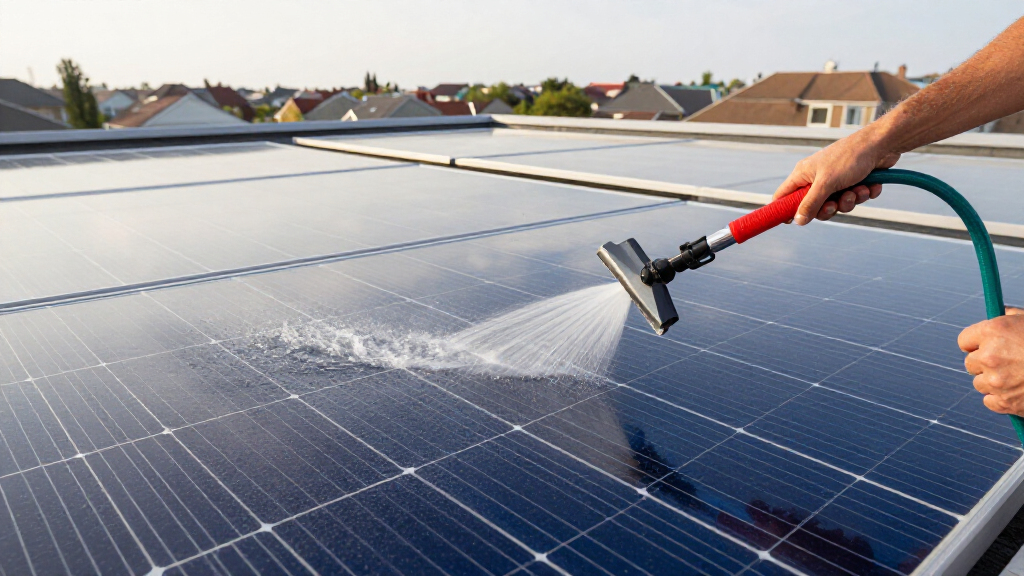

TL;DR
Experts recommend cleaning solar panels only when visibly dirty or obstructed, as routine washing may not significantly boost efficiency. The decision depends on local conditions and panel location.
Solar panel owners are advised that routine washing is often unnecessary unless panels are visibly dirty or obstructed, according to recent expert guidance. This advice challenges the common practice of frequent cleaning and emphasizes condition-based maintenance, which could influence homeowner and commercial solar upkeep strategies.
Multiple industry experts and recent studies indicate that cleaning solar panels should be based on specific conditions rather than a fixed schedule. The U.S. Department of Energy’s National Renewable Energy Laboratory (NREL) and leading solar maintenance companies recommend inspecting panels regularly and cleaning only when dirt, dust, bird droppings, or debris visibly reduce sunlight absorption. Routine washing without clear evidence of dirt may not significantly improve energy output, as panels are designed to withstand environmental exposure.
Some studies cited by experts show that the efficiency loss from dirt accumulation is often minimal, especially in areas with low pollution or infrequent dust storms. Conversely, in regions with high pollution or frequent dust, cleaning can restore optimal performance, but even then, only as needed. The cost and water use associated with cleaning are also factors to consider, encouraging a more measured approach.
Why This Guidance Changes Solar Maintenance Practices
This guidance impacts both residential and commercial solar users by potentially reducing unnecessary maintenance costs and water consumption. It also encourages owners to adopt condition-based cleaning, which can extend panel lifespan and reduce environmental impact. Understanding when cleaning is truly beneficial helps optimize energy output and resource use, making solar power more sustainable and cost-effective.

SKGPOLE 30Ft Reach Solar Panel Cleaning Brush Kit with 5-24ft Telescoping Pole, Water Fed Window Cleaner Tool with 20" Brush, Soap Dispenser, Cobweb Duster, Squeegee for Roof, RV, Gutter, Boat, Deck
- Wide 20" Cleaning Brush: Large coverage for solar panels
- High-Density Nylon Bristles: Protects photovoltaic panels during cleaning
- Four High-Flow Nozzles: Extensive water coverage for deep cleaning
As an affiliate, we earn on qualifying purchases.
As an affiliate, we earn on qualifying purchases.
Historical and Regional Factors Influencing Panel Cleaning
Traditionally, many solar owners and installers have recommended regular cleaning, often on a monthly basis, to maximize efficiency. This practice was based on the assumption that dirt significantly hampers sunlight absorption. However, recent research and industry guidance suggest that environmental conditions largely determine whether cleaning is necessary. In dry, dusty regions, more frequent cleaning may be justified, while in cleaner environments, panels can go longer between washes.
Recent studies from NREL and industry surveys indicate that the marginal gains from routine cleaning are often outweighed by water and labor costs. This shift reflects a broader trend toward more sustainable, condition-based maintenance practices in the solar industry.
“Cleaning solar panels should be based on visible dirt or performance drops, not on a fixed schedule. Regular washing without cause offers little benefit and wastes resources.”
— Dr. Emily Carter, NREL researcher

FROGBRO 1600W MPPT Solar Panel Tester LCD Photovoltaic Multimeter
- Measurement Capacity: Supports panels under 1600W and 60V
- Clear LCD Display: Large screen readable in sunlight
- Automatic VOC Reading: Full automatic voltage measurement in any mode
As an affiliate, we earn on qualifying purchases.
As an affiliate, we earn on qualifying purchases.
Unclear Impact of Long-Term Dirt Accumulation
It is still unclear how long-term, low-level dirt buildup affects panel efficiency over multiple years, especially in highly polluted environments. More longitudinal studies are needed to determine whether infrequent cleaning leads to cumulative performance loss or if panels can maintain efficiency with minimal maintenance.
SKGPOLE 30Ft Reach Solar Panel Cleaning Brush Kit with 5-24ft Telescoping Pole, Water Fed Window Cleaner Tool with 20" Brush, Soap Dispenser, Cobweb Duster, Squeegee for Roof, RV, Gutter, Boat, Deck
- Wide 20" Cleaning Brush: Large coverage for solar panels
- High-Density Nylon Bristles: Protects photovoltaic panels during cleaning
- Four High-Flow Nozzles: Extensive water coverage for deep cleaning
As an affiliate, we earn on qualifying purchases.
As an affiliate, we earn on qualifying purchases.
Future Research and Industry Recommendations for Panel Cleaning
Researchers plan to conduct long-term studies to better quantify the impact of different environmental conditions on panel performance. Industry groups are expected to update maintenance guidelines accordingly, emphasizing condition-based cleaning. Manufacturers may also incorporate self-cleaning technologies or coatings to reduce maintenance needs further.
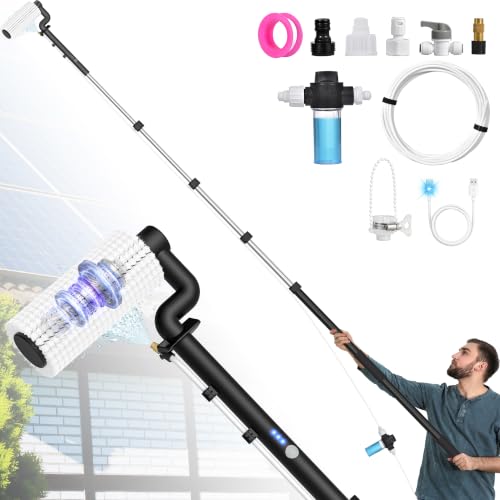
Electric Solar Panel Cleaning Brush, 20Ft, Soap Dispenser & Water Fed Pole
- Lightweight and Durable Material: Made with aerospace-grade aluminum, weighs 2 lbs
- Integrated Foam Cleaning Tank: 100 ml tank for continuous foam generation
- Effective Dirt Penetration: Dense foam penetrates deep into dirt
As an affiliate, we earn on qualifying purchases.
As an affiliate, we earn on qualifying purchases.
Key Questions
How do I know if my solar panels need cleaning?
Inspect your panels regularly for visible dirt, dust, bird droppings, or debris. If you notice a significant reduction in energy output or visible buildup, cleaning may be necessary.
Can cleaning my solar panels damage them?
When done properly, cleaning with soft brushes or sponges and water is safe. Avoid using abrasive materials or high-pressure water, which can damage the panels. Consult your manufacturer’s guidelines for specific instructions.
How often should I clean my panels?
Only clean panels when they are visibly dirty or performance drops are observed. In clean environments, this could mean cleaning every 1-2 years, while in dusty or polluted areas, more frequent cleaning may be justified.
Does cleaning improve efficiency significantly?
Studies suggest that cleaning can restore efficiency if dirt buildup is substantial, but routine washing without visible dirt often yields minimal gains. The benefit depends on environmental conditions and dirt accumulation levels.
Source: hn