TL;DR

Get home appliances delivered free with Prime
- Fast, free delivery on millions of items
- Prime Video, Amazon Music and more included
- Member-only deals all year
Ring plans to launch a $249 Smart Lock in the first few months of 2027 with a hand crank that can generate enough electricity for about 30 seconds of operation. The company says its built-in battery should last up to a year on a charge, but the lock’s exact release date and several product details remain unconfirmed.
Ring has announced an upcoming $249 Smart Lock that uses a built-in hand crank to generate enough electricity for about 30 seconds of operation if its battery runs out. The backup is designed to let users unlock the door with the lock’s fingerprint reader, keypad, Ring app or Alexa, addressing a common concern about losing access when a connected lock has no power.
The crank is a small wheel built into the front of the lock. According to The Ambient’s report, which attributes the product details to Ring, turning it back and forth three or four times generates around three volts. A small motor and supercapacitor inside the lock store and supply that energy, allowing the device to operate normally for a short period rather than switching to a limited low-power mode.
Ring says the lock’s built-in battery should last up to a year on a single charge. The crank is intended as an emergency measure, not the usual way to power or unlock the device. It offers a backup that does not rely on having a spare battery, USB cable or external power source available when the battery is depleted.
The lock will use a single-cylinder deadbolt and will not require additional wiring. Ring plans to offer it in Black, Silver and Brass. The company has not confirmed a precise release date; the current target is the first few months of 2027, with founder Jamie Siminoff reportedly hoping for a launch closer to January than March. Customers can register interest, according to the report.
A Backup for Depleted Batteries
A smart lock can be inconvenient if its power runs out at the wrong time, particularly when a person is outside and cannot reach the battery or another power source. The crank gives the Ring model a way to generate temporary power at the door, so a depleted battery does not necessarily prevent a user from activating the lock’s regular access methods.
The design may be relevant to people who are wary of replacing a conventional key with a connected lock, as well as owners of properties that are not visited often. Siminoff pointed to remote cabins as a possible use: a manual power source could be useful when a user arrives to find the battery empty and has no charging equipment nearby. That is a potential application, not a guarantee that the lock will suit every remote location or operating condition.
The crank does not change the fact that the product depends on electronics for its normal smart features. Rather, it provides a brief emergency operating window. Its practical value will depend on whether the short power supply is enough for users to access the lock as intended and on how the product performs in real-world use.
As an affiliate, we earn on qualifying purchases.
Ring’s Lock and Camera Plans
The hand-crank system is part of Ring’s effort to address a specific concern associated with battery-powered smart locks: users may fear being locked out if the battery dies. Siminoff, Ring’s founder, said that concern can put people off buying a smart lock, according to The Ambient. The announced product pairs a claimed battery life of up to one year with a manual backup for the less frequent case of a depleted battery.
Ring also has other camera hardware in development, according to the report: the Outdoor Cam 4K Plus, Spotlight Cam 4K Plus, Floodlight Cam 4K Plus and Indoor Cam 4K. The company is also preparing a Pan-Tilt Indoor Cam 2K, whose base can rotate 360 degrees and tilt 175 degrees and is designed to follow movement indoors. Those products are separate announcements; the lock’s hand-crank power system is the development at the center of this report.
“Concerns about losing access when a smart lock runs out of power can put people off buying one.”
— Jamie Siminoff, Ring founder, as reported by The Ambient
As an affiliate, we earn on qualifying purchases.
Release Date and Test Results
Ring has not announced an exact launch date. The stated window is the first few months of 2027, while the report says Siminoff hopes to release it closer to January than March. The company has also not provided, in the supplied report, independent test results or further detail on performance across different conditions.
The reported figures—three or four turns, around three volts and approximately 30 seconds of operation—describe Ring’s proposed system, but there is no independent verification in the source material. Details such as how users will know when the battery is depleted, how the lock signals that crank-generated power is ready, and what happens if the crank or internal components fail are not specified. The report also does not give full information about compatibility, installation requirements beyond the single-cylinder deadbolt and no additional wiring, or any required connectivity for each unlocking method.
As an affiliate, we earn on qualifying purchases.
Awaiting Launch Details
Ring’s next major milestone is to confirm a specific release date and make the lock available for sale. The company’s current target remains the first few months of 2027, and people can register interest, according to The Ambient. Further product information should clarify installation, supported configurations, how the emergency power sequence works and the conditions covered by Ring’s battery-life estimate.
Until the lock is released and tested, the crank’s usefulness remains based on the company’s reported specifications rather than independent hands-on results. Prospective buyers will also need to compare its $249 planned price and smart-access features with their own needs, including whether the short emergency power supply and single-cylinder deadbolt design fit their doors.
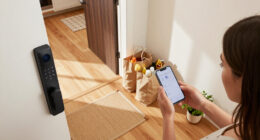
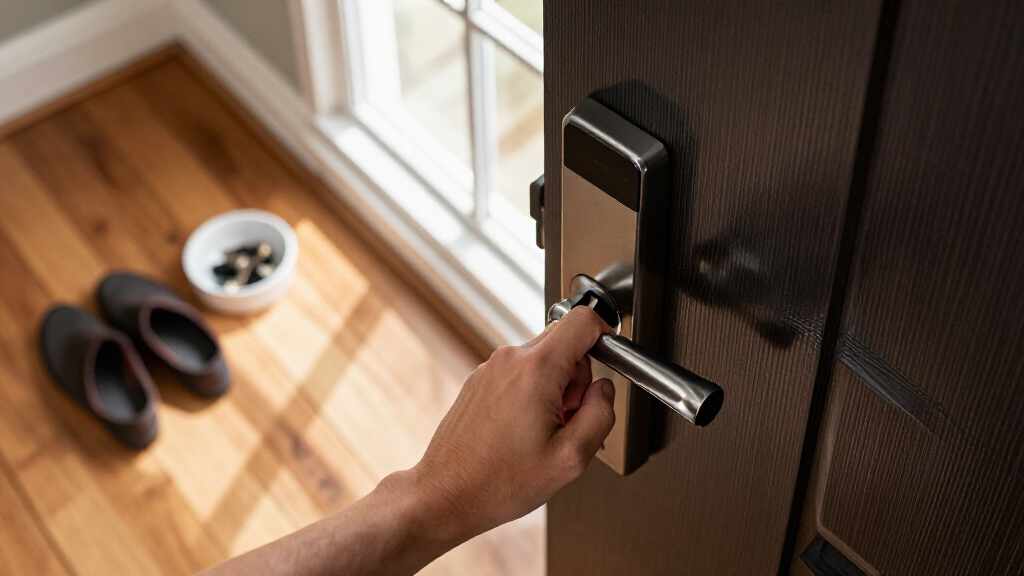
smart lock with fingerprint and keypad
As an affiliate, we earn on qualifying purchases.
As an affiliate, we earn on qualifying purchases.
Key Questions
How does the Ring Smart Lock’s hand crank work?
The wheel on the front of the lock can be turned back and forth three or four times. Ring’s system uses a small motor and supercapacitor to generate and store enough electricity for about 30 seconds of operation, according to The Ambient’s report.
What can users do during the emergency power window?
The reported 30 seconds should allow the lock to operate its usual access methods: the fingerprint reader, keypad, Ring app or Alexa. The source does not provide independent testing of those methods under crank-generated power.
How long should the lock’s battery last?
Ring says the built-in battery should last up to a year on one charge. That is the company’s stated estimate, not an independently verified result, and actual battery life may depend on use and conditions.
When will Ring’s Smart Lock be available, and how much will it cost?
Ring’s current target is the first few months of 2027, but it has not confirmed an exact release date. The planned price is $249, and the lock is expected in Black, Silver and Brass finishes.
Source: rss
Fall yard work Picks
leaf blowers
As an affiliate, we earn on qualifying purchases.