
TL;DR

Get home appliances delivered free — and shop member deals
- Fast, free delivery on millions of items
- Access to Prime Big Deal Days deals on October 6–7
- Prime Video, Amazon Music and more included
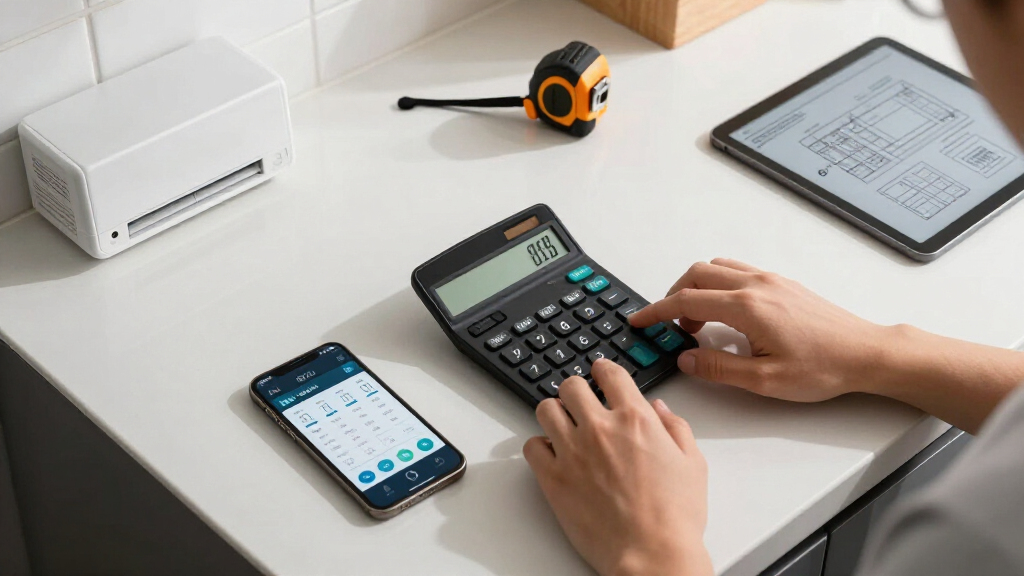
A BTU calculator estimates the cooling capacity needed for your space, based on room size and conditions. Accurate sizing prevents short-cycling, humidity issues, and wasted energy, helping you choose the right air conditioner for your needs.
Use the 20 BTU per square foot rule as a starting point, then adjust for room specifics.
Oversized units cool fast but cause humidity and energy problems; size matters more than raw capacity.
Always factor in sunlight, ceiling height, and occupancy for accurate sizing.
Comparison charts provide quick reference, but a professional load calculation (Manual J) offers ultimate accuracy.
Beware of misleading ratings: portable ACs show different BTU numbers depending on the standard used (ASHRAE vs. SACC).
What is a BTU calculator and why should you use it?
A BTU calculator estimates the **cooling capacity** needed for your room, based on size and conditions. It turns room dimensions into a number — the BTU/h rating — that matches your space perfectly.
Using a calculator helps you avoid common pitfalls: oversizing causes short-cycling and humidity problems, while undersizing leaves you sweaty and frustrated. Think of it as a GPS for your cooling needs, guiding you to the right unit without trial and error.
20 BTU per square foot air conditioner
As an affiliate, we earn on qualifying purchases.
As an affiliate, we earn on qualifying purchases.
How to quickly find your ideal BTU with a simple calculation
Start with the basic rule: about **20 BTU per square foot** of living space. For example, a 250 sq ft room needs roughly 5,000 BTU, while a 350 sq ft room needs around 7,000 BTU.
Adjust for special conditions: add 4,000 BTU for kitchens, increase capacity by 10% for rooms with lots of sun, and subtract 10% for shaded spaces. If your room has high ceilings or is poorly insulated, bump up the number.
Here’s a quick example: a sunny, 300 sq ft living room with high ceilings and a kitchen extension might need around 8,000 BTU.
portable air conditioner BTU calculator
As an affiliate, we earn on qualifying purchases.
As an affiliate, we earn on qualifying purchases.
BTU size chart: What your room needs at a glance
| Room Size | Standard BTU | Adjusted for Conditions |
|---|---|---|
| 150-250 sq ft | 5,000 BTU | 4,500-5,500 BTU |
| 300-350 sq ft | 8,000 BTU | 7,200-8,800 BTU |
| 400-450 sq ft | 10,000 BTU | 9,000-11,000 BTU |
| 450-550 sq ft | 12,000 BTU | 10,800-13,200 BTU |
This table helps you match your room size with the right AC capacity at a glance. Remember, factors like sun exposure and insulation can shift these numbers.
As an affiliate, we earn on qualifying purchases.
Why bigger isn’t always better: the downsides of oversizing
An oversized AC cools rooms quickly but causes more harm than good. It short-cycles, turning on and off rapidly, which wastes energy and wears out the compressor faster. Plus, it doesn’t dehumidify well, leaving your space clammy and uncomfortable.
Imagine a 12,000 BTU unit in a 400 sq ft room — it might chill the air fast but won’t remove enough moisture, leaving the environment sticky. So, always aim for the right size based on your room’s specifics.
Choosing an appropriately sized unit ensures it runs longer and more efficiently, providing consistent comfort without the wasteful energy spikes caused by cycling too frequently. Proper sizing also means better humidity control, which is crucial for comfort and health. Remember, the tradeoff of oversizing is comfort loss and increased costs, so precision matters.
Oversized units may seem advantageous at first because they cool quickly, but this rapid cooling often results in the system shutting off prematurely before dehumidification can occur. This leads to a damp, clammy environment that feels uncomfortable despite the cool air. Additionally, frequent cycling consumes more energy and stresses the system, reducing its lifespan. Therefore, selecting the correct size isn’t just about comfort—it’s about efficiency, durability, and maintaining a healthy indoor environment.
energy efficient air conditioner for large rooms
As an affiliate, we earn on qualifying purchases.
As an affiliate, we earn on qualifying purchases.
How to use an online BTU calculator — step by step
- Measure your room’s length and width — multiply for square footage.
- Input your room size into the calculator.
- Adjust for sunlight, high ceilings, or extra appliances.
- Review the recommended BTU range.
- Select an AC unit close to this size — don’t overshoot.
Frequently Asked Questions
How do I know if my room needs more or less BTU?
Consider factors like sunlight, high ceilings, kitchen appliances, and number of occupants. These can increase or decrease your ideal BTU. Use adjustments in your calculation to fine-tune the size needed.Can I just buy the biggest AC for my room?
No. Oversizing leads to short-cycling and humidity issues, which make your space less comfortable and waste energy. Always aim for a size that matches your room’s actual cooling load.Is a higher BTU always better for hot climates?
Not necessarily. While hotter climates need more cooling power, oversizing still causes problems. A properly sized unit, even in hot weather, delivers consistent comfort and efficiency.How accurate is an online BTU calculator?
It provides a good starting point based on standard assumptions. For the most precise sizing, especially in complex spaces, a professional Manual J calculation is recommended.Conclusion
Choosing the right AC size is less about the biggest number and more about matching your space’s true cooling needs. A simple BTU calculator helps you avoid costly mistakes and keeps your home comfortably cool without wasting energy. Next time you shop, remember: size smart, not giant.Air Conditioner BTU Calculator
Estimate a right-size cooling range from room area, ceiling height, sun exposure, and occupancy.
Your estimate fits a compact room unit. Compare 6,000 BTU air conditioners sized for smaller rooms.
See compact AC matchesYour estimate lands in the mid-size range. Compare 8,000 BTU window air conditioners for bedrooms or offices.
See mid-size AC matchesYour estimate needs a larger-capacity unit. Compare 12,000 BTU air conditioners and confirm room conditions before buying.
See larger AC matchesEstimate only. Check product specs, local rates, and site conditions before buying or planning around these numbers.
Fall yard work Picks
leaf blowers
As an affiliate, we earn on qualifying purchases.