Wicker baskets add a warm, rustic charm and are perfect if you want a cozy, traditional look, but they need careful maintenance and can be vulnerable to moisture damage. Plastic baskets are durable, easy to clean, and great for humid environments, yet they may lack the aesthetic appeal of natural wicker. Choosing between them depends on whether style or resilience matters more to you; explore further to find the best fit for your needs.
Key Takeaways
- Wicker baskets offer a rustic, natural aesthetic but require more care and protection from moisture to maintain longevity.
- Plastic baskets are highly durable, resistant to moisture, pests, and rough handling, making them suitable for high-traffic or outdoor use.
- Wicker provides a warm, decorative appeal ideal for traditional or bohemian decor, while plastic is more utilitarian with limited decorative options.
- Maintenance for wicker involves keeping it dry and avoiding rough handling, whereas plastic is easy to clean and low-maintenance.
- Choice depends on aesthetic preference and durability needs: wicker for style and warmth, plastic for resilience and practicality.
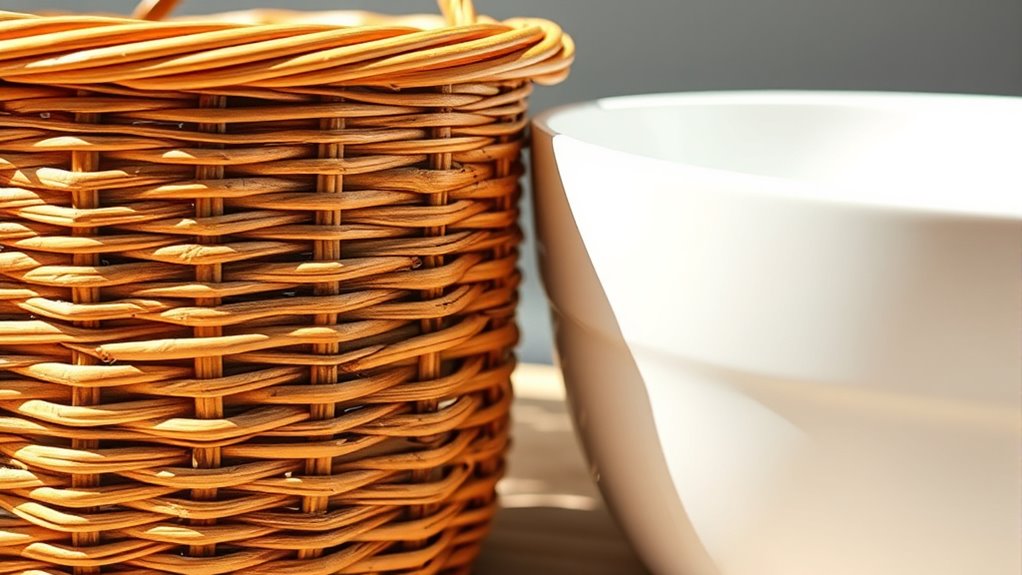
When choosing storage solutions, you might wonder whether wicker or plastic baskets are the better option. Both have their unique strengths, but understanding their material resilience and aesthetic appeal can help you decide which suits your needs best. Wicker baskets, often crafted from natural fibers like rattan, willow, or bamboo, bring a warm, rustic charm to any space. Their material durability depends on quality and care; high-quality wicker can last for years if kept dry and protected from excessive moisture. However, natural fibers are more susceptible to wear and tear over time, especially if exposed to humidity or rough handling. Despite this, their aesthetic appeal is unmatched in creating a cozy, inviting atmosphere. The woven design adds texture and visual interest, making wicker baskets ideal for decorative storage in living rooms, bedrooms, or bathrooms. They blend seamlessly with traditional or bohemian decor styles, enhancing the overall look of your space.
On the other hand, plastic baskets excel in durability and practicality. Made from synthetic materials, they’re resistant to moisture, pests, and rot, making them suitable for humid environments like laundry rooms or outdoor patios. Plastic’s material resilience means they can withstand rough handling and heavy loads without losing shape or integrity. Plus, many plastic baskets are designed with reinforced edges and sturdy bases, boosting their longevity even further. Aesthetic appeal, however, tends to be more utilitarian with plastic. While some come in bright colors and sleek designs, they often lack the natural warmth and texture that wicker offers. If your priority is functional storage that can endure tough conditions and require minimal maintenance, plastic baskets are a reliable choice. They’re lightweight, easy to clean, and often stackable, which makes organizing large spaces more manageable. Additionally, modern plastic baskets are often made with impact-resistant materials, enhancing their durability for everyday use.
Ultimately, your decision hinges on what matters most to you. If you want storage that combines durability with a charming, traditional look, wicker baskets are a great option—just keep in mind they need more care to maintain their appearance and longevity. Conversely, if you need resilient, low-maintenance solutions that stand up to moisture and rough use, plastic baskets deliver in both durability and practicality, though they might lack the decorative appeal of wicker. Both types can serve their purpose well, but understanding their material resilience and aesthetic appeal ensures you pick the right storage solution for your space and lifestyle.

JMvicyroam 65L Extra Large Blanket Basket for Living Room – Woven Cotton Rope Laundry Hamper with Reinforced Handles – Storage Bin for Pillows, Comforters & Toys – Machine Washable,Oatmeal
OVERSIZED 65L/115L BLANKET BASKET CAPACITY — Master household clutter with this extra-large storage solution. Designed specifically as a…
As an affiliate, we earn on qualifying purchases.
As an affiliate, we earn on qualifying purchases.
Frequently Asked Questions
Which Basket Type Is More Eco-Friendly in Production?
Wicker baskets are more eco-friendly in production because they have a better sustainability comparison and lower environmental impact. You’ll find that wicker is made from natural, renewable materials like rattan, bamboo, or willow, which grow quickly and decompose easily. In contrast, plastic baskets rely on fossil fuels, take longer to produce, and contribute more to pollution. So, choosing wicker helps reduce your environmental footprint and promotes greener living.
Are Wicker Baskets Suitable for Outdoor Use?
Yes, wicker baskets are suitable for outdoor use if they’re properly treated. Their material durability improves with weather-resistant coatings, making them withstand sun and rain better. Plus, you’ll love their aesthetic appeal, adding a natural, charming touch to your outdoor space. Just guarantee you regularly maintain and protect them to prolong their lifespan, as untreated wicker can deteriorate quickly when exposed to the elements.
How Do Maintenance Needs Compare Between Wicker and Plastic?
Imagine your baskets as silent guardians of order. Wicker needs gentle cleaning with a soft brush or damp cloth to prevent dust buildup and preserve its charm, but it’s more prone to dust accumulation and moisture damage. Plastic, on the other hand, is a resilient warrior, easily wiped clean, requiring less maintenance. Its smooth surface resists dust, making upkeep simple and quick for your busy routine.
Can Wicker Baskets Be Recycled Easily?
Wicker baskets aren’t easily recyclable due to recycling challenges, as their natural materials often aren’t accepted by standard facilities. This can increase their environmental impact because they may end up in landfills instead of being reused or recycled. If you’re eco-conscious, you might want to evaluate alternatives or repurpose wicker baskets to reduce waste. Overall, while charming, wicker baskets pose recycling difficulties that impact their sustainability.
Which Basket Type Offers Better UV Resistance?
Imagine your basket basking in the sun—plastic baskets generally offer better UV resistance than wicker. Plastic’s UV durability means it withstands sunlight longer without fading or cracking, ensuring material longevity. Wicker, on the other hand, tends to deteriorate faster under UV exposure, reducing its lifespan. So, if you’re seeking a basket that endures outdoor elements, plastic is your best bet for long-term durability and keeping its appearance.

Rubbermaid Large Hip-Hugger Laundry Basket/Hamper, 1.5-Bushel, White, Stackable Storage Bin/Organizer for Bathroom/Bedroom/Dorm/Home
Lightweight, easy to lift plastic laundry basket
As an affiliate, we earn on qualifying purchases.
As an affiliate, we earn on qualifying purchases.
Conclusion
Ultimately, choosing between wicker and plastic baskets is like selecting between tradition and practicality. Wicker symbolizes warmth, craftsmanship, and nature’s touch, while plastic stands for durability and ease. Your choice reflects what you value most—timeless charm or modern convenience. Remember, each basket is a vessel carrying your stories and needs. Whichever you pick, let it be a reflection of your lifestyle, turning everyday storage into a meaningful part of your home’s story.

Goodpick Wicker Storage Basket for Living Room, Small Round Woven Basket for Toys, Towel, Bedroom, Children Corner Decoration Plant Baskets Indoor, Jute, 10"D x 8.3"H
Jute material: jute rope, it's foldable. This woven basket touch soft, no sharp corners. You can use it…
As an affiliate, we earn on qualifying purchases.
As an affiliate, we earn on qualifying purchases.

Keter Marvel Plus 71 Gallon Resin Outdoor Storage Box for Patio Furniture Cushions, Throw Pillows, Garden Tools and Pool Floats, Brown
DIMENSIONS “ Compact Yet Spacious for Small Spaces: Exterior: 45.9" W x 17.4" D x 22.2" H /…
As an affiliate, we earn on qualifying purchases.
As an affiliate, we earn on qualifying purchases.