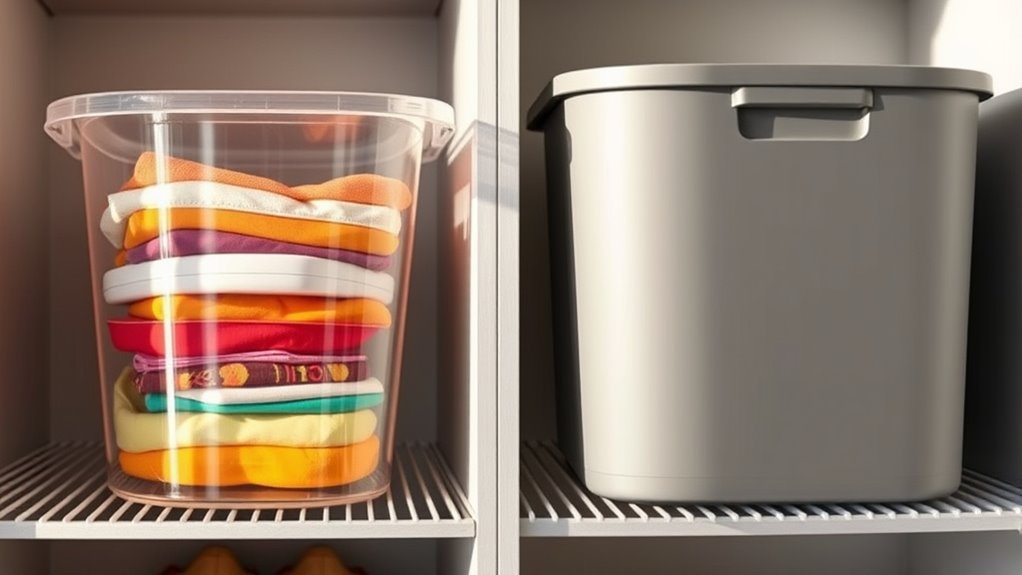

If you want easy organization and quick identification, transparent bins are your best choice—they let you see contents instantly and look sleek in modern spaces. On the other hand, opaque bins hide waste and create a tidy, discreet look, which is great if you prefer a clean appearance. Consider whether label visibility or concealment matters most for your needs. Keep exploring to discover more tips on choosing the right storage solution for your space.
Key Takeaways
- Transparent bins enable quick identification of contents, reducing rummaging and enhancing organization efficiency.
- Opaque bins hide waste, maintaining a tidy appearance but may slow down sorting.
- Clear labels are more visible on transparent bins, improving label visibility and overall organization.
- Opaque bins conceal waste, which can help keep spaces looking clean but might decrease awareness of contents.
- Overall, transparency supports better waste management habits, while opacity emphasizes concealment and aesthetic discretion.
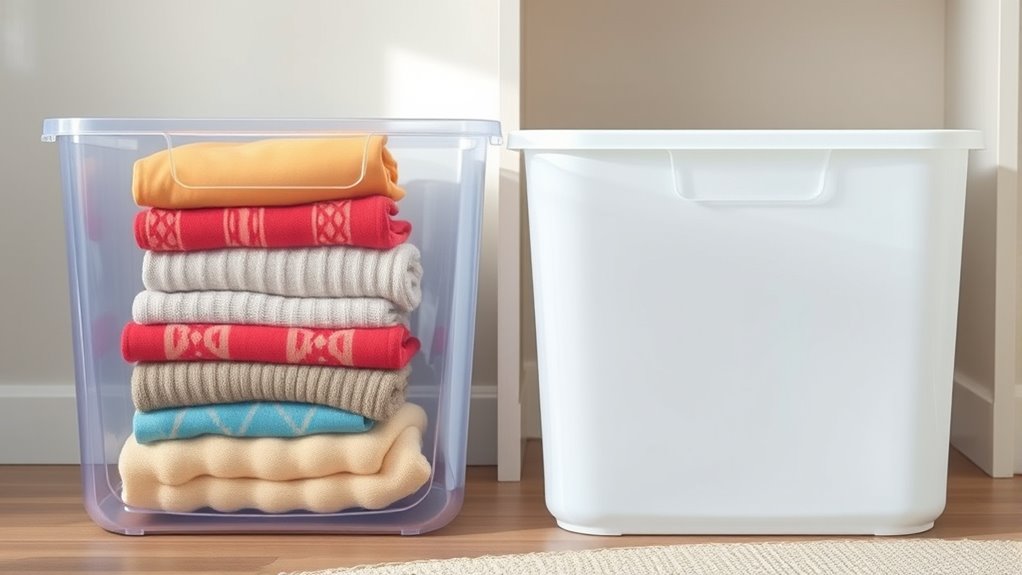
When choosing waste bins, understanding the differences between transparent and opaque options can help you make the best decision for your needs. One of the first things to consider is label visibility. With transparent bins, labels can be easily seen through the clear material, making it simple to identify the contents at a glance. This is especially helpful if you’re sorting recyclables or managing multiple waste streams, as you won’t have to rummage through the bin to check what’s inside. On the other hand, opaque bins obscure their contents, so labels need to be prominently displayed on the outside. If the labels are clear and strategically placed, you can still quickly identify what’s in the bin, but it requires more attention compared to transparent options.
Transparent bins offer easy label visibility, making waste sorting quick and straightforward.
Aesthetic appeal also plays a significant role in your choice. Transparent bins tend to have a modern, sleek look that can seamlessly blend into contemporary or minimalist spaces. Their see-through nature can make a cluttered interior appear more organized because you can see what’s inside without opening the lid. This visual transparency can also encourage more responsible waste disposal, as it’s harder to ignore the contents and avoid sorting properly. Conversely, opaque bins often have a more traditional or discreet appearance, which can be desirable if you want to hide unsightly waste or keep your space looking tidy. They’re available in various colors and styles, allowing you to match your decor or create a uniform look across different areas.
Durability and cleanliness are additional factors to think about. Transparent bins might show dirt, stains, or spills more readily, prompting more frequent cleaning. Opaque bins tend to hide minor messes, which can be convenient but might also lead to neglect if you don’t regularly check their contents. When it comes to durability, both types can be made from sturdy materials, but transparent plastics can sometimes be more prone to scratches or clouding over time, affecting their appearance and label visibility.
Ultimately, your choice hinges on your priorities. If quick identification and a modern look are paramount, transparent bins are a solid pick. If you prefer hiding waste, maintaining a cleaner aesthetic, and matching your decor, opaque bins might serve you better. Considering how each option impacts label visibility and aesthetic appeal will help you select the waste bin that keeps you organized and enhances your space. Additionally, incorporating space-saving solutions can optimize your waste management system and further support organization.
Frequently Asked Questions
Are Transparent Bins More Durable Than Opaque Ones?
You might wonder if transparent bins are more durable than opaque ones. Generally, transparent bins made from thicker, high-quality plastic have better material strength and impact resistance, making them sturdy for everyday use. However, their durability depends on the specific material and manufacturing quality. Opaque bins can sometimes be more durable if made from stronger plastics, but if transparency is a priority, choose bins with reinforced plastic for better impact resistance.
Can Transparent Bins Prevent Theft Better Than Opaque Bins?
You might think transparent bins prevent theft better because they act as a visual theft deterrent, making it obvious if something’s missing. However, if privacy concerns are a priority, opaque bins are more effective because they hide contents, reducing temptation. While transparent bins deter theft visually, they may compromise privacy, so consider your specific needs when choosing between the two.
Which Bin Type Is More Environmentally Friendly?
Ever notice how your choices mirror the environment’s needs? When you pick bins, remember that opaque ones often use less material, reducing manufacturing impact. Transparent bins might boost recycling benefits since contents are visible, encouraging proper sorting. Overall, if your goal’s to be eco-friendly, opt for bins that minimize waste and support recycling programs—making your organization efforts greener and more sustainable in the long run.
Do Opaque Bins Retain Odors Better Than Transparent Ones?
You might wonder if opaque bins do a better job at odor containment than transparent ones. Generally, opaque bins better hide scent visibility, helping keep odors contained and less noticeable. The solid walls prevent you from seeing the smell, which can help you feel more organized. So, if odor control is your priority, opaque bins tend to be more effective at containing odors and reducing scent visibility, making your space smell fresher longer.
Are There Size Limitations for Transparent or Opaque Storage Bins?
Think of storage capacity and stacking limitations as your bins’ size boundaries. Both transparent and opaque bins come in various sizes, from small containers perfect for tiny items to large ones for bulky belongings. Your choice depends on what you need to store and how much space you have. Keep in mind, larger bins might have stacking restrictions, so plan your storage setup accordingly to maximize efficiency and avoid clutter.
Conclusion
Ultimately, choosing between transparent and opaque bins is like selecting the right lens for a masterpiece—you want clarity or mystery, depending on your needs. Transparency offers a window into your space, making organization feel like a well-rehearsed symphony. Opaque bins, on the other hand, guard your secrets and maintain a clean aesthetic. Either way, your decision shapes how effortlessly your space functions—turning your home into a harmonious work of art, just like the masters intended.