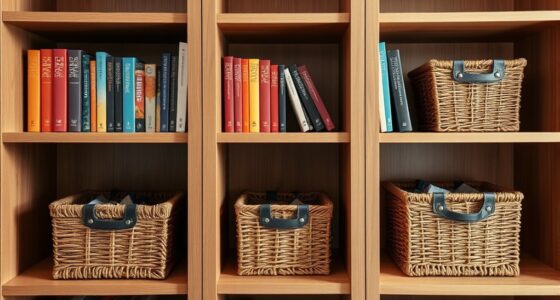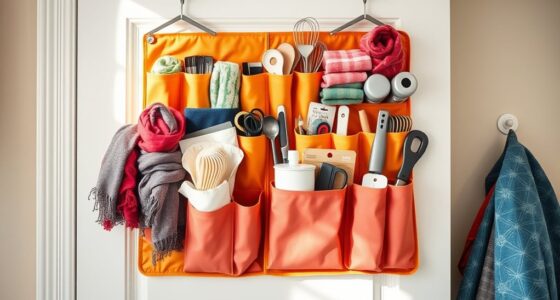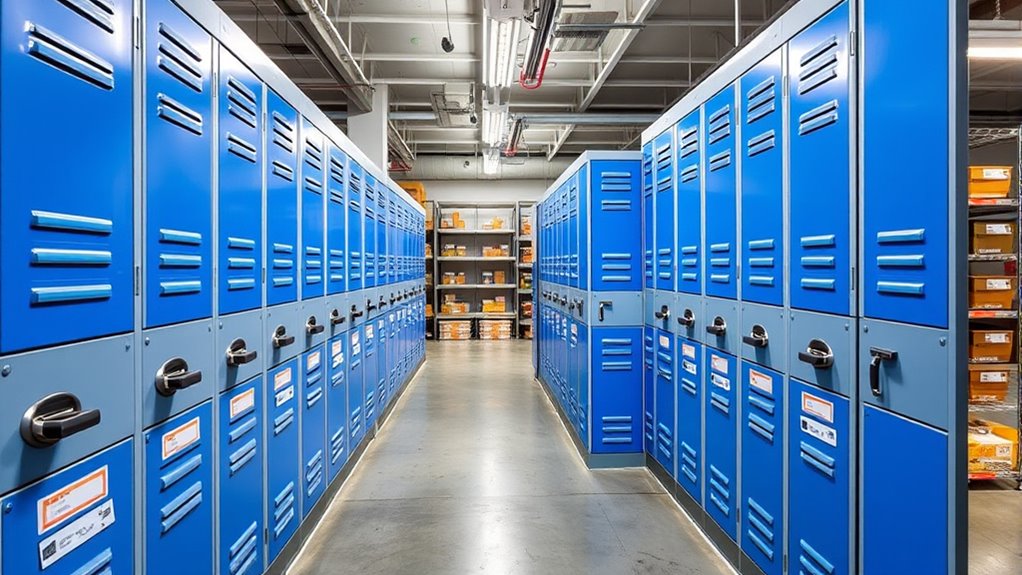
To organize your self-storage unit efficiently, plan your layout before packing, placing frequently accessed items at the front and heavy or infrequently used ones in the back. Use uniform bins, label boxes clearly, and maximize vertical space with stacking and shelving. Keep pathways clear for easy access and create an inventory list. Follow facility security guidelines and always verify your security measures. Keep learning how to optimize your storage for best results and peace of mind.
Key Takeaways
- Plan your layout before packing, placing frequently accessed items at the front for easy retrieval.
- Use uniform, sturdy containers and label boxes clearly for efficient organization.
- Maximize vertical space by stacking boxes securely and utilizing shelving units if available.
- Keep pathways clear and create an inventory list to locate items quickly.
- Follow security protocols by managing access carefully and regularly checking locks and surveillance.
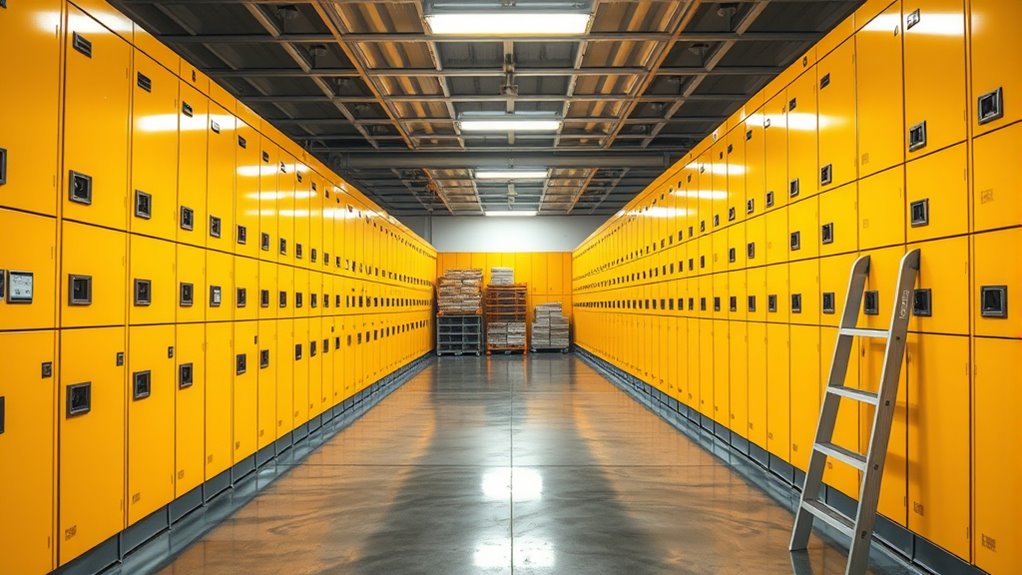
Self-storage lockers offer a convenient and secure way to organize your belongings when space is limited. When choosing a facility, it’s vital to pay attention to security protocols designed to protect your items from theft or damage. Reputable storage providers implement multiple layers of security, such as surveillance cameras, well-lit premises, and secure fencing, to deter unauthorized access. These measures guarantee that your belongings stay safe, giving you peace of mind. Additionally, access management plays an essential role in maintaining security. Many facilities require personalized access codes or keycards, which limit entry to authorized individuals only. This controlled access helps prevent accidental or malicious interference, making sure your storage unit remains private and secure at all times.
Once you’ve selected a facility with strong security protocols, organizing your unit efficiently becomes your next priority. Start by planning the layout before you begin packing. Think about the items you’ll need most often and place them near the front for easy retrieval. Heavy or less frequently used items should go toward the back or on the bottom to maximize space and stability. Use uniform containers or sturdy bins to keep things neat, making stacking and accessing items more straightforward. Label each box clearly, indicating its contents and the date, so you can locate specific items without unnecessary rummaging. Creating an inventory list can also save time, especially if you store many belongings.
Maximize your space by utilizing vertical storage, stacking boxes securely, and making use of shelving units if available. Keep pathways clear within your unit so you can access your items easily without having to move everything around. When managing access, always follow the facility’s guidelines—never share your access codes or keys with others, and be cautious about who you allow to enter your unit. Regularly check the security features, such as locks and surveillance footage, to guarantee everything remains in order. If you notice any irregularities, report them immediately to the management team.
Frequently Asked Questions
How Can I Prevent Theft in Self-Storage Units?
To prevent theft in your self-storage units, you should enhance security by installing security cameras to monitor activity and deter thieves. Implement access control measures, such as personalized key codes or electronic gates, to restrict entry only to authorized individuals. Regularly check security footage and keep records of access. These steps create a safer environment, reduce theft risk, and give you peace of mind knowing your stored belongings are protected.
What Are the Best Practices for Long-Term Storage?
Think of your storage as a well-oiled machine. Use climate control to protect sensitive items from moisture and temperature fluctuations. Pack items tightly with proper techniques—think sturdy boxes, cushioning, and labeling—to maximize space and prevent damage. Avoid overloading shelves, and keep an inventory list. Regularly check on your unit to catch issues early. This approach keeps your belongings safe and in top shape for the long haul.
How Do Weather Conditions Affect Stored Items?
Weather conditions critically impact your stored items. Extreme heat or cold can cause damage, so using climate control helps maintain a stable environment. Moisture prevention is key; consider using dehumidifiers and moisture barriers to stop mold, rust, or warping. Keep items off the floor and in sealed containers to shield them from humidity and temperature fluctuations. Proper climate control and moisture prevention ensure your stored belongings stay safe and in good condition.
Can I Access My Locker After Hours?
Yes, you can access your locker after hours if the facility offers after-hours access. Check the access hours posted by your storage provider; many offer 24/7 access or extended hours for convenience. Make sure you have your key or access code ready, and always review any specific policies for after-hours access. This way, you can retrieve or store items whenever it suits your schedule.
What Security Features Should I Look for in a Facility?
Think of security features like a fortress guarding your treasures. You should look for access controls like keypad entry, PIN codes, or key cards, ensuring only authorized people get in. Surveillance cameras act as vigilant guards watching every move. These features combined give you peace of mind, knowing your belongings are safe and secure, even when you’re not around. Always choose a facility with robust security to protect your valuable possessions.
Conclusion
By organizing your self-storage lockers efficiently, you’ll maximize space and easily find what you need. Did you know that properly arranged units can increase storage capacity by up to 30%? This means more room for your belongings without the need for extra units. Take the time to categorize, label, and optimize your setup. You’ll save time, reduce stress, and get the most out of your storage space—making the entire process much smoother and more enjoyable.