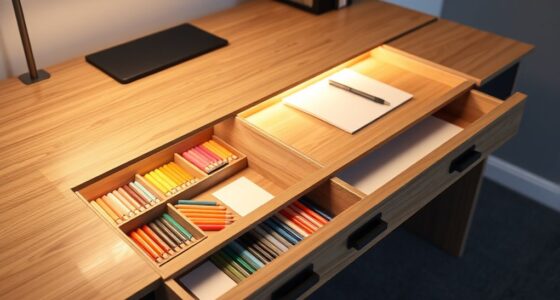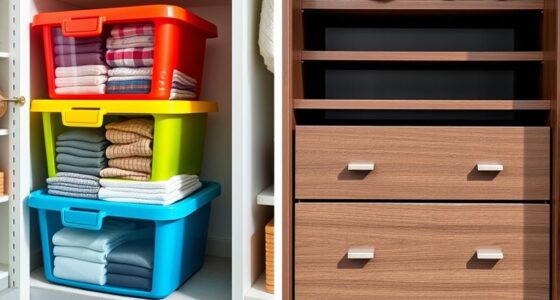
Repurposing old furniture for storage helps you make the most of limited space while adding charm and character to your home. You can turn vintage trunks into hidden-storage coffee tables or transform an old ladder into a unique bookshelf. It’s a cost-effective, eco-friendly way to customize your decor and create functional, stylish pieces. Keep exploring to discover more exciting ideas about giving your vintage furniture a fresh purpose.
Key Takeaways
- Repurposing old furniture maximizes space and adds vintage charm to your home decor.
- Creative projects like turning ladders or trunks into storage units enhance functionality and style.
- Vintage furniture introduces layered textures, warmth, and character for a cozy, inviting environment.
- DIY repurposing offers cost-effective, eco-friendly solutions that reduce waste and personalize your space.
- Multi-purpose and customized pieces optimize small spaces while reflecting your unique aesthetic.
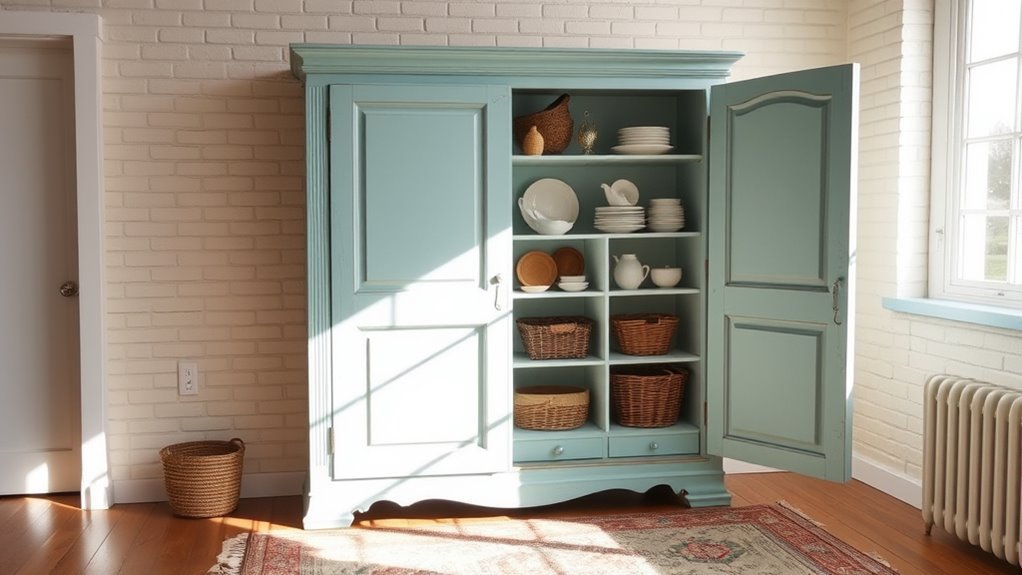
If you’re looking to maximize space and add a unique touch to your home, repurposed furniture storage offers a creative solution. Instead of discarding old pieces, you transform them into functional storage units that bring character and practicality together. This approach not only conserves resources but also adds a touch of vintage aesthetics to your living space. When you repurpose furniture, you get to choose pieces with history and charm, turning them into statement pieces that reflect your personal style.
Imagine turning an old wooden ladder into a bookshelf or using vintage trunks as coffee tables with hidden storage. These repurposed items serve dual purposes, helping you optimize space while maintaining a distinctive look. Vintage aesthetics play a crucial role in this process because they evoke nostalgia and charm, making your home feel warm and inviting. By incorporating aged, weathered furniture, you create a layered, textured environment that’s both stylish and functional. Plus, vintage pieces often have built-in character that modern furniture can’t replicate, giving your space a sense of history and uniqueness.
Vintage furniture adds warmth and character, turning your space into a charming, layered environment full of history and style.
Space optimization is at the core of repurposed furniture storage. You can strategically select pieces that serve multiple functions—like a chest that doubles as seating or an antique sideboard with drawers for organizing essentials. These solutions allow you to make the most of limited space, especially in smaller homes or apartments. Repurposing also encourages creativity; you might paint, reupholster, or add decorative touches to customize each piece to your taste. This process ensures your storage solutions aren’t just practical but also visually appealing. Additionally, understanding second trimester developments can help you plan your space to accommodate upcoming needs within your home.
Another advantage of repurposed furniture is its affordability. You can often find vintage or discarded furniture at thrift stores, flea markets, or online marketplaces for a fraction of the cost of new, high-end storage options. With a little effort and some DIY skills, you can breathe new life into these pieces, turning them into eye-catching storage solutions that match your decor. This eco-friendly approach reduces waste while allowing you to craft a personalized, stylish environment.
Ultimately, repurposed furniture storage blends vintage aesthetics with space optimization, helping you create a home that’s both functional and full of character. It’s about more than just saving space—it’s about telling a story with your furniture, giving old pieces a new purpose, and making your home feel uniquely yours. Whether you’re a seasoned DIY enthusiast or just starting, this approach offers endless opportunities to innovate and personalize your living space.
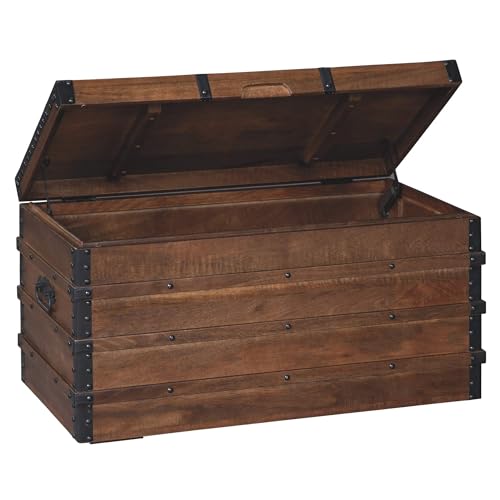
Signature Design by Ashley Kettleby Vintage Wood Storage Trunk or Coffee Table with Lift Top 19", Brown
STORAGE TRUNK: Organization and style merge with this storage trunk. It's an ideal complement in small spaces for…
As an affiliate, we earn on qualifying purchases.
As an affiliate, we earn on qualifying purchases.
Frequently Asked Questions
How Do I Ensure Safety With Repurposed Furniture Storage?
To guarantee safety with repurposed furniture storage, you should focus on child safety and weight capacity. Secure furniture to the wall to prevent tipping, especially if kids might climb on it. Check that drawers and shelves can hold the intended weight without sagging or breaking. Use non-toxic paints and finishes, and regularly inspect for loose parts or damage. These steps keep your repurposed pieces safe and functional for everyday use.
What Tools Are Essential for Refurbishing Old Furniture?
Did you know that using the right tools can increase your refurbishing efficiency by up to 50%? To get started, you’ll need a reliable power drill for drilling and assembling, along with sanding tools to smooth surfaces and remove old paint or finish. These essentials help you work faster and achieve a professional look. Make sure to select quality tools to guarantee safety and durability during your furniture makeover project.
Can I Customize Storage Solutions for Specific Items?
Yes, you can customize storage solutions for specific items by designing custom designs with tailored compartments. You should measure your items carefully and plan how each piece will fit into the furniture. Use adjustable dividers or removable inserts to adapt to different sizes. This way, you create a practical, personalized storage space that keeps everything organized and easily accessible, maximizing your furniture’s functionality.
How Do I Choose the Right Finish for Repurposed Furniture?
When choosing the right finish for your repurposed furniture, consider the finish options that match your style and needs. Think about durability factors like water resistance and wear resistance, especially if the piece will see frequent use. For a rustic look, opt for wax or oil; for a sleek, modern finish, go for varnish or polyurethane. Matching the finish to your environment guarantees your furniture remains beautiful and functional longer.
What Are Eco-Friendly Options for Furniture Repurposing?
Think of your furniture as a canvas for eco-friendly artistry. You can choose sustainable materials like reclaimed wood, bamboo, or recycled metal to breathe new life into old pieces. Use green cleaning products to keep your project environmentally gentle. These choices not only save resources but also create a stylish, conscious space. Embrace green practices, and your repurposed furniture will tell a story of sustainability and craftsmanship.
repurposed wooden ladder bookshelf
As an affiliate, we earn on qualifying purchases.
As an affiliate, we earn on qualifying purchases.
Conclusion
By repurposing furniture for storage, you not only give old pieces a fresh purpose but also reduce waste and save money. Did you know that upcycling furniture can cut household waste by up to 30%? So, next time you’re considering new storage solutions, think creatively and breathe new life into your existing pieces. It’s a sustainable choice that transforms your space and benefits the environment—plus, it’s easier than you might think!
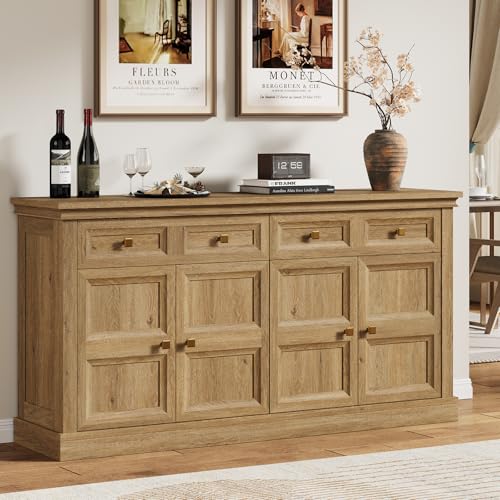
ONBRILL 63 Inch Buffet Cabinet with Storage, Large Sideboard Credenza with Drawers, 4 Doors Storage Sideboards, Accent Kitchen Coffee Bar Cabinets for Living Room Entryway, Oak Brown
Ample Storage Sideboard: This sideboard features two double-door cabinets and two extra-large drawers, providing ample space for tableware,…
As an affiliate, we earn on qualifying purchases.
As an affiliate, we earn on qualifying purchases.
upcycled furniture storage solutions
As an affiliate, we earn on qualifying purchases.
As an affiliate, we earn on qualifying purchases.