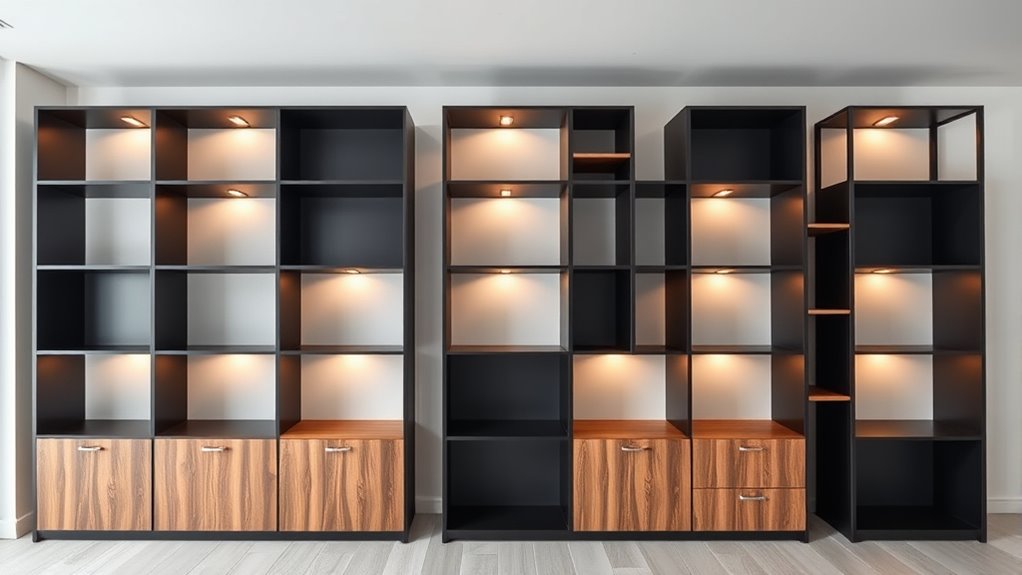

To design a future-proof layout with modular shelving systems, focus on flexibility, using adjustable and reconfigurable components. Plan for expansion by including additional modules that can seamlessly integrate as your storage needs grow. Optimize space by maximizing vertical and horizontal use, and choose materials and styles that match your aesthetic. With these adaptable features, your storage setup will evolve effortlessly. Keep exploring to discover how to tailor your system for long-term functionality and efficiency.
Key Takeaways
- Prioritize adjustable modules to easily reconfigure and expand as storage needs evolve over time.
- Optimize vertical and horizontal space to future-proof against increasing inventory or collection sizes.
- Choose versatile materials and finishes that can adapt to changing interior design or branding requirements.
- Design with scalability in mind, allowing seamless addition of modules without major disruptions.
- Incorporate flexible layouts suitable for various environments, ensuring adaptability for different organizational priorities.
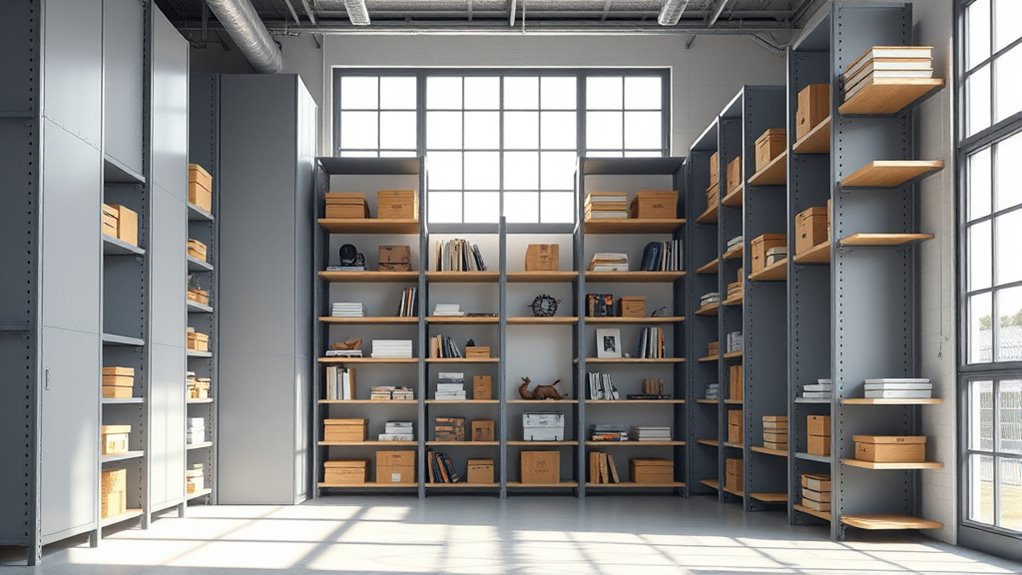
Modular shelving systems offer flexible and customizable storage solutions that adapt to your needs. Whether you’re organizing a home office, retail space, or warehouse, these systems give you the ability to tailor your storage to fit your specific requirements. One of the key features that make them so versatile is their adjustable components. You can easily modify shelf heights, add or remove sections, and reconfigure the layout as your space or storage needs change. This adaptability guarantees your shelving system remains functional and efficient over time, eliminating the need for costly replacements or extensive renovations.
Modular shelving adapts to your needs with adjustable components for lasting, flexible storage solutions
By leveraging adjustable components, you can optimize every inch of your space. Instead of traditional fixed shelves that might leave unused gaps or force you to buy additional storage units, modular systems allow you to maximize vertical and horizontal space. For example, if you acquire larger items or need more room for certain objects, you can simply adjust the shelves or add new modules without disrupting the entire setup. This level of control helps you achieve better space optimization, which is vital when working with limited or valuable real estate.
Additionally, modular systems encourage a proactive approach to organization. As your collection or inventory grows, you can seamlessly expand your shelving units. When you need to add new sections, it’s as straightforward as snapping in new modules or adjusting existing components. This scalability means you’re not locked into a rigid storage plan that might become obsolete quickly. Instead, you create a future-proof layout that evolves with your changing needs.
The beauty of modular shelving lies in its ease of customization. No tools or specialized skills are generally required to reconfigure these systems, making it accessible for anyone. You can adapt the design for specific purposes—whether you need open shelving for display or enclosed units for privacy and protection. This flexibility guarantees your storage system remains aligned with your priorities, whether that’s easy access, aesthetic appeal, or security.
Furthermore, modular systems often come in a variety of materials, colors, and finishes, allowing you to match your shelving to your existing décor or branding. They can be installed in tight corners, along walls, or as standalone islands, making them suitable for diverse environments. This adaptability not only enhances functionality but also contributes to a cohesive, professional look that can grow with your business or household. Also, understanding home organization concepts can help you design more effective layouts using modular systems.
Frequently Asked Questions
What Materials Are Best for Modular Shelving Durability?
When considering the best materials for modular shelving durability, you’ll want to compare options like steel, wood, and plastic. Steel offers excellent strength and longevity, making it ideal for heavy loads. Wood provides a natural look but varies in durability based on type and treatment. Plastic is lightweight and resistant to moisture but may not hold up under heavy use. Focus on durability factors like strength, resistance to wear, and ease of maintenance to choose the best material.
How Do I Customize Modular Shelving for Uneven Walls?
To customize modular shelving for uneven walls, you should focus on wall anchoring and flexible configurations. Use adjustable brackets and shims to stabilize the shelves against irregular surfaces. Incorporate flexible components that allow you to tailor each section to fit the wall’s contours. This way, you guarantee your shelving remains secure and functional, even on uneven walls, giving you a tailored, seamless look that adapts to your space.
Can Modular Systems Support Heavy or Bulky Items?
Think of your modular system as a sturdy ship ready to carry heavy cargo. You can support bulky items if you choose units with reinforced wall mounting and high weight capacity. Always check the specifications to make certain each shelf can handle your heaviest items. Properly anchoring your modules guarantees they won’t sink under pressure, keeping your storage both safe and flexible for future needs.
Are Modular Shelves Suitable for Outdoor Environments?
You can definitely use modular shelves outdoors if you choose the right materials. Look for systems with weatherproof coatings and UV-resistant materials, which safeguard against sun, rain, and other elements. These features ensure your shelves stay durable and functional over time. By selecting modules specifically designed for outdoor use, you get flexible storage that withstands environmental challenges while maintaining a sleek appearance.
What Is the Average Lifespan of Modular Shelving Units?
The average lifespan of modular shelving units depends on factors like shelving maintenance and installation tips you follow. Typically, with proper care, they last 5 to 10 years, but outdoor use may reduce this. Regularly check for wear, clean them, and guarantee correct installation to extend their durability. Proper shelving maintenance and following installation tips help maximize your investment and ensure your modular units stay functional longer.
Conclusion
As you design your space with modular shelving, imagine a landscape that evolves with your needs—each shelf a stepping stone, adaptable and resilient. Picture your environment transforming seamlessly, with every piece fitting perfectly into the next, creating a future-proof layout that grows with you. Embrace this flexible approach, and watch your space become a dynamic canvas—ready to hold whatever the future holds, sturdy yet ever-changing like a well-crafted mosaic.