To double your drawer capacity, avoid traditional bulky folding methods and switch to a space-saving technique like folding clothes into tight, uniform rolls or using flat fold methods that maximize space. Keep your folds consistent, handle fabrics gently, and stack items neatly to prevent gaps or bulges. Utilizing this efficient fold not only saves space but also keeps your drawer organized. Keep exploring how this simple change can transform your storage system and boost capacity.
Key Takeaways
- Use uniform folding techniques like the roll fold to maximize space and create consistent, compact stacks.
- Fold clothing into smaller, neat shapes to reduce bulk and improve drawer capacity.
- Avoid uneven or bulky folds that cause gaps, gaps, or bulges, wasting space.
- Implement color coding and organized stacking to enhance accessibility and prevent clutter.
- Practice systematic folding and regular maintenance to sustain optimal drawer utilization.
Why Traditional Folding Wastes Space and Hurts Organization
Traditional folding methods often lead to wasted space and disorganized closets because they don’t maximize the shape or size of your items. When you fold clothes the usual way, you might take longer than necessary, reducing your folding speed and making the process less efficient. Plus, this approach doesn’t consider material flexibility, so fabrics can bunch up or leave gaps that waste drawer space. Rigid folding techniques ignore how different fabrics bend or stretch, resulting in uneven stacks and less room for more clothes. As a result, your drawer capacity remains underused, and your closet becomes cluttered. To optimize space, you need a folding method that considers material flexibility and allows you to fold quickly and neatly, making better use of every inch. Understanding material properties can help you choose the best folding techniques for different fabrics and maximize space efficiency. Incorporating flexible folding strategies can further enhance organization and efficiency in your drawer space, especially when tailored to the specific fabric types you own.
The Key Principles That Maximize Drawer Space
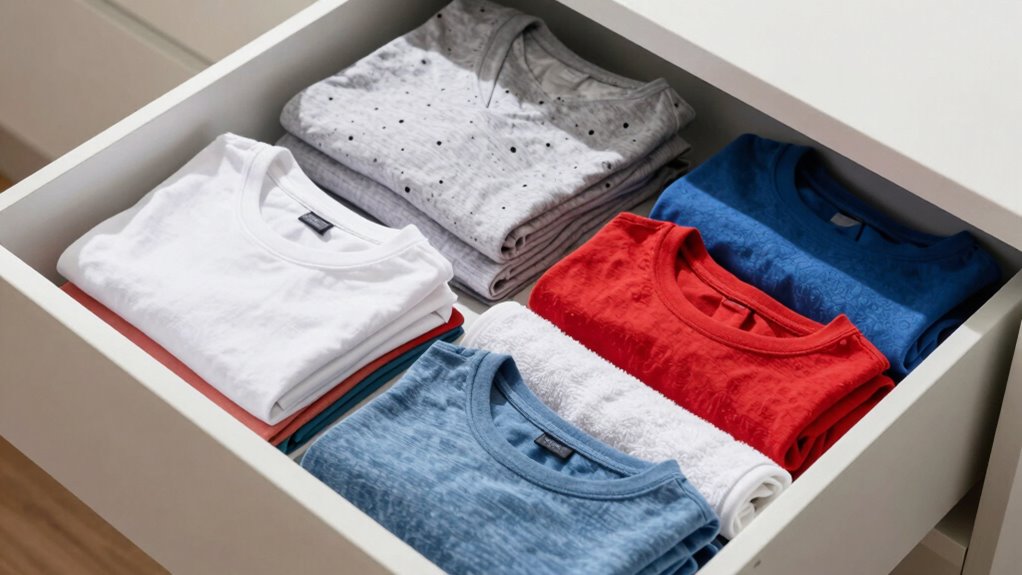
Using uniform folding techniques helps you fit more items neatly into your drawer. When your clothes are all the same size, stacking becomes more efficient and easier to access. Keep these principles in mind to maximize space and stay organized. Additionally, maintaining clear storage spaces allows for better visibility and easier retrieval of your folded items. Incorporating organization strategies can further enhance your drawer efficiency and help sustain an organized system. Ensuring proper storage optimization can prevent overcrowding and improve overall accessibility. Applying space planning principles ensures your storage solutions are functional and adaptable for your needs.
Uniform Folding Techniques
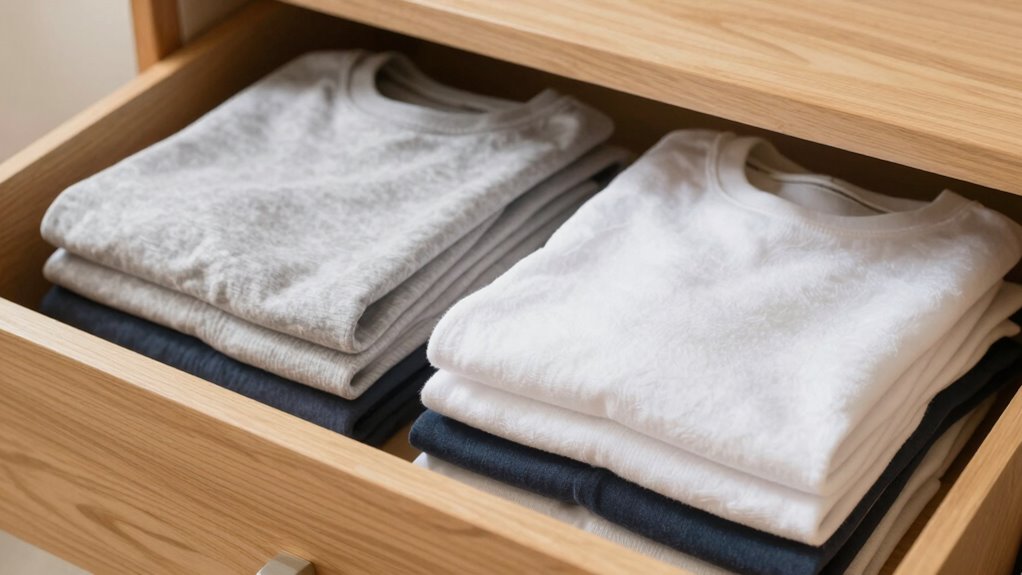
To maximize drawer space, mastering uniform folding techniques is essential. When you fold clothes consistently, they stack neatly, making the most of every inch. Keep clothing tags hidden or tucked in to avoid uneven bulges, and use folding accessories like foam boards or clips to guarantee straight, even edges. Uniform folds create a tidy, organized drawer that’s easier to access and maintain. Focus on these key principles:
- Fold all items to the same size and shape for consistency
- Use folding accessories to sharpen edges and streamline appearance
- Tuck clothing tags to prevent unevenness or bulk
- Maintain a systematic approach for every item to ensure uniformity
- Standardized techniques help ensure every fold aligns perfectly, maximizing space efficiency and reducing passive voice in your instructions. Incorporating professional folding methods can further enhance your drawer organization and efficiency.
These practices help you double drawer capacity and keep your wardrobe looking neat.
Consistent Item Sizes
Maintaining consistent item sizes is essential for maximizing drawer space and keeping your wardrobe organized. When you fold clothes uniformly, it’s easier to stack and fit more items without wasting space. Pay attention to fabric textures; softer fabrics may need gentle handling, but still should be folded to match the size of sturdier pieces. Consistent sizes improve folding aesthetics, creating a neat, uniform look that simplifies finding what you need. Avoid irregular folds that cause gaps or bulges, which reduce capacity. By aligning the dimensions of each item, you ensure a tidy drawer that optimizes every inch. Incorporating proper folding techniques can help maintain these consistent sizes over time. This disciplined approach not only boosts capacity but also makes your wardrobe more visually appealing and easier to maintain over time.
Choosing the Best Fabrics for Folding Clothes
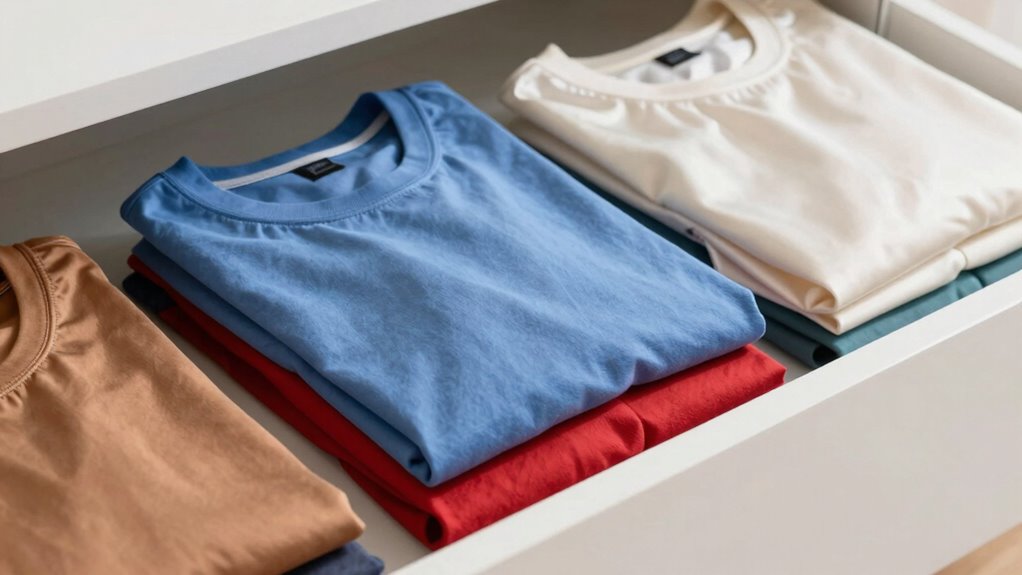
When selecting fabrics for folding, you want materials that hold up over time without tearing or fraying. Durable fabrics like cotton or wool are often best because they withstand regular handling. Make sure the fabric’s long-term durability matches your needs to keep your clothes looking their best. Additionally, choosing fabrics with fiber strength ensures they maintain their integrity even after repeated folds. Considering the material’s resilience can help prevent damage caused by stress during folding and storage. Incorporating fabrics that are water-resistant can also help protect your clothes from moisture damage during storage or accidental spills. Selecting breathable fabrics can further enhance longevity by reducing moisture buildup that might weaken fibers over time.
Fabric Durability Tips
Choosing the right fabrics can considerably extend the life of your folded clothes. To guarantee durability, select fabrics that resist excessive fabric stretch and color fading. Natural fibers like cotton and linen tend to hold their shape and color longer, while synthetic blends may be more prone to stretching or fading over time. Proper folding techniques also reduce stress on the fabric, helping maintain their original appearance.
To maximize fabric durability:
- Avoid overstuffing drawers, which causes unnecessary fabric stretch
- Use gentle, color-preserving detergents
- Fold clothes along natural seams to prevent stretching
- Store fabrics away from direct sunlight to prevent color fading
These tips help your clothes stay vibrant and intact longer, making your folding efforts worthwhile.
Suitability for Folding
Ever wondered which fabrics are best suited for folding and keeping their shape? Material suitability plays a key role here. Fabrics with good fabric flexibility, like cotton, linen, and lightweight knits, tend to fold neatly and maintain their form over time. Avoid stiff or overly delicate materials, as they may wrinkle or stretch out of shape easily. Choosing fabrics that are naturally pliable ensures your folded clothes stay tidy and look fresh longer. Also, consider the weight and texture—lighter fabrics fold more easily without sagging, while heavier ones hold their shape better. When selecting clothes for folding, opt for those with good material suitability and fabric flexibility to maximize the benefits of proper folding techniques and double your drawer capacity effortlessly. Material flexibility is an essential factor in achieving neat, long-lasting folds. Additionally, understanding fabric care instructions can help preserve the quality and appearance of your clothing over time. Being aware of the fabric composition can further guide you in choosing clothes that are easier to fold and maintain. Recognizing the fiber content can also help you select fabrics that are more resilient to repeated folding and unfolding.
How to Fold Clothes to Double Your Drawer Capacity

Folding your clothes carefully can substantially increase your drawer space, allowing you to store twice as much in the same area. Start by using a consistent folding method, like the roll fold, to maximize space efficiency. Implement color coding to organize items by type or occasion, making it easier to find what you need quickly. Incorporate seasonal rotation by folding and stacking seasonal clothes separately, keeping your drawer streamlined. To optimize capacity further, fold items uniformly to avoid bulky lumps. Consider stacking horizontally to utilize drawer height better. Regularly reassess your folding system to maintain order and ensure you’re making the most of your space. Proper folding combined with smart organization techniques doubles your drawer capacity and keeps everything neat. For added durability and style, choose folding methods that complement your overall farmhouse decor style, creating a cohesive and inviting space. Additionally, exploring organizational strategies can help you maintain an efficient and clutter-free drawer system. Incorporating these simple adjustments can also boost your overall senior wellness by reducing stress and saving time during daily routines.
Common Folding Mistakes and How to Avoid Them
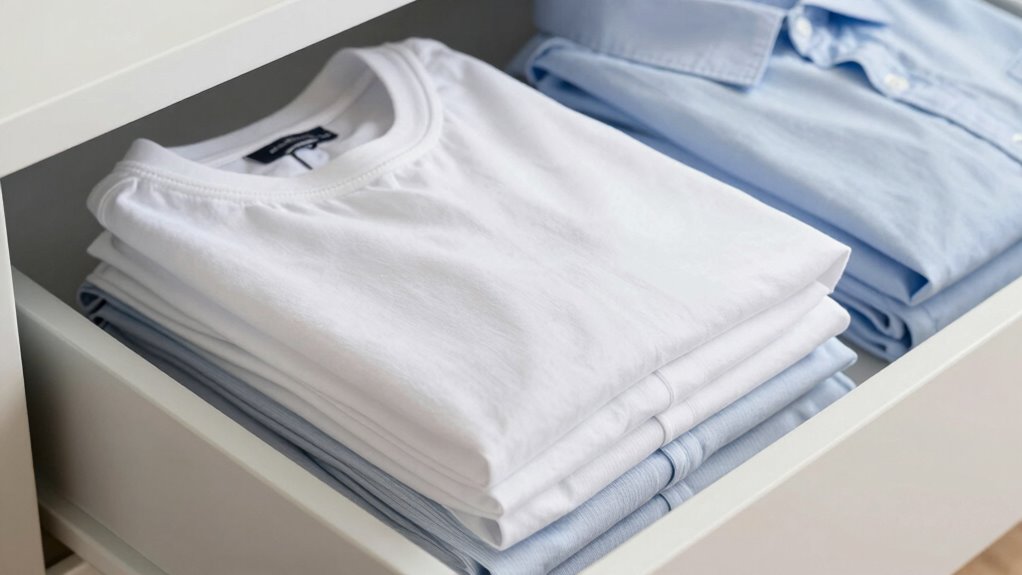
Many common folding mistakes can undermine your efforts to save space and keep your clothes neat. Rushing your folding speed often leads to uneven edges and bulky stacks that take up more room. Take your time to fold smoothly and precisely for a cleaner, more compact result. Additionally, neglecting color coordination can make your drawer look cluttered and disorganized, making it harder to find what you need quickly. Sorting clothes by color before folding helps maintain a tidy appearance and simplifies outfit choices. Avoid crumpling or creasing fabrics by handling each piece carefully. Also, don’t fold clothes in a haphazard way—use consistent techniques to ensure every item stacks neatly. Correcting these mistakes improves your efficiency and maximizes your drawer’s capacity.
Customizing the Technique for Different Clothing Types
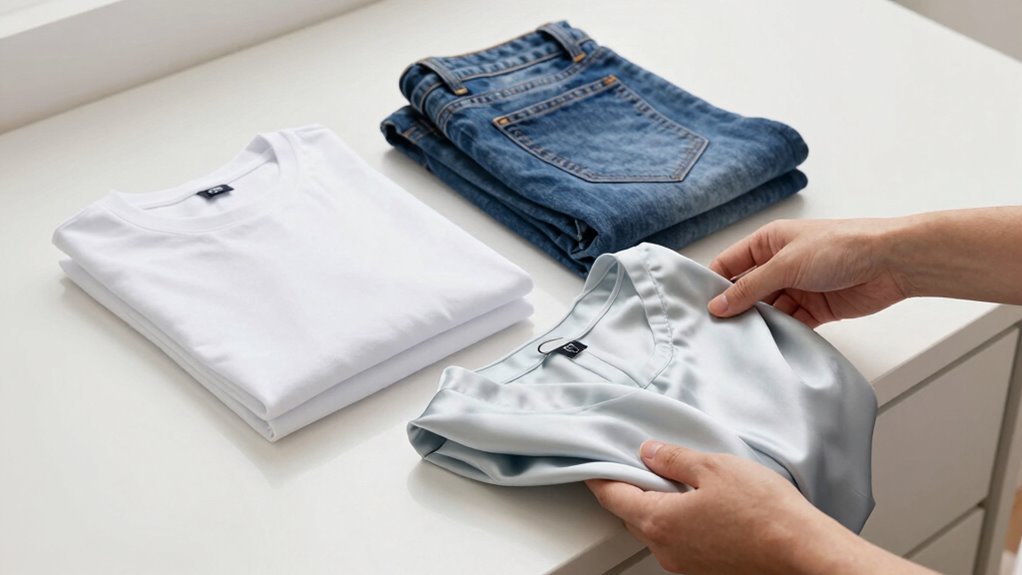
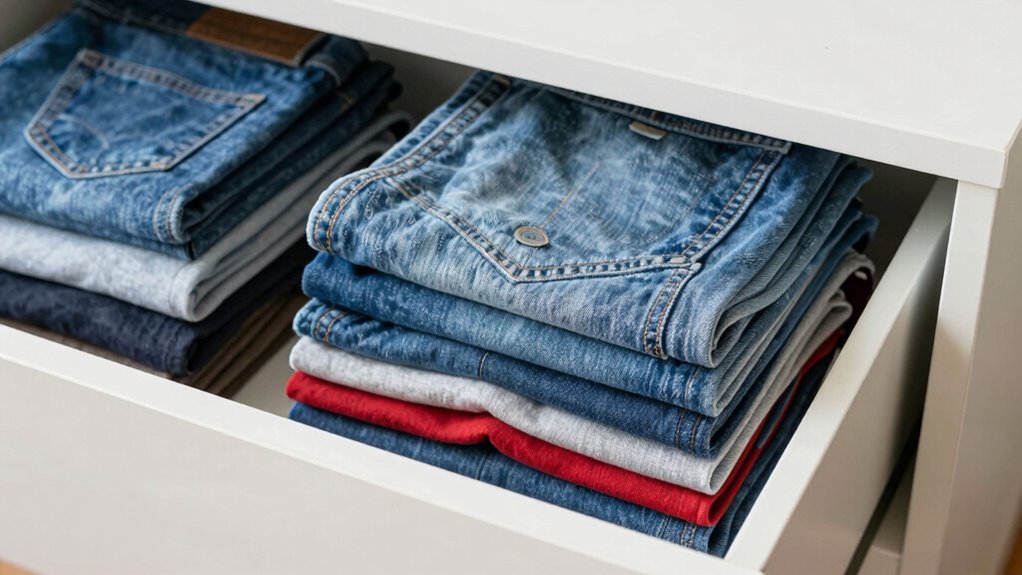
To achieve the best results, you should adjust your folding techniques based on the specific clothing type. Different clothing materials and fabric flexibility require tailored approaches to prevent damage and maintain shape. For delicate fabrics like silk or chiffon, fold gently and avoid tight creases. Stiffer materials like denim benefit from firmer folds to keep their structure. Consider the fabric’s flexibility when folding, ensuring you don’t overstretch or compress the material. This minimizes wrinkles and preserves clothing quality.
- Use gentle folds for delicate fabrics to prevent snags
- Apply firmer, more precise folds for stiff, structured clothing
- Avoid excessive compression on stretchy or elastic materials
- Adjust folding tension based on fabric flexibility to prevent damage
Comparing This Folding Method to Other Space-Saving Strategies
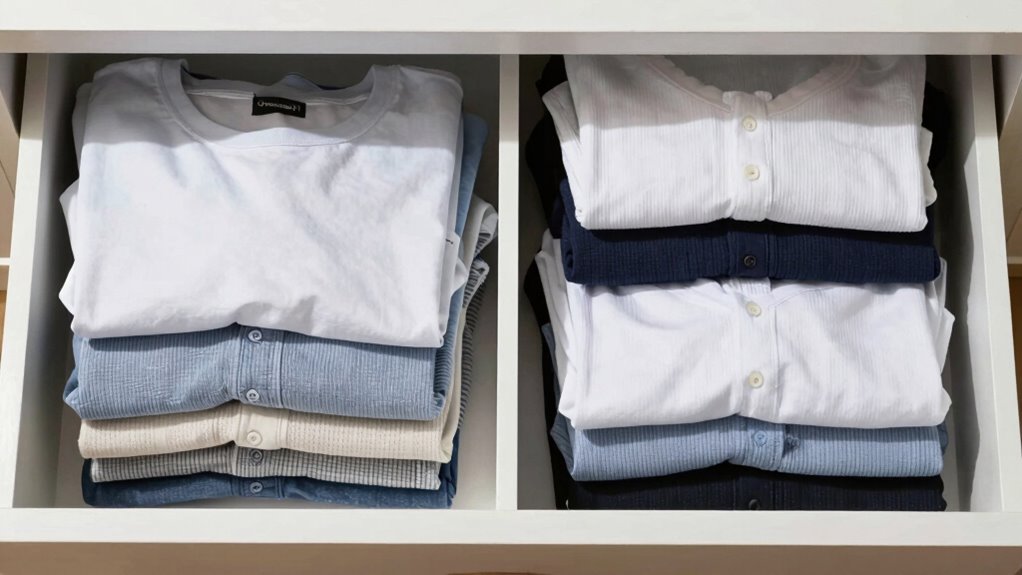
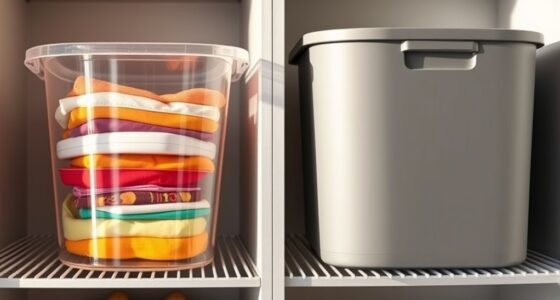
While folding is a popular and straightforward method for saving space, it’s not the only strategy available. Other techniques like rolling clothes or using storage bins can also maximize space efficiency. The key difference lies in folding ergonomics—how easily and comfortably you handle clothes during storage. For example, rolling reduces creases and makes items more accessible, while storage bins can keep items organized without unfolding. Here’s a quick comparison:
| Strategy | Space Efficient Storage | Folding Ergonomics |
|---|---|---|
| Folding (this method) | Doubles drawer capacity | Improved with proper technique |
| Rolling | Maximizes space, reduces wrinkles | Easier to handle |
| Storage bins | Keeps items organized | Less flexible, requires stacking |
Choosing the right method depends on your needs and space constraints.
Tips for Maintaining a Neat and Organized Drawer Over Time
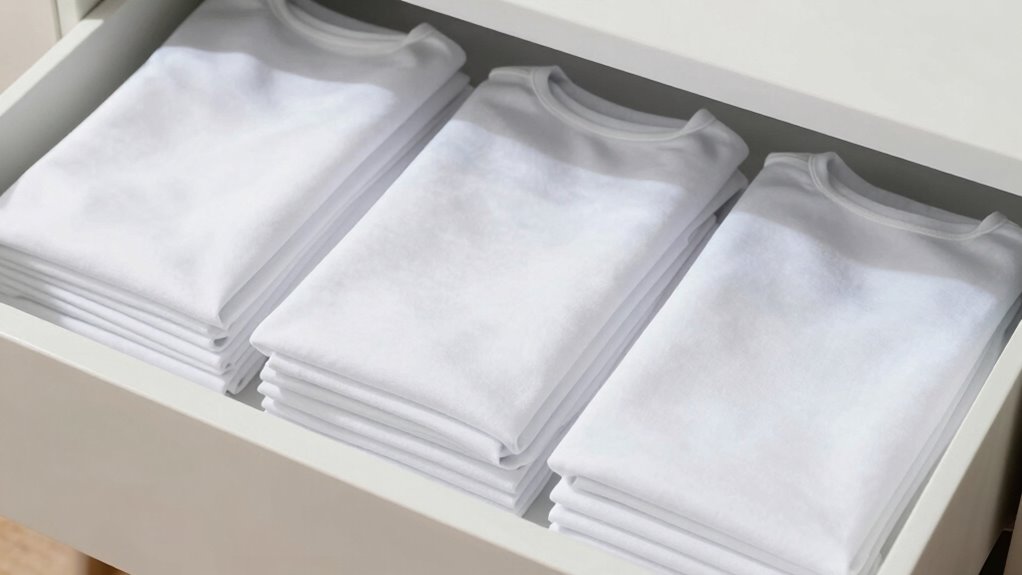
Keeping your drawer neat and organized requires regular effort and mindful habits. To maintain order, start by consistently practicing your folding method, ensuring items stay compact and uniform. Use color coordination to quickly identify categories, making it easier to find what you need. Drawer labeling also helps keep things in their designated spots, reducing clutter. Regularly revisit your organization system to remove worn or unused items. Consider rotating items seasonally to prevent overcrowding. Keep small accessories or loose items in labeled containers for quick access. Finally, tidy up your drawer weekly, aligning folded items neatly and updating labels if necessary. By incorporating these habits, your drawer remains functional, tidy, and easy to maintain over time.
Transform Your Drawer Organization and Save Space Today
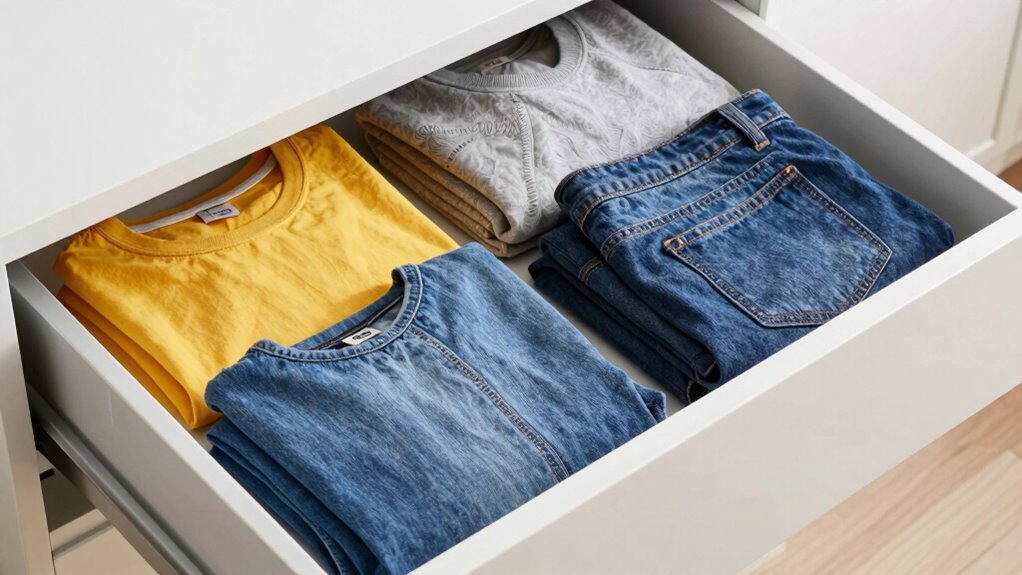
Implementing smart organization techniques can instantly transform your drawer into a space that’s both functional and clutter-free. Start by using drawer dividers to create designated sections for different items, preventing everything from piling up. Incorporate color coordination by grouping similar items—like socks, underwear, or accessories—by color, making it easier to find what you need at a glance. This visual system not only saves space but also keeps your drawer looking tidy and appealing. When you combine drawer dividers with thoughtful color coordination, you maximize space and streamline access. Take a few minutes to reorganize, and you’ll notice how much more efficient your drawer becomes. With these simple steps, you’ll double your storage capacity and enjoy a clutter-free space every day.
Frequently Asked Questions
Can This Folding Method Be Applied to All Clothing Materials?
Yes, you can apply this folding method to most fabric types, but always consider garment care. For delicate fabrics like silk or lace, handle gently and avoid tight folds that might cause creases or damage. For sturdy materials like cotton or denim, this method works perfectly, saving space and maintaining shape. Always check your clothing’s care labels to verify the folding technique won’t affect the fabric’s longevity or appearance.
How Long Does It Take to Master This Folding Technique?
Mastering this folding technique takes mere minutes—trust me, you’ll be a pro faster than you can blink! With just a little practice, you’ll discover astonishing furniture organization and space optimization skills. It’s so simple, you’ll wonder why you ever folded any other way. Within a day or two, you’ll be transforming cluttered drawers into models of order, making your space feel twice as spacious and perfectly organized.
Is This Method Suitable for Storing Accessories or Only Clothes?
This folding method is great for storing clothes, but it’s also suitable for accessories and jewelry storage. You can use it to keep scarves, belts, or even small jewelry pieces neatly organized and easy to access. By applying this technique, you maximize drawer space while maintaining order. It’s versatile enough to help you streamline accessory organization, making your entire storage system more efficient and clutter-free.
What Tools or Accessories Can Enhance Folding Efficiency?
You can enhance folding efficiency with simple folding tools like folding boards or guides, which help you achieve uniform folds quickly. Storage accessories such as drawer dividers or adjustable organizers keep your clothes neat and accessible. By using these folding tools and storage accessories, you streamline your process, maximize drawer space, and maintain a tidy wardrobe, making it easier to find and manage your clothes every day.
How Often Should I Re-Fold Clothes to Maintain Maximum Space?
You should re-fold clothes every few months to maintain maximum space and keep them looking fresh. This practice helps extend clothing lifespan by preventing fabric wear from prolonged creases. Regularly folding improves laundry frequency efficiency, ensuring your wardrobe stays organized and accessible. Don’t wait until clutter builds; re-folding periodically keeps your drawers neat, preserves clothing quality, and makes your space feel more spacious and inviting over time.
Conclusion
By adopting this folding method, you can double your drawer capacity and keep your clothes perfectly organized. Did you know that proper folding can increase space efficiency by up to 50%? It’s a simple change that makes a big difference. Stick with these tips, avoid common mistakes, and enjoy a tidy, clutter-free drawer every day. Transform your space now—you’ll wonder how you ever managed without this game-changing technique.