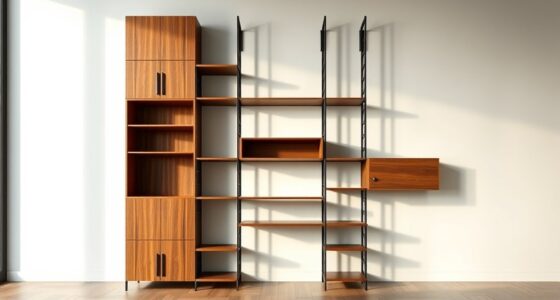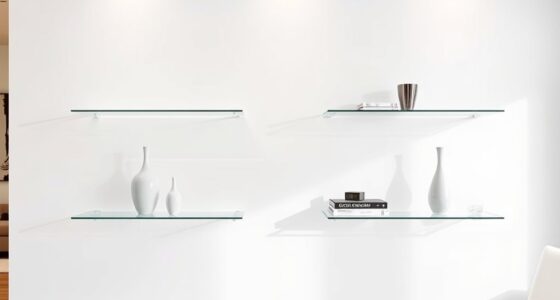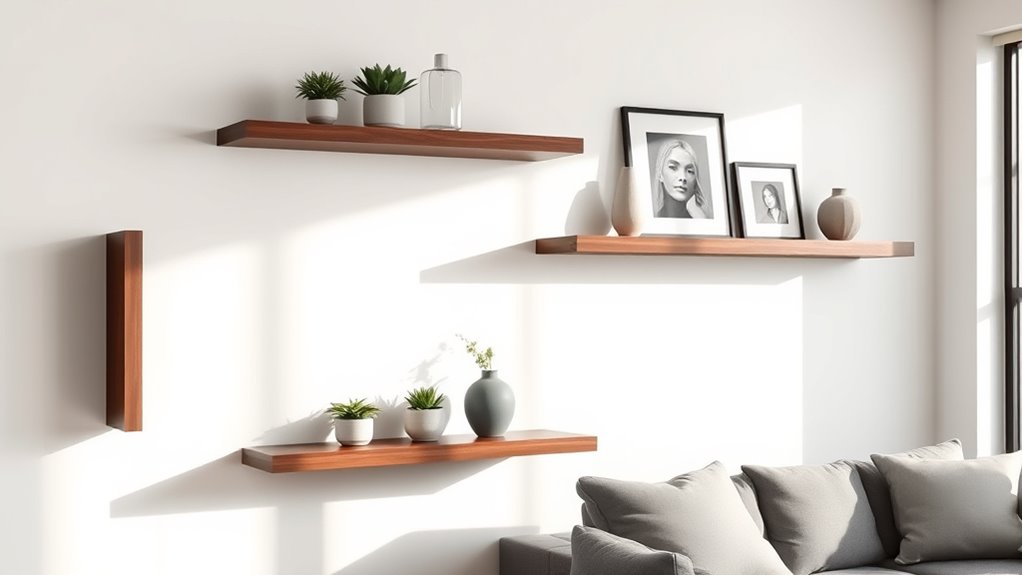

Floating shelves offer a sleek, modern look while providing practical storage. To maximize their appeal, choose materials like wood or glass that match your decor. Guarantee proper installation by securely attaching supports to wall studs and leveling the shelves carefully. Support and weight capacity vary, so select brackets or cleats suitable for your items. When installed correctly, they enhance your space’s style and function—continue exploring to discover tips for choosing and installing the perfect floating shelves.
Key Takeaways
- Choose the right material (wood, glass, metal, composite) to match your decor style and functional needs.
- Ensure precise measurement and level installation for a clean, floating appearance.
- Use appropriate supports like hidden brackets or cleats for stability and weight capacity.
- Select hardware compatible with your wall type (drywall, brick, concrete) for secure mounting.
- Properly secure and align shelves to enhance durability, safety, and aesthetic appeal.
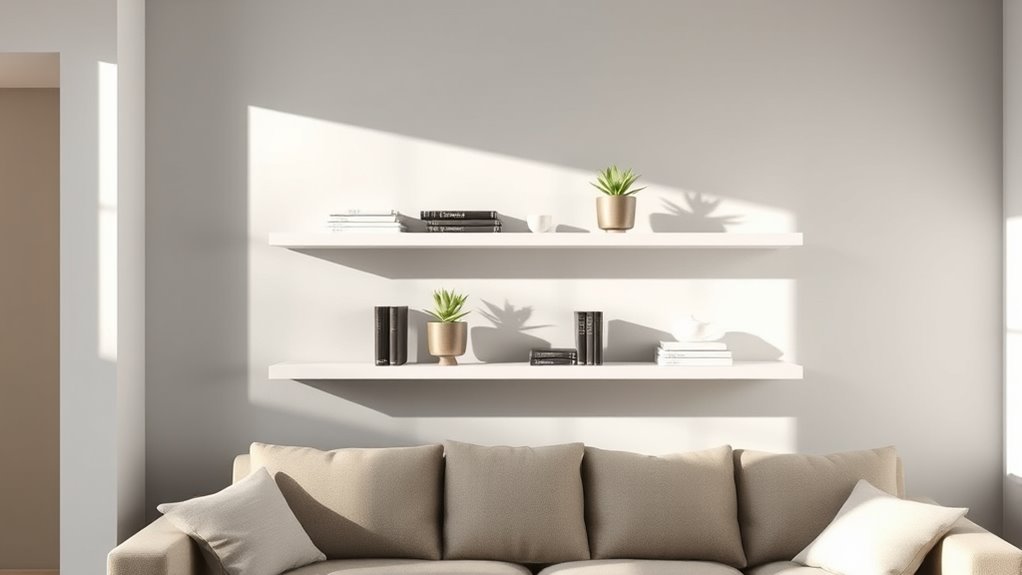
Floating shelves have become a popular choice for adding storage and style to any space because they offer a sleek, modern look without bulky brackets or supports. When considering these shelves, one of the first things you’ll want to decide is the material options. The variety is extensive, ranging from wood and glass to metal and composite materials. Wooden shelves are timeless and versatile, fitting well into rustic, contemporary, or minimalist decor. You can choose natural finishes or paint them in bold colors to make a statement. Glass shelves lend a light, airy feel, perfect for small spaces or to display delicate items. Metal options, like steel or aluminum, provide an industrial vibe and are incredibly durable, making them suitable for heavier objects. Composite materials, such as MDF or laminate, are budget-friendly and come in numerous finishes, offering a practical solution without sacrificing style.
Once you’ve picked your material, proper installation becomes essential to guarantee your floating shelves are both functional and safe. To start, you’ll want to measure carefully. Use a level and a pencil to mark where the shelves will go, ensuring they’re perfectly aligned. Installing brackets or cleats is key—these hidden supports give the illusion that the shelf is floating on its own. For wooden shelves, you might prefer a cleat system, where a sturdy wooden strip is attached to the wall, and the shelf slides onto it. This method provides excellent support and a clean appearance. Make sure you locate wall studs with a stud finder, especially if you plan to hold heavier items like books or plants. Anchors can be used if studs aren’t available, but they won’t hold as much weight. Additionally, selecting the right hardware can be informed by understanding shelf weight capacity and how it varies with support types.
When attaching brackets or cleats, use the right hardware depending on your wall type—drywall, brick, or concrete. Drill pilot holes to prevent splitting, and tighten screws firmly but carefully to avoid cracking the material. You should also double-check the level before securing each support. Once the supports are in place, slide your shelf onto them and make sure it’s stable. If needed, secure the shelf to the supports with small screws or adhesive strips, especially if you anticipate heavy use. With these tips, your floating shelves will not only look great but will also stand the test of time, providing a sleek storage solution that’s both practical and stylish.
Frequently Asked Questions
What Materials Are Best for Indoor Floating Shelves?
You should choose materials like solid wood, MDF, or metal for indoor floating shelves, as they offer excellent material durability and support your needs. Solid wood provides natural aesthetic options and a warm, classic look, while MDF is budget-friendly and easy to customize. Metal shelves add a modern touch and are highly durable. Consider your style and weight requirements to select the best material that balances durability and aesthetic appeal for your space.
How Much Weight Can Floating Shelves Typically Hold?
You might be surprised, but floating shelves typically hold between 15 to 50 pounds, depending on their material and installation. The key is understanding their weight capacity and ensuring proper load distribution. When you evenly spread weight across the shelf, it can support more without sagging or falling. Always check the manufacturer’s guidelines and reinforce brackets if you’re planning to display heavier items. Proper installation makes all the difference.
Are Floating Shelves Suitable for Humid Environments Like Bathrooms?
Yes, floating shelves can work in humid environments like bathrooms if you choose moisture-resistant materials. Look for shelves made from water-resistant wood, plastic, or metal to guarantee bathroom durability. Proper sealing and regular maintenance help prevent warping or damage caused by moisture. When you select the right materials and install them correctly, floating shelves can add both style and functionality without compromising their longevity in damp spaces.
How Do I Prevent Shelves From Wobbling or Falling?
Did you know that improper mounting accounts for nearly 60% of shelf accidents? To prevent wobbling or falling, make sure you use the right mounting techniques, like sturdy anchors and screws. Distribute the load evenly across the brackets and wall, avoiding overloading one side. Double-check that your shelves are level during installation, and use a stud finder for added support. This way, your floating shelves stay secure and steady.
Can Floating Shelves Be Customized or Painted?
Yes, you can customize and paint floating shelves to match your decor. You have plenty of custom paint options to choose from, allowing you to create a unique look. Before painting, sand the shelves lightly for better adhesion and use a primer to make sure your chosen shelf color matching turns out vibrant and smooth. With these steps, your floating shelves will seamlessly blend into your space and reflect your personal style.
Conclusion
So, go ahead and install those floating shelves—your walls will thank you, and your cluttered chaos will finally look intentional. Just imagine the envy of your friends, marveling at your “design genius” while secretly wondering if you’ve uncovered some secret shelf-creating wizardry. Remember, with a little effort, your space can go from “just okay” to “wow,” proving that even floating shelves can elevate your home’s style—without the need for a magic wand.