TL;DR
A pantry organization tip shows how an adjustable tension rod and clips can keep lightweight seasoning, condiment and snack packets visible on a shelf. The method is removable and requires no screws, but it depends on a shelf with enough height and a rod that fits securely.
An organizing tip recommends placing an adjustable tension rod near the top of a pantry shelf and using binder or curtain clips to hang lightweight packets, freeing shelf space and keeping small items in view alongside other pantry organization products. The removable setup needs no screws or brackets, though it will work only where the shelf has enough clearance and the rod fits securely.

Get home appliances delivered free with Prime
- Fast, free delivery on millions of items
- Prime Video, Amazon Music and more included
- Member-only deals all year
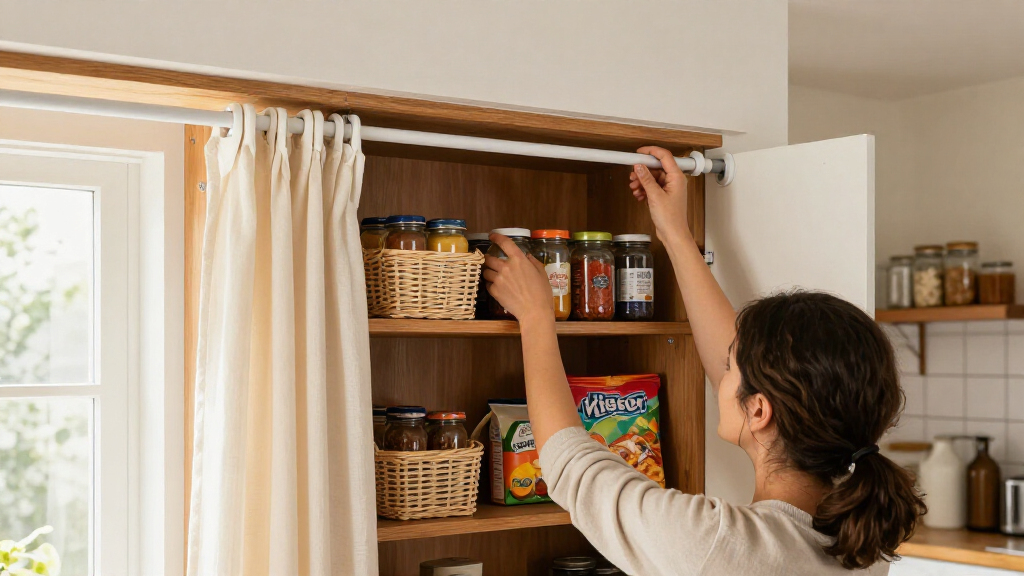
The idea, associated in the article with Natalia from OrgaNatic, is aimed at the small packets that can become difficult to sort in a pantry: seasoning sachets, gravy mixes, condiments and some snacks. Rather than stacking them in a bin or leaving them loose on a shelf, the method suspends them from a rod installed across the shelf’s upper section, complementing other pantry storage solutions. Binder clips or curtain clips attach the packets; S-hooks are also suggested as a possible option.
Before installation, the article advises checking the shelf’s inside width by testing the rod in place or measuring the space. The rod should fit snugly. It can be wiped clean before use, and the article suggests repainting it if its color does not suit the pantry. If an available rod is the wrong size, the guidance is to choose one that matches the shelf rather than rely on a poor fit.
The rod is positioned high enough to keep hanging packets visible while leaving the shelf below available for boxes or other pantry goods. The article also proposes placing a rod above a back row of jars to create another level for smaller spice jars. That second arrangement depends on the shelf’s layout and available vertical room; the tip does not provide a load rating or claim that every rod-and-shelf combination can support jars.
A simple way to hang small pantry packets
An adjustable tension rod and clips can keep lightweight sachets visible while freeing shelf space. The setup depends on a secure fit and enough clearance.
What the tip suggests
Hang lightweight items along the shelf’s upper area instead of stacking them loose or in a bin.
Keep small items in view
Use clips for seasoning, gravy, condiment and some snack packets.
Free up the surface
Suspending packets may leave room below for boxes and other pantry goods.
No drilling required
The tension rod presses between shelf walls without screws or brackets.
Check before fitting
Measure the interior width and make sure there is room for the rod and hanging items.
Measure or test the rod in place; it should fit snugly with enough vertical clearance.
Follow the rod manufacturer’s instructions and check that it sits firmly.
Hang a few packets and check that clips hold and the rod stays stable.
Know the limits
The article describes an organizing idea, not a tested guarantee for every pantry.
- Lightweight seasoning and gravy sachets
- Condiment and snack packets
- Small spice jars only if the rod’s rated capacity allows
- No load rating or tested weight limit is provided
- Fit, shelf material and repeated use may affect stability
- Hanging items may obstruct access behind them
Making Use of Empty Pantry Space
The suggestion addresses a familiar storage problem: small packets can disappear behind larger items or collect in a disorganized pile, making it harder to see what is on hand. Hanging them along the shelf’s upper area may make individual packets easier to identify and retrieve, while shifting them off the shelf surface can leave more room for containers and boxes. The claimed benefit is a practical organizing option, not a tested guarantee that a pantry will remain orderly.
Because a tension rod can be removed without drilling, the approach may suit renters or people who do not want to alter cabinetry. It is also a relatively simple reuse option if a spare rod happens to fit. The trade-off is that the arrangement takes up vertical clearance and depends on a stable fit; a shelf that is too short or a rod that slips would make the method unsuitable.
Products Worth Considering

Philips Hue Iris Smart LED Table Lamp, White

Levoit Eleva 300X Air Purifier for Home Bedroom

Roborock RockNeo Q110H Wire-Free Robot Lawn Mower
As an affiliate, we earn on qualifying purchases.
How the Rod Fits the Shelf
The organizing tip repurposes a tension rod, commonly used to hold curtains, as a small pantry storage rail. Its adjustable ends press against the inside walls of a shelf, avoiding screws and brackets. The method uses the open area above stored goods rather than adding a fixed shelf or buying a dedicated organizer.
Its scope is specific: the article focuses on lightweight packets and suggests small spice jars only as a possible extra tier. It does not describe the setup as a solution for heavy cans, large containers or every pantry design. Shelf dimensions, the rod’s adjustment range and the clearance above items all affect whether the arrangement is practical.
““Your pantry shelf should be high enough to allow a tension rod in.””
— The organizing article
Fit and Load Limits Are Unspecified
The tip does not give measurements, a recommended rod type, a tested weight limit or guidance on how much pressure is needed for a secure installation. It also does not report testing across different pantry materials or shelf designs. Readers should check the rod’s fit and follow its manufacturer’s instructions; the article offers no evidence that a rod will remain in place under every load or with repeated use.
It is also unclear how well clips will hold different packet materials, or whether hanging items will obstruct access to jars and boxes behind them. The suggestion to hang small jars is presented as an option, but no weight capacity is supplied. The safer interpretation is to reserve the arrangement for lightweight items unless the rod’s specifications support more.
Check the Shelf Before Installing
The next step for anyone considering the idea is to measure the shelf’s interior width and height, then test whether an appropriately sized rod can sit firmly without blocking stored items. After fitting it according to the rod’s instructions, start with lightweight packets and check that the clips hold them and the rod stays stable. If the rod does not fit securely, use a correctly sized alternative or choose another organizer.
No product launch, formal testing or follow-up announcement is described. Whether the hack works in a particular pantry will depend on its dimensions, the rod and clips used, and the weight of the items hung.
Key Questions
What pantry items can be hung from the rod?
The tip suggests lightweight packets, including seasoning, gravy, condiment and snack sachets. It does not recommend hanging heavy containers.
Does installing the rod require drilling?
The proposed tension rod presses between the shelf’s inside walls, so the setup is intended to work without screws or brackets. It still needs to fit securely.
How do I know whether a tension rod will fit?
Measure the shelf’s inside width or test the rod in place before using it. The shelf also needs enough vertical clearance for the rod and hanging items.
Can the rod hold spice jars too?
The article suggests a rod above a back row of jars as a possible extra tier for smaller spice jars, but it gives no weight limit. Check the rod’s specifications and avoid exceeding its rated capacity.
Source: hunker.com