TL;DR

Get home appliances delivered free with Prime
- Fast, free delivery on millions of items
- Prime Video, Amazon Music and more included
- Member-only deals all year
A Livingetc report describes a design trend in which a sculptural, deliberately less comfortable chair serves as a visual accent rather than everyday seating. Designers say it can add contrast and affect a room’s mood, though the idea is an opinion, not a rule for every home.
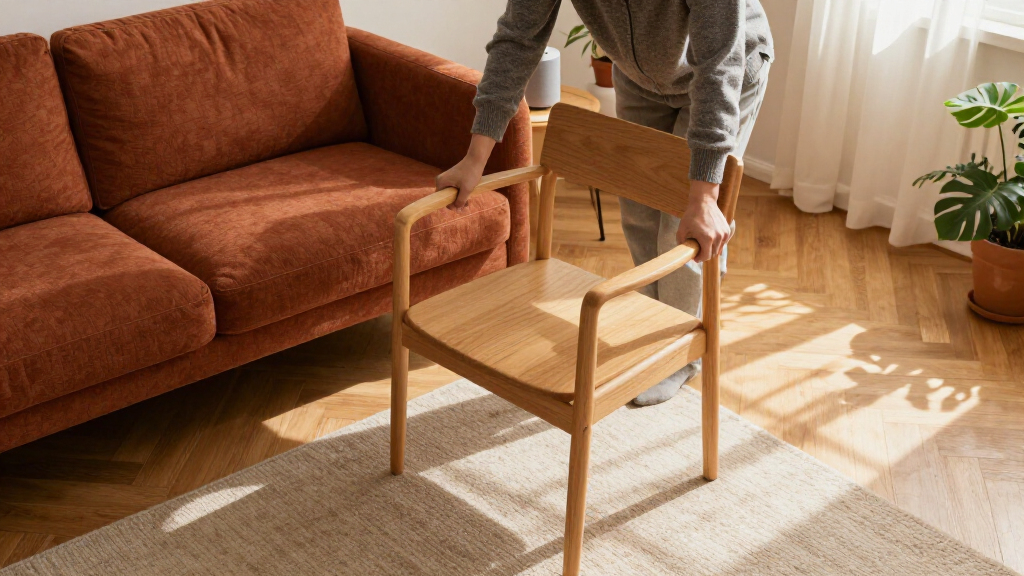
Interior designers are making a case for one deliberately uncomfortable chair as a sculptural accent that can shift the mood of a room, according to a Livingetc report. The idea is not to replace comfortable seating, but to use a chair for its visual effect rather than its suitability for long stretches of sitting.
Designer Anahita Rigby, whom Livingetc identifies as the person who first drew the writer’s attention to the idea, describes a chair as an expressive focal point. She said an unconventional seat can be valued for its sculptural form, including when it is not designed primarily for comfort. Her recommendation is limited: she is not suggesting that every seat in a room should be uninviting.
The report says such chairs are better suited to places where people are not expected to settle in for long. Rigby suggests a hallway corner, a spot near a bookshelf, or an informal dining area. The article says designers are not generally placing these pieces in front of the television, where comfort is more likely to be a priority.
Sarah Stemp, co-founder of Sascal Studio, told Livingetc that an uncomfortable chair in her living room made the space feel more considered and balanced its softer elements. Decorator Simone Haag compares an unexpected design detail to a small adjustment to an outfit: she says it can change the energy of the room.
A Statement Piece, Not a Daily Seat
The suggestion matters because it distinguishes decorative impact from practical use. A chair can function as a focal point, add contrast to softer furnishings, or signal a change in the character of a room without being the seat people choose for a long visit. The designers’ comments describe an aesthetic judgment, not evidence that uncomfortable furniture improves a home for everyone.
For readers considering the idea, the source points toward a limited role: place the sculptural chair where its appearance can contribute to the room, while keeping comfortable options available for everyday use. That distinction also avoids treating the headline’s broad claim—“every home needs” one—as a literal design requirement.
Products Worth Considering

Levoit Core 400S-P Smart Air Purifier for Large Rooms

LEVOIT Vital 200S-P Smart Air Purifier for Large Rooms

Coway Airmega 250 Air Purifier for Large Rooms
As an affiliate, we earn on qualifying purchases.
From Comfort to Visual Contrast
The Livingetc feature frames the chair as a departure from conversations focused on soft shapes and textures people can settle into. It calls the sculptural seat a micro design trend, rather than a wholesale move away from comfortable furniture. Its purpose, as described by the designers, is to introduce an unexpected visual element into a room otherwise arranged for ease.
The report includes examples of chairs and stools from a range of retailers and studios, but it does not present sales figures, survey results, or independent research showing how widespread the trend is. Its account is based on designers’ perspectives and one designer’s experience with a chair in her own living room.
“The uncomfortable chair I added to my living room definitely makes the space feel more considered, balancing the softer energy it already had to seem more dynamic.”
— Sarah Stemp, co-founder of Sascal Studio, speaking to Livingetc
How Broad Is the Chair Trend?
The report does not establish how common the trend is, whether it is growing, or how shoppers respond to it. It offers designers’ views and examples, not market data or a formal survey. The phrase “every home needs” is therefore best understood as Rigby’s design opinion, rather than a verified requirement or a consensus among designers.
The source also does not define how uncomfortable a chair must be to fit the idea. A sculptural chair may still be usable for short periods; the feature gives no comfort measurements, design criteria, or guidance on balancing appearance with accessibility and household needs.
Comfort Remains the Practical Test
The Livingetc feature does not announce a product launch, formal design rule, or upcoming industry milestone. Its immediate takeaway is a styling suggestion: consider an eye-catching chair in a space where it will not be expected to serve as the main place to sit. Any wider shift in furniture buying or interior design remains unconfirmed by the material provided.
For homeowners, the next step is a personal one: decide whether a sculptural seat suits the room and its users, and retain comfortable seating where people need it. The report offers no evidence that choosing an uncomfortable chair is necessary to achieve a considered interior.
Key Questions
What does “uncomfortable chair” mean in this report?
It refers to a sculptural or unconventional chair valued mainly for its appearance, rather than for long periods of sitting. The report does not set a precise comfort standard.
Are designers recommending that every chair be uncomfortable?
No. Rigby explicitly says she is not suggesting every seat should be uninviting. The idea is to use one chair as an accent alongside more comfortable furniture.
Where might such a chair work?
Rigby suggests a hallway corner, an area near a bookshelf, or an informal dining space—places where the chair can contribute visually without being the main seat for extended lounging.
Is this a proven or widespread design trend?
The Livingetc report calls it a micro trend and presents designers’ opinions, but provides no market figures or survey data to show how widespread it is.
Source: rss