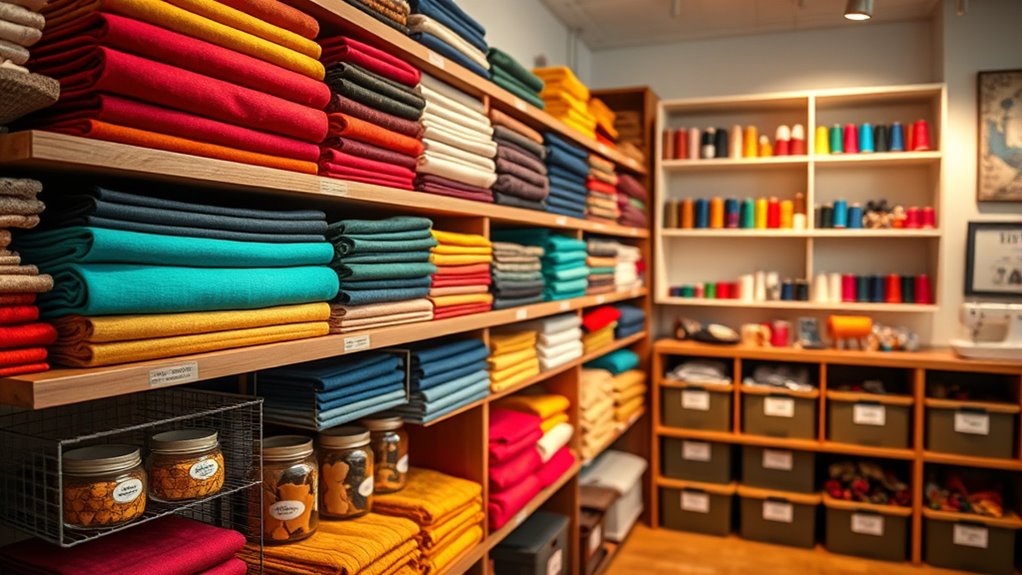

To organize your sewing room effectively, store fabrics by folding neatly and stacking on open shelves or hanging on wall-mounted racks for easy access. Use clear labeled bins or vacuum-sealed bags to save space and keep fabrics dust-free. For threads, employ spools racks or small containers with labels to prevent tangling. Regularly tidy and reorganize your supplies, and you’ll discover tips to optimize your space and keep everything tidy and inspiring.
Key Takeaways
- Use clear bins, labeled and stacked, for easy fabric identification and space efficiency.
- Roll fabrics onto tubes or spools to prevent creases and improve visibility.
- Store threads on wall-mounted racks or in labeled containers for quick access and tangle prevention.
- Implement dust-proof storage with lids, filters, or vacuum-sealed bags for fabric and thread protection.
- Regularly tidy, label, and reorganize to maintain an efficient, clutter-free sewing workspace.
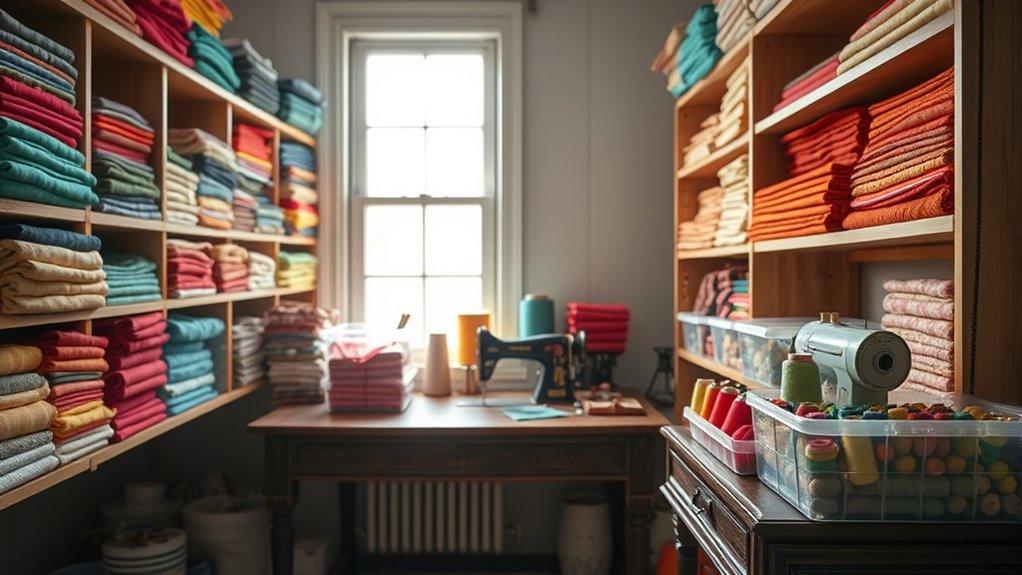
A well-organized sewing room can transform your crafting experience from frustrating to enjoyable. When your space is tidy and everything has a designated spot, you’ll find it easier to focus on your projects instead of wasting time searching for supplies. One of the most important aspects of sewing room organization is how you store your fabrics and threads. By implementing effective fabric storage ideas and thread organization tips, you’ll keep your supplies in top shape and make your workspace more efficient.
Start with fabric storage ideas that maximize space and keep your fabrics accessible. Rolling fabric onto cardboard tubes or large spools can prevent creases and make it easier to see your selection. Clear storage bins with labels are excellent for stacking fabrics, allowing you to quickly find what you need without rummaging through piles. If you prefer a more streamlined look, hanging fabric on a wall-mounted rack or using a pegboard with clips helps keep fabrics visible and wrinkle-free. Folding fabrics and stacking them on open shelves also works well, especially if you have a variety of colors and patterns. Just be sure to fold neatly and organize by type or color to avoid clutter. Using vacuum-sealed storage bags can conserve space for seasonal or less frequently used fabrics, keeping them dust-free and compact. Regularly inspecting your fabric and thread storage helps prevent damage and keeps everything in optimal condition.
When it comes to thread organization tips, keeping your threads tidy and easily accessible is key. Invest in a thread rack or a spice rack for small spools; this prevents tangling and makes it simple to grab the right color quickly. For larger spools, a wall-mounted spool holder or dedicated drawers with compartments work best. Consider transferring thread to clear, labeled containers or small jars for a neat appearance. Keep your most-used threads within arm’s reach, perhaps in a small drawer or on a dedicated shelf near your sewing machine. To prevent thread from unraveling or tangling, always store spools with the ends secured, either by tucking the loose tail under the thread or using a small clip. Additionally, choosing storage solutions with filtration systems can help keep your sewing supplies dust-free and protected from allergens, ensuring a cleaner workspace.
Organization isn’t just about storage; it’s about creating a system that works for you. Regularly tidy up your fabric and thread storage to keep everything in order. Labeling shelves and containers ensures you know exactly where everything is, saving you time and reducing frustration when you’re in the middle of a project. By investing in the right storage solutions and staying consistent with your organization habits, your sewing room will become a space that inspires creativity rather than causing stress. With these fabric storage ideas and thread organization tips, you’ll enjoy a more functional and enjoyable sewing environment that helps you finish projects with ease.
Frequently Asked Questions
What Is the Best Way to Prevent Fabric From Fading Over Time?
To prevent fabric from fading over time, you should choose colorfast fabrics whenever possible. Store your fabrics away from direct sunlight and use sun protection tips, like keeping them in opaque containers or dark closets. When washing, use gentle detergents and cold water to preserve color. Additionally, avoid prolonged exposure to sunlight and always dry fabrics in shade, which helps maintain their vibrant hues longer.
How Can I Organize Scraps Efficiently for Easy Access?
You can organize scraps efficiently by implementing scrap sorting and fabric categorization. Start by sorting scraps by color, fabric type, or project use, then store them in clear bins or labeled containers for easy access. Use small compartmentalized trays for tiny pieces and larger boxes for bigger scraps. Regularly tidy your collection to keep everything accessible, making your sewing process smoother and more enjoyable.
What Are Eco-Friendly Storage Options for Sewing Supplies?
Think of your sewing supplies as treasures needing a gentle cradle. You can use recycled containers and biodegradable bins, turning everyday items into eco-friendly treasure chests. These options not only keep your supplies organized but also reduce waste and environmental impact. By choosing these sustainable solutions, you’re weaving a greener future, all while ensuring your sewing space stays tidy and inspiring. Embrace these earth-friendly choices for a more mindful sewing haven.
How Do I Choose the Right Thread Storage System?
To choose the right thread storage system, consider your space and how you use your threads. You might prefer a thread rack for easy access and visibility, or storage bins if you want to keep threads organized by color or type. Look for sturdy, eco-friendly options that fit your sewing area. Select a system that keeps your threads tangle-free, accessible, and neatly organized, making your sewing more enjoyable.
What Humidity Levels Are Ideal for Fabric Storage?
You should aim for humidity levels around 50%, as this provides ideal humidity control for fabric storage. Maintaining this level helps prevent moisture and mold, ensuring your fabrics stay in great condition. Use a dehumidifier or silica gel packs to keep moisture prevention consistent, especially in damp environments. Proper humidity control keeps your fabrics dry and safe, avoiding damage caused by excess moisture or dryness.
Conclusion
With your sewing space organized, every stitch becomes smoother, every project more joyful. Imagine a room where fabrics are folded neatly, threads are ready at your fingertips, and clutter is a distant memory. Embrace this harmony, and let your creativity flow freely—like a well-oiled machine, your sewing room becomes a sanctuary of inspiration. So, take a moment now, tidy up, and turn chaos into calm—your perfect sewing haven awaits.