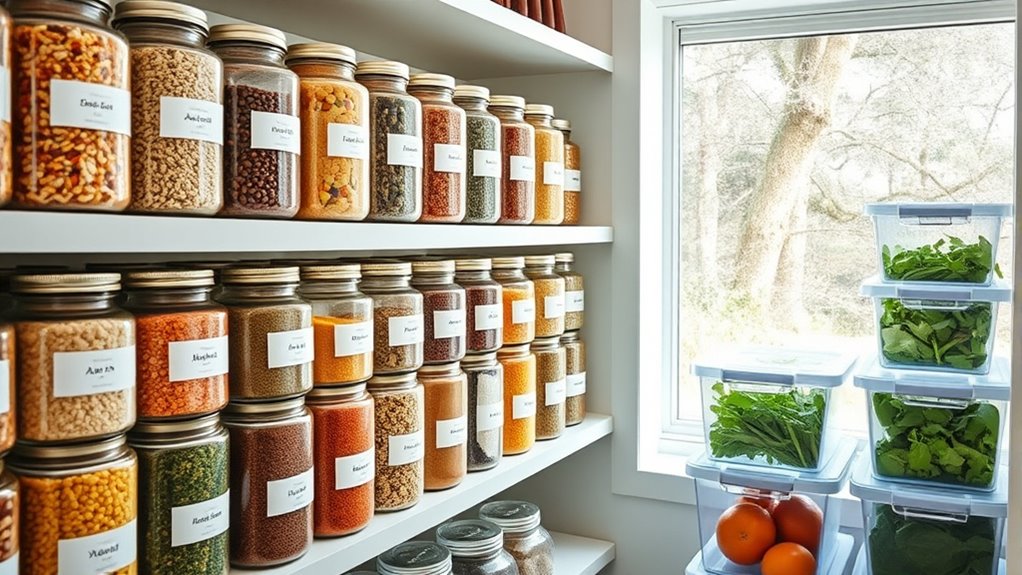

To prevent food waste and achieve pantry perfection, organize your space with clear labels, grouping similar items and using durable containers for dry goods. Store frequently used ingredients within arm’s reach and rotate stock to use older items first. Regularly inspect and discard expired products, and track your inventory to avoid overbuying. Implementing these systems helps keep your pantry tidy and efficient—continue exploring for more tips to maximize your food management!
Key Takeaways
- Implement a clear labeling system with waterproof labels for quick identification and expiry date monitoring.
- Organize items by usage frequency, placing staples within arm’s reach and less-used items higher or lower.
- Practice regular stock rotation by placing newer items behind older ones to ensure first-in, first-out usage.
- Use transparent containers and adjustable shelving to maximize space and easily monitor food quantities.
- Maintain an inventory management system, digital or manual, to track supplies, prevent overbuying, and reduce spoilage.
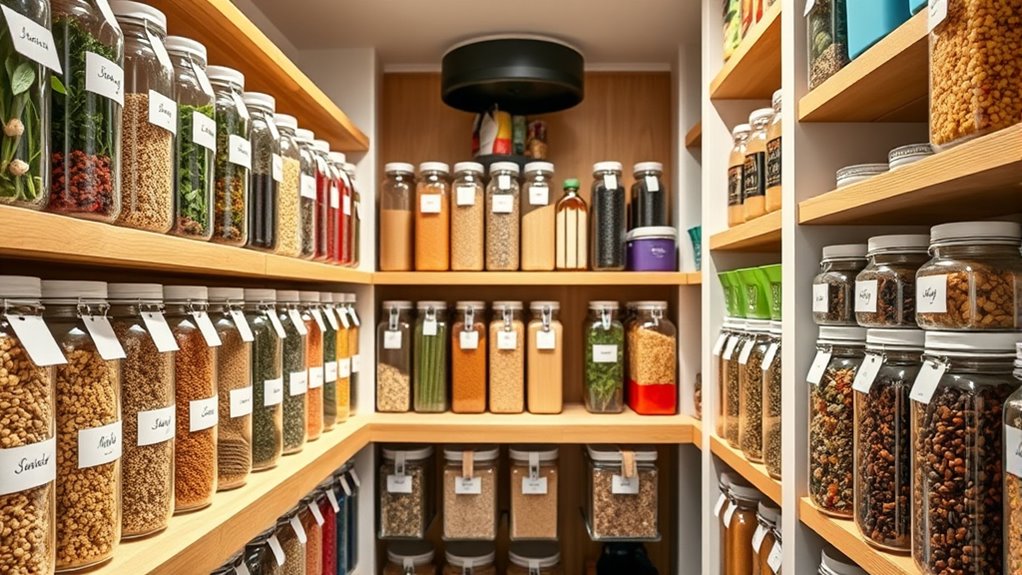
A well-organized pantry can transform your kitchen experience, making it easier to find what you need and reducing food waste. The key to achieving this starts with effective storage strategies that maximize space and keep everything accessible. Consider grouping similar items together—canned goods, baking supplies, snacks—so you always know where to look. Use clear containers for dry goods like rice, pasta, and flour, which not only keep ingredients fresh but also make it simple to see what you have at a glance. Vertical stacking and adjustable shelves can help utilize every inch of space, preventing clutter and guaranteeing each item has its designated spot. When your pantry is tidy, you naturally reduce the chances of forgotten items spoiling or going unused.
Another essential element is implementing a reliable label system. Labels serve as visual cues, allowing you to quickly identify contents without rummaging through jars or boxes. With clear, consistent labeling, you can avoid the common mistake of buying duplicates or letting items expire because you forgot you already had them. Labeling also encourages regular organization, prompting you to check expiry dates and dispose of expired or stale food before it turns into waste. Use waterproof labels and a permanent marker for durability, especially if you plan to wash or reposition containers. You can also get creative with color-coded labels for different categories, such as red for spices or green for snacks, to streamline your shopping and stocking routines even further.
In addition to storage strategies and label systems, consider the placement of items based on how often you use them. Frequently used ingredients should be within arm’s reach, while less common supplies can be stored on higher or lower shelves. This approach minimizes the time you spend searching for essentials and helps keep your pantry tidy. Rotating stock is another smart tactic—place newer items behind older ones, so you always consume the oldest products first. This simple step prevents food from expiring unnoticed and reduces waste. Regularly inspecting your pantry guarantees that stale or spoiled items are discarded, keeping your space clean and your food fresh.
Implementing a proper inventory management system can further enhance your efforts by tracking what you have and alerting you when supplies are running low, thus preventing unnecessary purchases and spoilage.

308 Kitchen Pantry Labels for Food Containers, 3 Sizes White Minimalist Labels for Organizing, Food Label for Jars, Storage Bins, Preprinted Waterproof Pantry Label for Containers
ORGANIZED PANTRY BY CLEAR LABELS: Using uniform clear labels to identify and declutter every item of your pantry…
As an affiliate, we earn on qualifying purchases.
As an affiliate, we earn on qualifying purchases.
Frequently Asked Questions
How Often Should Pantry Inventories Be Updated?
You should update your pantry inventory weekly to maintain inventory freshness and prevent food waste. Regularly checking items helps you spot expired or unused products early, so you can plan meals better and buy only what you need. A consistent update frequency keeps your pantry organized and guarantees you’re aware of what’s available, saving money and reducing waste. Make it a habit to review your inventory at least once a week for best results.
What Are the Best Ways to Organize Small Pantry Items?
Organize small pantry items like a well-curated jewelry box, with clear container types such as stackable jars or bins. Use labeling strategies to easily identify contents at a glance. Group similar items together—spices, snacks, or baking supplies—and place frequently used ones at the front. This method keeps your pantry tidy, saves space, and makes finding what you need effortless, preventing clutter and waste.
How Can Technology Help Prevent Food Waste?
Technology helps you prevent food waste through smart inventory systems that track what you have. With expiration alerts, you get notified before items go bad, so you use them timely. You can also scan receipts or barcodes to update your pantry list automatically. By staying aware of expiration dates and inventory levels, you save money and reduce waste effortlessly, making your kitchen more efficient and eco-friendly.
Are There Eco-Friendly Storage Options for Perishables?
Think of your fridge as a garden where eco-friendly storage options bloom. You can use reusable containers for leftovers and fresh produce, keeping food fresh longer. Beeswax wraps are like a gentle hug for bread and cheese, preventing spoilage without waste. These sustainable choices are kind to the planet and keep your perishables fresh, helping you reduce waste while staying organized and eco-conscious in your kitchen.
How Do Seasonal Changes Affect Pantry Management?
Seasonal changes impact your pantry management by requiring you to adjust storage based on climate considerations. During warmer months, you should prioritize seasonal storage by keeping perishables in cool, dark spots or using eco-friendly containers that regulate temperature and humidity. In colder seasons, you might need to reorganize for better insulation. Adapting your system to these climate considerations helps prevent spoilage, reduces waste, and keeps your food fresh longer all year round.

Rubbermaid Brilliance Tritan Plastic Food Storage Containers BPA Free Airtight Lids Ideal for Lunch Meal Prep & Leftovers Set of 5 (3.2 Cup)
100% Leak-proof: Guaranteed no-spill seal and secure latches
As an affiliate, we earn on qualifying purchases.
As an affiliate, we earn on qualifying purchases.
Conclusion
By implementing smart storage systems, you can drastically reduce food waste and save money. Did you know that approximately 30% of the food produced globally is wasted? That’s enough to feed billions of people! By organizing your pantry and using effective preservation techniques, you not only cut down on waste but also make a positive impact on the environment. Start today, and turn your pantry into a waste-free zone—your wallet and the planet will thank you.

15.5 to 25.5 Inch Expandable Kitchen Cabinet Organizer Shelf, 2 Pack 30 LBS Heavy Duty Adjustable Kitchen Counter Storage Shelves Organizers,Stackable Small Storage Shelf Rack For Cabinet Cupboard
【𝗔𝗱𝗷𝘂𝘀𝘁𝗮𝗯𝗹𝗲 𝗟𝗲𝗻𝗴𝘁𝗵 𝗮𝗻𝗱 𝗛𝗲𝗶𝗴𝗵𝘁】: —The package includes 2 pieces of kitchen cabinet organizer. Both can expand length from…
As an affiliate, we earn on qualifying purchases.
As an affiliate, we earn on qualifying purchases.

Warehouse Management and Inventory Control System
As an affiliate, we earn on qualifying purchases.
As an affiliate, we earn on qualifying purchases.


