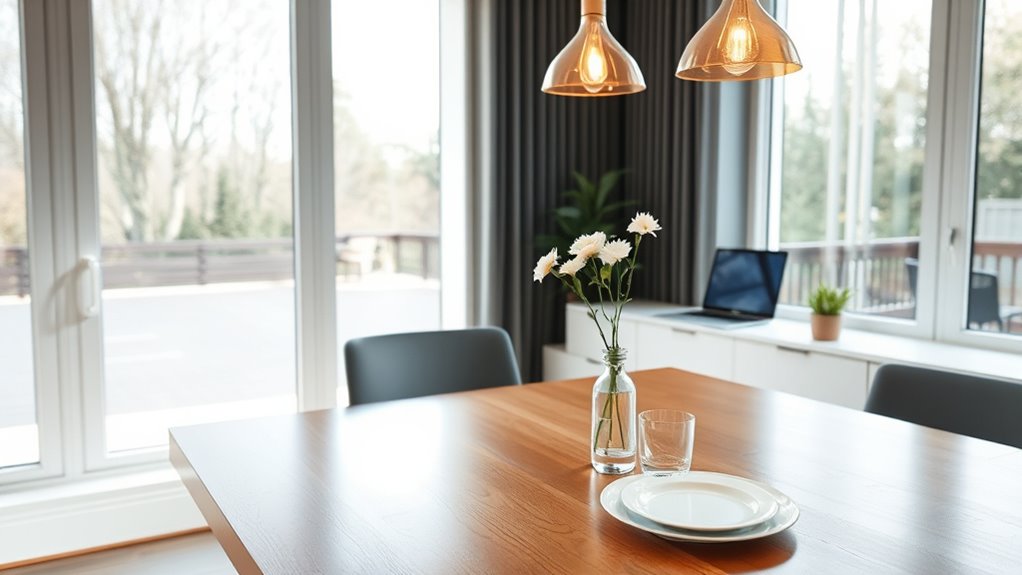

To create a multifunctional dining room, combine space-saving furniture like foldable tables and stackable chairs with layered lighting such as pendant and task lights. Use built-in storage to stay organized and maintain a clutter-free environment. Incorporate adjustable lighting to easily switch between dining and work modes. Smart lighting and sleek fixtures help define zones and adapt to your needs. Explore how thoughtful design can seamlessly transform your space—there’s more to discover.
Key Takeaways
- Use space-saving furniture like fold-down tables and stackable chairs to maximize room flexibility.
- Incorporate layered, adjustable lighting to create distinct zones for dining and working areas.
- Implement hidden storage solutions to keep surfaces clutter-free and support multifunctionality.
- Design with sleek, unobtrusive fixtures and wall-mounted elements for a minimalist, versatile space.
- Create seamless transitions between activities using smart lighting and adaptable furniture arrangements.
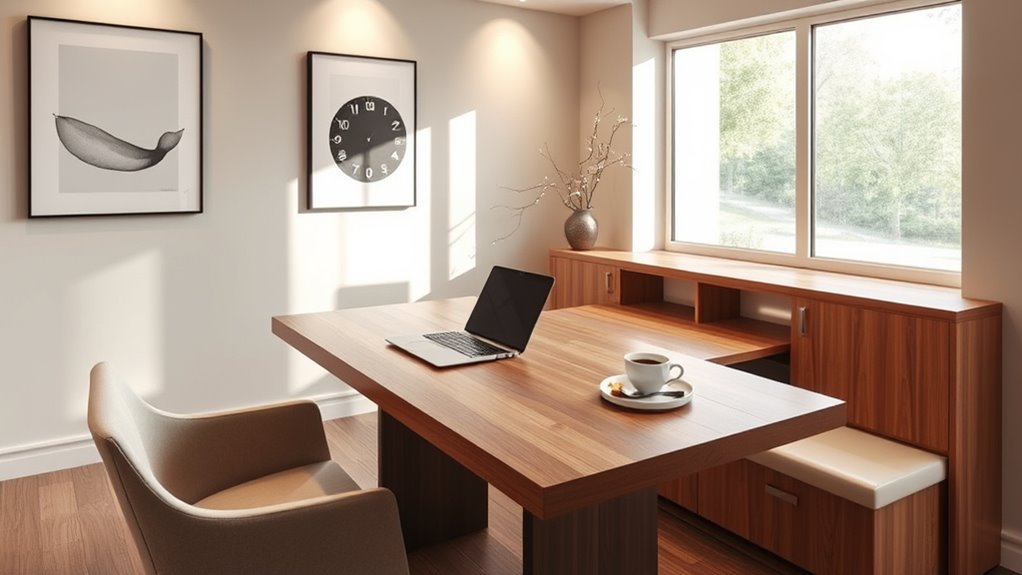
A multifunctional dining room seamlessly combines practicality and style, transforming a single space into an area that serves various needs. When you’re designing such a room, space-saving furniture becomes essential. Opt for pieces that maximize functionality without taking up too much room. Fold-down tables, extendable dining surfaces, and built-in storage solutions help you create a flexible environment. For instance, a dining table with hidden compartments or a wall-mounted foldable table allows you to quickly adapt the space for different activities. Chairs that can be stacked or tucked away further enhance the room’s versatility, making it easy to clear the area when you need more space for other purposes.
Lighting design plays a pivotal role in setting the right mood and defining zones within your multifunctional dining room. Good lighting not only illuminates the space but also helps differentiate the eating area from the workspace. Pendant lights above the dining table create a cozy, inviting atmosphere, while adjustable task lighting or desk lamps can be used when you’re working. Incorporate layered lighting with a mix of ambient, task, and accent lights to ensure the room is functional for all activities. Dimmable fixtures are especially useful, allowing you to change the brightness depending on whether you’re sharing a meal, hosting friends, or working on your laptop. Additionally, incorporating vertical storage solutions can help maintain an organized space by keeping essentials within easy reach without cluttering the surfaces.
To enhance the room’s adaptability, consider lighting fixtures that are sleek and unobtrusive. Recessed lighting offers a minimalist look that doesn’t clutter the space, and smart lighting systems enable you to control brightness and color temperature via your smartphone or voice commands. When you combine thoughtful lighting design with space-saving furniture, you create a seamless transition between dining and working modes, making the room more efficient and inviting.

IDEALHOUSE FoldingTable, Drop Leaf Dining Table with 6 Wheels and 2-Layer Storage Shelf, Space Saving Table for Small Spaces (Slate Oak, 47.2" D x 23.6" W x 29.5" H)
【Space Saving】Ideal for small apartments and limited spaces. Our drop leaf table would fully folded and stored in…
As an affiliate, we earn on qualifying purchases.
As an affiliate, we earn on qualifying purchases.
Frequently Asked Questions
How Can I Maximize Space in a Small Multifunctional Dining Room?
To maximize space in your small multifunctional dining room, use space-saving furniture like foldable tables and stackable chairs. Incorporate decorative partitions to separate areas without crowding the room, creating distinct zones for dining and working. Opt for multi-purpose pieces, such as storage benches or extendable tables, to keep the space organized and versatile, ensuring you make the most of every inch while maintaining a stylish and functional environment.
What Are the Best Furniture Options for Dual-Purpose Use?
You should opt for convertible furniture like a fold-down table or a sofa bed to maximize space and versatility. Modular storage units allow you to customize and adapt the room for both dining and working needs, keeping clutter out of sight. These pieces are practical, space-saving, and flexible, making it easy to switch between functions without sacrificing style or functionality in your small multifunctional dining room.
How Do I Create a Seamless Transition Between Eating and Working Areas?
To create a seamless shift between your eating and working areas, use decorative accents like rugs, artwork, or lighting to define each space subtly. Incorporate color coordination by choosing complementary or matching hues for furniture and accessories, helping the areas flow naturally. You can also use open shelving or room dividers that blend style and function, ensuring the space feels cohesive while maintaining distinct zones for dining and working.
What Lighting Solutions Are Ideal for Multifunctional Dining Spaces?
Think of your space as a stage, where lighting sets the mood. Use warm ambient lighting to create a cozy atmosphere, perfect for dining, and add focused task lighting over work areas for clarity. Dimmable fixtures let you adjust brightness, making shifts seamless. Layering ambient and task lighting ensures your multifunctional dining space is versatile, functional, and inviting, no matter the activity.
How Can I Ensure Privacy in a Combined Dining and Work Area?
To guarantee privacy in your combined dining and work area, focus on acoustic privacy and visual separation. Use sound-absorbing materials like rugs, curtains, or wall panels to minimize noise transfer. Incorporate room dividers, screens, or furniture placement to create visual boundaries. These strategies help you maintain focus, reduce distractions, and define distinct zones, making your space both functional and private without sacrificing style or openness.

FDW | Metal Dining Chairs | Set of 4 | Black | Stackable Tolix Side Chairs with Backrest | Scratch-Resistant | Non-Slip Feet | Indoor/Outdoor Use | 330 lbs Capacity | for Kitchen & Restaurant
DURABLE METAL CONSTRUCTION: Crafted from premium metal, these lightweight yet durable patio chairs feature a sleek industrial design…
As an affiliate, we earn on qualifying purchases.
As an affiliate, we earn on qualifying purchases.
Conclusion
By combining your dining and working spaces, you create a versatile environment that maximizes your home’s functionality. Did you know that 65% of people now work from home at least part of the time? Embracing this multifunctional approach not only saves space but also boosts productivity and social connection. So, why not transform your dining room into a flexible area that adapts to your evolving needs? It’s a smart, stylish way to make every inch work for you.

Licperron 3-Light Pendant Light Fixtures, Black Pendant Lights Kitchen Island, Adjustable Pendant Lighting with Clear Glass Shade, Modern Hanging Light Fixtures for Dining Room, Hallway, Living Room
【Adjustable Height Cord Design】The glass pendant lights come with 3 ajustable cord, Maximum Length 3.93ft (47.2inch) which can…
As an affiliate, we earn on qualifying purchases.
As an affiliate, we earn on qualifying purchases.

Govee Smart Ceiling Light, RGBIC LED Ceiling Light Fixture, 2400LM Flush Mount Light Fixture, DIY Colors, Works with Alexa, 2200K-6500K Lights for Bedroom, Living Room,12 Inch, 1 Pack (White)
Multicolored Lighting: The main light of smart ceiling light is RGB+WW, while the back light is RGBIC. With…
As an affiliate, we earn on qualifying purchases.
As an affiliate, we earn on qualifying purchases.