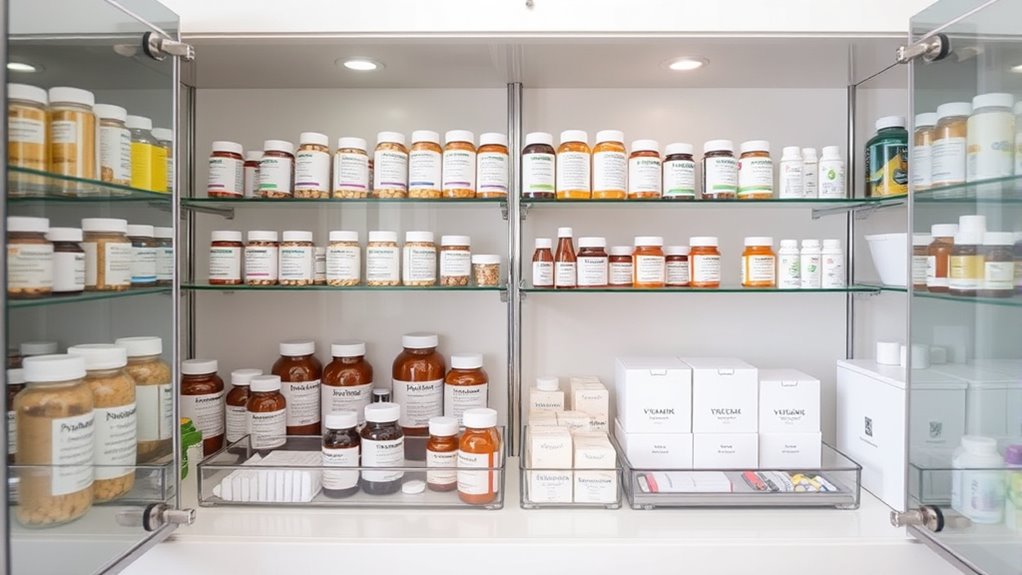

To organize your medicine cabinet for safety and easy access, group similar items together in labeled, transparent containers or small baskets. Use childproof locks and store medications out of reach of kids and pets. Keep frequently used medications in accessible spots and store others in dedicated, safety-enhanced spaces away from heat or sunlight. Regularly check and dispose of expired drugs to prevent hazards. Continue exploring for tips that help maintain a tidy, secure, and efficient medicine cabinet.
Key Takeaways
- Use labeled, clear containers and baskets to categorize medications for easy access and identification.
- Install childproof locks and store medications out of children’s reach to enhance safety.
- Dedicate specific storage spaces for emergency and frequently used medications for quick retrieval.
- Regularly check expiration dates and dispose of expired drugs to ensure safety and effectiveness.
- Store medicines in a cool, dry, and dark place, away from heat and humidity, to preserve their efficacy.
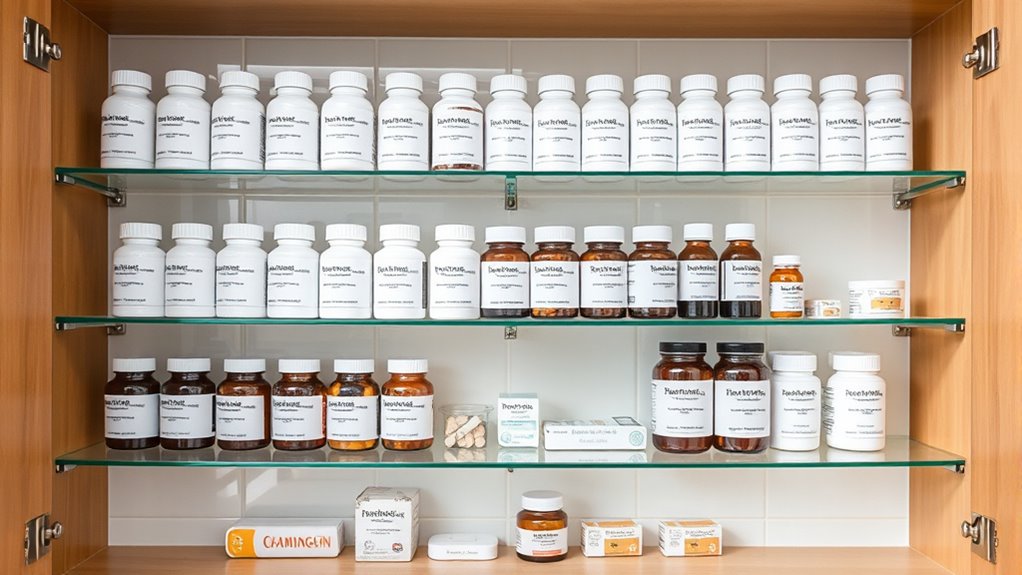
A well-organized medicine cabinet makes it easy to find what you need quickly and keeps your space tidy. When it comes to pill safety, proper storage solutions are essential to prevent accidents and *guarantee* medications remain effective. Start by categorizing your medicines—group together prescriptions, over-the-counter drugs, vitamins, and supplements. This not only simplifies access but also minimizes the risk of misusing the wrong pill. Use clear, labeled containers or small baskets to keep these groups separate and visible. Labeling each container with the medication name and expiration date helps you quickly identify what’s inside, avoiding confusion or accidental ingestion of expired pills.
Pill safety isn’t just about storage; it’s about keeping medications out of reach of children and pets. Consider installing a childproof lock on the cabinet or using high shelves that little hands can’t reach. If you keep medications in boxes, store them in a way that makes it obvious where they are, rather than stacking multiple boxes into a messy pile. This reduces the likelihood of grabbing the wrong medication or forgetting what’s inside. Always check the expiration dates regularly and dispose of expired or unused medications safely. Proper disposal prevents accidental ingestion and keeps your medicine cabinet from becoming cluttered with outdated drugs.
Implementing smart storage solutions can make a *notably* difference in accessibility. Use small, stackable bins or drawer organizers for frequently used items, so you don’t have to dig through a jumble of bottles. A dedicated space for emergency medications, like EpiPens or antihistamines, ensures you can grab them quickly when needed. Keep your medicines away from heat, humidity, and direct sunlight—these conditions can degrade the effectiveness of your pills. If space allows, consider installing a small lockable box inside the cabinet for highly sensitive or prescription medications, giving you an extra layer of safety. Additionally, employing appropriate cookie management techniques can help maintain privacy and compliance with privacy standards while managing your medication storage.
Another effective storage solution involves using clear containers so you can see what’s inside without opening each one. This saves time and prevents you from accidentally knocking over bottles while searching for a specific medication. Always store medications upright to prevent leaks and spills. Keep a list nearby of all the medicines you have, along with their expiration dates, to make regular checks easier. By maintaining a tidy, well-organized medicine cabinet with proper storage solutions, you’re not only making your daily routine more efficient but also *greatly* enhancing your safety. When each medication has its designated place, you reduce the risk of errors and create a safer environment for everyone in your home.
Frequently Asked Questions
How Often Should I Declutter My Medicine Cabinet?
You should declutter your medicine cabinet every three to six months to guarantee safety and accessibility. Check medication labeling for expiration dates, and discard expired or unused items. Use proper storage containers to keep medicines organized and prevent mix-ups. Regular decluttering helps you identify expired medications quickly, reduces clutter, and maintains a safe environment. Staying on top of this routine ensures your medicines are effective and easily accessible when needed.
What Are the Best Safety Measures for Children?
Think of your medicine cabinet as a treasure chest—only safe for a grown-up to open. Use child-proof locks to keep dangerous items out of reach, and make certain all medicines are clearly labeled to avoid mix-ups. Store hazardous substances on high shelves or in locked cabinets. Regularly check and update safety measures, making sure your little explorers can’t stumble upon something risky. Safety is your shield against accidents.
How Can I Prevent Medication Mix-Ups?
To prevent medication mix-ups, you should focus on pill sorting and label clarity. Always store medications separately, ideally in clearly labeled containers or compartments, so you can easily distinguish between them. Use large, legible labels with both the medication name and dosage. Double-check labels before taking or giving medication, and keep a list of your medicines to guarantee you’re using the right one at the right time.
Are There Eco-Friendly Ways to Dispose of Expired Medicines?
Imagine the danger if expired medicines linger in your home, quietly risking harm. You can prevent this through eco-friendly disposal methods, ensuring safety and environmental care. Consider medication recycling programs or take-back events, which responsibly handle your leftovers. Never flush medicines down the drain or toss them in the trash. By choosing eco-friendly disposal, you protect our planet and keep your loved ones safe from accidental exposure.
What’s the Ideal Temperature for Storing Medicines?
You should store medications at room temperature, ideally between 68-77°F (20-25°C), to make certain proper medication storage. Consistent temperature control helps maintain the medication’s efficacy and safety. Avoid areas with high humidity, heat, or direct sunlight, like bathrooms or near radiators. Keep your medicine cabinet in a cool, dry place, and check storage instructions on labels for specific temperature guidelines. Proper temperature control is key to keeping your medicines effective.
Conclusion
So, after all that, your medicine cabinet is now a shining example of safety and accessibility—because nothing says “I’ve got my life together” like knowing exactly where your painkillers are when the headache hits. Who needs chaos or mystery in their medicine stash? With a well-organized cabinet, you’ll never have to play hide-and-seek with that elusive ointment again. Cheers to a clutter-free, stress-free, and maybe even responsible medicine cabinet—your future self will thank you.