
To create a growth-friendly kids’ closet, use versatile storage solutions like labeled bins and vertical organizers that adapt as your child grows. Involve them in sorting and rotating clothes to encourage responsibility and independence. Keep systems simple and flexible, making it easy to update for seasonal changes and size growth. Using inviting, colorful containers will motivate your child to stay organized. If you want to discover more practical tips, continue exploring ways to maintain a clutter-free, adaptable space.
Key Takeaways
- Use adjustable, vertical storage solutions to accommodate children’s changing sizes and needs.
- Incorporate colorful, labeled containers to promote independence and easy access.
- Involve children in clothing rotation and organization to build responsibility and decision-making skills.
- Keep organization systems simple and flexible to adapt as children grow.
- Encourage ongoing tidiness with appealing storage options that motivate children to maintain order.
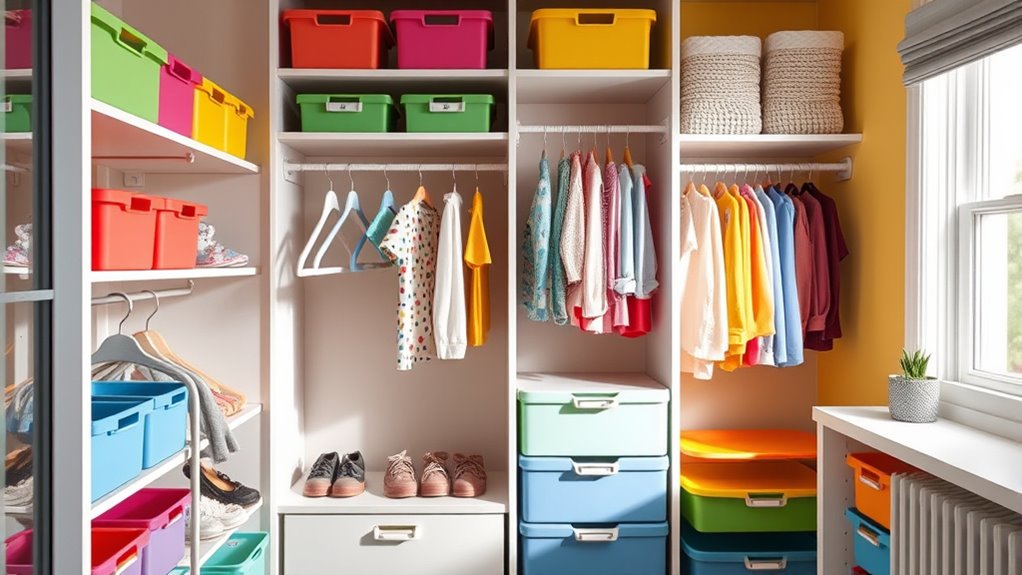
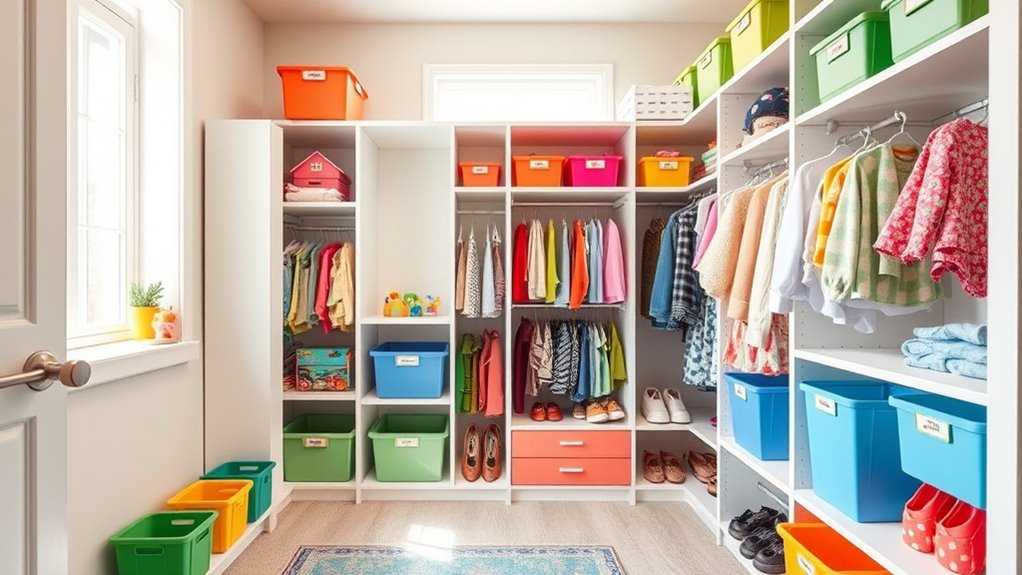
Organizing your kids’ closet can transform a chaotic space into a functional and enjoyable area for both you and your children. When you focus on creating growth-friendly systems, you make it easier for your kids to find what they need and put things away without frustration. One effective way to do this is by incorporating decorative storage solutions. Stylish bins, baskets, and boxes not only keep clutter at bay but also add a touch of personality to the closet. Choose colorful or themed containers that appeal to your child’s tastes, making it fun for them to participate in tidying up. These decorative storage options can be neatly labeled or designed with pictures to help your children identify where items go, encouraging independence. When storage looks inviting and organized, your kids are more likely to maintain the system, fostering good habits early on.
Clothing rotation is another essential strategy. Kids grow quickly, and their wardrobes need regular updates to stay manageable. Instead of letting outgrown clothes clutter the closet, set up a system to rotate clothing seasonally or as sizes change. This means keeping only the current size in the closet and storing out-of-season or outgrown items elsewhere. You can use clear bins or labeled boxes for this purpose, making it simple to swap clothes when needed. Regular clothing rotation prevents the closet from becoming overwhelmed with too many options, which can lead to decision fatigue and mess. It also teaches your children about organization and the importance of keeping only what they use. When clothes are rotated efficiently, your child’s closet stays neat and accessible, and you save time searching for the right outfit.
Additionally, incorporating vertical storage solutions can maximize space and make the closet more adaptable as your child grows. To make clothing rotation easier, involve your kids in the process. Teach them to fold and put away clothes properly, and let them help decide what to keep or donate. This not only speeds up the organization process but also instills a sense of responsibility. Pair this with decorative storage solutions to keep everything visually appealing and easy to access. Use tiered shelves or hanging organizers to separate different clothing types, like pajamas, school uniforms, and playwear. This way, your child’s closet becomes a practical space that adapts to their growth and changing needs. The key is to keep things simple and flexible, so your child can learn to manage their belongings independently while you maintain a tidy, growth-friendly environment.
Frequently Asked Questions
How Often Should I Reorganize My Child’s Closet?
You should reorganize your child’s closet every few months, especially when clothing size updates happen. Regular checks help you swap out outgrown clothes and keep everything accessible. Use versatile storage container choices that grow with them, like stackable bins or adjustable shelving. This way, you maintain an organized, growth-friendly system that adapts to their changing needs without much hassle.
What Are Eco-Friendly Closet Organization Options for Kids?
Did you know that using recycled storage can reduce waste by up to 30%? You can choose eco-friendly closet options like sustainable materials such as bamboo or organic cotton for storage bins and shelves. Recycled plastic bins and repurposed furniture also make great sustainable choices. These options help protect the environment while keeping your child’s closet organized and adaptable for growth, making sustainability a simple part of your everyday routine.
How Can I Involve Children in Organizing Their Closet?
You can involve children in organizing their closet by empowering them to make decisions and take ownership of their space. Turn organizing routines into fun activities, like sorting clothes by color or size. Encourage their input on storage solutions, and praise their efforts to boost confidence. This approach helps them develop responsibility and keeps their closet tidy, making organization a positive, ongoing habit.
What Safety Precautions Should I Consider in Kid-Friendly Closet Systems?
Imagine a toddler exploring their closet; you should install child-proof locks on cabinets and drawers to prevent accidents. Always choose closet systems made from non-toxic materials, ensuring safety if children chew or lick surfaces. Regularly check that shelves and hooks are securely fastened and at safe heights. By taking these precautions, you create a safe environment that encourages independence while minimizing risks.
How Do I Manage Seasonal Clothing Changes Effectively?
To manage seasonal clothing changes effectively, start with clothing rotation by sorting out off-season items and storing them separately. Use accessible storage solutions like labeled bins or under-bed containers for easy access. Regularly review and update the wardrobe to prevent clutter, rotating clothing as seasons change. This approach keeps your kid’s closet organized, making it simple to swap out clothes and ensure everything fits and is ready for the weather.
Conclusion
By implementing growth-friendly closet systems, you create a space that adapts as your child grows, turning chaos into harmony. Think of it as planting a garden that blossoms over time—each new season brings fresh opportunities for organization and order. With these flexible solutions, you’ll not only keep clutter at bay but also nurture independence and confidence in your little one. Ultimately, a well-organized closet becomes the silent partner in your child’s journey toward growing up gracefully.