To organize your garden shed efficiently, group tools, seeds, and supplies by category using labeled bins, shelves, and pegboards. Keep frequently used items nearby and store pest control products separately in a cool, dark spot for safety. Use clear containers for seeds and labels for quick identification. Maintain your organization with routine checks and proper tool maintenance. If you continue, you’ll find expert tips to keep your shed neat and accessible all season long.
Key Takeaways
- Group similar items like tools, seeds, and supplies in dedicated zones with labeled storage to enhance accessibility.
- Use wall-mounted shelves, pegboards, and clear bins to optimize space and visibility of small items and seed packets.
- Store pest control products separately in a cool, dark area away from children and pets for safety and effectiveness.
- Maintain routine inspections and replenish supplies, discarding expired products to ensure a well-organized, functional shed.
- Designate specific work areas for potting, soil mixing, and tool maintenance, keeping tools sharp, clean, and easily accessible.
A well-organized garden shed makes outdoor chores easier and more enjoyable. When you keep your tools, seeds, and supplies neatly arranged, you save time and reduce frustration. One key aspect of this organization is setting up a dedicated space for plant care and pest control. By doing so, you’ll have everything you need close at hand, making it easier to maintain healthy plants and prevent pests from taking over your garden.
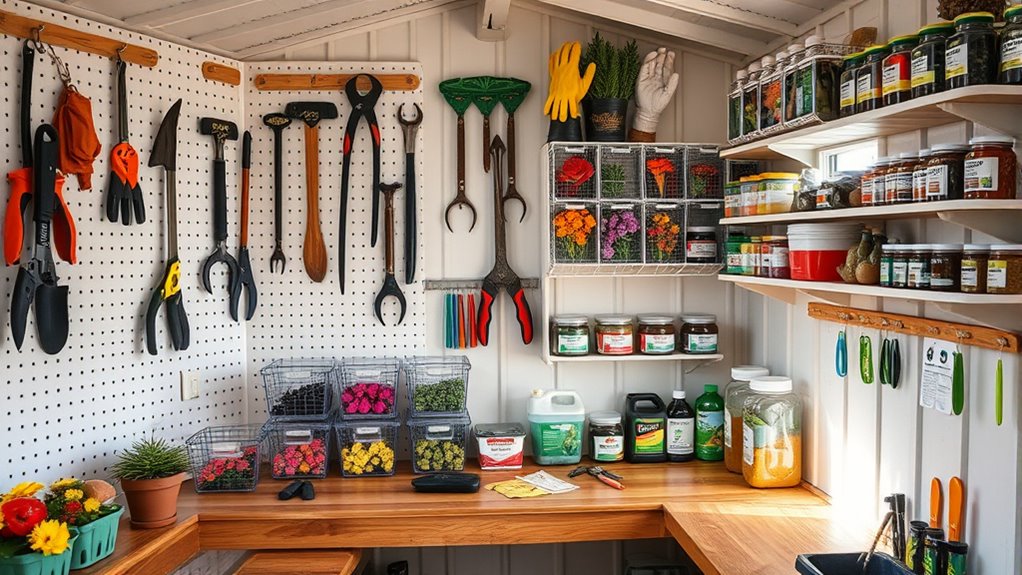
Start by grouping items based on their purpose. Keep all your plant care supplies—fertilizers, watering cans, soil amendments, and plant food—in one area. This way, when you’re ready to tend to your garden, you won’t have to dig through clutter to find what you need. Consider installing shelves or wall-mounted pegboards to keep smaller items like pruning shears, gloves, and plant tags visible and accessible. Clear storage bins work well for seed packets and plant labels, helping you stay organized and find what you want quickly.
Pest control supplies should also have a designated section. Store insecticides, traps, and natural pest repellents together, and make sure they’re stored safely, away from children and pets. Keep in mind that some pest control products can be sensitive to light or temperature, so store them in a cool, dark place within your shed. When you’re organized, it’s easier to spot early signs of pest problems and react quickly. You can keep a small notebook or chart nearby to track pest activity or treatments, helping you stay on top of your garden’s health.
To enhance your plant care and pest control efforts, consider labeling your storage containers. Clear labels prevent you from wasting time searching for specific supplies, especially when you’re in a hurry. Also, maintain a routine of checking your supplies periodically, discarding expired products, and replenishing what’s running low. This proactive approach keeps your garden thriving and minimizes the risk of pest infestations.
Finally, invest in a small workbench or table within your shed. This provides a convenient spot for potting plants, mixing soil, or applying pest control treatments. Keeping your tools sharp and clean also helps prevent plant diseases and pest problems from spreading. When everything has a designated place, and you follow a consistent organization method, your garden shed becomes a hub of efficiency. Not only will it make caring for your garden more straightforward, but it’ll also give you peace of mind knowing that all your plant care and pest control needs are well within reach.
Frequently Asked Questions
How Often Should I Reorganize My Garden Shed?
You should reorganize your shed at least twice a year, ideally during seasonal updates. Regular shed cleaning helps keep everything tidy and prevents clutter from accumulating. After each season, reassess your tools, seeds, and supplies, discarding what’s unused or expired. This routine makes it easier to find what you need quickly and keeps your shed functional year-round, saving you time and frustration during busy gardening periods.
What Are the Best Labels for Small Supplies?
You should use clear, durable labels for small supplies to keep your shed organized. Labeling systems like waterproof labels or chalkboard tags work well, especially when attached to storage containers. Choose labels that are easy to read and resistant to moisture. You can also opt for color-coded labels for different categories, making it simpler to find what you need quickly and maintain an efficient, organized shed.
How Can I Prevent Pests in My Shed?
Imagine turning your shed into a pest-free haven. To achieve this, implement effective pest control strategies like regular cleaning and storing items in sealed containers. Seal any gaps or cracks with durable shed sealing methods to block entry points. Keep the area dry and well-ventilated, and consider natural repellents. These simple steps create an inviting environment away from unwelcome critters, keeping your shed tidy and pest-free year-round.
What Safety Gear Should I Store in My Shed?
You should store essential safety gear like protective gloves and eye protection in your shed to stay safe while gardening. Keep these items easily accessible so you can quickly put them on when handling chemicals or tools. Regularly check that your gloves are in good condition and your eye protection is clean. Proper safety gear helps prevent injuries and keeps your gardening experience safe and enjoyable.
How Do I Handle Mold or Moisture Issues?
Picture a fortress protecting your treasures—you need to tackle mold and moisture head-on. To handle this, regularly check for leaks, improve airflow, and use dehumidifiers to prevent mold growth. Store items in breathable containers, and wipe down surfaces to control moisture. Mold prevention is your shield, ensuring your shed stays dry and safe. Act now to keep mold and moisture issues at bay, preserving your garden haven.
Conclusion
Keeping your garden shed organized is like giving your gardening dreams a gentle nudge in the right direction. When everything has a cozy spot, you’ll find your favorite tools and seeds more easily, making your gardening moments smoother and more enjoyable. A tidy shed isn’t just about neatness; it’s about creating a welcoming space where your passion can flourish without unnecessary fuss. Embrace organization, and watch your garden thrive effortlessly.