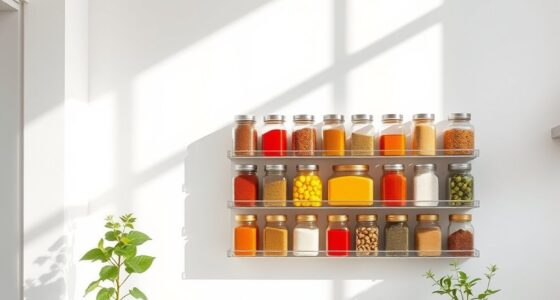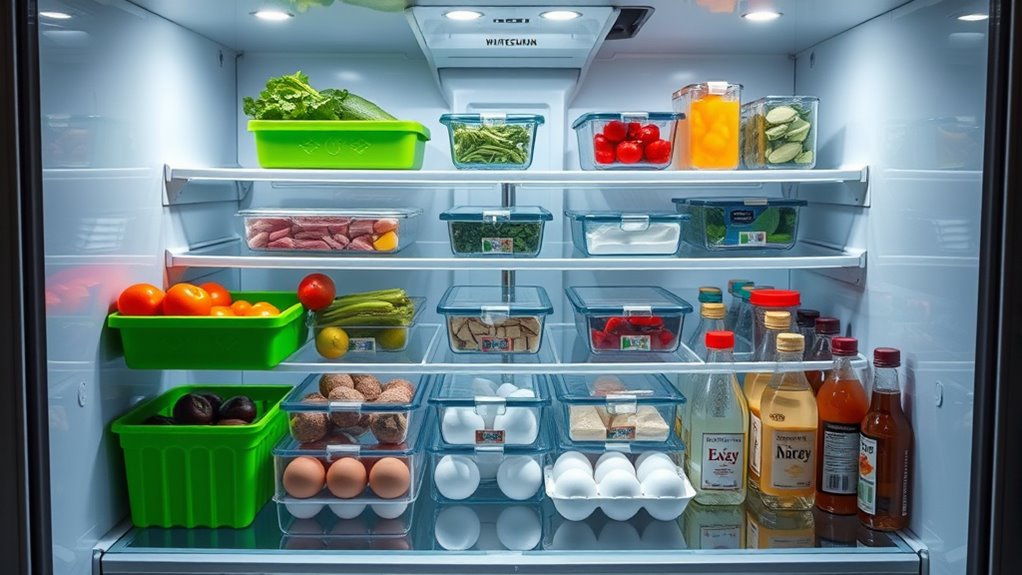

Organizing your fridge into specific zones boosts food safety and keeps things efficient. Store ready-to-eat items on the top shelves for easy access, while dairy and perishables go in middle shelves to maintain proper temperatures. Use crisper drawers for fruits and vegetables, keeping them fresh longer, and arrange condiments and drinks in the door shelves for convenience. Effective zoning reduces waste, prevents cross-contamination, and saves time—continue to discover key tips for perfect fridge organization.
Key Takeaways
- Proper fridge zoning ensures quick access to items, reducing time spent searching and handling food safely.
- Storing ready-to-eat foods on the top shelf minimizes cross-contamination risks.
- Maintaining dairy and perishables on middle shelves preserves freshness and prevents spoilage.
- Using crisper drawers for fruits and vegetables extends their shelf life and keeps produce fresh.
- Organizing condiments and beverages in door shelves improves overall accessibility and maintains order.

Have you ever wondered how to keep your fridge tidy and efficient? The key lies in proper zoning, which not only helps you find what you need quickly but also keeps your food safer and fresher longer. When you organize your fridge with designated zones, you create a system that reduces waste, prevents cross-contamination, and streamlines your daily routines. If you have picky eaters at home, this approach can make meal prep tips easier, as you can pre-portion snacks and ingredients for different preferences, making everyone’s life simpler.
Start by dividing your fridge into specific zones based on food types and storage needs. The top shelf is ideal for ready-to-eat items like leftovers, drinks, and deli meats. Keeping these items at eye level means you can grab snacks or meals quickly without rummaging through everything. For households with picky eaters, this zone becomes especially useful because you can place their favorite snacks or pre-packed meals here, making it easier to cater to their preferences without disturbing the rest of the fridge.
The middle shelves are perfect for dairy products, eggs, and other perishable ingredients. These should be stored at a consistent temperature to prevent spoilage. When you organize this way, you also make meal prep tips more effective. You can set aside ingredients for specific meals in advance, reducing last-minute stress and ensuring everyone gets what they want. For example, pre-chopped vegetables or pre-portioned proteins can be stored here, ready to be incorporated into meals. It saves time and minimizes the risk of forgotten leftovers rotting away. Proper temperature control is essential for maintaining food safety and quality in these zones.
The crisper drawers are designed for fruits and vegetables. To maximize freshness, keep fruits in one drawer and vegetables in another, and adjust the humidity controls if available. This zoning prevents spoilage and keeps produce crisp longer. If you’re meal prepping, you can also portion out fruit and veggie snacks for different family members, making healthy choices more accessible for picky eaters. Keeping these items organized in clear containers or labeled bags helps you see what’s available at a glance.
The door shelves are best suited for condiments, sauces, and beverages. These items are less perishable and can withstand slight temperature fluctuations. When you organize the door this way, it’s easier to find what you need without disturbing the more delicate items in the main compartments. For meal prep, consider storing small jars of dressings or spreads here, so they’re handy when assembling meals or snacks.

Stackable Refrigerator Organizer Bins, 6 Pack Clear Kitchen Organizer Container Bins with Handles and 20 PCS Plastic Bags for Pantry, Cabinets, Shelves, Drawer, Freezer – Food Safe, BPA Free 10"L
【STACKABLE DESIGN】The lifting feet at the bottom of each freezer organizer bin can be stacked, stacked, or side…
As an affiliate, we earn on qualifying purchases.
As an affiliate, we earn on qualifying purchases.
Frequently Asked Questions
How Often Should I Reorganize My Fridge Zones?
You should reorganize your fridge zones every 2 to 3 months to keep food safety and freshness in check. Regularly check food expiration dates and adjust zone labeling if needed, especially after buying new items or using up old ones. This helps prevent cross-contamination and keeps your fridge efficient. A quick reorganization ensures you’re always storing food properly, reducing waste and maintaining peak freshness.
What Are the Best Containers for Storing Leftovers?
Think of your leftovers as treasures needing protection; the best containers are airtight, like castles guarding their treasures, keeping food fresh and odors contained. Opt for stackable storage to maximize space, like building blocks creating a fortress of organization. These containers prevent leaks and spoilage, ensuring your leftovers stay safe and delicious. Choose high-quality, BPA-free options for durability and health, and you’ll maintain a well-ordered, efficient fridge.
How Can I Prevent Cross-Contamination Between Zones?
You can prevent cross-contamination by maintaining a strict cleaning schedule for your fridge and using clear zone labeling. Regularly wipe down shelves and containers, especially between different food groups. Designate specific zones for raw meats, cooked foods, and produce, and stick to them. This reduces the risk of bacteria transfer. Consistent cleaning and clear labels help you keep each zone safe and organized, ensuring food stays fresh and hygienic.
Does Fridge Temperature Affect Food Safety Zones?
Your fridge’s temperature is like a gentle guardian of your food’s freshness, directly impacting safety zones. Proper temperature regulation and humidity control keep bacteria at bay, ensuring each zone stays ideal. When temperatures fluctuate, it’s harder to maintain these safe zones, risking cross-contamination. Keep your fridge at the right temperature—around 37°F (3°C)—and use humidity control features to preserve food quality and safety effectively.
Are There Specific Zones for Organic or Special Diet Foods?
Yes, you should create specific zones for organic storage and special diet segregation. Store organic foods on a designated shelf away from raw meats or processed items to prevent cross-contamination. For special diet foods, like gluten-free or allergy-sensitive products, keep them in clearly labeled areas to guarantee they’re easily accessible and protected. This zoning helps maintain food safety and respects dietary needs, making your fridge more organized and efficient.
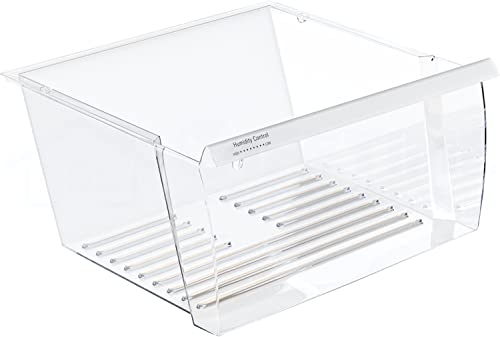
Upgraded Lifetime Appliance Parts 2188656 Crisper Bin (Upper) Compatible with Whirlpool Refrigerator | Fridge Drawers | Kenmore Refrigerator Parts | Whirlpool Shelf Replacement – WP2188656
✅【 WARNING 】 This item is not universal and will not fit all Whirlpool or Kenmore fridges. To…
As an affiliate, we earn on qualifying purchases.
As an affiliate, we earn on qualifying purchases.
Conclusion
By mastering your fridge’s zoning system, you turn chaos into a well-orchestrated symphony of freshness. Think of your fridge as a bustling city where each section has a purpose—keeping your food safe and your kitchen efficient. When you organize with intention, you’re not just storing groceries; you’re creating a sanctuary of health and harmony. Keep the rhythm steady, and your fridge will always be a reliable guardian of your culinary treasures.
Stackable Refrigerator Organizer Bins, 6 Pack Clear Kitchen Organizer Container Bins with Handles and 20 PCS Plastic Bags for Pantry, Cabinets, Shelves, Drawer, Freezer – Food Safe, BPA Free 10"L
【STACKABLE DESIGN】The lifting feet at the bottom of each freezer organizer bin can be stacked, stacked, or side…
As an affiliate, we earn on qualifying purchases.
As an affiliate, we earn on qualifying purchases.

ASTIMESA 8 Pcs Adjustable Clear Fridge Divider Set, Retractable Fridge Door Organizer Clip, Snap-On Unexpanded: 3.1 x 1.9 Inches (8 x 5 cm) Expanded: 4.7 x 1.9 Inches (12 x 5 cm)
【Adjustable Design】 The size of unexpanded freezer separator dividers is 3.1" x 1.9" (8 x 5 cm), and…
As an affiliate, we earn on qualifying purchases.
As an affiliate, we earn on qualifying purchases.