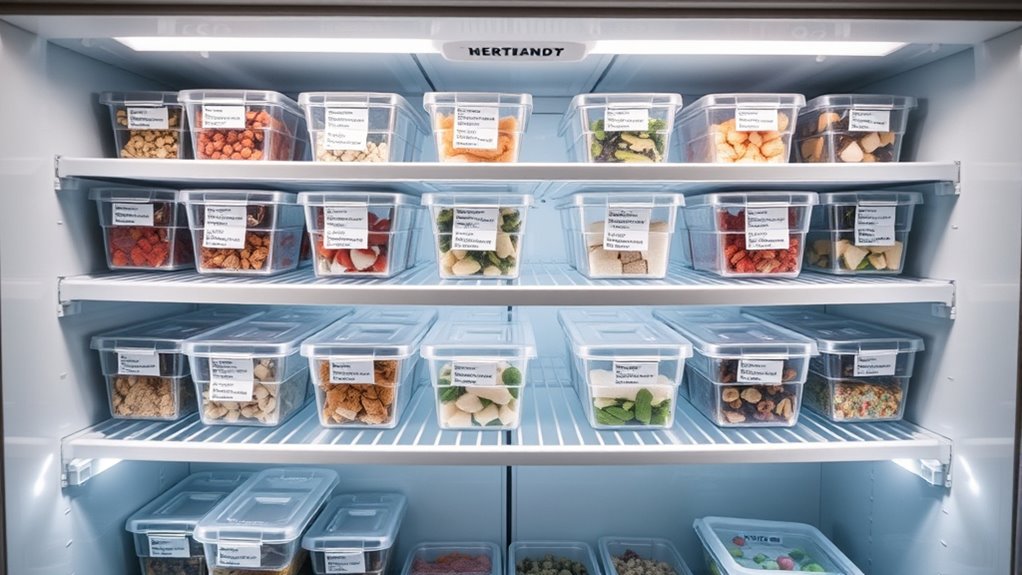

To reduce waste and improve freezer efficiency, dedicate specific zones for vegetables, meats, and prepared meals, making items easier to find. Use waterproof labels with contents and dates, and rotate older items to the front to guarantee you use them first. Keep an organized inventory visible on the door, plan meals around current stock, and choose eco-friendly containers. Keep these tips in mind for a more organized freezer—there’s more to discover on how to implement them effectively.
Listen free for 30 days with Audible
Thousands of audiobooks and originals — cancel anytime.
As an affiliate, we earn on qualifying purchases.
Key Takeaways
- Use waterproof labels to clearly mark contents with names and freezing dates for easy identification.
- Organize items by zones (vegetables, meats, prepared meals) to streamline access and rotation.
- Practice FIFO (first-in, first-out) by placing older items at the front and newer at the back to reduce spoilage.
- Regularly review and update inventory lists on the freezer door to track stock and minimize waste.
- Label and rotate items systematically to ensure older food is used first, preventing unnecessary disposal.
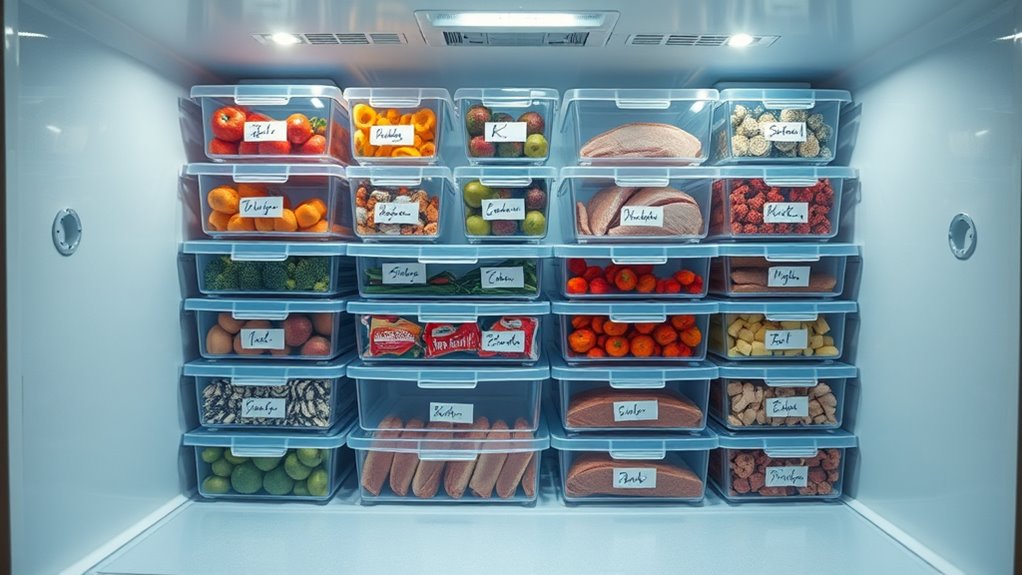
Ever wonder how to keep your freezer neat and accessible? The key lies in effective organization through proper labeling and rotation. When you implement these strategies, you not only save time but also reduce waste, making your meal prep more efficient. Start by dedicating specific zones in your freezer for different food categories. For example, assign one section for vegetables, another for meats, and a separate area for prepared meals. This setup enhances space optimization, allowing you to see everything at a glance and prevent forgotten items from lurking in the back. As you fill your freezer, make it a habit to label each package with the contents and date of freezing. Use waterproof markers or labels that won’t smudge or peel, ensuring clear identification over time. Proper labeling is vital for effective rotation—when you know exactly what you have and when you froze it, you can prioritize older items for consumption first. This practice helps prevent food waste and keeps your freezer organized, especially during busy weeks when meal prep is in full swing. Additionally, understanding sustainability practices in food storage can help you choose eco-friendly containers and reduce environmental impact.
Implement a rotation system, moving older items to the front of the freezer and pushing newer items toward the back. This way, you’re always using the oldest stock first, which minimizes spoilage and maximizes freshness. When you’re preparing meals, take advantage of your well-organized space by planning your grocery shopping around what’s already in the freezer. This reduces unnecessary trips and helps you stick to your meal prep schedule. Keep an inventory list somewhere visible, like on the freezer door, to track what’s inside without opening it repeatedly. This simple step saves energy, maintains consistent temperatures, and makes sure you’re making the most of your frozen supplies.
As an affiliate, we earn on qualifying purchases.
Frequently Asked Questions
How Often Should I Defrost My Freezer for Optimal Organization?
You should defrost your freezer every 6 to 12 months for ideal freezer maintenance. This helps prevent ice buildup, which can reduce efficiency and waste energy. Keep an eye on frost accumulation; if it exceeds a quarter-inch, it’s time to defrost. Following an optimal defrosting schedule ensures your freezer runs smoothly, maintains proper temperature, and keeps your food fresh. Regular defrosting is key to efficient freezer organization and less waste.
What Are the Best Containers to Prevent Freezer Burn?
You should use airtight containers that are specifically labeled as freezer safe options to prevent freezer burn. These containers keep moisture in and air out, protecting your food from ice crystals and dehydration. Look for durable, leak-proof options made of BPA-free plastic or glass with tight-fitting lids. Remember, proper sealing and choosing high-quality, freezer-safe containers help maintain freshness and prevent freezer burn over time.
How Can I Prevent Cross-Contamination in My Freezer?
Imagine you’re stacking raw chicken next to cooked vegetables—cross contamination can happen quickly. To prevent it, always use separate containers for raw and cooked foods, and make sure they’re tightly sealed. Follow freezer safety tips like labeling everything clearly and placing raw items below cooked ones. Regularly clean your freezer to reduce bacteria buildup. These simple steps help prevent cross-contamination, keeping your food safe and fresh longer.
What Temperature Should My Freezer Be Set To?
You should set your freezer’s temperature to 0°F (-18°C) for ideal preservation. Regularly check your temperature settings and guarantee proper freezer calibration to maintain consistent cold. Proper calibration prevents temperature fluctuations that could compromise food safety. Use a reliable thermometer to monitor and adjust the settings as needed. Keeping your freezer at the correct temperature helps prevent spoilage and cross-contamination, ensuring your frozen foods stay fresh and safe.
How Do I Handle Spoiled or Expired Frozen Items Safely?
When you find spoiled or expired frozen items, carefully discard them to prevent contamination. Use proper labeling practices to track expiration dates and guarantee you remove older items first. Always wash your hands after handling spoiled food, and clean the freezer area thoroughly. Regularly checking and rotating your freezer items helps prevent waste and keeps your food safe. Stay vigilant with expiration date tracking to maintain a healthy, organized freezer.
As an affiliate, we earn on qualifying purchases.
Conclusion
By labeling and rotating your freezer items, you can reduce waste by up to 30%, saving money and space. Staying organized not only keeps your freezer tidy but also guarantees you use your food before it expires. With a little effort, you’ll find it easier to prevent spoilage and enjoy fresher meals. So, take five minutes today to implement these tips—you’ll be surprised how much easier freezer management becomes and how much less food gets wasted.
food rotation system for freezer
As an affiliate, we earn on qualifying purchases.
As an affiliate, we earn on qualifying purchases.
As an affiliate, we earn on qualifying purchases.
NFL season / tailgating Picks
team gear
As an affiliate, we earn on qualifying purchases.