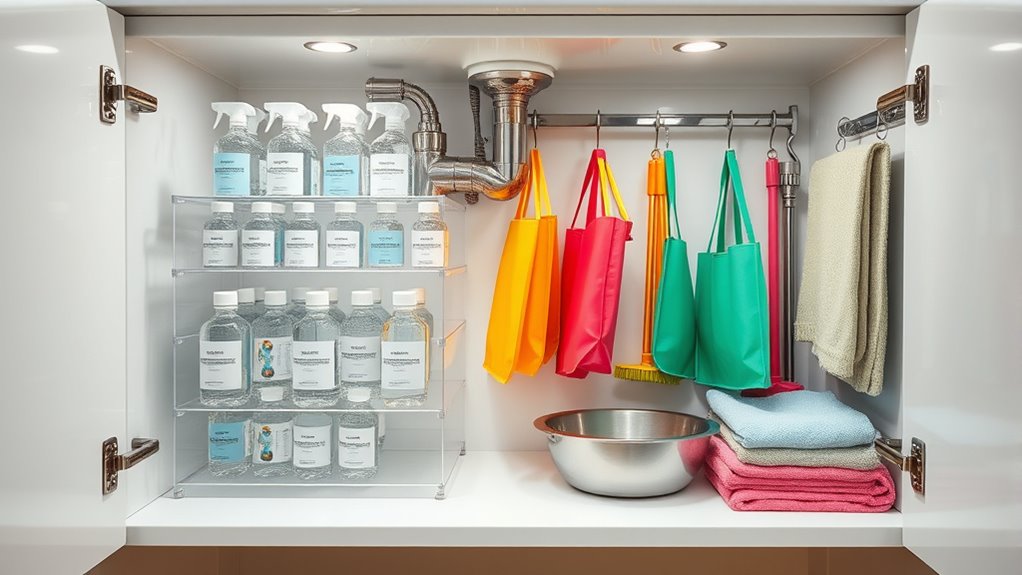

To organize your under-sink area efficiently, start by removing all items for a thorough clean and discard expired or unused products. Use clear, stackable containers labeled for easy access, grouping similar items like cleaning supplies and trash bags together. Keep frequently used items at the front and utilize vertical space with shelves or wall mounts. Regularly review and tidy the area to maintain order, and discover simple tips to optimize storage as you continue exploring.
Key Takeaways
- Remove all items and thoroughly clean the under-sink area before organizing.
- Use clear, labeled containers to store cleaning supplies, bags, and small tools for easy access.
- Group similar items together, such as drain cleaners, trash bags, and brushes, for efficient retrieval.
- Maximize vertical space with stackable bins, tiered shelves, and hooks inside cabinet doors.
- Regularly review and tidy the area every few months to prevent clutter and address plumbing issues promptly.

An under-sink area often becomes a cluttered space, making it difficult to find what you need when you need it. Over time, bottles of cleaning supplies, bags, and miscellaneous items pile up, creating chaos instead of convenience. To regain control, you need a strategic approach to organizing this space. Proper plumbing maintenance is key here; before you start, check for leaks or drips that could cause future messes or damage. Once your plumbing is in good shape, you can focus on optimizing storage.
Start by clearing everything out. Discard empty or expired bottles and any items you no longer use. As you do this, consider your storage container tips. Using clear, stackable containers helps you see what’s inside at a glance, saving time and reducing the frustration of digging through clutter. Small bins are perfect for grouping similar items—like all your drain cleaners or hand soaps—so you can grab what you need without rummaging. Label each container for quick identification, especially if you keep multiple products in the same bin.
Clear out clutter, use transparent containers, and label for quick, easy access.
When organizing cleaning supplies, keep the most frequently used items at the front or on the top shelf for easy access. Consider using a tiered shelf or a small pull-out drawer to maximize vertical space. For larger bottles or bulky items, store them at the back or on the floor, but ensure they’re secure to prevent tipping over. If you keep plastic bags or trash bags under your sink, designate a specific container or a bag holder to contain them neatly, avoiding a messy pile on the floor.
Implementing cost-effective storage solutions can help you stay within budget while keeping your under-sink area tidy and functional.
Add hooks or small wall-mounted organizers inside the cabinet door to hold brushes, gloves, or small tools. This keeps items off the shelf and frees up space for other essentials. Remember to regularly review and tidy your under-sink area to prevent clutter from building up again. Establish a maintenance routine—say, every few months—to check for leaks, discard expired products, and reorganize if needed.

iCASA 6-Pack Clear Fridge Organizers and Storage Bins Container with Labels
Designed for Clutter-Free Kitchens & Pantries – This 6-pack clear organizer set transforms messy refrigerators, cabinets, and pantry…
As an affiliate, we earn on qualifying purchases.
As an affiliate, we earn on qualifying purchases.
Frequently Asked Questions
How Do I Prevent Mold Under the Sink?
To prevent mold under your sink, you should focus on moisture control and mold prevention. Keep the area dry by wiping up spills promptly and ensuring proper ventilation. Use a dehumidifier or fan if necessary, and consider installing a moisture barrier or tray to catch leaks. Regularly check for leaks or condensation, and clean the area with mold-resistant solutions to keep mold from forming and spreading.
What Are Eco-Friendly Cleaning Supply Storage Ideas?
Think of your cleaning closet as a garden that thrives on sustainability. You can nurture it by using eco-friendly storage ideas, like repurposing old baskets or wooden crates, and choosing recycling bins that blend into your decor. Opt for biodegradable bottles and containers, which break down naturally, reducing waste. By organizing with these thoughtful solutions, you create a greener space that’s as beautiful as it is functional.
How Often Should I Reorganize Under-Sink Areas?
You should reorganize your under-sink area every 3 to 6 months to maintain ideal organization. Incorporating regular frequency maintenance into your organizational routines helps prevent clutter and keeps things accessible. Reassess your storage solutions, discard expired supplies, and adjust labels or containers as needed. Staying consistent with these routines ensures your space remains tidy, functional, and easy to navigate, saving you time and frustration in the long run.
Can I Store Fragile Items Safely Under the Sink?
You can store fragile items under the sink safely if you prioritize fragile item safety by adding under sink cushioning like foam or soft cloths. Use sturdy, leak-proof containers to prevent damage and avoid placing fragile items near heavy or sharp objects. Regularly check the area for leaks or spills that could compromise your cushioning, and confirm items are secure so they don’t shift or break during movement.
What Are Space-Saving Tips for Small Under-Sink Cabinets?
To save space in your small under-sink cabinet, use drawer dividers to organize small items neatly. Vertical stacking helps maximize vertical space, letting you store more without clutter. Group similar items together and stack bottles or cleaning supplies carefully. You can also install narrow shelves or hooks for additional storage. These tips make your cabinet more efficient and accessible, so you find what you need quickly without sacrificing valuable space.

Stackable Refrigerator Organizer Bins, 6 Pack Clear Kitchen Organizer Container Bins with Handles and 20 PCS Plastic Bags for Pantry, Cabinets, Shelves, Drawer, Freezer – Food Safe, BPA Free 10"L
【STACKABLE DESIGN】The lifting feet at the bottom of each freezer organizer bin can be stacked, stacked, or side…
As an affiliate, we earn on qualifying purchases.
As an affiliate, we earn on qualifying purchases.
Conclusion
With a little effort, your under-sink space can become a hidden oasis of order, making daily routines smoother and more enjoyable. When you create a thoughtful system, you’re gently guiding chaos into calm, revealing a sanctuary where everything has its place. Embrace the process, knowing that a well-organized cabinet isn’t just about neatness — it’s about giving yourself the gift of peace and simplicity in a busy world.

EigPluy 3 Piece Kitchen Cabinet Door Storage Box,Self Adhesive Wall Mounted Storage Boxes,Wardrobe/Bathroom/Refrigerator Small Items Organizer Storage Box (Black3)
Increase the Storage Capacity: Kitchen Cabinet Door Organizer Can Easily Store a Variety of Items, Decorate Your Home…
As an affiliate, we earn on qualifying purchases.
As an affiliate, we earn on qualifying purchases.

Sevenblue 3 Pack Under Sink Organizer, Height Adjustable 2 Tier Pull-Out Metal Under Kitchen Sink Organizer, Multi-Purpose Storage Shelves for Kitchen Bathroom Cabinet, Black
Maximize Storage Space: Our 3-pack under sink organizer delivers 40% more storage than standard 2-pack sets. Its narrow-top,…
As an affiliate, we earn on qualifying purchases.
As an affiliate, we earn on qualifying purchases.