TL;DR

Get home appliances delivered free with Prime
- Fast, free delivery on millions of items
- Prime Video, Amazon Music and more included
- Member-only deals all year
A Hunker home-improvement report recommends clear adhesive contact paper as a lower-cost alternative to curtains for adding privacy while allowing daylight through. The article describes cleaning the glass, applying the paper, smoothing bubbles and trimming the edges; it does not provide prices or independent tests of privacy, durability or removal.
Hunker’s home-improvement report recommends applying clear contact paper directly to window glass as a budget-friendly way to increase privacy without hanging curtains. The adhesive covering is described as giving glass a frosted appearance that obscures views while allowing light through, making it a possible option for compact rooms such as bathrooms.
The report says curtains can involve decisions about size, style and care, and may be costly or visually cluttering in a small space. Clear contact paper offers a different approach: it adheres to the glass rather than covering the window with fabric. Hunker says it is usually less expensive than static-cling window film, particularly when a large amount is needed, but the article supplies no prices or product-by-product cost comparison.
For installation, Hunker recommends a clean glass surface, a ruler or measuring tape, a utility or craft knife, and a wallpaper smoother. A credit card or nylon pan scraper can be used to press out air bubbles if a smoother is not available. The paper can be applied slightly larger than the pane and trimmed afterward; cutting it too small may leave uncovered gaps.
The report says adhesive-backed contact paper may stay in place better than static-cling film in humid areas such as bathrooms. It also says the material is removable, and that lingering adhesive can be cleaned with soap and water or an adhesive-removal product. These are the report’s practical claims; it does not give test results, removal timelines or details about how different glass surfaces respond.
Privacy Without Hanging Curtains
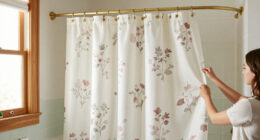
The suggestion offers renters and homeowners a way to address line of sight through a window without installing a curtain rod or giving up all daylight. That may be useful in bathrooms or other small rooms where fabric can take up visual space. Since the covering is attached to the glass, it also avoids the need to select and maintain window-length fabric panels.
The trade-off is that privacy depends on the material and how it is used. Hunker describes clear contact paper as obscuring what is inside while letting light filter through, but does not quantify how much visibility it blocks in different lighting conditions. A covering that admits daylight may not block all light or every view. Readers should check the product’s intended use and test a small area if they need a particular level of privacy.
Design choices also affect the result. The article mentions plain clear paper, lace and frosted diamond patterns, as well as strips that leave some glass uncovered. Patterned or solid-color products can block more light, while stained-glass-style options add color. Those choices make the method adaptable, but they also mean privacy and brightness will vary with the product and coverage.
Products Worth Considering

Ring Alarm 8-Piece Kit (2nd Gen) Home Security System

Philips Hue Bridge Pro Smart Lighting Hub

Philips Hue Secure Wired Video Doorbell, 2K Resolution, Wide Angle View, Integrated Hue Lights, Two-Way Audio, Infrared Night Visibility, Bl
As an affiliate, we earn on qualifying purchases.
How Contact Paper Differs From Film
Contact paper is commonly used as an adhesive covering for flat surfaces, including drawer interiors and cabinet surfaces. In this case, Hunker proposes using a clear version on glass to create a frosted effect. The comparison in the report is with static-cling window film: contact paper uses adhesive, while static-cling film holds to glass without the same adhesive attachment.
The distinction matters most in the installation and removal. Hunker says adhesive contact paper can be trimmed to fit after application and may hold more reliably in humid conditions; it also says it can be taken off if preferences change. The report does not compare specific brands or explain whether every contact paper product is suitable for windows, so product instructions should guide selection.
““A much more budget-friendly way to add privacy to your windows, while still letting in light, is to skip the curtains entirely and apply clear contact paper directly to the glass.””
— Hunker report
Cost, Coverage and Removal Limits
The source does not state the report’s publication date, give current product prices, or identify a measured savings against curtains or window film. Its description of contact paper as less expensive is not backed by a specific price, quantity or comparison baseline. Costs will depend on the size of the window and the product chosen.
It is also unclear how much privacy a particular clear or patterned paper provides at different times of day, how long it stays attached, or whether removal leaves residue on every type of glass. Hunker says soap and water or an adhesive remover can address stuck-on adhesive, but offers no testing details. The article does not establish that all products labeled contact paper are made for window use; readers should follow product labeling and avoid assuming the same results across brands.
Check the Product Before Applying
The report describes a do-it-yourself option rather than a new product launch or a formal change in home-improvement guidance. For anyone considering it, the practical next step is to review the chosen product’s instructions, measure the pane and try the material on a small area before covering the full window. Clean the glass first, apply the paper with enough excess to trim, and smooth bubbles as the material goes on.
Readers who need reliable privacy should assess the finished covering from both inside and outside, under daytime and nighttime lighting, before relying on it. If the room requires darkness or complete visual screening, the report does not establish that clear contact paper will meet that need. No follow-up testing or additional product guidance is specified in the supplied source.
Key Questions
Does clear contact paper make a window fully private?
Hunker says clear contact paper creates a frosted look that obscures views while letting light through. The report does not quantify how much it blocks visibility or confirm full privacy in every lighting condition.
What tools are needed to apply it?
The report lists a ruler or measuring tape, a utility or craft knife, and a smoother. A credit card or nylon pan scraper can help press out air bubbles.
Is contact paper cheaper than window film?
Hunker says contact paper is usually less expensive than static-cling window film, especially for larger quantities. It gives no prices or detailed comparison, so actual costs depend on the products and window size.
Can the paper be removed?
The report says it can be removed and suggests using soap and water or an adhesive-removal product for residue. It does not provide testing details for removal from different kinds of glass.
Source: hunker.com