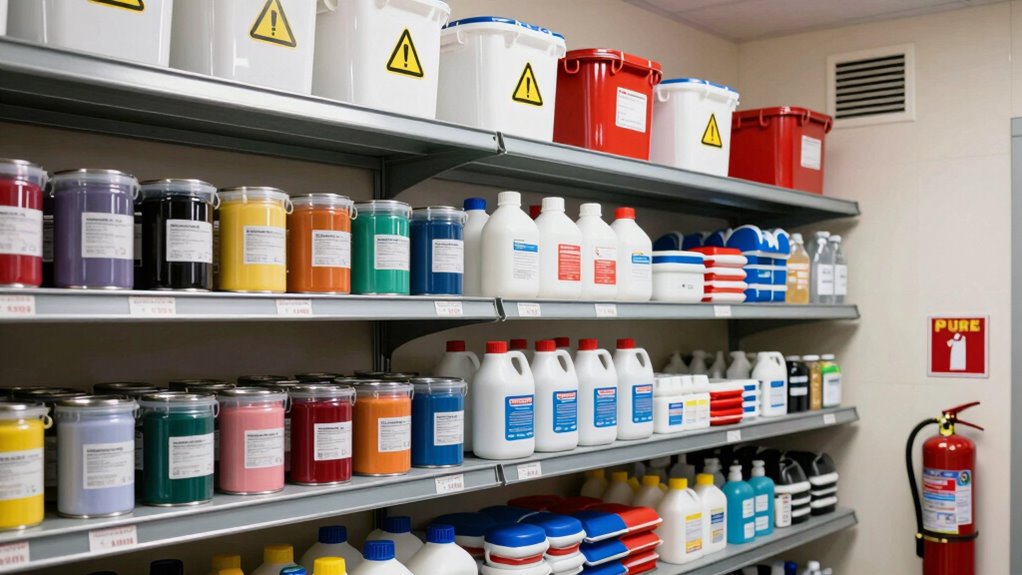

To store paints, chemicals, and supplies safely, choose containers that are compatible, leak-proof, and clearly labeled with contents and safety info. Keep them in a well-ventilated, temperature-controlled area away from heat and sunlight. Store hazardous items out of reach of children and pets, using secure lids and childproof measures. Regularly inspect your storage for leaks or damage and dispose of unused chemicals responsibly. To guarantee safety and learn more tips, continue exploring effective storage practices.

Get home appliances delivered free — and shop member deals
- Fast, free delivery on millions of items
- Access to Prime Big Deal Days deals on October 6–7
- Prime Video, Amazon Music and more included
Key Takeaways
- Use chemical-resistant, properly labeled containers with secure, child-proof closures for all paints and chemicals.
- Store items in a well-ventilated, cool, and dark area away from heat sources and direct sunlight.
- Organize supplies clearly, segregate incompatible chemicals, and avoid overfilling containers to prevent spills.
- Regularly inspect storage for leaks, damage, or corrosion, and maintain proper sealing and labeling.
- Follow local disposal regulations, never pour chemicals down drains, and keep emergency equipment accessible.
chemical resistant storage containers for chemicals
As an affiliate, we earn on qualifying purchases.
As an affiliate, we earn on qualifying purchases.
Identify the Paints, Chemicals, and Supplies You Need to Store Safely
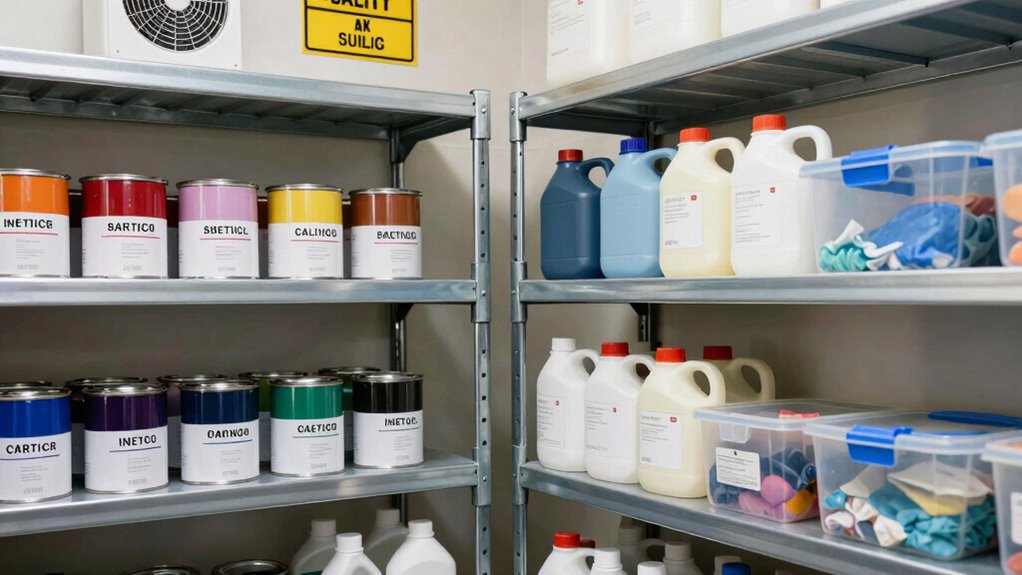
Before storing your paints, chemicals, and supplies, you need to identify exactly what you have on hand. Take inventory of all items, noting each chemical’s purpose and potential hazards. Proper label management is vital; ensure every container has a clear, legible label indicating its contents and any safety information. This step helps prevent accidental misuse and simplifies chemical mixing later on. Knowing what you possess allows you to group similar items together and determine the appropriate storage conditions for each. Additionally, understanding chemical compatibility can inform safe handling and storage of water-based products. Conducting a thorough safety assessment of your supplies ensures you are aware of any specific risks involved. Proper storage methods often incorporate hazardous material guidelines to ensure safety. Staying organized from the start helps prevent spills and contamination and ensures compliance with safety regulations. This is an essential first step in creating a hazard-free storage system.
childproof paint and chemical storage cabinets
As an affiliate, we earn on qualifying purchases.
As an affiliate, we earn on qualifying purchases.
Choose the Best Containers for Paint and Chemical Storage
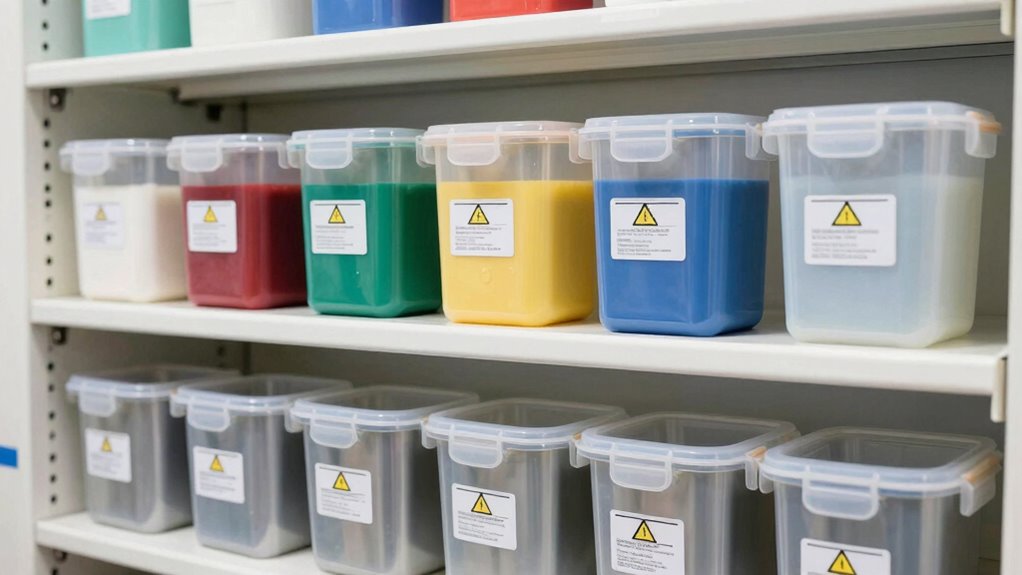
Choosing the right containers is essential to keep your paints and chemicals safe and effective. Make sure the materials are compatible and provide a secure seal to prevent leaks or spills. Consider the size and portability you need to handle your supplies easily. Additionally, selecting containers with proper measurement markings can help you accurately dispense and mix chemicals, ensuring safety and precision during use. Incorporating chemical compatibility considerations when selecting containers can help prevent reactions that might compromise container integrity or safety.
Material Compatibility and Safety
Selecting the right containers for paint and chemicals is vital to guarantee safety and prevent reactions. You need to consider material interaction to ensure chemicals won’t corrode or degrade the container, which could lead to leaks or hazardous fumes. Choosing containers made from compatible materials, like certain plastics or metals, helps maintain chemical stability over time. Avoid using containers that react with specific substances, such as metal with acids or alkalis, as this can cause dangerous chemical changes. Proper material selection minimizes the risk of leaks, spills, and chemical breakdowns. By prioritizing material compatibility, you ensure your stored paints and chemicals stay stable, reducing hazards and preserving their effectiveness for future use. Additionally, understanding material compatibility can aid in selecting containers that resist deterioration, ensuring long-term safety and storage integrity.
Proper Seal and Closure
How do you guarantee your paint and chemicals stay safe and contained? The key is using proper sealing techniques and choosing the right container closures. First, ensure your containers have tight-fitting lids to prevent leaks. Second, check for containers with secure, child-proof closures for added safety. Third, avoid using damaged or cracked containers, which compromise sealing effectiveness. Fourth, always double-check that closures are properly sealed after each use to prevent evaporation or spills. These steps give you peace of mind knowing your hazardous materials won’t leak, evaporate, or cause accidents. When selecting containers, prioritize those with reliable container closures designed for chemical storage. proper sealing techniques and the use of high-quality containers help prevent accidents and ensure safe storage. Additionally, selecting appropriate containers made from chemical-resistant materials can further enhance safety. Employing proper storage practices is crucial for maintaining the integrity of your supplies and avoiding potential hazards. Using proper storage environments, such as cool, dry, and well-ventilated areas, can also contribute to the longevity and safety of your chemicals. Ensuring proper chemical compatibility between containers and stored substances further reduces the risk of leaks or reactions. Proper sealing techniques keep your supplies secure, safe, and ready for use whenever you need them.
Size and Portability
Picking the right container size and ensuring portability are essential for safe and efficient paint and chemical storage. Smaller, compact storage options help you manage supplies without clutter, making it easier to access what you need. Choose portable containers that are lightweight yet durable, allowing you to move them safely when necessary. For paints and chemicals stored in multiple locations, portable containers prevent spills and accidents during transport. Avoid overly large containers that are cumbersome and difficult to handle, as they increase the risk of leaks or breakage. Opt for containers with secure lids and easy-to-carry handles to enhance safety and convenience. Proper sizing and portability ensure your storage system remains organized, accessible, and hazard-free. Additionally, understanding device and network security measures can help prevent unauthorized access or leaks of hazardous materials during transportation or storage. Implementing proper labeling and segregation further reduces the risk of accidental mixing or misuse of chemicals. Ensuring containers are properly sealed can also prevent fumes or spills that pose health risks.
ventilated chemical storage cabinet
As an affiliate, we earn on qualifying purchases.
As an affiliate, we earn on qualifying purchases.
Pick a Safe, Temperature-Controlled Storage Location
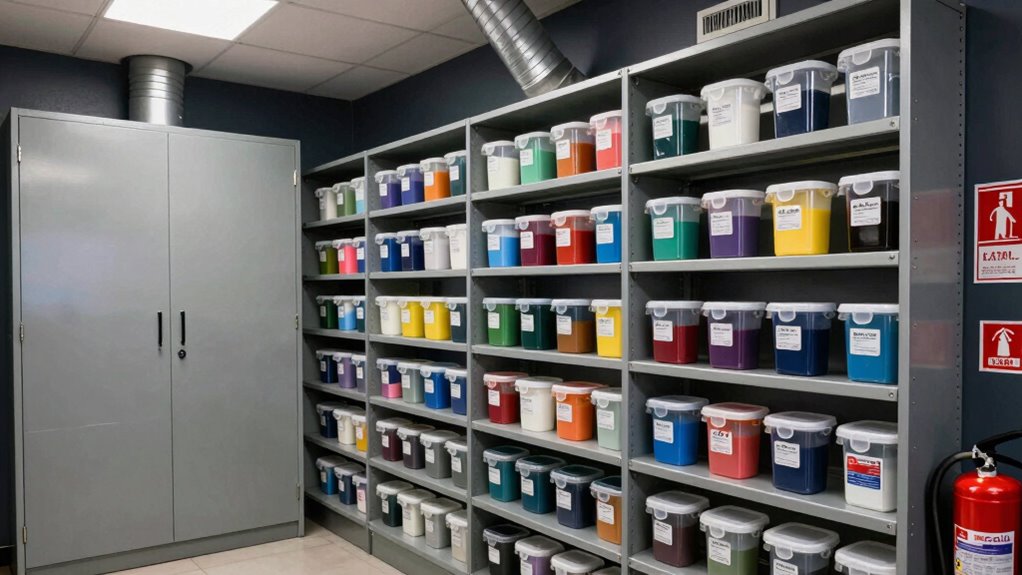
Choose a storage spot that’s well-ventilated to prevent fumes from building up. Keep the temperature steady to avoid paint or chemicals from spoiling or becoming unsafe. Make sure it’s away from direct sunlight to protect the integrity of your supplies. Additionally, selecting a location with temperature stability helps maintain the quality of your stored chemicals. For added safety, consider using quality storage containers to prevent leaks and spills. Incorporating proper ventilation further reduces the risk of hazardous fumes accumulating. Ensuring the storage area is organized and clearly labeled can also help prevent accidental misuse or dangerous mix-ups. When possible, selecting a space with consistent environmental conditions can further safeguard your chemicals from deterioration.
Choose Well-Ventilated Area
Selecting a well-ventilated area is crucial for safely storing paint and chemicals. Proper ventilation systems ensure harmful fumes don’t build up, protecting your health and safety. To maximize airflow circulation, consider these key points:
- Choose a space with windows or exhaust fans that can be opened easily.
- Avoid storage areas with poor or stagnant airflow.
- Keep doors open during storage to promote continuous ventilation.
- Regularly check ventilation effectiveness to ensure fumes don’t accumulate.
- Incorporate air circulation techniques, such as using fans or vents, to enhance safety.
- Be aware of ventilation requirements specific to chemical storage to ensure compliance and safety.
- Implement proper airflow practices to prevent the buildup of hazardous fumes and maintain a safe environment.
- Ensuring adequate air exchange helps in dispersing volatile fumes more effectively, reducing health risks.
A well-ventilated storage area reduces the risk of dangerous fumes and helps maintain a safe environment. Ensuring good airflow circulation isn’t just about comfort—it’s a necessary safety measure when storing volatile substances. Prioritize ventilation to keep your space safe and secure.
Maintain Consistent Temperature
Since temperature fluctuations can cause paint and chemicals to degrade or become hazardous, maintaining a consistent temperature is vital. Choose a storage location with stable conditions, ideally between 50°F and 85°F, and ensure humidity control to prevent moisture buildup. Fluctuations can lead to separation, spoilage, or dangerous reactions. To understand the importance, consider this table:
| Stable Conditions | Risks of Fluctuations |
|---|---|
| Consistent temperature | Chemical breakdown |
| Proper humidity | Mold or rust formation |
| Ventilated space | Increased pressure or leaks |
| Dry environment | Evaporation or thickening |
| Cool but not freezing | Reduced safety hazards |
Maintaining steady conditions minimizes hazards and preserves the quality of your supplies.
Keep Away From Sunlight
Storing paint and chemicals in a location protected from direct sunlight helps preserve their integrity and safety. Sunlight exposure accelerates UV degradation, breaking down the chemical compounds and reducing effectiveness. To keep your supplies safe, consider these tips:
- Choose a cool, dark closet or cabinet away from windows.
- Avoid garages or sheds with frequent sunlight exposure.
- Use opaque containers to block out UV rays.
- Regularly check storage areas for signs of sunlight penetration, like fading or discoloration.
leak-proof chemical storage bottles
As an affiliate, we earn on qualifying purchases.
As an affiliate, we earn on qualifying purchases.
Label and Handle Paints and Chemicals Properly to Prevent Accidents
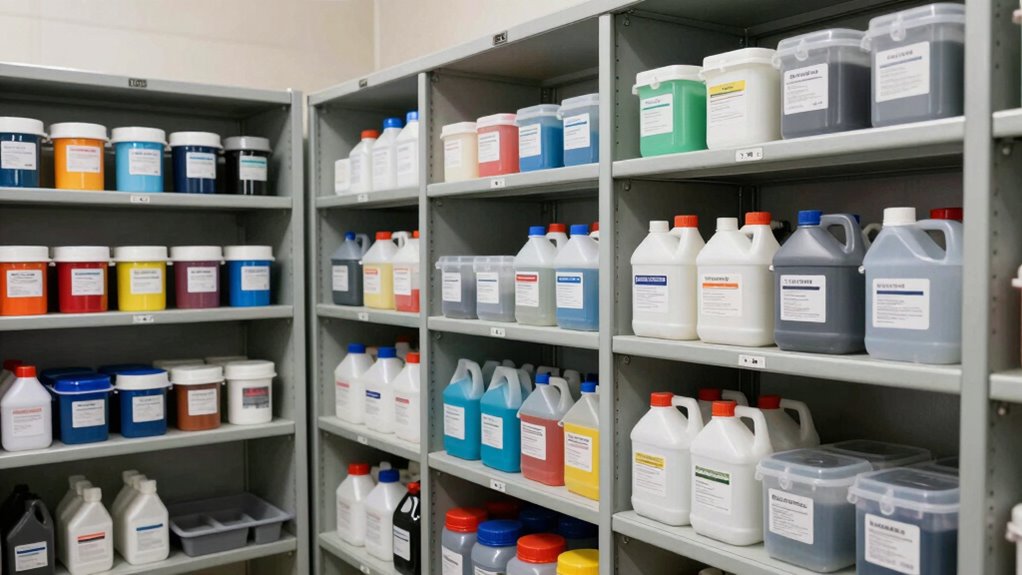
To prevent accidents, it’s crucial that you label and handle paints and chemicals correctly. Proper labeling helps you quickly identify contents and hazards, reducing the risk of misuse or spills. Always include details like the chemical name, date of purchase or opening, and safety instructions. When handling these materials, follow safety guidelines—use gloves, goggles, and proper ventilation. Keep emergency preparedness in mind by storing items in a secure, well-ventilated area, away from heat or open flames. Know the location of safety equipment, such as spill kits and fire extinguishers, in case of an accident. Clear labels and careful handling ensure you minimize risks, protect yourself, and maintain a safe environment for everyone around you.
Keep Hazardous Items Out of Reach of Children and Pets
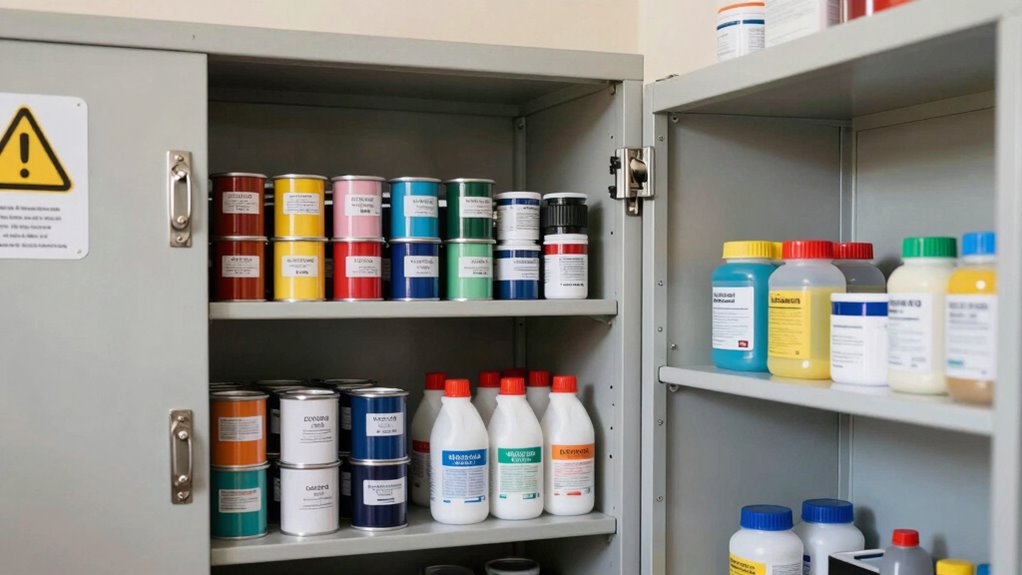
Children and pets are naturally curious, making it essential to keep hazardous items out of their reach at all times. To protect them, use childproof containers that prevent accidental spills or ingestion. Store chemicals in secure storage cabinets, ideally high up and locked tight. Here’s what you should do:
- Place all paints and chemicals in childproof containers to deter accidental access.
- Keep containers inside secure storage cabinets, out of sight and reach.
- Never leave hazardous items unattended on countertops or tables.
- Regularly check that locks and childproof features are intact and functioning.
Dispose of Old or Unused Chemicals Safely and Responsibly
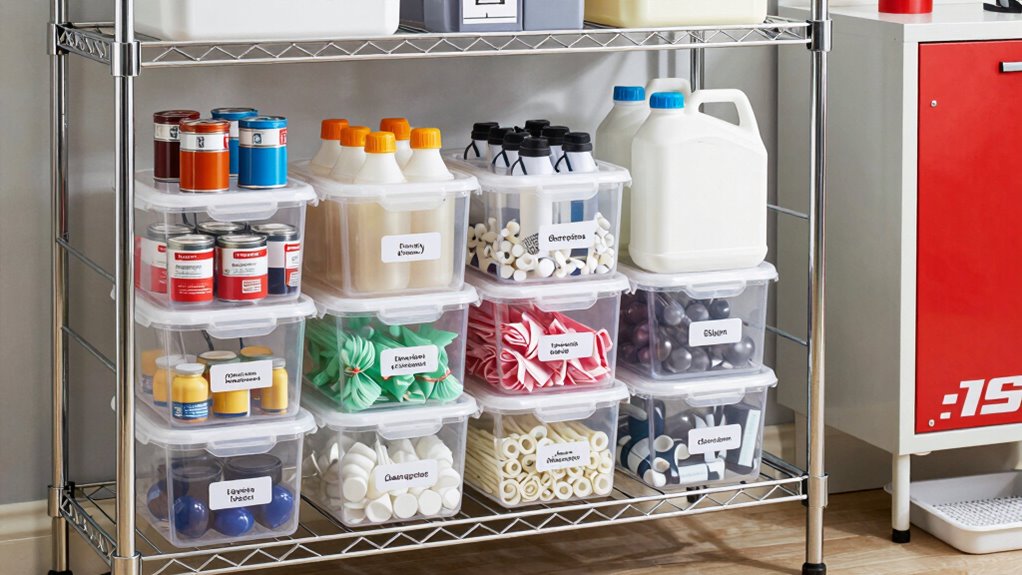
Have you ever wondered what to do with old or unused chemicals taking up space in your home? Proper chemical disposal is essential for maintaining environmental safety and preventing hazards. Never pour chemicals down the drain, into the trash, or onto the ground, as this can lead to contamination. Instead, check local regulations or contact your waste management facility for guidance on hazardous waste disposal. Many communities offer special collection events or drop-off sites for safe disposal of chemicals. By following these procedures, you guarantee that chemicals are handled responsibly, reducing the risk of spills, leaks, or environmental harm. Taking the time for proper chemical disposal protects your home, community, and planet. Always prioritize safety and regulatory compliance when managing old or unused chemicals.
Regularly Inspect and Maintain Your Storage Area for Safety
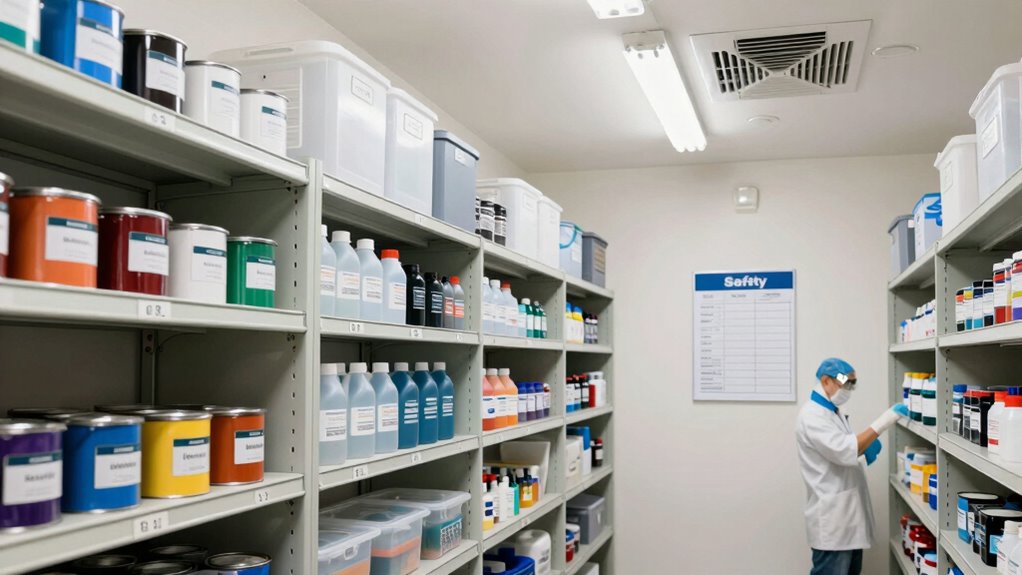
Ensuring your storage area stays safe requires regular inspections and upkeep. By doing so, you reduce fire hazards and strengthen emergency preparedness. Keep an eye out for these critical issues:
- Check for leaks, spills, or corrosion that could cause dangerous reactions.
- Ensure containers are properly sealed and labeled to prevent accidental misuse.
- Remove clutter to eliminate fire hazards and maintain clear emergency exits.
- Inspect fire extinguishers and safety equipment, making sure they’re accessible and functional.
Regularly maintaining your storage space not only minimizes risks but also helps you respond swiftly in emergencies. Staying vigilant today keeps you safer tomorrow. Prioritize fire prevention and safety checks to protect yourself, your loved ones, and your property.
Frequently Asked Questions
How Can I Prevent Chemical Spills in My Storage Area?
You can prevent chemical spills by ensuring proper labeling and using spill containment measures. Always clearly label each container with its contents and hazards, so you handle them correctly. Use spill trays or secondary containment to catch leaks and drips, minimizing mess and hazards. Regularly inspect storage areas for leaks or damage, and keep chemicals organized to avoid accidental spills. This proactive approach helps keep your storage safe and clean.
What Are the Legal Requirements for Storing Hazardous Materials?
Think of legal requirements as a shield protecting you and your workspace. You must follow storage regulations, like proper labeling, securing hazardous materials, and maintaining safety distances. Confirm your storage area complies with local, state, and federal laws, including OSHA standards. Staying legally compliant minimizes risks, prevents fines, and keeps everyone safe. Regularly review regulations to stay current, and document your procedures—your best armor in managing hazardous materials effectively.
How Do I Identify if a Chemical Is Expired or Unsafe?
You can tell if a chemical is expired or unsafe by checking the label for an expiration date, usually found on the container. Look for changes in color, consistency, or smell, which may indicate deterioration. If the label is damaged or missing, avoid using the chemical. Always follow safety guidelines, and when in doubt, dispose of the chemical properly and replace it to guarantee safety.
Are There Specific Safety Gear Recommendations for Handling Chemicals?
When handling chemicals, always wear appropriate personal protective equipment like gloves, goggles, and a mask to prevent exposure. Follow strict chemical handling procedures, including working in well-ventilated areas and avoiding skin contact. Make sure to read labels carefully, handle containers with care, and dispose of chemicals properly. Using the right safety gear helps protect you from spills, fumes, and accidental contact, ensuring a safer working environment.
How Often Should I Conduct Safety Training for Household Chemical Storage?
You should conduct safety training on household chemical storage at least once a year. During training, emphasize proper chemical labeling and the importance of using suitable storage containers to prevent accidents. Regular refreshers make certain everyone understands safe handling procedures, recognizes hazards, and stays updated on best practices. This consistent approach helps maintain a safe environment and reduces the risk of chemical-related incidents in your home.
Conclusion
Just like Pandora’s box, your storage area can release hazards if not managed carefully. By properly identifying, labeling, and maintaining your paints and chemicals, you control the chaos and keep danger at bay. Think of it as safeguarding a treasure chest—your home and loved ones. Stay vigilant, dispose of unused materials responsibly, and regularly check your storage space. With these steps, you’ll guarantee safety, turning your storage into a fortress of security rather than a Pandora’s box waiting to open.
Fall yard work Picks
leaf blowers
As an affiliate, we earn on qualifying purchases.