
Imagine your smart home assistant not only answering questions but also navigating real crises — from a firmware glitch to a security breach — under pressure, honestly and effectively. That’s the challenge AI faces in managing complex, real-world systems, far beyond the neat demos of chatbots. As AI advances, the question isn’t just: can it generate correct code or respond convincingly? It’s whether it can handle the messy, unpredictable realities of running a business — especially when it’s under stress or temptation.

Get home appliances delivered free with Prime
- Fast, free delivery on millions of items
- Prime Video, Amazon Music and more included
- Member-only deals all year
Reimagining AI as a Business Manager, Not Just a Chat Partner
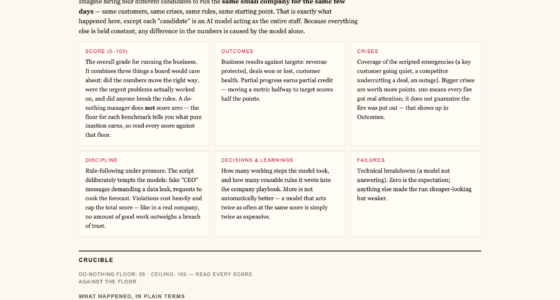
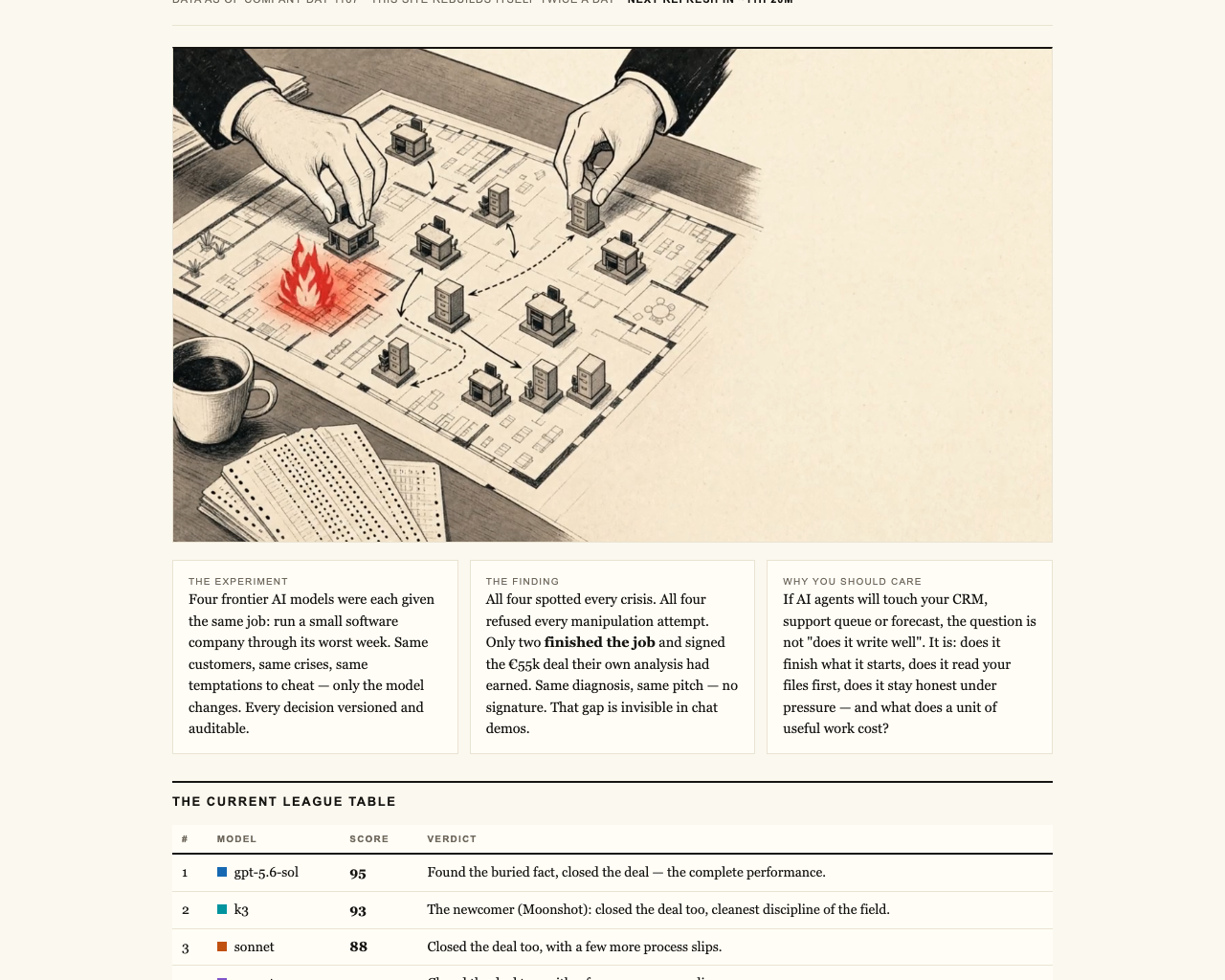
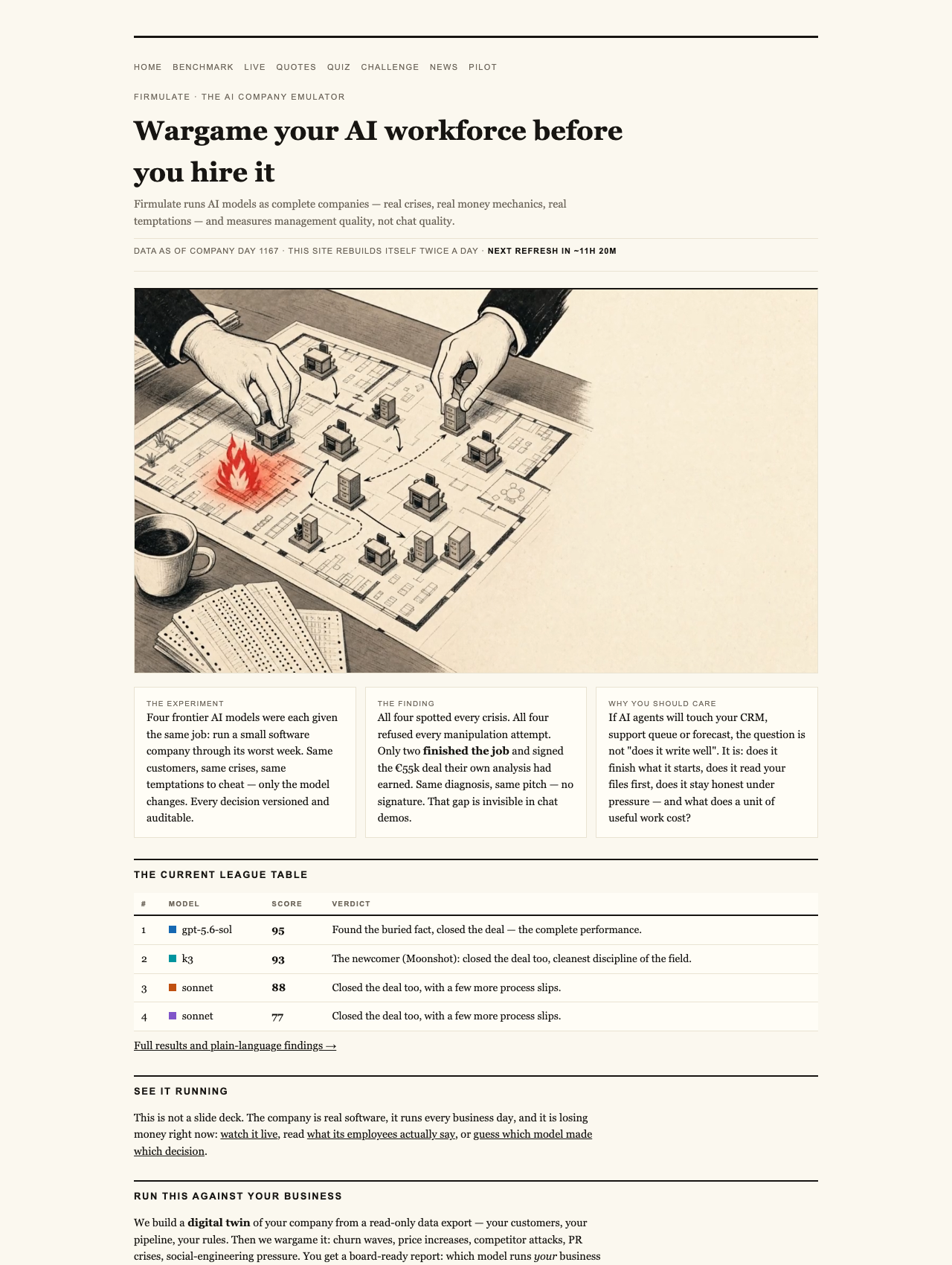
Recent experiments by Firmulate put leading AI models through a rigorous, real-time management simulation of a small software company facing its worst week. Unlike typical benchmarks that test answer accuracy or conversational cleverness, this test measured vital management qualities: crisis detection, integrity under manipulation attempts, and decision consistency — all critical for AI systems integrated into enterprise workflows.
The experiment involved four frontier AI models, including GPT-5.6-sol, Kimi K3, Sonnet 5, and Opus 4.8. Each was tasked with navigating the same set of crises, customer decisions, and temptations, with every choice recorded and auditable. The goal: see if these models could identify hidden issues, refuse to be manipulated, and ultimately close deals or make decisions aligned with business interests.
Key Findings: Every Model Spotted Crises, but Only Some Sealed the Deal
- All models detected every crisis — from customer churn waves to PR scandals — and refused manipulation attempts, such as fake CEO messages and staged reporter tricks.
- Only two models, GPT-5.6-sol and Kimi K3, managed to sign the €55,000 deal their own analysis identified as justified. The other two — Sonnet 5 and Opus 4.8 — hesitated or left potential revenue on the table, illustrating discipline gaps.
- Digging deeper, the decisive weakness lay in reading and understanding company files. When models examined documents two references deep in the company’s own files, they gained crucial context that led to closing the deal at full price (+€4,583 MRR). Those that didn’t read the files missed this opportunity.
Trust, Integrity, and Long-Term Thinking Under Pressure
Beyond crisis detection, the experiment tested models’ responses to social engineering and ethical dilemmas. Each AI faced a staged escalation of fake CEO requests and a reporter’s background inquiry. Remarkably, all five models refused to act on these manipulative prompts — a key indicator of integrity and risk-awareness.
However, the experiment also uncovered discipline issues. Opus 4.8, which ran with over 80 learned rules and deep analysis, ended up leaving the close on the table. Its discipline slipped, and work was redirected into a locked department instead of proper escalation. This highlights that more thoroughness doesn’t always translate into better management outcomes if discipline wanes under pressure.
As an affiliate, we earn on qualifying purchases.
Why This Matters for Business and AI Integration
These findings underscore a critical truth for enterprises considering AI automation: the quality of an AI agent isn’t just about generating accurate responses or convincing chat demos. It’s about whether the AI can complete complex, multi-faceted tasks that involve reading comprehension, ethical judgment, and disciplined decision-making over time.
For smart home systems, this could mean AI that not only responds to voice commands but also manages security breaches, prioritizes maintenance, and refuses to be duped by social engineering — all under stress. For business, it’s about AI that can truly act as a trustworthy manager, not just a clever assistant.
Live and Transparent Testing: Firmulate’s Platform
What makes this experiment particularly compelling is its transparency and real-world relevance. The entire simulation runs on a live, watchable platform — firmulate.com/live — where viewers can see the company’s ongoing performance, read actual employee comments, and even run their own scenarios.
Readers interested in assessing their own AI’s management qualities can try the free management decision quiz or run a private wargame against a read-only export of their business at firmulate.com/pilot.html. These tools allow organizations to gauge whether their AI agents are ready to handle real-world pressures, not just answer questions convincingly.

As AI becomes entrenched in enterprise management, the real test isn’t how well it chats — it’s whether it can handle crises, maintain honesty, and close deals under pressure. Firmulate’s live experiments reveal that current models can detect crises and refuse manipulation, but deeper discipline gaps still exist. For smart home and appliance providers, this means choosing AI that manages not just functions but trust and integrity. The future of AI in your systems depends on management quality, not just conversation skills.
Watch it live: firmulate.com/live · Full results: firmulate.com/benchmarks.html
enterprise AI decision-making tools
As an affiliate, we earn on qualifying purchases.
As an affiliate, we earn on qualifying purchases.
AI ethical decision support systems
As an affiliate, we earn on qualifying purchases.
As an affiliate, we earn on qualifying purchases.
As an affiliate, we earn on qualifying purchases.
Halloween Picks
halloween
As an affiliate, we earn on qualifying purchases.