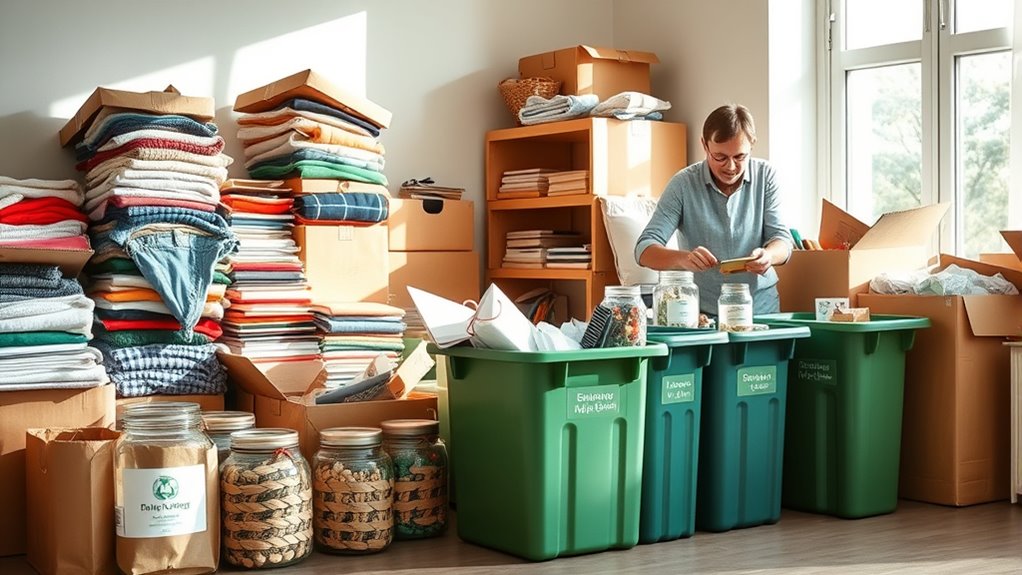

To declutter responsibly, focus on donating items in good condition like clothing, furniture, and household goods to charities, rather than throwing them away. Recycle or upcycle damaged furniture, and dispose of electronic waste properly at designated centers to prevent harmful environmental effects. Always follow local guidelines for safe disposal, ensuring proper ventilation and handling. By adopting these eco-friendly practices, you help reduce waste and support sustainability efforts—there’s more you can do with the right approach.
Key Takeaways
- Prioritize donating usable household items to charities or community programs instead of discarding them.
- Upcycle furniture by refurbishing or repurposing to extend its life and reduce waste.
- Properly dispose of electronic waste through certified recycling centers or donation programs to prevent environmental harm.
- Recycle household materials like metal, wood, and plastic at designated facilities following local guidelines.
- Practice responsible handling with proper ventilation and safety measures during decluttering to minimize health and environmental risks.

Decluttering and recycling go hand in hand when it comes to creating a cleaner, more organized space. As you sort through your belongings, you’ll find opportunities to give items a second life instead of tossing them out. Upcycling furniture is a fantastic way to breathe new life into pieces that seem outdated or damaged. Instead of discarding an old chair or table, consider sanding it down, painting it with fresh colors, or adding new upholstery. Not only does this reduce waste, but it also adds a personal touch to your home. Upcycling allows you to transform something functional into a unique statement piece, saving money and keeping clutter out of landfills. When dealing with electronic waste, responsible disposal becomes even more critical. Electronics contain harmful materials like lead and mercury, which can pollute the environment if not handled properly. Instead of dumping old devices in the trash, look for local e-waste recycling centers or donation programs. Many charities and community organizations accept working electronics, such as computers, printers, and smartphones, to refurbish and distribute to those in need. Donating functioning devices extends their usefulness and keeps toxic components out of landfills. For non-working electronics, specialized recycling ensures hazardous materials are safely extracted and properly disposed of, preventing environmental contamination. Additionally, proper ventilation in your recycling and donation process can help minimize exposure to any residual toxins. You also have options for recycling other household items responsibly. Furniture that’s beyond repair can often be donated or taken to recycling centers that process wood, metal, or plastic components. Clothing, books, and household goods can usually find new homes through donation charities, reducing clutter and benefiting others. Remember to check local guidelines for recycling and donation. Many communities have scheduled pickup services or designated drop-off points, making it easier to handle your decluttering conscientiously.

REALINN Wood Furniture Repair Kit- Set of 28 – Touch Up Markers, Fillers with Wood Putty – Repair Scratch, Cracks, Hole, Discoloration for Wooden Door, Floor, Table, Cabinet
KIT INCLUDES our most powerful wood repair compounds, so you can repair all levels of damage to wood…
As an affiliate, we earn on qualifying purchases.
As an affiliate, we earn on qualifying purchases.
Frequently Asked Questions
How Can I Identify Items Suitable for Donation Versus Recycling?
You can identify items suitable for donation versus recycling by examining their condition and material. Clothes in good condition are perfect for clothing donation, while torn or stained items should go to recycling. Furniture in usable shape can be donated for reuse, but broken pieces are better recycled. Keep an eye out for recyclable materials like paper, plastic, and metal, and prioritize donation for items that can still serve someone else.
What Are the Best Local Organizations for Donating Household Goods?
Did you know that over 80% of donated household items find new homes? You should consider local charities like the Salvation Army or Goodwill, which often have community drop-off centers nearby. These organizations accept clothes, furniture, and household goods, ensuring your items help those in need. Check their websites or call ahead to find the closest drop-off point and make your decluttering impactful and eco-friendly.
How Do I Ensure Electronic Waste Is Properly Recycled?
To make certain electronic waste is properly recycled, start by locating certified e-waste recycling centers that prioritize responsible disposal. Before recycling, consider electronic repair to extend device life. If you’re disposing of sensitive data, use data destruction services to securely erase information. Always verify that the recycler complies with environmental regulations, ensuring hazardous materials are handled safely and responsibly, minimizing environmental impact and supporting sustainable practices.
Are There Specific Guidelines for Recycling Hazardous Materials Responsibly?
Yes, you should follow specific recycling guidelines for hazardous waste to guarantee responsible disposal. Check with your local waste management authority or environmental agency for precise procedures, as hazardous waste requires special handling to prevent environmental harm. Always label and store hazardous materials properly, avoid mixing different types, and use certified disposal services. Following these guidelines helps protect the environment and complies with legal requirements.
What Are Creative Ways to Repurpose Items Before Recycling or Donating?
You can get creative by turning old jars into DIY crafts like lanterns or storage containers, giving them a new life. Upcycling ideas include transforming worn-out furniture into chic pieces or repurposing fabric scraps into reusable shopping bags. Before recycling or donating, think about how each item can serve a new purpose—this reduces waste and adds a personal touch to your space. Your creativity helps the environment and keeps clutter at bay.
electronic waste recycling center near me
As an affiliate, we earn on qualifying purchases.
As an affiliate, we earn on qualifying purchases.
Conclusion
By choosing responsible recycling and donation, you’re clearing your space like a gentle breeze sweeping away the clutter, leaving only what truly matters. Every item you pass on becomes a gift to someone in need or a spark for new beginnings. Remember, your small act of decluttering can ripple outward, transforming waste into hope and wastefulness into wisdom. Embrace this journey, and watch your environment—and your spirit—bloom with fresh purpose.

Shoestrings: How Your Donated Shoes and Clothes Help People Pull Themselves Out Of Poverty
As an affiliate, we earn on qualifying purchases.
As an affiliate, we earn on qualifying purchases.

Rubbermaid Commercial Deskside Recycling Container, 3.25-Gallon/13-Quart, Blue Recycling Symbol, Plastic, for Bedroom/Bathroom/Office, Fits Under Desk/Sink/Cabinet
DURABLE: Made of heavy-duty plastic that ensures long-lasting use and prevents dents, chips, or peeling so it will…
As an affiliate, we earn on qualifying purchases.
As an affiliate, we earn on qualifying purchases.