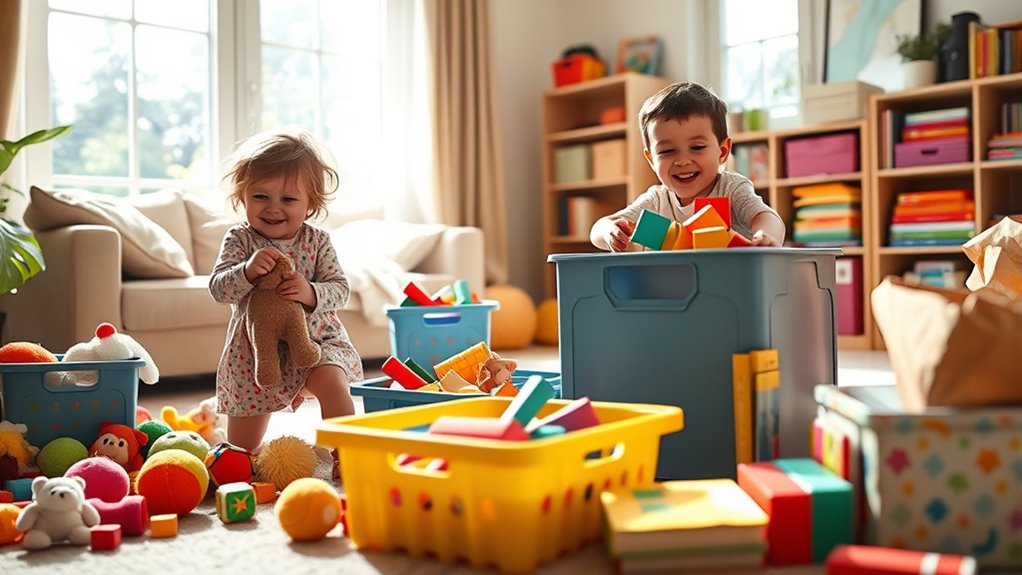

Turning cleanup into a game makes organizing fun for your kids. You can set challenges like finding specific toys or cleaning up within a time limit, turning chores into adventures. Use rewards like stickers or extra playtime to keep motivation high. Making the process playful helps children develop organization skills and builds positive habits. If you keep exploring, you’ll find more creative ways to make tidying up enjoyable for everyone.
Key Takeaways
- Turn cleanup time into fun challenges, like timed sorting or scavenger hunts, to motivate kids.
- Use rewards such as stickers or extra playtime to reinforce positive cleanup habits.
- Incorporate themed games or storytelling to make organizing feel like an adventure.
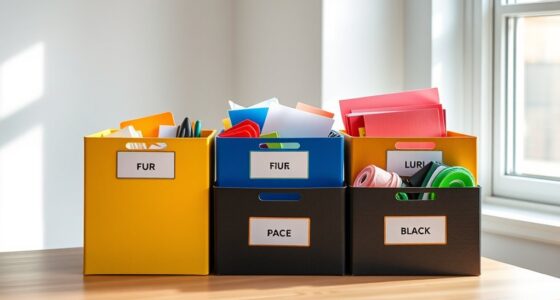
- Create visual labels and color-coded bins to guide children in sorting items during cleanup.
- Celebrate small wins and progress to build confidence and make decluttering enjoyable.
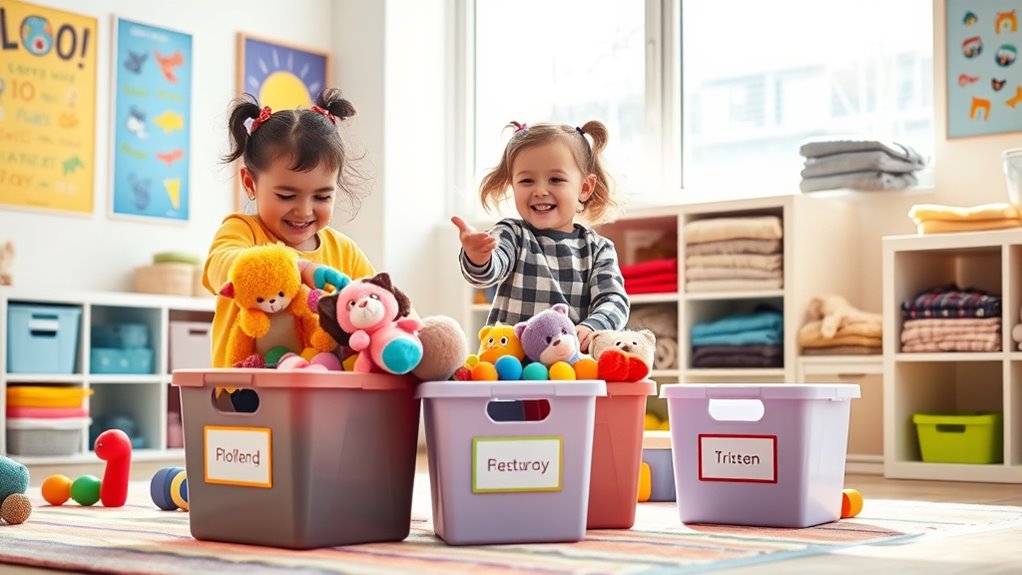
Decluttering with kids can feel overwhelming, but involving them in the process makes it manageable and even fun. When you turn cleanup time into a game, kids become enthusiastic participants rather than reluctant helpers. The key is to make toy organization and storage solutions engaging rather than a chore. Instead of simply asking them to tidy up, challenge them to find specific items or set a timer to see how quickly they can put everything away. This approach transforms the task into an adventure that captures their attention and motivates them to participate.
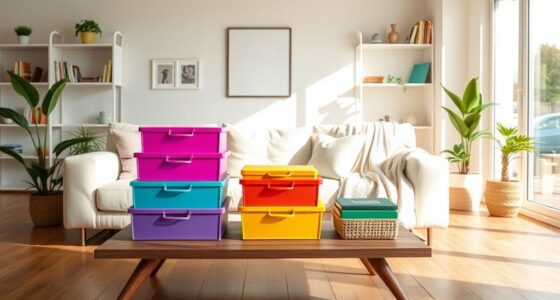
Using storage solutions that are accessible and easy to use is essential. Clear bins with labels, for example, help kids identify where each toy belongs, making cleanup more straightforward. When they can see what’s inside, they’re more likely to put things back in the right place without fuss. Incorporate fun storage options like colorful baskets or themed containers that match their interests to make the process more appealing. You can also assign specific storage spots for different toy categories—like cars, dolls, or art supplies—so they learn to categorize and organize as part of the game.
Accessible, labeled storage like clear bins and themed containers make toy cleanup fun and easy for kids.
To keep the momentum going, create mini challenges. For instance, you might say, “Let’s see if you can find all the cars and put them in this bin before I count to ten.” Celebrating small wins boosts their confidence and makes cleanup feel rewarding. Incorporating a reward system, like stickers or extra playtime, motivates them to keep up with the organization. Make sure to involve them in choosing storage solutions so they feel ownership over their space, which encourages ongoing tidiness.
Additionally, understanding that the way colors and images are used in projectors can impact how well images are reproduced helps in creating an inviting and engaging environment for kids’ spaces. Turning cleanup into a game also means being patient and flexible. If your child struggles with a particular area, break the task into smaller steps and praise their effort. Remember, the goal isn’t perfection but establishing good habits and making the process enjoyable. By framing toy organization as a fun activity, you help your kids develop a positive attitude toward decluttering. Over time, they’ll learn to appreciate the importance of keeping their space tidy and will be more independent about maintaining it. When you approach decluttering as a shared adventure, you not only reduce stress but also create lasting memories together, all while teaching your children valuable skills they’ll carry into the future.

DECOMOMO Storage Bins, Cube Storage Bin with Labels, Fabric Storage Cubes for Shelves (10.5" x 11" / 6pcs, Rainbow)
Rainbow Storage Cubes: The rainbow bins add a beautiful pop of color, creating a vibrant and fun atmosphere…
As an affiliate, we earn on qualifying purchases.
As an affiliate, we earn on qualifying purchases.
Frequently Asked Questions
How Can I Motivate Reluctant Children to Declutter?
To motivate reluctant children to declutter, use fun motivational techniques like turning cleanup into a game or setting small, achievable goals. Incorporate engaging organizing strategies such as labeling bins or creating visual charts. Praise their efforts and offer rewards to keep them encouraged. Make the process feel like an exciting activity rather than a chore, helping your kids develop positive habits while reducing clutter effortlessly.
What Age Is Suitable for Kids to Start Cleaning?
Think of teaching kids to clean as planting a seed that grows over time. Generally, kids as young as 2 or 3 can start learning age-appropriate cleaning skills. At this stage, focus on simple tasks like putting toys away or wiping surfaces. As they grow, their cleaning skills can develop gradually. Remember, patience and encouragement help them build independence and confidence in their abilities.
How Do I Handle Sentimental Items During Decluttering?
When handling sentimental keepsakes during decluttering, you should create memory boxes for your child’s most cherished items. Involve your kid in choosing which keepsakes to keep, like special drawings or toys. Encourage them to tell stories about these items, making the process meaningful. This way, you preserve important memories while reducing clutter. Keep only the most meaningful sentimental keepsakes, and store them safely in designated memory boxes.
What Are Some Effective Reward Systems for Kids?
Imagine turning cleanup time into a treasure hunt with reward charts and sticker incentives. You can create a colorful chart where your child earns a sticker for each task completed. Once they fill the chart, they earn a small reward, like a fun activity or a special treat. This system encourages responsibility and makes tidying up exciting, turning chores into a game that motivates them to stay organized.
How Can I Maintain a Clutter-Free Home Long-Term?
To keep your home clutter-free long-term, establish consistent routine schedules for tidying up and incorporate storage solutions that make it easy for everyone to put things away. Set specific times daily or weekly for cleanup, and involve your kids in maintaining these habits. Regularly assess your storage options to guarantee they meet your needs, encouraging everyone to stay organized and prevent clutter from building up again.

Yilobi 5 Pack Rainbow Woven Storage Baskets for Shelves, Decorative Toy Baskets Organizer for Kids Room, Nursery, Playroom, Classroom – Colorful Cotton Rope Toy Storage Bins for Organizing & Decor
Natural Cotton Material – The 5-pack cotton rope storage baskets are made from 100% premium cotton rope. These…
As an affiliate, we earn on qualifying purchases.
As an affiliate, we earn on qualifying purchases.
Conclusion
Remember, decluttering with kids isn’t just about tidying up; it’s about creating joy amid chaos. As you turn cleanup time into playful games, you’ll find that mess becomes manageable and even fun. The challenge isn’t just to organize the space, but to foster their creativity and cooperation. So, embrace the chaos, make it a game, and watch how a little fun transforms the clutter into clarity—proving that sometimes, the mess is just part of the masterpiece.

Utron 80 Pack Reward Chart for Kids, Incentive Chart Behavior Chart for Kids at Home, 2 Designs with 2160 Star Sticker, Kids Chore Chart, Sticker Chart for Kids Behavior
Package Includes: The reward chart comes in two styles of cardstock, 40 each in black and white, with…
As an affiliate, we earn on qualifying purchases.
As an affiliate, we earn on qualifying purchases.
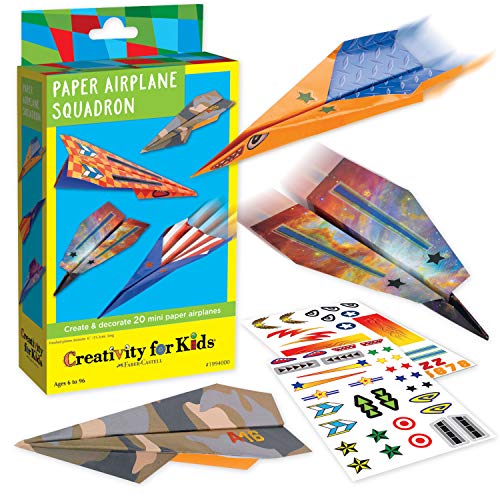
Creativity for Kids Paper Airplane Squadron – Create 20 Paper Airplanes, Mini Craft Kit for Boys, Easter Basket Stuffers and Gift for Boys, Kids Activities (Ages 6+)
TAKE FLIGHT WITH PAPER PLANES: Launch into fun with this interactive paper airplane kit, perfect for kids who…
As an affiliate, we earn on qualifying purchases.
As an affiliate, we earn on qualifying purchases.