
To manage your pet’s toys and supplies effectively, start by gathering everything together for a thorough assessment. Discard broken, unused, or worn-out items and donate those your pet no longer enjoys. Organize the essentials in designated spots using bins or shelves, and rotate toys regularly to keep your pet engaged. Setting a routine to review your supplies keeps clutter at bay and creates a safer, more comfortable space—discover more tips to streamline your setup below.
Key Takeaways
- Assess and discard damaged, unused, or unengaging pet toys to ensure safety and reduce clutter.
- Designate specific storage areas using bins or shelves for organized toy and supply management.
- Regularly review and rotate toys to maintain pet interest and prevent overcrowding.
- Involve pets in decluttering by allowing them to choose favorite toys and remove broken items.
- Schedule routine maintenance to keep supplies organized, safe, and easily accessible for a clutter-free environment.
If you share your home with pets, decluttering becomes essential for maintaining a safe and comfortable environment. When it comes to managing your pet’s toys and supplies, staying organized isn’t just about aesthetics—it’s about pet safety and space optimization. An overflowing collection of toys, leashes, bowls, and grooming tools can quickly create hazards or make daily routines cumbersome. By intentionally decluttering, you guarantee your pet’s environment remains safe, accessible, and stress-free.
Start by evaluating all your pet supplies. Gather everything in one place so you can see exactly what you have. You might find that some toys are worn out, missing parts, or no longer engaging for your pet. Discard or donate these items. Keeping only the toys that your pet actively plays with or enjoys helps reduce clutter and prevents your pet from chewing or swallowing broken pieces. This process not only streamlines your space but also promotes pet safety because fewer stray or damaged toys mean fewer risks of choking or injury.
Evaluate and discard worn or damaged pet toys to reduce clutter and promote safety.
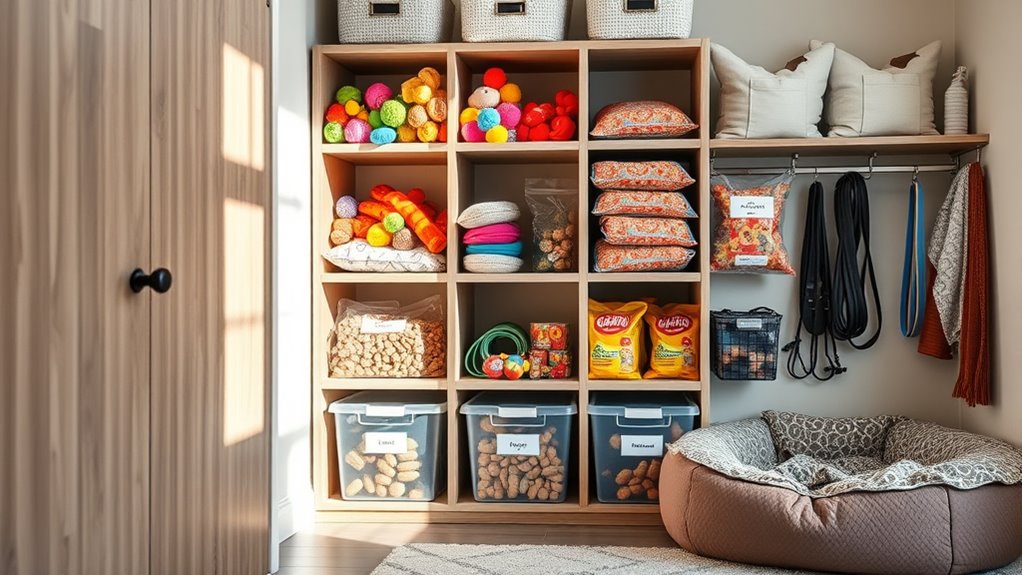
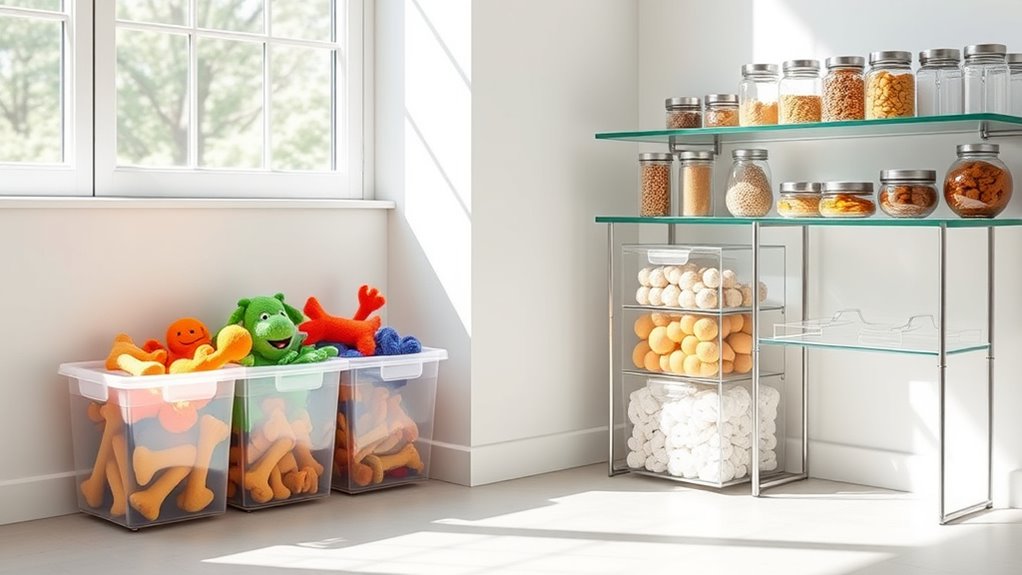
Next, consider space optimization. Designate specific areas for your pet’s belongings. Use storage bins, shelves, or dedicated corner setups to keep items tidy and accessible. When toys are stored properly, it’s easier to rotate favorite items, which keeps your pet engaged without overwhelming your living space. Keeping supplies organized reduces the likelihood of accidents—like tripping over scattered toys or stepping on sharp, broken pieces. It also makes cleaning faster because you won’t have to dig through piles of clutter to find what you need.
Regularly revisit your pet’s supplies to prevent accumulation. Set a schedule—perhaps monthly—to go through their toys and accessories. This habit helps prevent clutter from building up again and ensures that your pet’s environment stays safe. When you replace or donate items, you’re also promoting a clutter-free space that benefits everyone. Remember, the goal isn’t just to tidy up but to create an environment that minimizes hazards and maximizes comfort for your furry friend.
Finally, involve your pet in the decluttering process when appropriate. For example, let them sniff and choose which toys they still enjoy. This makes decluttering a positive experience for both of you and encourages your pet to engage with their environment in a safe, organized way. By keeping only what’s necessary and functional, you optimize your space and foster a safer, more comfortable home. Ultimately, a clutter-free environment benefits your pet’s well-being and makes daily routines more manageable for you. Storage solutions are essential tools to help keep your pet’s belongings organized and accessible.
Frequently Asked Questions
How Often Should I Declutter My Pet’s Belongings?
You should declutter your pet’s belongings every few months to keep their space organized and monitor pet behavior. Regularly sorting through toys and supplies helps identify worn or unused items, preventing clutter buildup. Use smart storage solutions like bins or shelves to keep everything accessible and tidy. This routine keeps your pet happy, reduces mess, and makes it easier to spot when new toys or supplies are needed.
What’s the Best Way to Organize Pet Toys?
You should organize your pet’s toys with smart storage solutions like bins or baskets to keep things tidy. Implement a toy rotation system, keeping only a few toys accessible at a time and storing the rest out of sight. This keeps your pet interested and prevents clutter from piling up. Regularly switch out toys, and clean them to maintain hygiene, making your space more manageable and your pet happier.
How Do I Decide What Supplies to Keep or Discard?
Ever wonder which supplies truly make life easier? To decide what to keep or discard, focus on choosing essentials your pet actually uses and loves. Avoid clutter by evaluating each item’s condition, frequency of use, and importance. If a toy or supply is broken, unused, or gathering dust, it’s time to let it go. Keep only what benefits your pet’s well-being and daily routine, making space for what truly matters.
Are There Eco-Friendly Options for Donating Unused Pet Items?
Yes, you can find eco-friendly options for donating unused pet items. Look for local shelters or rescue groups that prioritize sustainable practices or accept eco-friendly donations. Some organizations even have specific programs for recycling or repurposing toys and supplies. If donation isn’t possible, consider sustainable disposal options like recycling or repurposing items to reduce waste. This way, you’re helping pets and the environment simultaneously.
How Can I Involve My Pet in the Decluttering Process?
You can involve your pet in the decluttering process through interactive play and training exercises. Use playtime to identify favorite toys, encouraging your pet to engage with certain items while gently removing others. Incorporate training exercises to teach your pet to fetch or select specific toys, making decluttering a fun, bonding activity. This way, your pet feels involved, and you keep your space organized while strengthening your bond.
Conclusion
By decluttering your pet’s toys and supplies, you create a calmer, more organized space that benefits both of you. Think of it like tending a garden—remove the dead leaves and excess weeds to let the healthy plants thrive. I once cleared out my pet’s clutter, and suddenly, playtime became more joyful and less chaotic. Remember, a tidy space isn’t just neat—it’s a foundation for happier, healthier moments with your furry friend.