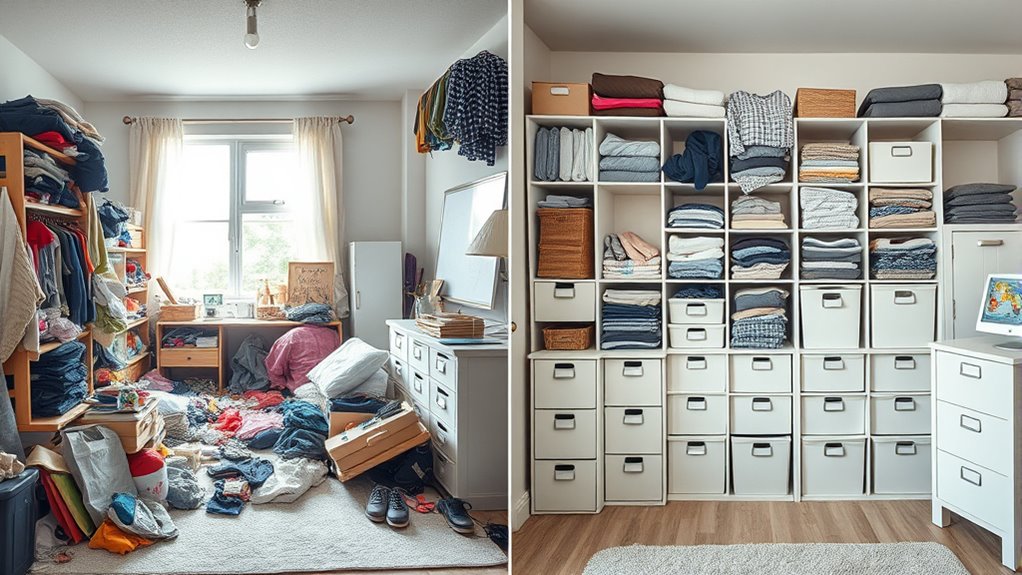

Decluttering and organizing might seem similar, but they serve different purposes. Decluttering is about removing unnecessary or unused items to clear your space, while organizing involves arranging what’s left in a way that makes everything easier to find and use. By understanding these differences, you can create a cleaner, more efficient environment. If you want to discover how to master both steps effectively, there’s more to explore on this topic.

Get home appliances delivered free with Prime
- Fast, free delivery on millions of items
- Prime Video, Amazon Music and more included
- Member-only deals all year
Key Takeaways
- Decluttering involves removing unnecessary or unwanted items, while organizing focuses on arranging kept items for easy access.
- Decluttering requires honest decisions about what no longer serves a purpose; organizing creates efficient storage systems.
- The main goal of decluttering is reducing clutter and visual chaos; organizing aims to maximize space and improve functionality.
- Decluttering helps eliminate emotional attachment to items and simplifies the environment; organizing enhances accessibility and retrieval.
- Effective decluttering clears space, and organizing ensures that remaining items are stored logically using tools like bins, shelves, and labels.

Many people confuse decluttering with organizing, but they’re actually distinct processes that serve different purposes. Decluttering focuses on removing unnecessary items from your space, helping you get rid of what you no longer need or use. It’s about making decisions on what stays and what goes, which can be emotionally challenging but essential for creating a clean, simplified environment. Organizing, on the other hand, involves arranging the items you’ve decided to keep in a way that makes them easy to find and access. It’s about establishing storage solutions that maximize space and improve your daily efficiency. Understanding the difference between decluttering and organizing can help you approach your space more effectively. When you start decluttering, your primary goal is to reduce clutter by sorting through your belongings and eliminating what doesn’t serve a purpose anymore. This step often requires honest self-assessment and a willingness to let go of items tied to sentimental value or unnecessary accumulation. Once you’ve decluttered, organizing becomes more straightforward because you’re dealing with a manageable quantity of belongings. You can then focus on creating logical systems—using bins, shelves, or labels—that make retrieving what you need quick and effortless. This process saves you time in the long run, as you no longer waste minutes searching for misplaced items or sorting through cluttered spaces. Effective storage solutions are key to successful organizing. You want to choose options that fit your space and lifestyle, whether that’s investing in drawer dividers, wall-mounted shelves, or clear containers. Well-thought-out storage makes your space look tidy and ensures your belongings are protected and easy to access. When your items are organized, you also improve your time management because you minimize the chaos and distraction caused by clutter. Instead of wasting time digging through piles or rummaging through disorganized drawers, everything has a designated place. This not only boosts your productivity but also reduces stress, allowing you to focus on what really matters.
As an affiliate, we earn on qualifying purchases.
Frequently Asked Questions
How Often Should I Declutter or Reorganize My Space?
You should declutter and reorganize your space every few months to maintain a tidy environment. Incorporate storage solutions that suit your needs and stick to regular cleaning routines to prevent clutter buildup. This way, you keep your space functional and clutter-free without feeling overwhelmed. Regular check-ins make it easier to maintain organization, ensuring your home stays comfortable and efficient for daily use.
Can Decluttering Improve Mental Health and Well-Being?
You might think clutter is harmless, but it actually hampers your mental clarity and emotional relief. Decluttering your space isn’t just about tidiness; it clears your mind of chaos, boosting your mental health. As you let go of unnecessary stuff, you create a calming environment that promotes well-being. Ironically, simplifying your surroundings can make you feel more energized and balanced, proving that less truly is more for your mental health.
What Tools or Products Assist With Effective Organizing?
You can use various tools like storage solutions and labeling systems to make organizing more effective. Opt for clear bins, stackable containers, and drawer dividers to maximize space. Label everything clearly to find items quickly and maintain order. These tools help you stay consistent, reduce clutter, and create a streamlined space. With the right storage solutions and labeling systems, you’ll find it easier to keep your environment neat and organized long-term.
How Do I Maintain Organization After Decluttering?
Maintaining organization after decluttering is like tending a garden—you need regular care. Use smart storage solutions to keep everything in its place, making it easier to find and put away items. Dedicate a few minutes daily for tidying, which helps with time management and prevents clutter from returning. Consistently reviewing and adjusting your systems guarantees your space stays organized, turning maintenance into a seamless part of your routine.
Are There Specific Strategies for Decluttering Sentimental Items?
You can declutter sentimental items by first recognizing their emotional attachment and sentimental value. Set limits on how many items you keep, like one box or a few special pieces. Take your time, and ask yourself if each item truly holds meaningful memories or if it’s just taking up space. Consider photographing or creating a digital album of cherished items to preserve memories without cluttering your space.
As an affiliate, we earn on qualifying purchases.
Conclusion
Think of decluttering as clearing away the weeds in your garden and organizing as planting your plants in neat rows. Both steps are essential, but they serve different purposes. Decluttering removes the excess, making space for what truly matters. Organizing then helps you nurture and maintain that space. Without decluttering first, organizing is like trying to arrange weeds—it’s an uphill battle. So, start by clearing out, then arrange with purpose, and watch your space flourish.
As an affiliate, we earn on qualifying purchases.
label maker for storage containers
As an affiliate, we earn on qualifying purchases.
As an affiliate, we earn on qualifying purchases.
Fall yard work Picks
leaf blowers
As an affiliate, we earn on qualifying purchases.