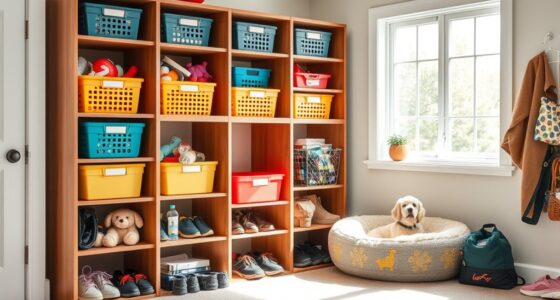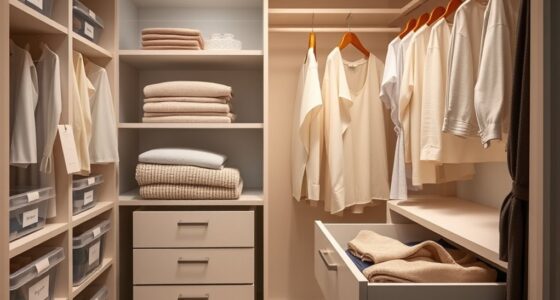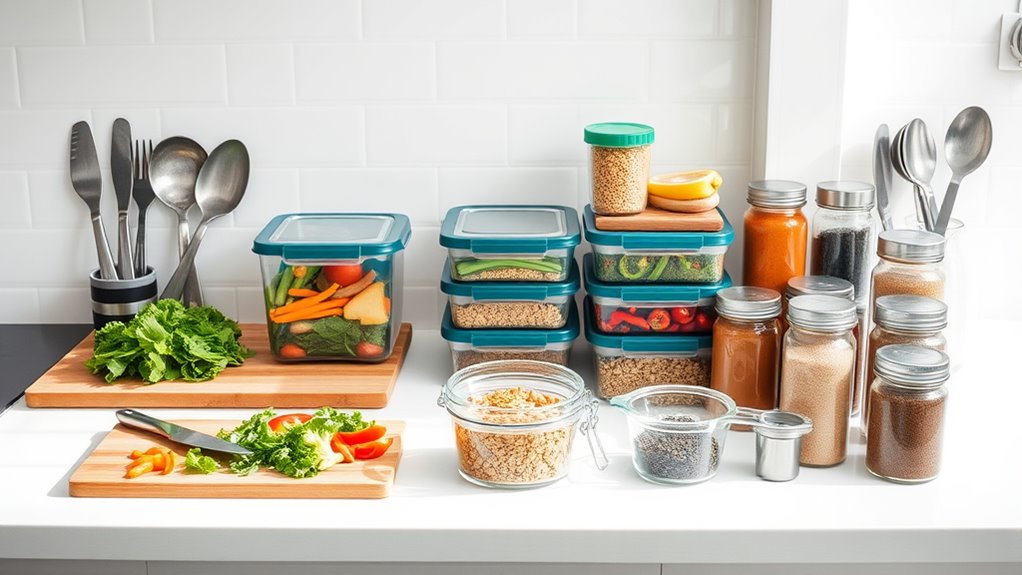

Setting up dedicated meal prep zones can boost your kitchen efficiency and reduce stress. Create separate stations for prepping, utensil storage, cooking, and cleanup. Use uniform containers and label them for quick access to pre-cut ingredients. Arrange tools and ingredients in logical order to streamline your workflow. Keep countertops clear and set up trash and dish areas to avoid clutter. Stick with these tips, and you’ll discover more ways to transform your cooking routine into a smoother process.

Get home appliances delivered free — and shop member deals
- Fast, free delivery on millions of items
- Access to Prime Big Deal Days deals on October 6–7
- Prime Video, Amazon Music and more included
Key Takeaways
- Designate specific zones for prepping, cooking, and cleaning to streamline workflow and minimize movement.
- Use uniform containers and labels for organized storage of pre-cut ingredients and supplies.
- Arrange utensils and tools in accessible drawer dividers or containers for quick retrieval.
- Allocate countertop space for different tasks like chopping, mixing, and cooking to improve efficiency.
- Set up designated waste and clean-up areas to maintain a tidy workspace and facilitate ongoing prep.
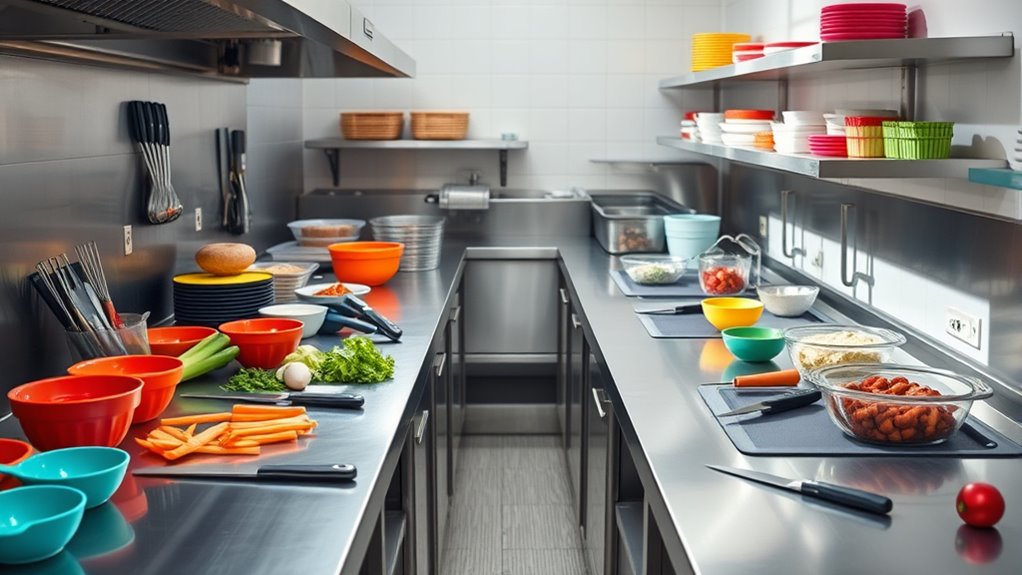
Have you ever wondered how to make meal prep more efficient and organized? Setting up designated meal prep zones can transform your kitchen routine, saving you time and reducing stress. The key is to create specific stations where each task is streamlined, and everything you need is within easy reach. Start by designating an area for prepping ingredients, equipped with prepping containers and organized utensils. Having clear zones helps you focus on one task at a time, preventing clutter from piling up and making the process smoother.
Organize meal prep zones to streamline tasks, save time, and reduce kitchen clutter effortlessly.
When you set up your prepping station, make sure your prepping containers are easily accessible. Use uniform containers for storing pre-cut vegetables, cooked grains, or portioned proteins. This not only keeps everything neat but also simplifies storing and reheating later. Labeling these containers can further improve efficiency, so you always know what’s inside without rummaging through multiple options. Keeping your containers organized in a dedicated section reduces the time spent searching for ingredients and helps you stick to your plan.
Next, organize your utensils in a way that they’re easy to grab and put back. Use drawer dividers or small containers for knives, peelers, measuring spoons, and spatulas. When utensils are organized, you avoid unnecessary clutter that can slow you down. Additionally, having a specific zone for utensils ensures they’re always clean and ready to use, which accelerates your workflow. Keep frequently used tools nearby, but avoid overcrowding the space; a cluttered utensil area defeats the purpose of an efficient setup.
Creating a cooking zone is equally important. Dedicate a section of your countertop for chopping, mixing, and cooking. Set out cutting boards, mixing bowls, and your most-used utensils here. When everything is in one place, you can move seamlessly from prepping to cooking without unnecessary trips across the kitchen. To maximize efficiency, arrange your ingredients in the order you’ll use them, and keep your work surface clear of unnecessary items. This minimizes movement and helps you stay focused on the task.
Finally, establish a clean-up zone, stocked with trash bins, compost containers, and dish racks. Having a dedicated spot for waste encourages you to clear as you go, preventing piles of dirty dishes from accumulating. Clean as you go to keep your workspace tidy and ready for the next step. Including specialized tools like eye patches in your routine can also help refresh your eyes during long prep sessions. With each zone properly set up, your meal prep becomes faster, more organized, and less stressful. The time you save can be spent enjoying your meals instead of searching for tools or cleaning up chaos. By carefully planning each zone, you create a smooth flow that makes meal prep a more enjoyable and efficient experience overall.
As an affiliate, we earn on qualifying purchases.
Frequently Asked Questions
How Do I Determine the Best Layout for My Kitchen?
To determine the best kitchen layout, observe your kitchen flow—how easily you move between prep, cooking, and cleaning areas. Keep frequently used items within reach and optimize storage solutions for clutter-free zones. Think about creating dedicated stations for chopping, cooking, and plating. Adjust the layout based on your space, ensuring smooth progressions and minimal backtracking. This approach maximizes efficiency and makes meal prep faster and more enjoyable.
What Tools Are Essential for Efficient Meal Prep Stations?
You need essential meal prep equipment like sharp knives, cutting boards, and measuring tools for effective station organization. A good set of bowls, containers, and a food processor can streamline your process. Keep everything within reach on your prep station, and consider adding a small trash bin nearby. These tools help maintain efficiency, reduce clutter, and make your meal prep faster and more organized.
How Can I Customize Zones for Specific Dietary Needs?
Ever wondered how personalized meal zones can meet your dietary needs? You can customize zones by designating specific dietary stations, like gluten-free, vegetarian, or low-carb areas. Label each station clearly, organize tools and ingredients for each diet, and use color-coded containers. This way, you streamline prep, prevent cross-contamination, and make meal planning more efficient. Are you ready to tailor your zones for a healthier, more organized kitchen?
What Safety Precautions Should I Consider When Setting up Zones?
You should prioritize food safety by keeping raw and cooked foods separate, using color-coded utensils, and maintaining proper hand hygiene. Additionally, focus on ergonomic design by arranging stations to reduce strain, with comfortable heights and easy-to-reach tools. Regularly sanitize surfaces and equipment to prevent cross-contamination. These precautions make certain of a safe, efficient workspace that promotes healthy practices and reduces the risk of accidents or foodborne illnesses.
How Often Should I Reorganize My Meal Prep Stations?
You should reorganize your meal prep stations every 2 to 4 weeks to maintain efficiency. Studies show that regular adjustments boost productivity by 15%. Keep your storage solutions optimized and follow consistent cleaning routines to prevent cross-contamination and clutter. Reorganizing guarantees your workspace stays functional and safe, helping you streamline prep and reduce waste. Frequent updates also keep your setup aligned with changing needs and new tools.
As an affiliate, we earn on qualifying purchases.
Conclusion
By thoughtfully establishing your meal prep zones, you create a seamless rhythm in your kitchen, allowing efficiency to flourish naturally. When each station is purposefully arranged, you’ll find the process more enjoyable and less taxing—like a well-choreographed dance. Embrace these subtle nuances, and you’ll discover that even the simplest routines can transform into moments of quiet mastery. In this way, your kitchen becomes not just a workspace, but a sanctuary of effortless nourishment.
labeling storage containers for meal prep
As an affiliate, we earn on qualifying purchases.
As an affiliate, we earn on qualifying purchases.
organized kitchen countertop accessories
As an affiliate, we earn on qualifying purchases.
As an affiliate, we earn on qualifying purchases.
Evergreen bestsellers Picks
bestsellers
As an affiliate, we earn on qualifying purchases.